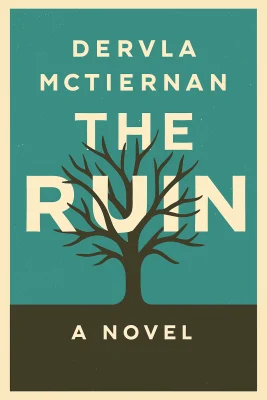
The Ruin
Categories
Fiction, Audiobook, Mystery, Thriller, Ireland, Suspense, Crime, Irish Literature, Mystery Thriller, Detective
Content Type
Book
Binding
Paperback
Year
2018
Publisher
Penguin Books
Language
English
ASIN
0143133128
ISBN
0143133128
ISBN13
9780143133124
File Download
PDF | EPUB
The Ruin Plot Summary
Introduction
# The Weight of Buried Secrets: A Detective's Twenty-Year Reckoning The call came in as a domestic dispute, nothing more. Twenty-year-old Garda Cormac Reilly drove through February rain toward what he thought would be routine family trouble. Instead, he found two children standing over their mother's corpse in a house that reeked of death and despair. Five-year-old Jack Blake bore the archaeological evidence of systematic abuse carved into his small bones. His fifteen-year-old sister Maude held herself with the careful dignity of someone who had learned not to trust adults. When social services arrived to take Jack into care, Maude simply vanished into the night, leaving behind only questions that would haunt Cormac for decades. Twenty years later, Detective Sergeant Cormac Reilly stands beside the River Corrib, watching Jack Blake's body disappear into an ambulance. The official verdict is suicide, but when Maude returns from Australian exile, she brings with her a fury that threatens to unravel secrets powerful people would prefer to keep buried. Some debts, it seems, can only be paid in blood.
Chapter 1: Ghosts Return: When the Past Refuses to Stay Dead
The body floated in the Galway waters like discarded refuse. Jack Blake, thirty-three years old, pulled from the River Corrib on a rain-soaked March evening in 2013. Detective Sergeant Cormac Reilly stood at the water's edge, watching the ambulance disappear into the darkness, and felt recognition crawl up his spine like ice. Superintendent Brian Murphy handed him the file with bureaucratic indifference. "Suicide," Murphy declared, as if the word itself could seal the case shut. "Blake left his car on the bridge, jumped, end of story." But Cormac knew better than to trust Murphy's certainties. The man had transferred him from Dublin for reasons that remained deliberately vague, parking him in Galway like unwanted furniture. The postmortem revealed what Cormac had suspected. Jack Blake bore the scars of a childhood that had carved itself into his very bones. Old fractures, burn marks, cigarette scars. This was the little boy Cormac had lifted from that house of horrors two decades ago, the child whose wide, frightened eyes had haunted his dreams ever since. Then she appeared. Maude Blake walked into the garda station like a ghost made flesh, her Australian accent unable to disguise the steel in her voice. She was small, weathered by years under foreign suns, but her eyes burned with the same fierce protectiveness Cormac remembered from that terrible night. "My brother didn't kill himself," she stated with absolute conviction. "Someone murdered him, and I'm going to prove it." The official investigation was perfunctory, designed to rubber-stamp a predetermined conclusion. But Maude's certainty infected Cormac like a virus, forcing him to confront the possibility that Jack Blake's death was merely the latest chapter in a story that had begun with a needle in his mother's arm and a fifteen-year-old girl's desperate choice to disappear.
Chapter 2: Two Deaths, Twenty Years Apart: Parallel Investigations Begin
The past refused to stay buried. As Cormac delved deeper into Jack Blake's final days, the ghosts of 1993 began to stir. He returned to Kilmore, to the rotting shell of the house where it all began, and found the memories waiting for him like patient predators. Hilaria Blake had been a woman destroyed by degrees. Alcoholism had hollowed her out, leaving behind a shell that barely resembled the mother her children needed. The house had reeked of neglect and despair, its windows boarded against a world that had already written off its inhabitants. Five-year-old Jack had been malnourished, covered in bruises, his small body a canvas of cruelty. Fifteen-year-old Maude had stood guard over him like a fierce young sentinel, her childhood sacrificed on the altar of survival. Meanwhile, Maude conducted her own investigation with methodical fury. She had learned patience in the Australian outback, and she applied it now to unraveling her brother's final days. The official suicide narrative crumbled under scrutiny. CCTV footage showed Jack walking away from the bridge, not toward it. His phone records revealed no signs of depression or despair. The physical evidence pointed to murder, but the gardaí seemed determined to ignore it. She met with Jack's girlfriend, Aisling Conroy, a surgeon whose grief was as sharp as her scalpel. Together, they began to piece together Jack's final day, following digital breadcrumbs that led to Lough Mask, where Jack had gone to think and never returned. But their investigation had awakened more than memories. Someone was watching them, following their movements, anticipating their discoveries. The social services files painted a picture of systematic failure. Katherine Shelley, the social worker assigned to the case in 1993, had tried to remove the children but been overruled by her superiors. The system had conspired to keep the Blake family together, even as it tore itself apart from within. Religious neighbor Domenica Keane had wielded influence like a weapon, convincing authorities that the children were better off with their natural mother, no matter how unnatural that mother had become.
Chapter 3: Institutional Failures: The System That Abandoned the Innocent
The deeper Cormac dug, the more appalled he became. There had been others in that house, shadows that moved through the Blake children's lives like malevolent spirits. A man who called himself Simon Schmidt, or perhaps Schiller, who had taken an unhealthy interest in young Jack. The pieces of a larger horror began to emerge, a network of predators who had seen opportunity in the Blake family's isolation and desperation. Domenica Keane proved to be a formidable opponent when Cormac finally tracked her down. Now in her seventies, she lived alone in a house that felt like a shrine to her own righteousness. She claimed to remember nothing useful about the Blake family, deflecting his questions with the skill of someone who had spent decades avoiding accountability. But she let slip references to the mysterious helper who had supposedly been part of her prayer group. The public health nurse who had dealt with Keane warned Cormac to be careful. The old woman was dangerous, she said, a sociopath who took pleasure in destroying the confidence and enthusiasm of younger people. She had falsely accused a previous nurse of assault, nearly destroying the woman's career before dropping the charges. Keane didn't like happy people, the nurse explained. She fed on suffering and chaos. Cormac began to see a pattern of predation that stretched across decades. Keane had been the facilitator, using her religious authority to gain access to vulnerable families. She had kept Hilaria Blake drunk and compliant, had prevented social services from removing the children, had created the perfect hunting ground for someone with darker appetites. When Hilaria finally became too sick to be useful, when the risk of discovery grew too great, she had been eliminated with a carefully administered overdose. But proving any of this would require more than circumstantial evidence and educated guesses. Most of the potential witnesses were dead, missing, or had every reason to lie. The system that had failed the Blake children once was preparing to fail them again, this time by silencing the one person who refused to let their story be forgotten.
Chapter 4: Hidden Networks: Predators, Enablers, and Religious Cover
The arrest warrant for Maude Blake was signed on a Friday evening, executed with the kind of precision that spoke of careful planning. Detective Sergeant Melanie Hackett led the team that took Maude into custody, armed with a statement from Hannah Collins, a drug addict desperate to secure early release from prison. Collins claimed that Maude had asked her to procure heroin in 1993, heroin that had subsequently killed Hilaria Blake. But the case against Maude was built on quicksand. Hannah Collins was the sister of Tom Collins, Maude's childhood friend and now her lawyer. The coincidence was too neat, the timing too convenient. Someone had orchestrated this arrest, using the legal system as a weapon to silence the one person who refused to let Jack Blake's death be forgotten. Cormac found himself caught in the crossfire. His investigation into Jack's suicide had been quietly reassigned, his authority undermined by colleagues who seemed more interested in protecting the status quo than seeking justice. Detective Danny McIntyre, ostensibly an ally, began to reveal himself as something far more sinister. His helpful suggestions carried the weight of threat, his friendly demeanor masking calculation that made Cormac's skin crawl. The truth about the Blake family's tragedy began to emerge in fragments. Simon Schiller, the mysterious figure from their past, had been a pedophile who preyed on vulnerable children. Domenica Keane, the religious neighbor who had blocked social services intervention, had been his enabler and accomplice. Hilaria Blake hadn't been an unfit mother by choice, but a woman trapped in a web of addiction and exploitation, her children used as currency in transactions too horrible to contemplate. Maude's crime hadn't been murder in the traditional sense, but mercy killing performed by a child who had run out of options. She had killed her mother not from hatred, but from love. Love for Jack, love strong enough to damn herself if it meant saving him. The needle in Hilaria's arm had been wielded by hands that shook not with malice, but with the terrible weight of necessity.
Chapter 5: Corruption in Blue: The Enemy Within the Force
The corruption ran deeper than Cormac had imagined. Danny McIntyre wasn't just a bad cop. He was something far worse, a predator who had used his badge as camouflage for decades of violence and manipulation. His own sister, Lorna, had been his victim, raped and terrorized into silence by the very person who should have protected her. When she finally found the courage to report the crime, Danny had silenced her permanently. Jack Blake's death had been collateral damage in Danny's larger scheme. Jack had been hiking at Lough Mask on the day Danny disposed of Lorna's body, an innocent witness who had to be eliminated to protect the killer's secret. Danny had murdered Jack and staged his suicide, then used his position within the gardaí to ensure the investigation went nowhere. But Jack's death had brought Maude home, and Maude's questions had threatened to unravel everything. Danny had manipulated the system to have her arrested for her mother's murder, using Hannah Collins as an unwitting pawn in his game. The charges were designed to discredit Maude, to paint her as a killer whose accusations couldn't be trusted. Cormac began to see the pattern, the web of corruption that connected past and present. The same forces that had failed the Blake children in 1993 were still operating in 2013, still protecting predators and silencing victims. The system wasn't broken. It was working exactly as designed, serving those with power while grinding the vulnerable beneath its wheels. The confrontation was inevitable. Danny's mask finally slipped completely when he realized that Cormac was closing in on the truth. Desperate to tie up loose ends, he targeted Aisling Conroy, Jack's girlfriend, seeing her as another witness who needed to be silenced. But desperation made him careless, and carelessness would prove to be his downfall.
Chapter 6: Final Confrontation: Truth Paid for in Blood
The house in the Claddagh had become a shrine to obsession. Danny McIntyre had transformed Jack and Aisling's home into a twisted monument to his own delusions, filling it with candles and photographs, creating a stage for the final act of his murderous drama. When Aisling returned from her shift at the hospital, she found him waiting in Jack's chair, wearing Jack's clothes, holding a gun with the casual confidence of a man who had killed before. The psychological torture was methodical, designed to break her spirit before ending her life. Danny forced her to write a suicide note, to drink wine while he recounted his crimes in loving detail. He told her about Lorna, about Jack, about the others who had crossed his path and paid the ultimate price. The gun at her back was a constant reminder of her helplessness, the noose around her neck a promise of what was to come. But Aisling had inherited some of Jack's stubborn courage. When Cormac arrived, drawn by instinct and desperation, she saw her chance. Standing on the banister with the rope tight around her throat, she made a choice that would have made Jack proud. She stepped into the void, sacrificing herself to give Cormac a clear shot at the monster who had destroyed so many lives. The gunshot echoed through the house like thunder, final and absolute. Danny McIntyre fell backward, his reign of terror ended by a single bullet fired in defense of the innocent. Cormac caught Aisling as she fell, his hands working frantically to loosen the noose, to pull her back from the edge of death. The paramedics arrived in time, barely, to save a life that had been measured in seconds. In the aftermath, the truth emerged like water through a cracked dam. Danny's confession, extracted in his final moments of desperation, revealed the full scope of his crimes. The charges against Maude were dropped, the case against her revealed as the fabrication it had always been. Justice, delayed by twenty years and paid for in blood, finally arrived for the Blake family.
Chapter 7: After the Storm: Justice Delayed but Not Denied
The old house in Kilmore stood empty now, its roof collapsed, its walls crumbling back into the earth. Cormac stood in what had once been the Blake family's kitchen, watching nature reclaim what humanity had abandoned. It seemed fitting somehow, this return to dust and decay. Some places were too poisoned by memory to ever be redeemed. Maude had chosen to stay in Ireland, building new relationships from the ashes of old trauma. She had found family in unexpected places. Tom Collins, her childhood friend turned lawyer, and even Hannah Collins, the woman whose false testimony had nearly destroyed her. Forgiveness, it seemed, was possible even in the darkest circumstances, love strong enough to overcome betrayal and fear. Aisling Conroy had survived her ordeal, physically if not entirely emotionally. The rope burns around her neck would fade, but the scars on her soul would take longer to heal. She had lost Jack twice now, once to murder, once to the truth about his death. But she had also gained something: the knowledge that his love had been real, that their time together had mattered, that some bonds transcend even death. The corruption within the gardaí had been exposed but not entirely excised. Brian Murphy and his cronies had closed ranks, protecting their own while sacrificing Danny McIntyre as a convenient scapegoat. The system would reform itself just enough to avoid scrutiny, then return to its old patterns of protecting the powerful and grinding down the weak. But some victories, however small, were worth celebrating. Domenica Keane had died alone in her poisoned house, killed by the same toxic atmosphere she had created around herself. Simon Schiller had died in prison years earlier, his crimes finally catching up with him. The predators who had fed on the Blake family's misery had faced their own reckonings, justice delayed but not denied.
Summary
Cormac walked away from the ruins with a sense of completion he hadn't felt in twenty years. The case that had haunted his career was finally closed, the ghosts of his past laid to rest. He had failed the Blake children once, but he had not failed them again. Maude Blake had found her way home, not to the Ireland that had abandoned her, but to a new understanding of what family could mean. The truth about Jack's death had cost them all dearly, but it had also freed them from the lies that had shaped their lives for two decades. The rúin, the buried secrets that had poisoned so many lives, had finally been dragged into the light. Some wounds never fully heal, some debts can never be completely repaid. But sometimes, in the space between justice and mercy, between memory and forgiveness, there is room for something that looks almost like peace. The Blake family's story had ended not with redemption, but with recognition. Recognition that love, however imperfect, however desperate, however late in coming, still has the power to transform even the darkest truths into something bearable.
Best Quote
“What comes next? Her cold house. Their bedroom, with all Jack’s clothes in the wardrobe, his toothbrush on the sink. Just this morning she’d found a print-off he’d left for her, stuck to the fridge.” ― Dervla McTiernan, The Ruin
Review Summary
Strengths: The review highlights the intricate plot of "The Ruin," noting its engaging narrative that intertwines past and present events. The protagonist, Cormac Reilly, is portrayed as a principled character facing challenges in a corrupt environment. The audiobook narration by Aoife McMahon is praised, enhancing the listening experience. Weaknesses: The review does not explicitly mention significant weaknesses in "The Ruin" itself but expresses disappointment with another work by the same author, suggesting inconsistency in writing quality. There is a cautionary note about the book's appeal, indicating it may not suit all fans of police procedurals due to its focus on character development. Overall: The reader expresses a positive sentiment towards "The Ruin," appreciating its solid writing and complex storyline. While recommending it, the review suggests it may not align with typical police procedural expectations, appealing more to those interested in character-driven narratives.
About Author

Dervla McTiernan
McTiernan investigates the complexities of crime fiction by weaving social justice themes and familial narratives into her novels. Her works often delve into the psychological depths of characters, exploring issues such as family loyalty and past trauma, which are evident in books like "What Happened to Nina?" and "The Murder Rule." These standalone thrillers, alongside her celebrated Cormac Reilly series, set her apart as an author who skillfully blends legal insight with thrilling storytelling. Her early career as a corporate lawyer in Ireland enriches her narratives with authentic legal and corporate backgrounds, providing readers with a nuanced understanding of the intricate relationship between personal and societal challenges.\n\nReaders find McTiernan's novels compelling not only for their intricate plots but also for their exploration of the human condition. Her background in law and her relocation to Australia during the global financial crisis influenced her decision to pursue writing full-time, resulting in critically acclaimed works that resonate with global audiences. Her debut novel, "The Ruin," won prestigious awards such as the Ned Kelly Award for Best First Fiction, cementing her status as a leading figure in crime fiction. Meanwhile, "The Sisters," an audio novella, topped charts as a four-week bestseller in the United States, showcasing her versatility and appeal in different formats.\n\nMcTiernan’s contribution to the literary world is recognized through numerous accolades, including multiple Australian Book Industry Awards. Her novels, primarily set in Ireland but crafted in Australia, continue to captivate readers with their strong character development and the seamless integration of legal and thriller elements. This bio highlights how her unique perspective and methodical approach to storytelling make her books valuable for those interested in crime fiction that challenges societal norms and explores the depth of human relationships.
Read moreDownload PDF & EPUB
To save this Black List summary for later, download the free PDF and EPUB. You can print it out, or read offline at your convenience.
The Ruin
by Dervla McTiernan
