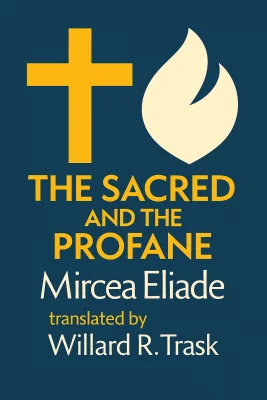
The Sacred and the Profane
The Nature of Religion
Categories
Nonfiction, Psychology, Philosophy, History, Religion, Spirituality, Anthropology, Theology, Mythology, Romanian Literature
Content Type
Book
Binding
Paperback
Year
1968
Publisher
Mariner Books
Language
English
File Download
PDF | EPUB
The Sacred and the Profane Plot Summary
Introduction
Have you ever noticed how certain spaces feel different, even special? A quiet cathedral, an ancient tree in a forest, or perhaps a sacred mountain that draws pilgrims from across the world. This feeling of distinction between ordinary and extraordinary spaces is not random - it reflects one of humanity's most fundamental experiences: the perception of the sacred. Throughout human history, across vastly different cultures and time periods, people have divided their world into two domains: the sacred and the profane. In this exploration of religious experience, we'll discover how humans across cultures experience and interpret the sacred in their lives. We'll see how religious humans orient themselves in space and time quite differently than their non-religious counterparts. We'll examine how natural elements - mountains, waters, trees - become charged with religious significance, and how the human body itself can be understood as a cosmic symbol. Through understanding these patterns, we gain insight not just into ancient or traditional societies, but into the very foundations of human consciousness and the persistent religious dimensions that shape our world today, even in seemingly secular contexts.
Chapter 1: The Concept of Sacred Space: Centers and Boundaries
For religious humans throughout history, space has never been homogeneous. Unlike the uniform, geometric space of modern scientific thought, religious space breaks into qualitatively different regions: the sacred and the profane. Sacred space stands out as different, powerful, and significant - it's the place where the divine has manifested itself, creating what religious scholars call a "hierophany." This manifestation creates a fixed point, a center in the midst of the formless expanse of profane space. Think of how a cathedral stands in a modern city - it represents a break in ordinary space. For religious people, the experience of this break in space is fundamental to their orientation in the world. Just as we need coordinates to navigate physical terrain, humans need spiritual coordinates to orient themselves in existence. The sacred space provides this fixed point, this cosmic center. Whether it's a temple, a sacred mountain like Mount Meru in Hindu traditions, or even a humble shrine in one's home, these centers connect heaven, earth, and underworld. This organization of space isn't merely symbolic - it structures the entire religious experience. When traditional peoples build a settlement, they're not simply constructing practical shelter; they're repeating the divine act of creation, establishing a cosmos out of chaos. The village layout, the central post of a nomadic tent, or the altar in a temple - all reproduce the cosmic axis, the world pillar that stands at the center of existence. Every properly founded dwelling becomes an imago mundi, an image of the world, positioned at what its inhabitants consider the center of the universe. For traditional societies, this sacred geography extends beyond physical structures. The boundaries between sacred and profane spaces are particularly charged with meaning. Thresholds, doorways, and bridges symbolize the dangerous passage from one cosmic zone to another. This is why so many religious rituals involve crossing thresholds - baptism represents crossing from profane life to sacred existence, initiation ceremonies involve symbolic journeys, and even funeral rites guide the deceased across the boundary between the worlds of the living and the dead. Through these spatial organizations, religious humans establish themselves in a meaningful cosmos. Unlike modern secular space, which appears neutral and uniform, sacred space reveals a world charged with meaning, power, and purpose. This concept of the sacred center persists even in seemingly secular contexts - think of how nations still venerate their capitals, how families treasure their ancestral homes, or how certain landscapes continue to inspire feelings of awe that echo ancient sacred experiences.
Chapter 2: Sacred Time: Myths and Eternal Return
For religious humans, time, like space, is not homogeneous. There exists a profound difference between ordinary, profane duration and sacred time. Profane time is the linear, historical time of everyday life - the time of work, errands, and mundane activities. Sacred time, by contrast, is what might be called "eternal time" - the primordial mythical time when the gods first acted. Most importantly, sacred time is reversible; through ritual and festival, religious humans can periodically return to the sacred time of origins. When religious communities celebrate their major festivals - whether it's Easter, Passover, or the reenactment of creation myths in traditional societies - they aren't simply commemorating past events. They are actually participating in those events, becoming contemporary with them. During a religious festival, the original sacred event breaks through into the present. The faithful Christian at Easter doesn't merely remember Christ's resurrection; in a profound sense, they become present at that cosmic event as it happens anew. This explains why religious calendars are fundamentally circular - they allow periodic returns to the sacred origins. Myths play a crucial role in this relationship with time. They are not fictional stories or primitive scientific explanations, as some modern interpretations suggest. Rather, myths are sacred narratives that reveal how reality came to be through the actions of supernatural beings. When a myth is recited during a ritual, that original creative act becomes present again. For agricultural societies, telling the story of how a god first taught humans to grow crops isn't just entertainment - it's a way of tapping into that original divine power to ensure a successful harvest. The myth provides the template, the paradigmatic model for human action. This perspective transforms how religious humans experience their own lives. By imitating divine actions preserved in myths, they sanctify their existence. A traditional fisherman doesn't just fish; he repeats the techniques taught by a cultural hero in mythical times. A marriage isn't just a social contract; it repeats the primordial union of cosmic forces. Through this imitation of divine models (what scholars call imitatio dei), ordinary life gains meaning by participating in a transcendent reality. The contrast with modern secular time consciousness is striking. For non-religious people, time flows in a single direction toward death, with no possibility of return or repetition. Historical events happen once and are gone forever. But for religious consciousness, what truly matters is not the historical uniqueness of events but their eternal mythical patterns. In sacred time, what happened once continues to happen through ritual repetition, offering humans access to the regenerative power of origins.
Chapter 3: Natural Symbolism: Cosmic Hierophanies
For religious humans, nature is never merely natural. The cosmos is perceived as a divine creation - alive, meaningful, and laden with sacred messages. Unlike modern secular perspectives that view nature as inert matter governed by blind forces, traditional religious viewpoints see the natural world as a vast system of sacred signs revealing transcendent realities. The sun, stars, moon, waters, mountains, and trees are not simply physical objects but manifestations of divine power and presence. The sky, for instance, stands as perhaps the most universal symbol of transcendence. Its immense height, inaccessibility, and eternal quality naturally evoke the "wholly other" - that which fundamentally differs from human existence. This is why so many supreme deities across cultures are associated with the sky: Zeus, Jupiter, the Maori Iho, or the Chinese T'ien. These are not merely primitive "nature gods" but expressions of transcendent power manifested through natural phenomena. When thunder sounds, religious consciousness hears not just atmospheric electricity but the voice of divine power. Water presents another fundamental cosmic hierophany. Waters symbolize the primordial substance from which all forms emerge and to which they return. This explains the religious significance of immersion rituals like baptism - entering water represents death to an old form of existence, while emerging represents rebirth into new life. The universal presence of flood myths reflects this understanding of water as both destroyer and regenerator, abolishing corrupted forms to make way for new creation. The earth, too, manifests sacred power, particularly in its aspect as the Great Mother. Agricultural peoples especially experience the earth as a living, fertile being who gives birth to all life forms. This explains why childbirth rituals often involve placing newborns on the ground - it represents returning to and receiving blessing from the universal Mother. The sacrality of earth appears in countless forms, from the reverence for soil in farming communities to the veneration of sacred mountains as the navel of the world. Plant symbolism, especially the cosmic tree, connects all levels of existence. The tree, with roots in the underworld, trunk on earth, and branches reaching toward heaven, becomes a perfect symbol of cosmic totality. In numerous traditions, from Nordic mythology's Yggdrasil to Buddhist cosmology, sacred trees represent the axis of the world and the possibility of communication between cosmic regions. These natural hierophanies aren't primitive superstitions but sophisticated symbolic systems through which humans comprehend their place in existence. Even in our modern world, these ancient patterns persist in art, dreams, and cultural symbols, revealing how deeply embedded these religious interpretations of nature remain in human consciousness. When we feel awe before a mountain vista or peace beside flowing water, we may be experiencing faint echoes of what our ancestors understood as cosmic hierophanies.
Chapter 4: Patterns of Initiation: Death and Rebirth
Across religious traditions worldwide, initiation ceremonies share a remarkably consistent pattern: symbolic death followed by rebirth into a new mode of being. These transformative rituals represent one of the most profound dimensions of religious experience, marking the transition from one state of existence to another. In traditional societies, the most important initiations occur at puberty, transforming children into adults through carefully orchestrated ceremonies that often include temporary isolation, ordeals, and instruction in sacred knowledge. The symbolic death at the heart of initiation takes many forms. In some traditions, initiates are buried in shallow graves or covered with leaves to simulate burial. In others, they're symbolically swallowed by a monster or cosmic animal, spending time in its "belly" before being "regurgitated" as new beings. Australian Aboriginal initiations often involve a period of seclusion in the bush, away from the community, where the initiate is considered temporarily dead to their former life. These ritual deaths are necessary because, in religious understanding, one cannot simply add to an existing state - true transformation requires the ending of one mode of being before a new one can emerge. The rebirth that follows this ritual death involves the acquisition of a new identity. Initiates often receive new names, learn secret languages, and are marked permanently through tattoos, scarification, or circumcision. These physical and symbolic modifications signify their new ontological status. What emerges from initiation is not merely the same person with additional knowledge, but a fundamentally transformed being with a new relationship to the community, the cosmos, and the sacred. Central to most initiation ceremonies is the transmission of sacred knowledge unavailable to the uninitiated. Myths of creation, explanations of cosmic order, and techniques for communicating with supernatural beings are revealed to initiates at the appropriate time. This knowledge isn't simply intellectual but transformative - knowing the sacred origins of things grants power over them and establishes the initiate's place in the cosmic order. The initiatory revelation of knowledge represents a profound illumination, a movement from darkness to light. The pattern of initiatory death and rebirth extends beyond formal ceremonies to shape religious understanding of many life transitions. Illness can be understood as a temporary death requiring healing rituals that enact rebirth. Mystical experiences follow this same structure, as the mystic "dies" to ordinary consciousness before experiencing divine reality. Even in modern secular societies, we find this pattern persisting in transformed ways - the college student leaving home, the immigrant beginning life in a new country, or the patient undergoing psychotherapy all experience versions of this ancient pattern of dissolution and reconstitution of identity. Initiation thus reveals a fundamental religious insight: genuine transformation requires passing through darkness, disintegration, and symbolic death before a more complete form of existence can emerge. This pattern reflects not just social conventions but a deep religious understanding of how humans grow into fuller participation in reality.
Chapter 5: Religious vs. Modern Man: Continuities and Transformations
The contrast between religious humans of traditional societies and modern secular individuals reveals profound differences in how existence itself is understood and experienced. For religious consciousness, all reality derives its significance from divine models, paradigms, and hierophanies. The world exists because it was created by gods, and human actions gain meaning by imitating divine patterns. Nature speaks the language of the sacred, and human life unfolds within a cosmos permeated with transcendent significance. For modern secular consciousness, by contrast, reality is desacralized - stripped of inherent religious meaning and transformed into resources to be utilized or problems to be solved. This transformation didn't happen suddenly. The process of desacralization has deep historical roots, developing through gradual changes in how humans relate to their world. In Western civilization, this process accelerated with the scientific revolution, industrialization, and the rise of materialist philosophies. The cosmos became a mechanism rather than a living organism, nature became a resource rather than a sacred revelation, and human life increasingly focused on historical rather than eternal concerns. Yet this process has never been complete - even the most thoroughly secular societies retain traces of religious patterns and impulses. Modern humans, while often rejecting explicit religious beliefs, frequently preserve religious behaviors in camouflaged forms. Consider how modern political movements adopt quasi-religious structures, complete with sacred texts, charismatic leaders, and promises of future salvation. Notice how secular celebrations like New Year's Eve retain the pattern of cosmic renewal found in religious festivals. Even the experience of reading fiction can create a kind of "sacred time" outside ordinary duration, similar to what religious myths once provided. These continuities reveal how deeply embedded religious patterns remain in human consciousness. The religious dimension persists most powerfully in what modern psychology calls the unconscious. The symbols, dreams, and archetypes that emerge from the depths of the psyche often display remarkable similarities to religious motifs from traditional cultures. This suggests that the religious impulse hasn't disappeared in modern humans but has been internalized and privatized. What once manifested as cultural religious systems now appears as individual psychological experiences, often disconnected from coherent cosmological frameworks. For religious humans, existence was open to the cosmos and participated in transpersonal realities. Modern humans have gained unprecedented individual freedom and technological mastery at the cost of this cosmic connection. Yet the persistence of religious patterns in transformed manifestations suggests that human existence remains fundamentally oriented toward meaning, transcendence, and the sacred, even when these dimensions are denied or displaced into secular substitutes. The challenge for modern consciousness may be to recognize these continuities rather than dismiss them, understanding that religious patterns represent not merely cultural artifacts but enduring structures of human experience.
Chapter 6: Sanctification of Life: Body, Home, and Cosmos
For religious humans, especially in traditional societies, life is not divided into separate spheres of sacred and secular activity. Rather, the entire cosmos, along with human bodies and dwellings, participates in a sacred pattern that can be continuously reactivated through ritual. This sanctification of everyday life transforms eating, sexuality, work, and dwelling into sacramental acts that connect humans to divine realities. The human body itself is understood as a cosmic symbol. In numerous traditions, from ancient India to indigenous cultures worldwide, the body is homologized with the cosmos - the spine corresponds to the world axis, the breath to cosmic winds, the heart or navel to the center of the world. This isn't mere poetic analogy but a lived understanding that the human microcosm mirrors the macrocosm. Through this correspondence, bodily functions become charged with cosmic significance. Breathing techniques in yoga, for instance, don't merely affect physical health but establish harmony with cosmic rhythms. Sexual union in tantric traditions represents not just human reproduction but the primordial integration of cosmic principles. The home or dwelling similarly functions as a sacred center. Building a house recapitulates the divine act of creating the cosmos. The hearth or central pillar corresponds to the axis mundi, the threshold marks the boundary between cosmic zones, and the roof opening (in traditional dwellings) provides communication with the transcendent realm. When traditional peoples construct a dwelling, they're not simply providing shelter but establishing a sacred space that orients them within the cosmic order. Even architectural details like the orientation of doors or the proportions of rooms often follow cosmic patterns that align human habitation with divine models. Daily activities undergo similar sanctification. Agricultural work repeats the paradigmatic acts of fertility deities. Cooking transforms into a ritual activity that reenacts cosmic transformation. Crafts like weaving, metalworking, or pottery making follow techniques revealed by divine or ancestral beings in mythical time. Even seemingly mundane actions like crossing thresholds, lighting fires, or drawing water become charged with sacred significance through their connection to cosmogonic paradigms. This sanctification of life creates a profound integration between cosmos, society, and individual. Unlike the compartmentalized existence of modern secular humans, who often separate work, family, and spiritual life into discrete domains, traditional religious existence maintains wholeness through cosmic correspondences. The cosmos provides the overarching pattern, human society mirrors this cosmic order, and individual life gains meaning through participation in both. Modern secular life has largely lost this integrative dimension. Bodies become biological machines, homes become functional spaces, and work becomes economically rather than cosmically significant. Yet traces of these ancient patterns persist even in contemporary experiences - in the special feeling of "coming home," in the continuing power of communal meals to create bonds, and in moments of harmony with natural rhythms that briefly reconnect us to a more integrated mode of existence.
Chapter 7: Rites of Passage: Transitions in Religious Experience
Throughout human history, religious traditions have developed elaborate ceremonies to mark life's crucial transitions. These rites of passage - celebrating birth, puberty, marriage, and death - don't merely acknowledge biological or social changes but transform them into spiritual journeys with cosmic significance. By structuring these transitions as sacred passages, religious traditions help individuals navigate the psychological challenges of change while connecting personal experience to transcendent patterns. Birth rituals worldwide demonstrate how religious consciousness transforms biological events into spiritual beginnings. A newborn isn't simply considered a new member of the human community but a soul arriving from the spiritual realm. In many traditions, the infant must undergo rituals that separate it from the pre-birth divine world and integrate it into human society. Native American traditions might present the baby to the four directions; Hindu ceremonies might include name-giving rituals that establish the child's spiritual identity; traditional Christian baptism symbolically drowns the child's inherent sinfulness while initiating them into the community of faith. These diverse practices share a common understanding: physical birth must be complemented by spiritual birth. Marriage rites similarly transform biological pairing into cosmic participation. In Hindu traditions, the couple circumambulates the sacred fire, reenacting the cosmic relationship between divine principles. Traditional Christian marriage explicitly models the union of Christ and the Church. Indigenous ceremonies often connect the couple to ancestral patterns established in mythical time. Through these rituals, the intimate relationship between two individuals expands to participate in larger patterns of cosmic fertility and social continuity. The couple doesn't merely start a family; they continue the creative work of the cosmos. Death rites perhaps most powerfully reveal how religious consciousness transforms biological endings into spiritual transitions. Elaborate funeral practices worldwide share a common pattern: helping the deceased separate from this world, guiding them through a dangerous journey or judgment, and establishing them in a new mode of existence. Egyptian mummification, Tibetan sky burial, traditional Christian last rites, or indigenous funeral songs all serve this transformative purpose. The biological fact of death becomes a spiritual passage, maintaining continuity of identity despite the body's dissolution. These rites of passage persist even in increasingly secular societies, though often in attenuated forms. Modern wedding ceremonies retain symbolic elements from religious traditions even when conducted without explicit religious content. Contemporary funeral practices still seek to provide meaning beyond mere disposal of remains. This persistence suggests that human transitions require more than practical management - they demand symbolic frameworks that connect individual experience to larger patterns of meaning. The power of these rites lies in their ability to integrate multiple dimensions of experience: the biological reality of growth and change, the psychological need for identity development, the social requirement for clear status transitions, and the spiritual understanding of life as a cosmic journey. By sanctifying life transitions, religious traditions acknowledge their profound significance while providing resources to navigate their inherent challenges.
Summary
The fundamental insight that emerges from our exploration of religious experience is the recognition of a profound division in human perception of reality - the distinction between the sacred and the profane. For religious humans throughout history, existence unfolds within a cosmos charged with sacred significance, where certain spaces, times, natural phenomena, and life transitions reveal connections to transcendent realities. This religious mode of being in the world doesn't represent a naive stage of human development but rather a complex and sophisticated way of understanding existence that persists even within seemingly secular modern consciousness. The patterns we've examined - sacred centers and boundaries, cyclical sacred time, natural hierophanies, initiatory transformations, and sanctified everyday life - reveal how religious experience provides a comprehensive framework for human existence. These patterns haven't simply disappeared in the modern world but continue in transformed, often camouflaged ways. Even the most thoroughly secular individuals may experience moments when ordinary time seems suspended, when certain spaces evoke a special reverence, or when life transitions demand ritual recognition. This suggests that the religious dimension isn't merely a cultural construct but reflects something fundamental about human consciousness and its relationship to reality. What questions might this raise about our contemporary understanding of secularization? How might recognition of these persistent patterns help us better understand the continued power of religious symbolism in politics, art, and culture? Perhaps by acknowledging these continuities, we can develop a more nuanced appreciation of both traditional religious worldviews and the complex religious dimensions that persist within seemingly secular modern life.
Best Quote
“It was lunar symbolism that enabled man to relate and connect such heterogeneous things as: birth, becoming, death, and ressurection; the waters, plants, woman, fecundity, and immortality; the cosmic darkness, prenatal existence, and life after death, followed by the rebirth of the lunar type ("light coming out of darkness"); weaving, the symbol of the "thread of life," fate, temporality, and death; and yet others. In general most of the ideas of cycle, dualism, polarity, opposition, conflict, but also of reconciliation of contraries, of coincidentia oppositorum, were either discovered or clarified by virtue of lunar symbolism. We may even speak of a metaphysics of the moon, in the sense of a consistent system of "truths" relating to the mode of being peculiar to living creatures, to everything in the cosmos that shares in life, that is, in becoming, growth and waning, death and ressurrection.” ― Mircea Eliade, The Sacred and the Profane: The Nature of Religion
Review Summary
Strengths: Eliade's insightful analysis and synthesis of complex ideas into accessible prose are highly regarded. His exploration of sacred spaces, times, and rituals and their impact on human experience and culture stands out. The comparative approach, utilizing examples from diverse religions, offers a broad perspective on universal religious experiences.\nWeaknesses: Dense and occasionally repetitive writing may challenge those unfamiliar with academic discourse on religion. Some critics note a tendency to generalize across cultures and religions, potentially oversimplifying complex traditions.\nOverall Sentiment: The book is largely viewed positively, often considered a foundational text in religious studies. It is valued for its depth and ability to provoke thought about the sacred's role in human life.\nKey Takeaway: Eliade's work underscores the sacred as a fundamental aspect of human consciousness, offering meaning and structure, while inviting readers to reflect on its pervasive influence across various religious and cultural contexts.
About Author
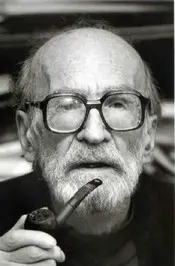
Mircea Eliade
Eliade situates his work at the intersection of myth and human psychology, crafting a comprehensive framework for understanding religious experiences. Whereas many scholars focus on the chronological progression of religions, Eliade probes the symbolic nature of myths and rituals, positing that they allow participants to re-experience sacred events through the concept of "eternal return". This approach is central to his influential book, "The Myth of the Eternal Return," which explores how ancient societies conceptualized cyclical time, thereby offering profound insights into religious consciousness.\n\nFor Eliade, the exploration of the sacred and the profane is paramount, yet he extends his inquiry beyond academic boundaries into the realm of fiction. His novels, such as "Maitreyi" and "The Forbidden Forest," delve into the metaphysical through themes of erotic love and mystical experiences. These narratives are not mere storytelling; they are rich tapestries that challenge the reader's understanding of spirituality and desire. By weaving the fantastic with the autobiographical and philosophical, Eliade’s narrative style prompts readers to consider the mystical dimensions of human life, a method that distinguishes his work from conventional academic texts.\n\nThe impact of Eliade’s contributions is far-reaching, benefiting scholars, students, and those intrigued by the philosophy of religion. His interdisciplinary approach, blending anthropology, philosophy, and literature, provides a versatile lens through which the complexities of religious symbolism can be understood. Moreover, his teachings at the University of Chicago have inspired a generation of thinkers, ensuring that his intellectual legacy endures. Despite the controversies surrounding his political affiliations, Eliade’s work continues to shape discussions in religious studies, making this author a pivotal figure for those seeking a deeper comprehension of the sacred in human experience.
Read moreDownload PDF & EPUB
To save this Black List summary for later, download the free PDF and EPUB. You can print it out, or read offline at your convenience.
The Sacred and the Profane
by Mircea Eliade
