Categories
Fiction, Audiobook, Mystery, Military Fiction, Thriller, War, Suspense, Crime, Mystery Thriller, Action
Content Type
Book
Binding
Hardcover
Year
2018
Publisher
Atria/Emily Bestler Books
Language
English
ISBN13
9781501180811
File Download
PDF | EPUB
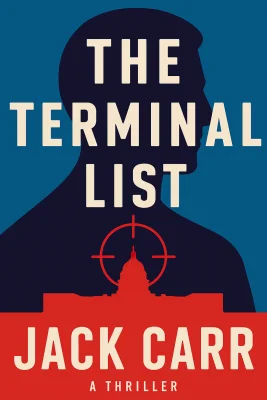
The Terminal List Plot Summary
Introduction
# The Terminal List: A Navy SEAL's Final Mission of Vengeance The Wyoming mountains held their breath as Lieutenant Commander James Reece adjusted his scope, crosshairs settling on the silver Mercedes winding through the valley below. Six hundred twenty-five yards. Perfect conditions for what needed to be done. Marcus Boykin had no idea that death was tracking him from the ridgeline above, no idea that his role in destroying an entire SEAL troop had finally caught up with him. The bullet found its mark with surgical precision, and the Mercedes careened off the highway in a spectacular roll, coming to rest in twisted metal and blood. Reece pulled out a crayon drawing from his chest pocket—three stick figures labeled "Daddy," "Mommy," and "Lucy"—and crossed the first name off the list written on the back. The Terminal List had claimed its first victim, but James Reece's war was just beginning. What started as a routine mission in Afghanistan had become something far more sinister, a conspiracy that reached into the highest levels of government and cost him everything he held dear. Now, with a brain tumor slowly killing him and nothing left to lose, Reece had become something more dangerous than any enemy America had ever faced: a highly trained special operator with a list of names and the skills to cross them all off.
Chapter 1: The Ambush: Betrayal in the Hindu Kush
The mission felt wrong from the start. Lieutenant Commander James Reece crouched in the Afghan darkness, studying the target compound through night vision goggles. His SEAL troop was positioned on the military crest of a hill, ready to assault what intelligence claimed was a high-value Taliban target. But something didn't add up. In sixteen years of war, Reece had never seen a target package this detailed come down from higher headquarters with such urgency. His troop chief moved up beside him, the massive bearded warrior who'd become like a brother. "What do you think, Reece?" The man's confident smile was visible even through the green glow of night vision. It was the look of a professional who'd done this dance countless times before. "It's just over that rise," Reece replied, checking his GPS one more time. "Predator shows nothing moving. No sentries. Nothing." That was the problem—it was too quiet, too easy. The explosion erased thirty-six of America's finest warriors in less than a second. The entire hillside erupted in violence and death that knocked Reece unconscious and threw him ten yards backward. When he came to, ears ringing and head pounding, he found himself staring into the severed head of his troop chief, the confident smile now frozen in death. The professional in him immediately went to work—check for weapons, assess injuries, establish communications. But the human part of him, the part that had led these men into an obvious trap, began to fracture. The Taliban had known they were coming. Every detail, every movement, every tactical decision had been anticipated. As Reece called in air strikes and coordinated the evacuation of what remained of his team, one thought echoed through his concussed mind: someone had set them up to die. The ambush was too perfect, too coordinated. This wasn't battlefield luck—this was betrayal at the highest levels.
Chapter 2: Personal Devastation: When Heroes Become Targets
The C-5 Galaxy touched down at Naval Air Station North Island, carrying James Reece back to a world that no longer existed. His friend Ben Edwards waited in the terminal, but there would be no homecoming celebration. While Reece had been trapped in Afghanistan answering questions from investigators, his teammate Boozer had supposedly committed suicide—a man who would never have used a 9mm pistol to end his life, not when he owned a collection of custom .45s. But the real devastation waited at home. Emergency lights painted Reece's neighborhood in hellish red and blue as police cars and ambulances crowded his street. Inside his house, Lauren and three-year-old Lucy had been gunned down by what appeared to be a home invasion. Lauren had died shielding their daughter, both of them cut down by automatic weapons fire. The paramedics had fought to save Lucy, but her small body couldn't survive the trauma. Detective Dubin walked through the crime scene, noting the family photos and military memorabilia that told the story of a warrior's life. The samurai sword from Reece's grandfather, the tomahawks from various deployments, the books on warfare and philosophy—this wasn't a random target. As Dubin examined the carnage, one thought crystallized: God help whoever did this. The final blow came from Dr. O'Halloran at Bagram, who had discovered brain tumors in three of Reece's men—an astronomical medical impossibility that suggested something far more sinister than combat stress. The doctor's message was clear: when Reece returned stateside, he needed to get checked immediately. But by the time Reece received the message, Dr. O'Halloran was dead, killed in what appeared to be a "green-on-blue" attack by an Afghan ally. The conspiracy was tightening its grip, eliminating witnesses and covering its tracks with surgical precision.
Chapter 3: The Conspiracy Unveiled: Corporate Greed and Military Corruption
Katie Buranek had been tracking the story since Bagram, her investigative instincts honed by years of exposing government cover-ups. When she met Reece at a downtown Los Angeles coffee shop, she brought more than sympathy—she brought answers. Using facial recognition software and media databases, she'd connected the dots between Josh Holder, a mid-level investigator, and some of the most powerful people in Washington. The photos she spread across the table told a story of corruption that reached into the highest levels of government. Holder walking alongside Secretary of Defense Lorraine Hartley. Steve Horn of Capstone Capital at charity fundraisers with Admiral Pilsner. Mike Tedesco, the political fixer who connected them all. These weren't random players—they were part of a network that had used Reece's SEAL troop as guinea pigs for an experimental drug. As Katie explained the connections, Reece felt the final pieces of his old life crumble away. His men hadn't died in combat—they'd been murdered to cover up a pharmaceutical conspiracy worth billions of dollars. The brain tumors weren't a medical mystery—they were side effects from RD4895, a PTSD-blocking drug that Capstone Capital was developing with Pentagon funding. The drug prevented trauma by blocking specific neural pathways, but it also caused aggressive brain tumors in test subjects. That night, Reece sat in his blood-stained living room and made a list on the back of Lucy's crayon drawing. Names written in his daughter's innocent handwriting became a death warrant for everyone who had destroyed his family and his team. It wasn't just a hit list—it was a terminal list, because James Reece was already dead. The tumor growing in his brain would kill him eventually, but not before he delivered justice to every person responsible for this betrayal.
Chapter 4: The Terminal List: Names Written in Blood
The transformation from Navy SEAL to angel of vengeance began with methodical preparation. Reece liberated weapons and explosives from the team armory, studied his targets' routines, and planned each assassination with tactical precision. The tumor in his brain was killing him slowly, but he had enough time to balance the scales of justice. Each name on his list represented a debt that could only be paid in blood. Marcus Boykin, the financial analyst who'd recommended terminating the test subjects, died first in Wyoming. A single rifle shot through his windshield made his death look like a hunting accident. Local law enforcement bought the story completely—an out-of-state hunter taking an illegal shot at a deer, the bullet carrying over the ridge to strike an unlucky motorist. Reece watched through his scope as the Mercedes rolled down the mountainside, then calmly packed his rifle and walked away. Saul Agnon, Horn's nervous lieutenant, was next. Reece found him at a Palm Springs legal conference and conducted a professional interrogation in the man's hotel bathroom. Between gasps for air during waterboarding sessions, Agnon spilled everything about the conspiracy. When the confession was complete and recorded, Reece prepared a lethal cocktail of drugs that would look like an accidental overdose. One more name crossed off the list, but the biggest targets still remained. The imam who'd arranged the Taliban ambush through his terrorist networks met a more theatrical end. Reece infiltrated his mosque during evening prayers, then decapitated him with a tomahawk in his office. He left the head impaled on the mosque's front gate with an ISIS flag, sending a message to the remaining conspirators that their hunter was coming. Each killing was precisely calculated to look like something other than targeted assassination, but the message was unmistakable.
Chapter 5: Hunter and Hunted: A One-Man War Against Power
The yellow taxicab materialized out of nowhere as Reece and Katie walked through Los Angeles Chinatown, its driver already raising a pistol as he stepped into the street. Humza Kamir, a Pakistani immigrant radicalized online by government handlers, had been activated as a sleeper asset with one mission: kill James Reece and make it look like Islamic terrorism. Time slowed as Reece's training took over. His left hand shoved Katie to the sidewalk while his right drew the Glock 19 from his waistband. The OODA loop—Observe, Orient, Decide, Act—compressed into milliseconds of pure violence. Kamir's first shot went wide, but Reece's didn't. Three rounds center mass, then two to the face as the would-be assassin crumpled to the asphalt. In Kamir's taxi, Reece found confirmation of his worst fears: his official Navy photograph, pictures of his house and vehicle, a detailed target package that could only have come from government sources. The conspiracy wasn't just covering its tracks—it was actively hunting him with national intelligence assets. They knew he was getting close to the truth, and they were willing to use radicalized assets to eliminate him. The message was clear: the full weight of the national security apparatus was now focused on eliminating one rogue SEAL commander. Steve Horn's Capstone Capital had resources that rivaled small nations, and they were all directed at stopping Reece before he could expose their crimes. As sirens wailed in the distance, Reece made a tactical decision that would define the rest of his war. Instead of waiting for police and getting tangled in the legal system, he disappeared into the urban maze of Los Angeles. The hunter had become the hunted, but James Reece had spent two decades perfecting the art of violence.
Chapter 6: Unexpected Betrayals: When Friends Become Enemies
The conspiracy reached deeper than Reece had imagined. Ben Edwards, his closest friend and CIA operative, had been feeding information to the conspirators from the beginning. When Reece sought help tracking down the remaining targets, Ben provided just enough assistance to keep him moving while secretly coordinating with Horn and Secretary Hartley. The betrayal cut deeper than any physical wound. Ben had known about the experimental drug program and said nothing. He'd watched Reece's family die and offered comfort while planning the next phase of the cover-up. When a team of SEALs and private contractors was sent to kill Reece at a cabin in New Hampshire, Ben was the only person who knew the location. The setup was perfect—thirty armed men waiting in ambush for America's most wanted domestic terrorist. Reece arrived at the cabin to find his former teammates preparing to execute him under orders based on lies. Among them was Senior Chief Strain, his old sniper school partner, leading a SEAL team that believed they were hunting a traitor. The sight of his brothers-in-arms preparing to kill him confirmed the conspiracy's reach into the highest levels of government and military command. Rather than trigger the claymore mines he'd positioned around the kill zone, Reece chose to spare the SEALs who were following orders. He melted into the New Hampshire wilderness, leaving his would-be killers to wonder how their target had vanished like smoke. The decision cost him tactical advantage but preserved his soul. He wouldn't kill innocent men, even if they were hunting him. The real enemies were still out there, and they would pay for every drop of innocent blood they'd spilled.
Chapter 7: Final Reckoning: Confronting the Architects of Destruction
The final confrontation took place on Fishers Island, where Secretary Hartley and Steve Horn had gathered to celebrate their victory. They believed Reece was dead or captured, clearing the way for Hartley's presidential campaign and Horn's pharmaceutical empire. The Domestic Security Act would pass in the wake of Reece's "terrorist" attacks, expanding government surveillance powers while making them all rich beyond imagination. Reece infiltrated the island by sea, using his SEAL training to swim ashore undetected. The private security contractors guarding the mansion were skilled but overconfident, more concerned with their smartphones than perimeter security. He eliminated them systematically, moving through the compound like a ghost, saving his rage for the architects of his family's destruction. Inside the mansion, he found Horn, Hartley, and Ben Edwards celebrating around a fireplace like old friends. They'd taken journalist Katie Buranek hostage to ensure Reece's cooperation, threatening to kill her if he didn't surrender. The setup was designed to force Reece into suicide or capture, eliminating the last witness to their crimes while maintaining their cover story. The explosion of Reece's demolition charge in the driveway shattered windows and provided the distraction he needed. His rifle spoke four times in rapid succession, ending the lives of Horn, Hartley, and Edwards before they could react. Katie survived because Reece had gambled correctly that the dead-man switch was a bluff. The conspiracy that had murdered his family and thirty-six Navy SEALs died in a mansion overlooking the Atlantic, their blood mixing with expensive wine on Persian carpets.
Chapter 8: Mission Complete: Sailing Into the Unknown
The mansion burned behind them as Reece and Katie escaped in a stolen vehicle. At the island's small airfield, pilot Liz Riley waited with her aircraft, engines running for immediate departure. She'd been Reece's guardian angel throughout his campaign of vengeance, providing transportation and support while risking her own freedom to help a man the government had branded a terrorist. Reece chose not to board the plane. His mission was complete, but the authorities would never stop hunting him. The tumor in his brain was a death sentence he couldn't outrun, and he wouldn't drag his friends into a life of hiding. Rather than flee to some foreign sanctuary, he disappeared into the night toward a different kind of extraction—one that would take him far from the country he'd served and the family he'd avenged. Days later, Reece sailed alone across the Atlantic in a stolen yacht, the names on his terminal list finally crossed out. The evidence Katie carried would eventually expose the conspiracy and clear his name, but vindication meant nothing to a dead man. Congressional hearings would follow, careers would be destroyed, and the pharmaceutical industry would face a reckoning that rippled through corporate boardrooms and Pentagon offices. As sunset painted the ocean red, Reece released Lucy's drawing to the wind, watching it disappear into the waves. The crayon rainbow seemed to glow in the dying light, a bridge between the world of the living and whatever waited beyond. His war was over. The tumor that was supposed to kill him in Afghanistan would finish the job at sea, far from the corruption and betrayal that had consumed everything he'd once held sacred.
Summary
James Reece's transformation from decorated Navy SEAL to avenging angel represents the ultimate cost of institutional betrayal. His terminal list claimed every life responsible for the deaths of his family and teammates, but the price of justice was his own soul and sanity. The conspiracy that used American warriors as guinea pigs for pharmaceutical profits crumbled under the weight of one man's methodical vengeance, exposing corruption that reached the highest levels of government and military command. The sea stretched endlessly ahead, vast and forgiving, ready to claim one last warrior who'd fought his final battle and found his peace in the depths of righteous fury. Reece's story serves as a dark reminder that when institutions fail their protectors, those protectors may choose to become something far more dangerous than any foreign enemy. In the end, the Terminal List was satisfied, the dead could rest in peace, and James Reece sailed toward whatever judgment awaited a man who'd traded his honor for justice and found both wanting in the final accounting.
Best Quote
“The consolidation of power at the federal level in the guise of public safety is a national trend and should be guarded against at all costs. This erosion of rights, however incremental, is the slow death of freedom. We have reached a point where the power of the federal government is such that they can essentially target anyone of their choosing. Recent allegations that government agencies may have targeted political opponents should alarm all Americans, regardless of party affiliation. Revisionist views of the Constitution by opportunistic politicians and unelected judges with agendas that reinterpret the Bill of Rights to take power away from the people and consolidate it at the federal level threaten the core principles of the Republic. As a free people, keeping federal power in check is something that should be of concern to us all. The fundamental value of freedom is what sets us apart from the rest of the world. We are citizens, not subjects, and we must stay ever vigilant that we remain so.” ― Jack Carr, The Terminal List
Review Summary
Strengths: The book demonstrates accuracy in depicting SEAL training and expertise, attributed to the author's background as a SEAL. Weaknesses: The review highlights several negative aspects, including overt political biases, lack of subtlety, and an unbelievable plot. The portrayal of women is criticized for being superficial, and the protagonist's actions are deemed implausible and unlikable. The narrative is described as poorly written, with a predictable and contrived storyline that fails to engage the reader or allow suspension of disbelief. Overall: The review conveys a predominantly negative sentiment, suggesting the book is poorly executed with a lack of depth and subtlety. It is not recommended for readers seeking a nuanced or believable narrative.
About Author

Jack Carr
Carr channels his extensive military background into a powerful literary journey, crafting narratives rich with authenticity and tactical insight. Rooted in his experiences with the United States Navy SEALs, Carr's stories intricately explore themes of vengeance, duty, and justice. These elements are not just dramatic devices but reflections of the high-stakes environments he once navigated. His writing is defined by vivid realism and dynamic pacing, traits that are natural extensions of his firsthand experiences in combat and leadership roles.\n\nIn works such as "The Terminal List," Carr expertly blends meticulous attention to detail with immersive storytelling, securing his position as a master of the thriller genre. His narratives engage readers with complex characters and riveting plots, offering not only entertainment but also a reflective commentary on the human condition under duress. Carr's method of weaving themes of survival, loyalty, and moral ambiguity offers readers a profound insight into the human psyche when faced with life-and-death situations.\n\nReaders who appreciate military thrillers and seek stories with both entertainment value and depth will find Carr's books particularly rewarding. His work not only captivates a global audience but also provides a reflective lens on the intricacies of combat and leadership, resonating with those who have experienced or are interested in these realms. By translating his life into literature, Carr continues to contribute meaningfully to the genre, offering stories that enlighten and honor the complexity of the world he knows so well.
Read moreDownload PDF & EPUB
To save this Black List summary for later, download the free PDF and EPUB. You can print it out, or read offline at your convenience.
The Terminal List
by Jack Carr
