Categories
Nonfiction, Science, Biography, Memoir, Audiobook, Medicine, Medical, Autobiography, Humor, Book Club
Content Type
Book
Binding
ebook
Year
2017
Publisher
Picador
Language
English
ASIN
B0DWVDXW7F
File Download
PDF | EPUB
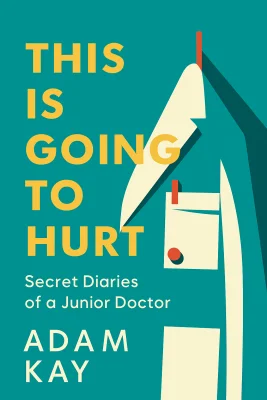
This is Going to Hurt Plot Summary
Introduction
Adam Kay stands among the most influential voices to emerge from the medical profession in recent times, transforming his traumatic experiences as a junior doctor in the British National Health Service into searing comedy and poignant social commentary. His journey from obstetrics and gynecology to comedy writing represents a fascinating study of how professional burnout can lead to unexpected creative rebirth. Kay's trademark combination of brutal honesty, dark humor, and heartfelt compassion has enabled him to shed light on the often invisible struggles of healthcare professionals while entertaining millions. What makes Kay's story particularly compelling is the tension between his obvious talent for medicine and his ultimate decision to leave the profession. Through his experiences, we gain unprecedented insight into three critical dimensions of modern healthcare: the psychological toll exacted on those who practice it, the systemic failures that endanger both patients and practitioners, and the gallows humor that serves as an essential coping mechanism for those on the front lines. His transition from delivering babies to delivering punchlines illuminates not just a personal journey of reinvention, but also offers a window into the hidden realities of an institution that affects every single person in Britain.
Chapter 1: The Reluctant Doctor: Medical School and Early Career
Adam Kay never made a conscious decision to become a doctor. Rather, medicine seemed the default path for someone raised in a Jewish family, attending a high-achieving school, and with a father who was a physician. This absence of active choice would later prove significant, as Kay found himself committed to a career path selected essentially when he was sixteen years old - an age where he notes most people aren't even legally allowed to text photos of their genitals, let alone make life-defining professional decisions. Medical school at Imperial College London presented Kay with the mammoth task of learning every aspect of human anatomy, physiology, and pathology. While he excelled academically, the transition from theory to practice delivered a shock. His diary entries from this period reveal the jarring disconnect between medical school's academic focus and the brutal realities of hospital work. The daytime shifts as a house officer (the British equivalent of an intern) proved manageable if monotonous - essentially functioning as a "glorified PA" completing endless administrative tasks. However, the night shifts plunged him into what he vividly describes as "an unrelenting nightmare that made Dante look like Disney." The emotional whiplash of early medical practice becomes evident in Kay's accounts. In one entry, he describes watching helplessly as a patient hemorrhaged blood "like a particularly avant-garde episode of Changing Rooms," marking his first witnessed death as "every bit as horrific as it could possibly have been." Yet merely paragraphs later, he records being bleeped awake at 3 a.m. to prescribe a sleeping pill for a patient who was already asleep. This juxtaposition of the profound and the absurd characterizes much of Kay's medical experience. Despite the grueling hours and emotional strain, Kay found the work meaningful. He writes with quiet pride about the first time he definitively saved a life, noting that while his registrar (supervisor) seemed unimpressed, for Kay it was a transformative moment. This satisfaction in making a tangible difference would sustain him through increasingly difficult circumstances, forming the emotional cornerstone that made his eventual departure from medicine all the more agonizing. As Kay progressed through his early medical career, his natural wit emerged as a crucial coping mechanism. His diary entries from this period reveal not just his developing clinical skills but also his increasingly sharp observational humor. Far from being merely flippant, this humor served as psychological armor against the daily traumas of medical practice. One entry about a man who degloving his penis while sliding down a lamp post showcases Kay's ability to document horrific medical scenarios with a touch of dark humor that somehow preserves both clinical accuracy and human empathy.
Chapter 2: Life on the Front Lines: Blood, Sweat and Paperwork
As Kay progressed to Senior House Officer and eventually Registrar, his responsibilities increased exponentially. In obstetrics and gynecology, this meant he was frequently the most senior person on the labor ward, responsible for the lives of dozens of mothers and babies simultaneously. He likens this experience to "living in a constant logic puzzle...the one with the boat, the fox, the chicken and the bag of grain. Except there are a dozen chickens, they're all delivering triplets and the boat's made of sugar." The physical toll of medical practice permeates Kay's accounts. He describes working 97-hour weeks, surviving on caffeine and adrenaline, and experiencing microsleeps while driving home after night shifts. In one particularly telling entry, he wakes up to someone tapping on his car window at a traffic light where he'd fallen asleep. This chronic sleep deprivation wasn't merely uncomfortable—it was dangerous, both to Kay and potentially to his patients. Yet hospital management persistently refused to acknowledge this reality, even forbidding doctors from using empty side rooms to catch brief naps during quiet periods of night shifts. The bureaucracy of the NHS emerges as a particularly frustrating adversary. Kay describes a computer system "upgrade" that actually made everything slower and more difficult, noting it was "like treating skin cancer by putting make-up over the lesion." Another entry details a diary card exercise where management supposedly monitored working hours, yet the clerical staff sent to shadow doctors went home at 10:30 p.m., declaring themselves "exhausted" while the doctors continued working through the night. Despite these challenges, Kay's commitment to patient care remains evident. He recounts staying hours past the end of his shift to support a couple through the delivery of their stillborn baby, lying to both the patient and his partner about why he was still there. "I don't know why I can't just tell the truth," he writes, revealing the emotional complexity beneath his sardonic exterior. This dedication extended beyond his official duties—he describes maintaining contact with patients whose stories had touched him, including a premature baby he visited regularly in the special care unit. Throughout these frontline years, Kay documents the growing distance between himself and non-medical friends. While peers were buying houses, pursuing relationships, and living normal lives, Kay was constantly rescheduling plans, missing important events, and struggling to maintain his relationship with his partner (referred to throughout as "H"). This isolation was compounded by the unique nature of medical experience—the trauma, responsibility, and intimate knowledge of human frailty that can never fully be communicated to those outside the profession.
Chapter 3: Humor as a Coping Mechanism: Finding Light in Darkness
Gallows humor emerges as Kay's primary defense mechanism against the daily horrors and absurdities of medical practice. His diary entries frequently transform potentially traumatic experiences into mordant comedy, like describing a particularly revolting gynecological procedure as one that "would make Lush think twice about releasing a new bath bomb." This dark humor served not merely as entertainment but as psychological self-preservation in an environment where death, bodily fluids, and human suffering were everyday occurrences. The camaraderie fostered through shared humor becomes evident in Kay's accounts of conversations in the doctors' mess (common room). He describes trading stories about patients with bizarre symptoms or complaints, with each anecdote receiving "a polite ripple of laughter, like a local dignitary's speech at a graduation ceremony." This collective release valve allowed doctors to process experiences that would otherwise be overwhelming. However, Kay also shows how this humor could sometimes mask deeper distress, noting after a drinking game with fellow doctors that "all six of us have cried because of work, five of us have cried while at work." Kay's humor frequently targets the absurdities of the healthcare system itself. He writes of a "tradition" at St. Agatha's hospital where the on-call consultant dresses as Santa Claus for Christmas Day rounds—until one consultant explains he abandoned the practice after performing CPR on an elderly patient while dressed as Santa, causing the revived patient to scream in terror. This blend of the festive and the horrific perfectly encapsulates the surreal nature of hospital life that Kay's humor attempts to process. The medical objects-in-orifices stories that pepper Kay's diaries represent perhaps the purest distillation of his approach to medical humor. From the patient with a Fireman Sam bath sponge head used as a makeshift menstrual barrier to the man who attempted to create a birthday surprise by inserting and lighting a candle in his penis, these anecdotes combine shock value with a profound insight into human nature. Kay presents these situations without judgment, finding the humanity in even the most bizarre medical encounters. What distinguishes Kay's humor from mere mockery is its underlying compassion. Even when recounting the most ridiculous patient behaviors, he retains a fundamental respect for their dignity. When a young woman performs her own amateur labiaplasty surgery due to body image issues fueled by pornography, Kay moves seamlessly from clinical detachment to genuine concern about societal pressures. This balance between humor and humanity would later become the hallmark of his writing career, allowing him to communicate difficult truths about healthcare in a way that audiences could emotionally process.
Chapter 4: Breaking Point: When Medicine Becomes Unbearable
Kay's breaking point came during a catastrophic obstetrical emergency that culminated in a stillbirth and near-fatal maternal hemorrhage. The visceral detail with which he recounts this event—the blood loss escalating from one liter to five to twelve, the panic in his consultant's eyes, the desperate measures to stem the bleeding—reveals its profound impact. Most telling is what follows in his diary: silence. This entry marks the end of his medical journaling, a testament to trauma too deep for even his characteristic gallows humor to process. Though Kay wasn't found medically negligent—his actions aligned with standard practice—he internalized a crushing sense of personal failure. "I knew that if I'd been better—super-diligent, super-observant, super-something—I might have gone into that room an hour earlier," he writes. This "might have" became an inescapable thought pattern that fundamentally altered his approach to medicine. He began performing unnecessary cesarean sections at the slightest hint of trouble, prioritizing absolute safety over balanced clinical judgment or training opportunities for junior colleagues. The lack of institutional support following this trauma exemplifies the systemic failure Kay repeatedly identifies. "I should have had counseling—in fact, my hospital should have arranged it," he notes, but describes instead a "mutual code of silence that keeps help from those who need it most." This absence of formal psychological support reflects a broader cultural problem in medicine: the expectation that doctors simply absorb trauma and continue functioning without acknowledging its impact. Kay's attempts to find a sustainable path forward reveal the inflexibility of medical career structures. When he asked to work part-time, he was told this wasn't possible "unless you're pregnant." Exploring a transition to general practice would have required starting over at a more junior level. Faced with these obstacles and his own unresolved trauma, Kay ultimately made the difficult decision to leave medicine entirely, a choice that devastated his parents and confused many colleagues who weren't privy to his full experience. The emotional aftermath of leaving medicine surfaces in Kay's description of his subsequent silence about his reasons for quitting. "At first I couldn't talk about it, then it became something I just didn't talk about," he writes. This silence extended even to close friends, who would only learn the full story through his published diaries. The shame associated with "failure" in a profession where perfection is the implicit standard prevented Kay from processing his experience through the normal channels of social support, further isolating him during an already difficult transition.
Chapter 5: The Transition: Trading Stethoscope for Pen
When Adam Kay hung up his stethoscope, he didn't immediately pick up a pen. There was a period of uncertainty, half-hearted locum shifts in private hospitals, and what he describes as "some lazy research" before he fully disconnected from medicine. This gradual withdrawal reflects the difficulty of shedding a professional identity that had defined him since his teenage years. For someone who had introduced himself as "Dr. Kay" thousands of times, becoming simply "Adam" represented a profound identity shift. The catalyst for Kay's transition to writing came when he discovered his old medical training portfolio while clearing out paperwork after the General Medical Council officially removed his name from the medical register. Reading through his own reflective practice entries, he was struck by the extreme working conditions he had simply accepted as normal during his medical career. Against the backdrop of politicians attacking junior doctors during the 2016 NHS contract dispute, Kay felt compelled to share these diaries to counter the government's narrative that doctors were being unreasonable or greedy. Kay's background had uniquely prepared him for a career in comedy writing. His ability to find humor in the darkest situations, honed through years of medical practice, transferred perfectly to comedy. His observational skills, developed through thousands of patient encounters, allowed him to notice the absurdities and incongruities that fuel great comedy. Perhaps most importantly, his experience communicating complex medical information to patients had taught him how to explain difficult concepts in accessible, engaging ways. The transition wasn't entirely seamless, however. Kay describes the guilt he felt about abandoning a profession that had invested so much in his training. "I feel guilty the country spent so much money training me up for me just to walk away," he admits. This sentiment reflects the unique burden placed on healthcare professionals, who are often made to feel that leaving medicine represents a moral failure rather than a personal choice. Kay had to overcome this internalized expectation to pursue his new career path. Interestingly, Kay's writing maintained many of the characteristics that had made him an effective doctor. His unflinching honesty about bodily functions and medical realities carries through to his comedy. His ability to balance humor with genuine compassion allows him to tackle difficult subjects while maintaining respect for those involved. Even his tendency toward self-deprecation, evident throughout his medical diaries, became an asset in his comedic writing, creating an immediate connection with audiences who appreciate his vulnerability. Unlike many career transitions that involve abandoning old skills, Kay's shift to comedy writing allowed him to repurpose his medical knowledge and experiences. The stories that had once served as coping mechanisms among colleagues in hospital break rooms now found a broader audience, educating the public about healthcare realities while entertaining them. What had been a private record of professional survival became a powerful public testimony about the state of modern medicine.
Chapter 6: Speaking Truth to Power: Exposing Healthcare Realities
When Kay transformed his private diaries into a public account of life as a junior doctor, he did far more than share amusing anecdotes about objects retrieved from bodily orifices. He systematically exposed the structural issues plaguing the National Health Service and their impact on those working within it. His combination of raw honesty, medical authority, and accessible humor made him uniquely positioned to communicate these realities to a general audience that might otherwise tune out more traditional policy discussions about healthcare. The inhuman working hours Kay documents throughout his diaries serve as perhaps his most damning indictment of the system. He records working 97 hours in a single week, missing Christmases, birthdays, and his own relationship milestones due to last-minute rota changes. One entry describes how all junior doctors at his hospital were asked to sign documents opting out of the European Working Time Directive because their contracts violated it so comprehensively. These accounts directly challenged politicians' claims that doctors were being unreasonable in their contract negotiations. Financial exploitation runs as another consistent theme through Kay's writings. He details earning £6.60 per hour as a Senior House Officer—slightly more than McDonald's staff but significantly less than their shift supervisors. He notes the absurdity of paying £1,300 (two-thirds of his monthly salary) for a professional exam that merely qualified him to enter a second, more expensive exam. Unlike other professions where passing qualifications leads to immediate promotion and pay increases, Kay sardonically observes that all his achievement earned him was "£1,300 on a pencil." Perhaps most powerfully, Kay exposes the psychological toll of working in a system that treats healthcare providers as expendable resources rather than human beings. He writes of a house officer who attempted suicide, noting that "nobody said anything—we all just heard from friends, like we were in the school playground." The absence of institutional response to such a crisis exemplifies what Kay identifies as "hospitals' wilful ineptitude when it comes to caring for their own staff." This psychological neglect extends to the lack of support after traumatic clinical events, contributing to burnout and, in Kay's case, eventual departure from the profession. Kay's decision to publish these accounts, particularly his open letter to the Secretary of State for Health, represents an act of political courage. By directly addressing the government official responsible for healthcare policy, Kay elevates his personal narrative into a broader political statement about the treatment of NHS staff. His suggestion that politicians should be required to work alongside junior doctors—to "palliate a cancer patient, watch a trauma victim have their leg amputated, deliver a dead baby"—powerfully challenges the detachment with which policy decisions affecting healthcare are often made.
Chapter 7: Legacy: Impact on Medical Discourse and NHS Advocacy
Adam Kay's transformation from anonymous doctor to influential healthcare commentator represents one of the most significant shifts in public discourse about the NHS in recent years. By translating the closed world of medical gallows humor into accessible public testimony, Kay breached the traditional barrier between healthcare professionals and the general public, creating unprecedented transparency about the realities of modern medicine. His impact has been felt across multiple dimensions—from policy debates to medical education to the broader cultural understanding of healthcare professionals. The timing of Kay's emergence as a public voice coincided with a critical moment in NHS history. His accounts provided powerful ammunition against government narratives about "greedy doctors" during the junior doctor contract disputes of 2016. By documenting the extraordinary sacrifices made by medical staff—missed family events, relationship breakdowns, physical and mental exhaustion—Kay humanized healthcare workers at a time when they were being politically demonized. His writing gave ordinary citizens insight into the lives behind the white coats and stethoscopes, generating public sympathy during a crucial policy battle. Beyond policy impacts, Kay's work has influenced a new generation of healthcare professionals. Medical schools now increasingly acknowledge the psychological challenges of the profession, partly in response to voices like Kay's that have highlighted medicine's mental health crisis. His honest portrayal of burnout and trauma has helped normalize conversations about physician mental health, potentially saving careers and lives by reducing the stigma around seeking help. One medical educator noted that Kay's diaries now serve as "unofficial required reading" for medical students, providing psychological preparation their formal curriculum often lacks. Kay's most lasting legacy may be his reconfiguration of how healthcare professionals communicate their experiences. Prior to his success, medical narratives typically fell into two categories: dry academic accounts or sentimental tales of miraculous cures. Kay pioneered a third approach: unvarnished truth-telling that combines technical accuracy with emotional authenticity and unexpected humor. This has inspired numerous healthcare workers to share their own stories through books, blogs, and social media, creating a richer public understanding of medicine's complexities. Despite leaving medicine, Kay has maintained his advocacy for the NHS, using his platform to highlight funding issues, staffing crises, and policy failures. During the COVID-19 pandemic, his voice proved particularly valuable in communicating the challenges faced by frontline staff. In a striking reversal, the doctor who once felt he had failed the profession by leaving now serves as one of its most effective advocates, translating complex healthcare issues into language the public can understand and care about. Throughout his post-medical career, Kay has maintained that his storytelling stems from the same motivation that drove him as a doctor: the desire to make a positive difference in people's lives. Whether through treating patients or educating the public about healthcare realities, his fundamental aim remains unchanged. This continuity suggests that Kay never truly left medicine—he merely found a different, potentially more impactful way to practice it.
Summary
Adam Kay's journey from exhausted junior doctor to influential writer and comedian illustrates how individual trauma can transform into powerful social commentary. Through his raw, unflinching accounts of medical life, Kay has achieved something remarkable: he has made the invisible labor of healthcare visible to the general public. His core message—that the NHS is not a collection of buildings and equipment but the human beings who work within it—has resonated with millions of readers and reshaped public conversations about healthcare. The ultimate value of Kay's contribution lies in his ability to bridge worlds—between medical professionals and the general public, between tragedy and comedy, between personal narrative and political advocacy. By making us laugh at the absurdities of hospital life while simultaneously confronting us with its heartbreaks, he creates an emotional connection that purely factual accounts of healthcare challenges cannot achieve. For anyone seeking to understand the human cost of medical care, or for those considering a career in healthcare, Kay's perspective offers essential insight: that medicine is simultaneously the most rewarding and most punishing of professions, and that its practitioners deserve our utmost respect and support. His story serves as both a warning about the dangers of an unsupported healthcare system and a celebration of the extraordinary individuals who continue to work within it despite everything.
Best Quote
“So I told them the truth: the hours are terrible, the pay is terrible, the conditions are terrible; you’re underappreciated, unsupported, disrespected and frequently physically endangered. But there’s no better job in the world.” ― Adam Kay, This is Going to Hurt: Secret Diaries of a Junior Doctor
Review Summary
Strengths: The book effectively balances humor and emotion, making the reader both laugh and cry. It provides a candid, engaging portrayal of life as a junior doctor in the NHS. The narrative is described as funny, moving, and insightful, with a good sense of humor maintained throughout.\nWeaknesses: The book contains many British cultural references, which may not be familiar to non-British readers.\nOverall Sentiment: Enthusiastic\nKey Takeaway: The book is a compelling and humorous account of the challenging yet rewarding life of a junior doctor in the NHS, highlighting systemic issues while expressing a deep appreciation for universal healthcare.
About Author
Adam Kay
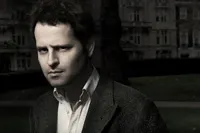
Kay probes the interplay between humor and the harsh realities of healthcare, transforming personal experience into profound literary themes. His transition from the medical field to authorship has allowed him to blend wit with candid narratives, as seen in his standout book, "This Is Going to Hurt." This memoir, which began as a response to political remarks about junior doctors, offers an unfiltered look into the life of a medical professional within the NHS. Therefore, Kay's writing resonates widely, bringing to light the vulnerabilities and resilience inherent in medical practice.\n\nWhile humor is a hallmark of Kay's style, it is paired with emotional depth that speaks to broader issues of mental health and personal sacrifice. His work extends beyond memoir, contributing to children's literature with titles like "Kay's Anatomy," which became a record-setting non-fiction book for kids. Meanwhile, his involvement in projects such as the "This Is Going to Hurt" television adaptation, which earned him a BAFTA Award for Best Drama Writer, demonstrates his multifaceted approach to storytelling. Readers benefit from Kay's ability to navigate complex topics with both clarity and empathy, making his narratives impactful and enlightening for a broad audience.\n\nThrough his varied works, Kay not only entertains but also educates, offering readers insights into the often unseen challenges of healthcare. His literary and performance efforts underscore his commitment to raising awareness about the human side of medicine. By sharing his journey from doctor to author, Kay's bio encapsulates a unique blend of storytelling that highlights the intersection of personal experience and universal themes, solidifying his role as a pivotal voice in contemporary literature.
Read moreDownload PDF & EPUB
To save this Black List summary for later, download the free PDF and EPUB. You can print it out, or read offline at your convenience.
This is Going to Hurt
by Adam Kay
