
Tortilla Flat
Categories
Fiction, Classics, Historical Fiction, Literature, American, Book Club, The United States Of America, 20th Century, Novels, Literary Fiction
Content Type
Book
Binding
Hardcover
Year
2001
Publisher
Pearson Schools
Language
English
ASIN
0582461502
ISBN
0582461502
ISBN13
9780582461505
File Download
PDF | EPUB
Tortilla Flat Plot Summary
Introduction
In Monterey, California, where the forest meets the town, there lived a man named Danny. When he returned from the war, he learned he had inherited two small houses on Tortilla Flat from his grandfather. The inheritance transformed Danny from a carefree vagrant into a man of property, and the weight of that responsibility settled heavily upon him. But Danny was not meant to bear this burden alone. Soon his house filled with friends – Pilon, Pablo, Jesus Maria, Big Joe Portagee, and the simple-minded Pirate with his pack of loyal dogs. Together they formed a brotherhood unlike any other in Tortilla Flat. This is the story of Danny and his friends, and of Danny's house – not merely the wooden structure overgrown with an ancient rose of Castile, but the living, breathing unit they created together. Like knights around Arthur's Round Table, they adventured through days of wine and friendship, of schemes and petty crimes, of kindness and treachery. They shared what little they had, protected one another, and fought fiercely when the situation called for it. But all brotherhoods must eventually face their end, as surely as the burning of a sacred talisman signals the dissolution of an ancient order. This is how it happened.
Chapter 1: The Inheritance: Danny Returns to Tortilla Flat
Danny returned from the war to discover he was a man of property. His grandfather, the viejo, had died while Danny was breaking mules in Texas, leaving him two small houses on Tortilla Flat. At first, the weight of ownership troubled him. To ease this new burden, he bought a gallon of wine and drank most of it himself. His worst nature emerged – he shouted, broke chairs in a poolroom, and picked fights with Italian fishermen down at the wharf. "Sicilian bastards," he called them, though they only grinned and invited him to come around later for new wine. His disorderly conduct earned him thirty days in the Monterey jail. There he passed the time drawing caricatures of local officials using squashed bedbugs on the cell wall. One night when the jail was empty, Tito Ralph, the jailer, shared wine with Danny. Later, Tito went for more wine, and Danny simply walked out with him. Instead of returning to jail, Danny slept among the pines. Upon his release, Danny sought his old friend Pilon. They found each other in the dusk, and Pilon clutched something precious beneath his coat. "Danny, my little friend! Where goest thou so fast?" Danny called out. Pilon tried to hurry away, but Danny caught up. "I have here two great steaks from God's own pig," Danny claimed, though he carried only ham slices and stale bread. "And I," Pilon admitted reluctantly, "have brandy." Together they built a fire in the woods and shared their humble feast. As the fog descended and the wind sighed through the pines, a loneliness fell upon them. Danny thought of friends lost in the war, while Pilon reminded him of Pablo, who sat in jail for stealing a goose. "Here we sit," Danny began mournfully, "homeless. We gave our lives for our country, and now we have no roof over our heads." "We never did have," Pilon added. Then Danny remembered his inheritance. "Pilon! My little fat duck of a baby friend. I had forgotten! I am an heir! I own two houses." The next day, they inspected the better of Danny's two houses – a low structure streaked with old whitewash, its porch adorned with a great pink rose of Castile. Inside were three rooms with sparse furnishings: a red rose calendar from 1906, strings of dusty red peppers, a stove, and rocking chairs. Pilon was impressed. "Three rooms and a bed and a stove. We will be happy here, Danny." But Danny's face had already changed, the worry of property settling on him. "Pilon," he said sadly, "I wish you owned it and I could come to live with you." That evening, as they sat rocking by the fire, Danny had an inspiration. "Pilon, why don't you rent the other house?" "Fifteen dollars a month," Danny insisted when Pilon tried to bargain. Though Pilon had never possessed fifteen dollars in his life, he agreed, thinking something might happen before the rent came due. And so Danny became a landlord, and Pilon his tenant. Neither expected any rent would ever be paid, but the arrangement satisfied them both. The weight of ownership was now divided between them, lightening Danny's burden and elevating Pilon's status in Tortilla Flat.
Chapter 2: The Gathering of Paisanos: A Fellowship Forms
Pilon moved into the smaller house, feeling his social status rise. He was no longer a vagrant but a renter. The arrangement seemed perfect – Danny never asked for rent, and Pilon never offered it. When either came by a jug of wine or a piece of meat, the other was sure to appear, and they shared their bounty freely. But Pilon's conscience troubled him about the unpaid rent. After cleaning squids for Chin Kee and earning two dollars, he started toward Danny's house to pay on account. However, on the way he bought two gallons of wine. "It is better so," he reasoned. "If I give him hard money, it does not express how warmly I feel toward my friend. But a present, now..." As Pilon walked with his paper-bagged treasures, the dusk transformed him. The brutal, scheming Pilon momentarily vanished, replaced by a mystic whose soul rose into the sunset's afterglow. "Our Father is in the evening," he thought. "These birds are flying across the forehead of the Father. Dear birds, dear sea gulls, how I love you all." But a man saved is a man in danger, for temptation finds him easily. As Pilon contemplated heaven, he noticed Pablo Sanchez sitting in a ditch beside the road. "Ai, amigo," Pablo called. "What great burden is it thou carriest?" Pilon stopped. "I thought you were in jail," he said severely. "I was not well received," Pablo explained cheerfully. "The judge said the sentence did me no good, and the police said I ate more than the allowance for three men. So I am on parole." Instantly, Pilon invited Pablo to share the wine at the rented house. They drank deeply, and as the first jug neared its shoulder, Pilon made his proposition. "Pablo, how would you like to rent part of my house? There would never be the cold ground for you any more. Never the hard sand under the wharf with crabs getting in your shoes." "Sure," said Pablo. "That's swell." "Look, you will pay only fifteen dollars a month!" Pablo agreed without hesitation. Pilon felt relief – now if Danny should ever ask for money, Pilon could say, "I will pay when Pablo pays." Life passed smoothly for the two friends. Each morning they rose when the sun cleared the pine trees, wandered into the gulch behind the house, and returned to sit on the front porch, wiggling their toes when flies landed on them. "If all the dew were diamonds," Pablo mused, "we would be very rich. We would be drunk all our lives." But Pilon, ever the realist, countered: "Everybody would have too many diamonds. There would be no price for them, but wine always costs money." Their peaceful existence continued until one evening, returning from the beach with the red-bearded Jesus Maria Corcoran and a jug of wine, they found him sick with a cough. Pilon, with typical cunning, convinced Jesus Maria that sleeping outdoors had caused his malady. "It is the night air," Pilon said sagely. "Your lungs will not stand it." When Jesus Maria fell asleep, Pilon and Pablo woke him with more wine and painted a picture of comfort: warm beds, protected from the deadly mist, no more shivering in the dawn. At last Pilon delivered his masterstroke: "And you will pay only three dollars on account now." Jesus Maria protested that he had promised to buy silk undergarments for a girl named Arabella Gross. But Pilon was relentless. "Do you think God is interested in Arabella's breasts? No! God floated that rowboat to you so you would not die from sleeping on the ground." Under such concentrated fire, Jesus Maria surrendered two dollars. Thus the fellowship grew to three, with Jesus Maria paying Pablo and Pilon, who in turn should have paid Danny, though the money never completed its intended journey.
Chapter 3: Tests of Loyalty: The Pirate's Treasure and the Bonds of Trust
The Pirate was a huge, broad man with a tremendous black bushy beard who wandered Monterey selling kindling wood from his wheelbarrow, always accompanied by his five devoted dogs. Each day he earned precisely twenty-five cents, and each night he hid that quarter with hundreds of others. Somewhere, Pilon reasoned, the Pirate must have a great hoard of money. When Danny and his friends found themselves desperately needing food to fulfill Jesus Maria's rash promise to keep Danny fed, Pilon's thoughts turned to the Pirate's treasure. He approached the simple man one evening, carrying a sugar cookie as a gift. "Thou art a worry to thy friends," Pilon told him softly. "They do not come to see thee because thou art proud. They think it might hurt thy pride to have them see thee living in this chicken house, clothed in rags, eating garbage with thy dogs." The Pirate was astonished. "I have all these friends? And I did not know it. And I am a worry to those friends?" Tears came to his eyes, but when Pilon suggested he bring out his hidden money to buy decent clothes and food, suspicion clouded the Pirate's face. "I have no money anywhere," he lied. Realizing stealth would be necessary, Pilon enlisted Danny, Pablo, and Jesus Maria in his scheme. They invited the Pirate to live with them, pretending concern for his health while secretly hoping to discover his treasure. The Pirate accepted, bringing his five dogs along. Each morning the Pirate visited restaurant back doors in Monterey, collecting scraps which he shared with his dogs and now with his friends. Danny's household began to eat well – fresh fish, half pies, untouched loaves of bread, meat that required only a little soda to take the green out. In return, the friends treated the Pirate with sweet courtesy while constantly watching him, hoping he would lead them to his hoard. But the Pirate was cautious. When Pilon followed him into the forest one night, the Pirate and his dogs vanished into the darkness. Changing tactics, the friends gathered around the Pirate one evening and told frightening stories about buried treasures being stolen. "I had an uncle, a regular miser, and he hid his gold in the woods," Pilon began. "And one time he went to look at it, and it was gone. Someone had found it and stolen it. He was an old man, then, and all his money was gone, and he hanged himself." The Pirate's face showed apprehension, but then, remarkably, relief. The next night, after Jesus Maria had shared wine with everyone, the Pirate slipped out of the house. The friends pursued him through the dark woods but lost him again. At dawn they returned to the house exhausted and defeated. To their astonishment, they found the Pirate waiting for them, a large canvas bag on the table. "I lied to thee, Pilon," the Pirate said. "I told thee I had no money, for I was afraid. I did not know about my friends then. You have told how hidden money is so often stolen, and I am afraid again. My money will be safe with my friends." Before Pilon could suggest the Pirate spend some of his fortune, the simple man revealed his purpose: "I have nearly a thousand two-bitses. When I have a thousand I will buy a gold candlestick for San Francisco de Assisi. Once I had a nice dog, and that dog was sick; and I promised a gold candlestick of one thousand days if that dog would get well." Danny and Pablo took the heavy bag of silver quarters and put it under Danny's pillow. The Pirate stood before them with tears of happiness in his eyes, having proved his love for his friends. The friends, meanwhile, felt a curious mixture of defeat and pride. They could not steal the money dedicated to a saint, but they had become guardians of a sacred trust. As the days passed, that bag became the symbolic center of their friendship, the point of trust around which their brotherhood revolved. They were proud of the money and proud that they had never tampered with it. The treasure had ceased to be currency in their minds – it had become a talisman of their fraternity.
Chapter 4: The Sweet Burden of Community: Helping Friends and Neighbors
One day, Jesus Maria discovered a young Mexican corporal sitting in the gutter on Alvarado Street, holding a sickly baby wrapped in a gray blanket. A policeman was trying to move him along, but the boy spoke only Spanish. Jesus Maria intervened, claiming the corporal as his friend. "I will take you to the house where I live," Jesus Maria told the boy. "There you will have something to eat. What baby is this?" "It is my baby," said the corporal. "I am a caporál, and he is my baby. He is sick now; but when he grows up, he is going to be a generál." At Danny's house, the friends welcomed the young soldier, creating a bed for the baby from an apple box lined with a sheepskin coat. The corporal told his story: he had been a soldier in Chihuahua, had married a beautiful girl, and they had the baby. But a capitán with epaulets and a silver sword had stolen his wife away. When the corporal complained, his life was threatened, so he fled with the infant. "In Fresno I met this wise man, and he told me I could make Manuel be what I wished," the corporal explained. "I tell that baby twenty times every day, 'You will be a generál. You will wear epaulets and carry a golden sword.'" While they listened, the baby began convulsing. Despite their efforts, the child died before their eyes. The corporal was stunned with grief. "Now he is dead. Now he will never be a generál with that sash and that sword." Pilon, assuming the father had planned for his son to someday avenge the family honor, offered condolences for this lost revenge. But the corporal was bewildered. "What is this? I have nothing to do with this capitán." "Then what was this plan to make the baby a generál?" Pilon demanded. The corporal explained simply: "It is the duty of a father to do well by his child. I wanted Manuel to have more good things than I had." After a thoughtful pause, he added, "Consider, if that capitán, with the little epaulets and the little sash, could take my wife, imagine what a generál with a big sash and a gold sword could take!" The friends contemplated this practical wisdom in silence, impressed by the corporal's straightforward approach to fatherhood. Later, when Señora Teresina Cortez and her numerous children faced starvation after the bean crop failed, the friends again felt the call of community. Jesus Maria discovered that Teresina's cupboard was empty, her children crying with hunger. "This is her baby, the baby of her wife," Jesus Maria reported to his friends, his heart burning with the desire to help. The paisanos launched into action. "The children shall not starve," they cried. "It shall be our trust!" Fish they collected, vegetable patches they raided. The Pirate raised his kindling prices and visited more restaurants. Big Joe repeatedly stole Mrs. Palochico's goat, returning it each time after milking. Food accumulated in Teresina's house – boxes of lettuce, spoiled mackerel, whole patches of pumpkins. After a week, however, Teresina had to admit an uncomfortable truth: her children were getting sick from all this unaccustomed bounty. "Green things and fruit are not good for children," she explained carefully. "Beans," she said, "there you have something to trust, something that will not go right through you." Understanding immediately, the friends executed their most daring raid yet. That night, four shadows broke into the Western Warehouse Company and emerged bearing four one-hundred-pound sacks of pink beans. At three in the morning, they delivered their treasure to Teresina's back door. "A miracle!" Teresina cried, waking the vieja, her ancient mother. At Danny's house, the four friends slept peacefully into the afternoon, satisfied with their night's work. What pillow can one have like a good conscience?
Chapter 5: Danny's Despair: The Weight of Property and Responsibility
Time passed easily at Danny's house. The friends rose when the sun struck the window, trudged down to the gulch to build a fire and make tea, then settled on the front porch for the day's gossip and philosophizing. The pine trees whispered above them, the roses of Castile perfumed the air, and brown butterflies waved their wings on the flowers. But Danny began to change. He looked at his friends and saw how with them every day was the same. When he got out of bed at night and stepped over the sleeping paisanos, he grew angry at their presence. Sitting on the porch in the sunlight, he dreamed of his days of freedom – sleeping in the woods in summer and in warm hay during winter, unencumbered by property or responsibility. "Oh, the fights! The flights through the woods with an outraged chicken under his arm! The hiding places in the gulch when an outraged husband proclaimed feud!" Since inheriting the houses, Danny rarely fought or engaged in adventure. Always the weight of the house was upon him, always the responsibility to his friends. For a month he brooded, staring at the ground, looking with sullen eyes at his ubiquitous friends, kicking the friendly dogs from his path. Then one night, he ran away. He went into the pine woods and disappeared. At first, his friends assumed he was pursuing some romantic adventure. "Love is nice," said Pilon. "We cannot blame any man for following a girl." But when a week passed with no sign of Danny, they began to worry. They searched the woods, calling his name, looking in places they themselves might have chosen to sleep. Finding nothing, they returned to the house only to discover Danny's blankets gone, all the food stolen, and two pots missing. "Danny did it," Pablo said excitedly. "Truly he is mad. He is running through the woods like an animal." Reports filtered in from across Monterey: Danny knocking down an old man for a bottle of grappa; Danny singing wildly, his eye swollen shut; Danny fighting on the wharf until Benito broke an oar on his head; Danny escaping from jail before morning. Meanwhile, Danny continued raiding his own house, stealing a sack of potatoes, the airtight stove, and even Pilon's shoes. "Now he has gone too far," Pilon declared. "Pranks he has played, and we were patient. But now he turns to crime. This is not the Danny we know. This is another man, a bad man." The house was in a state of siege, with Danny raging around it, having what appeared to be a wonderful time. The friends were determined to capture and restrain him, to "wipe the darkness from his brain." Then came the final blow. Torrelli, the bootlegger who had often been victimized by Danny and his friends, arrived with devastating news and a piece of paper. "I must tell you that you cannot live here any more," he announced with cruel satisfaction. "Danny does not own this house any more. The house belongs to me. Danny came to me and sold me his house for twenty-five dollars last night." The friends were stunned but acted quickly. As Torrelli gloated over his bill of sale, they engineered a distraction, seized the paper, and tossed it into the stove. "Paper?" Pilon asked innocently when Torrelli screamed accusations. "What is this paper you speak of so passionately?" After ejecting the apoplectic Torrelli, the friends sat on the porch in the sunshine, worried about Danny's deterioration. Soon afterward, Danny himself appeared with Tito Ralph, both carrying jugs of wine. Danny looked tired as he set his jugs on the porch. When Pilon mentioned Torrelli's visit and the burned paper, Danny asked urgently, "Where is that paper?" "We knew it was a lie, so we burned that paper," Pilon assured him. "You didn't sign it, did you?" "No," said Danny, and drained his jar.
Chapter 6: The Legendary Party: Danny's Final Dance with Destiny
When Danny returned to his house after his wild rampage, he was not conscience-stricken but profoundly tired. The rough fingers of violent experience had harped upon his soul. He began to live listlessly, arising from bed only to sit on the porch, from the porch only to eat, from the table only to return to bed. The talk of his friends flowed around him, but he showed no interest. "He is changed," said Pilon. "He is old." In vain his friends tried to rouse him from his apathy. They told their funniest stories, reported the most scandalous details of life on Tortilla Flat, but Danny remained distant, his eyes lacking their former fire. Pilon, observing that wine temporarily brightened Danny's eyes, conceived a plan. He gathered all the friends in the gulch behind the house and proposed something unprecedented: "What Danny needs is lots of wine, and maybe a party. Tomorrow we will all go down and cut squid, and tomorrow night we will give a party for Danny." The suggestion was met with astonishment. For the paisanos to willingly submit to a day of honest labor was unheard of. Yet so great was their love for Danny that they agreed without hesitation. The next morning when Danny awoke, the house was deserted. News of this extraordinary development spread quickly through Tortilla Flat. "All of Danny's friends are down cutting squids," people whispered in amazement. By noon, the true purpose had leaked out: "They are going to give a big party for Danny." The entire community was electrified. Mrs. Morales dusted her phonograph and selected her loudest records. Mrs. Soto attacked her chicken yard with a cleaver. Mrs. Palochico began cooking dulces. Girls bought colored crepe paper from Woolworth's. Guitars and accordions cried experimentally across the Flat. Meanwhile, Danny wandered lonely as smoke through Monterey, visiting the post office, the station, the pool rooms, feeling an ache in his heart "like the farewell to a dear woman." He ended up on the wharf, leaning over the rail, staring into the deep water. When evening came and Danny had not returned, his friends grew worried. Pilon and Pablo searched the town and finally found him on the dark pier. As they approached, Pablo later claimed he saw "a big black bird, as big as a man" hovering in the air over Danny's head. When they reached him and turned him around, Danny's eyes were vacant. "What is wrong?" they asked. "I don't know," Danny said. "I just feel this way. I don't want to do anything." "We are having a party for you at your house," Pilon told him. "Everybody in Tortilla Flat is there, and music and wine and chicken! There are maybe twenty or thirty gallons of wine." Danny breathed deeply, as if whispering to the gods a promise or a defiance. His eyes suddenly grew feverish. "You're goddam right I want to go. Hurry up. I am thirsty." He led them running up the hill. Long before they arrived they could hear the music through the pines and the shrill notes of excited voices. Danny lifted his head and howled like a coyote as they burst into the transformed house. That was a party for you! No one ever tried to give a better one. Never had there been so many fights – not fights between two men, but roaring battles that raged through whole clots of men, each one for himself. The laughter of women rang thin and high and brittle as spun glass. They danced so hard that the floor gave way in one corner. The accordions played so loudly that afterward they were windbroken like foundered horses. And Danny – just as the party defied comparison, so did Danny as its central figure. He attacked the whole party with a table leg. He performed superhuman feats of drinking and romance. Where Danny went, a magnificent madness followed. As the night wore on, those with less stamina began to wilt and creep away. Those who remained fought more viciously, danced harder, and shouted louder to compensate for their dwindling numbers. Then, according to many witnesses, Danny began to change form. He grew huge and terrible. His eyes flared like the headlights of an automobile. Holding the pine table leg in his right hand, he challenged the world. "Who will fight?" he cried. "Is there no one left in the world who is not afraid?" The people were afraid; the table leg had become a terror to them all. Danny swung it back and forth as the music died and a chill silence fell over the room. "No one?" Danny cried again. "Am I alone in the world? Will no one fight with me?" When no one answered, Danny drew himself up until his head nearly touched the ceiling. "Then I will go out to The One who can fight. I will find The Enemy who is worthy of Danny!" He stalked to the door, staggering slightly. The terrified people made a broad path for him. Outside the house they heard his roaring challenge. They heard the table leg whistle through the air. They heard his footsteps charging down the yard. And then, behind the house, in the gulch, they heard an answering challenge so fearful and so chill that their spines wilted like nasturtium stems under frost. They heard Danny charge to the fray, his last shrill cry of defiance, and then a thump. And then silence. After a breathless moment, Pilon rushed out the door. "Something is wrong," he said. The people followed him to the edge of the gulch, where a sharp zigzag path led down to the bottom. There they found Danny, broken and twisted. He had fallen forty feet. Doctors were summoned. Father Ramon came panting up the hill. Danny was carried to his bed, candles placed around him. The doctors examined him briefly before Father Ramon entered the bedroom, closing the door behind him. In the big room, crowded with the people of Tortilla Flat, there was tense silence. When Father Ramon emerged, his face unchanged, the women broke into a high and terrible wail. The men shifted their feet and went outside into the dawning.
Chapter 7: After Danny: The Dissolution of Brotherhood
Danny was dead, two days dead, and already he had ceased to be Danny. His body had been embalmed at government expense, and a military funeral was planned – a caisson with a new flag folded on top, an escort from the 11th Cavalry, a band with muffled drums, and a firing squad. The excitement on Tortilla Flat was palpable. Women cleaned and pressed their finest clothes. Children begged flowers from gardens in Monterey by day and stole more by night. Everyone prepared for the grand spectacle except Danny's closest friends, who faced an appalling tragedy – they had no decent clothes to wear to the funeral. "Where is the trouser knee unburst? Where the shirt unripped?" Their party clothes were in tatters, and there was no one in Tortilla Flat who was not planning to wear their good clothes to the funeral. Money for six suits was impossible to obtain. The friends sat in despair, chin in hand, crushed by their ill fortune. Finally, Pilon proposed a compromise: "We can go on the sidewalk, while the band and the people march in the street. We can lie in the grass around the cemetery fence and see everything." But they knew it was only half a solution. Being seen at the funeral was the more important half. The morning of the funeral dawned bright and clear. The sun rose as though for a picnic day. Danny's friends awakened sadly and gathered on the porch to honor their departed friend. "Danny was glad on mornings like this," said Pilon. Loyally they remembered and proclaimed Danny's virtues, forgetting his faults. They told stories of his goodness, his courage, his strength. When it was time for the service, they stood across from the church in their ragged clothes, watching enviously as well-dressed mourners entered. They heard the music and the drone of the service. They saw the cavalry arrive with muffled drums, the firing squad, and the caisson with its three pairs of horses. The procession moved with military precision – the flag-draped casket on the caisson, the band playing its sodden march, the people walking majestically behind. Everyone who mattered in Tortilla Flat was there, everyone except Danny's closest friends. Unable to bear the shame, Jesus Maria broke down first. He sobbed and put down his head and bolted away. The other five friends followed, with the Pirate's dogs bounding behind them. Before the procession reached the cemetery, Danny's friends were lying in the tall grass along its edge. They watched the short military service, heard the rifles crack and the bugle sing taps. At the sound, the Pirate's dogs laid back their heads and howled. When it was over, the friends walked quickly away before the people could see them. They passed Torrelli's deserted house, where Pilon entered through a window and emerged with two gallons of wine. Back at Danny's empty house, they filled fruit jars and drank to their friend's memory. "Danny liked wine," they said. "Danny was happy when he had a little wine." As evening fell, they opened the second gallon. Pablo tried a few notes of "Tuli Pan," and the others joined in. Pilon puffed at his cigar and flipped the spent match, which landed on an old newspaper against the wall. Each man started to stamp it out; then each paused, struck with the same celestial thought. In silence, they watched the flame flicker, die, and sprout to life again. They saw it bloom on the paper and catch the dry wooden wall. "Thus must it be, O wise friends of Danny. The cord that bound you together is cut. The magnet that drew you has lost its virtue. Some stranger will own the house, some joyless relative of Danny's. Better that this symbol of holy friendship, this good house of parties and fights, of love and comfort, should die as Danny died, in one last glorious, hopeless assault on the gods." They sat and smiled as the flame climbed like a snake to the ceiling and broke through the roof. Only then did they rise from their chairs and walk like dreaming men out of the door. Pilon, ever practical, took what remained of the wine. The sirens screamed from Monterey. The fire trucks roared up the hill. When the Fire Department arrived, the house was one great blunt spear of flame. The hoses wet the trees and brush to keep the fire from spreading, but the house itself was beyond saving. Among the crowding people of Tortilla Flat, Danny's friends stood entranced until at last the house was reduced to a mound of black, steaming cinders. Then the fire trucks turned and coasted away down the hill. The people of the Flat melted into the darkness. Danny's friends still stood looking at the smoking ruin. They looked at one another strangely, and then back to the burned house. And after a while they turned and walked slowly away, and no two walked together.
Summary
The story of Danny and his friends reveals how men can create something sacred from the most humble circumstances. Their brotherhood transformed a simple inherited house into a fortress of friendship, a place where wine flowed freely and loyalty was the highest virtue. From Pilon's clever schemes to the Pirate's innocent devotion, from Jesus Maria's humanitarian impulses to Pablo's steady presence, each friend contributed to the whole. Even in their petty crimes and drunken misadventures, there existed a nobility of purpose – to preserve their fellowship against the intrusions of responsibility and respectability. Danny's death marked the inevitable end of their union. As they watched his house burn to ashes, they understood that some things cannot be replaced or inherited. The talisman that bound them had lost its power. Like the knights of Arthur's Round Table after the loss of their king, they could no longer maintain the fellowship that had given meaning to their lives. The fire that consumed Danny's house was both an offering and a recognition – that what they had created together was too precious to be handed down to strangers, too perfect to survive in an imperfect world. And so they walked away separately into the darkness, carrying with them the memory of a brotherhood that, for a brief and shining moment, had made gods of paisanos.
Best Quote
“Time is more complex near the sea than in any other place, for in addition to the circling of the sun and the turning of the seasons, the waves beat out the passage of time on the rocks and the tides rise and fall as a great clepsydra.” ― John Steinbeck, Tortilla Flat
Review Summary
Strengths: The review highlights Steinbeck's vivid storytelling and his ability to create a romanticized depiction of society's fringes. The characters, particularly Danny and his friends, are portrayed with humor and charm, offering an entertaining narrative. The setting in Monterey during the Depression era is well-captured, providing a rich backdrop for the story. Weaknesses: The review notes that Steinbeck's writing in "Tortilla Flat" is less polished compared to his later works, such as "Cannery Row." Additionally, there is a critique of the book's potential portrayal of Mexican Americans in a stereotypical manner, raising concerns about racial insensitivity. Overall: The review conveys a mixed sentiment. While the book is appreciated for its charm and humor, it is also criticized for its perceived lack of depth and potential racial insensitivity. The reviewer finds it entertaining but not as engaging as Steinbeck's other works.
About Author
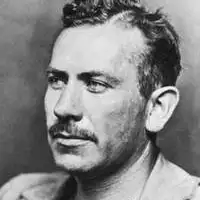
John Steinbeck
Steinbeck probes the complex tapestry of human experience through narratives that reflect a deep commitment to social justice and the human spirit's endurance. His writing purpose centers on shedding light on the struggles and resilience of marginalized communities, as seen in his masterful integration of realism with imaginative storytelling. For example, in "The Grapes of Wrath," Steinbeck critiques economic inequality while celebrating human perseverance, thereby providing readers with both a sobering reflection on society and a hopeful vision of resilience. Meanwhile, "Tortilla Flat" showcases his adeptness at weaving humor with pathos, making the plight of ordinary individuals both relatable and poignant.\n\nBy employing a style that merges lucid prose with rich, imaginative elements, Steinbeck deftly illuminates themes of fate, injustice, and the relentless pursuit of dignity. His books often explore the intricacies of friendship and moral complexity, as in "Of Mice and Men," where the bonds between characters highlight universal themes of ambition and loyalty amidst adversity. Furthermore, his background in manual labor and journalism enriched his narratives with authenticity, grounding his explorations of the working class in personal experience. This method of infusing real-world insights into his fiction not only enhances the emotional depth of his stories but also ensures their continued relevance across generations.\n\nFor readers seeking both a compelling narrative and profound insights into the human condition, Steinbeck's works offer a rich tapestry of experiences that resonate on multiple levels. His ability to capture the essence of human resilience while addressing pressing social issues benefits not only literary enthusiasts but also those interested in social history and cultural studies. By recognizing Steinbeck's contribution to American literature, underscored by his Nobel Prize for Literature, readers gain an appreciation for how his stories reflect enduring truths about humanity and society. This bio highlights the author's remarkable capacity to connect with readers through stories that are both timely and timeless.
Read moreDownload PDF & EPUB
To save this Black List summary for later, download the free PDF and EPUB. You can print it out, or read offline at your convenience.

Tortilla Flat
by John Steinbeck
