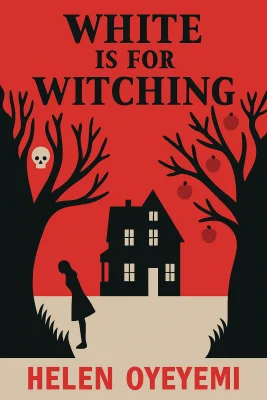
White Is for Witching
Categories
Fiction, Horror, Fantasy, Adult, Magical Realism, LGBT, Witches, Paranormal, Queer, Gothic
Content Type
Book
Binding
Hardcover
Year
2009
Publisher
Picador
Language
English
ASIN
0330458140
ISBN
0330458140
ISBN13
9780330458146
File Download
PDF | EPUB
White Is for Witching Plot Summary
Introduction
In a Victorian house perched on Dover's white cliffs, seventeen-year-old Miranda Silver stands at her bedroom window, watching her twin brother Eliot disappear into the morning mist. The house breathes around her, its walls whispering secrets that only she can hear. Since their photographer mother Lily died in Haiti's violence, Miranda has been slowly starving herself, consuming chalk and plastic instead of food, feeding something darker that lives within the ancient walls. The Silver House has sheltered four generations of women, each marked by an insatiable hunger that cannot be satisfied by ordinary sustenance. Miranda's great-grandmother Anna Good first heard the house's call during the war, when grief over her husband's death awakened something that had been sleeping in the brick and mortar. Now that presence, which Miranda calls the "goodlady," whispers promises of belonging and protection, demanding complete devotion in return. As Miranda's eating disorder worsens and strange incidents plague the house's guests, she must choose between the seductive comfort of ancestral madness and the terrifying uncertainty of her own independent existence.
Chapter 1: Absent Daughters: The Silver Legacy
The morning after Lily Silver's funeral, Miranda finds her first stick of chalk. It appears on her bedroom floor like a small white bone, smooth and inviting between her fingers. She tastes it tentatively, then with growing hunger, the bitter powder coating her tongue as the house settles around her with what sounds almost like approval. Eliot watches his twin sister with growing alarm. Where Miranda once moved through their Dover home with confident grace, she now drifts like a wraith, her black dresses hanging loose on her shrinking frame. Their father Luc, devastated by his wife's death, throws himself into running the family bed-and-breakfast, unable to see that his surviving daughter is slowly disappearing before his eyes. The house itself seems to be Miranda's closest companion now. Built in the 1940s and inherited from Lily's grandmother Anna Good, it stands on Barton Road like a sentinel, its windows watching the street with patient malevolence. Miranda speaks to its walls in whispers, receiving answers in the creak of floorboards and the whistle of wind through gaps in the window frames. When concerned teachers at school suggest Miranda needs professional help, she agrees readily, almost eagerly. The clinic offers clean white rooms and measured portions of food, but even there, the hunger follows her. She smuggles in chalk dust and plastic shavings, feeding the craving that conventional meals cannot touch. The doctors speak of pica, of eating disorders and trauma responses, but Miranda knows the truth runs deeper than medical terminology can reach.
Chapter 2: Chalk and Bones: The Architecture of Hunger
Six months later, Miranda returns from the clinic looking more fragile than ever. Her hair, cropped short during her stay, frames a face where her grey eyes have grown enormous, as if trying to take in more of the world before she disappears entirely. Eliot meets her at the door with careful brightness, but she can see the fear in his expression when he thinks she isn't looking. The house embraces her return like a lover welcoming home a wayward partner. Doors that stuck for months now open at her touch. The ancient lift, prone to breaking down, responds to her presence with smooth efficiency. In her bedroom, the psychomantium as Lily had called it, Miranda discovers that her father has nailed shut all her drawers and cupboards, trapping her hidden stashes of chalk and plastic strips inside. Sade, their new housekeeper from Nigeria, watches Miranda with eyes that seem to see more than they should. She speaks in riddles about old spirits and young girls who lose themselves in houses that remember too much. When Miranda finds her standing in the garden at midnight, speaking to invisible presences, Sade only smiles and says the dead are always hungry, always calling. The guests in their bed-and-breakfast begin experiencing strange incidents. A middle-aged couple from London claims someone keeps rearranging their belongings. A businessman swears he heard children crying in the walls. Most unsettling of all, a family with twin daughters packs up and leaves in the middle of the night, refusing to explain their sudden departure.
Chapter 3: Cambridge Reflections: Love Against Possession
At Cambridge University, Miranda encounters Ore, a sharp-witted archaeology student with warm brown skin and knowing eyes. Their first meeting is charged with recognition, as if they've been waiting for each other across time and distance. Ore sees past Miranda's careful makeup and flowing dresses to the hunger underneath, but instead of recoiling, she draws closer. In Ore's company, Miranda experiences moments of genuine appetite. They share midnight picnics on the common, and for the first time in months, Miranda tastes actual food without revulsion. Ore tells her stories of Caribbean folklore, of the soucouyant, a shape-shifting creature that feeds on human souls. The tale should frighten Miranda, but instead she finds herself oddly comforted by the idea of a hunger so ancient and necessary it has become mythic. Their relationship deepens beyond friendship into something Miranda has never experienced. In Ore's bed, she feels her body responding with sensations that have nothing to do with emptiness or consumption. For brief, precious moments, the whispers from home grow quiet, as if even the house recognizes the power of this new connection. But the hunger is patient. During lectures, Miranda finds herself unable to concentrate, her vision blurring as the familiar cravings return stronger than before. She begins sleepwalking, waking to find herself in strange parts of Cambridge with no memory of how she arrived. Ore watches her with growing concern, recognizing signs of something far more dangerous than an eating disorder.
Chapter 4: The Goodlady's Embrace: Ancestral Hauntings
The first manifestation comes during a December storm. As Miranda lies feverish in her Cambridge bed, Ore sees her transform, her face becoming something older, hungrier, more determined. Words spill from Miranda's lips in a voice that isn't quite her own, speaking of debts that must be paid and daughters who must come home. Ore researches obsessively, finding connections between the Silver women and a pattern of disappearances spanning decades. Anna Good's mother vanished in 1943. Anna herself died in mysterious circumstances in 1965. Even Lily's death in Haiti seems less random when viewed as part of a larger design, a hunger that reaches across continents to claim what it considers its own. Meanwhile, in Dover, Eliot notices changes in their home. Guests check out early, complaining of cold drafts and strange dreams. Sade speaks more frequently to her invisible companions, her eyes growing wild as she mutters warnings about houses that eat their children. Their father Luc remains obliviously focused on his cookbook, as if domestic normalcy can somehow ward off the growing darkness. The house itself seems to be awakening. Rooms change their layouts overnight. The ancient lift moves between floors without being called. Most disturbing of all, Eliot begins finding evidence of Miranda's presence: her distinctive lipstick on teacups, her footprints in dust, her voice humming lullabies in empty corridors, despite her being hundreds of miles away at university.
Chapter 5: Soucouyant Rising: The Battle for Miranda's Soul
Ore visits Dover over Christmas break, hoping to understand what holds such power over Miranda. The house welcomes her with deceptive warmth, but she quickly recognizes the predatory patience lurking beneath its Victorian respectability. In her assigned guest room, she finds a strange apple on her pillow, white on one side and blood-red on the other, a gift that makes her skin crawl with recognition. Sade becomes Ore's unlikely ally, sharing knowledge passed down through generations about spirits that inhabit places and the young women they choose as vessels. She gives Ore packets of salt and fierce peppers, ancient weapons against creatures that exist between the living and the dead. Together, they watch the house's assault on Miranda intensify, manifesting as sleepwalking episodes and moments of complete personality displacement. The climax comes when Miranda, fully possessed by the ancestral hunger, attempts to consume Ore's life force during what appears to be an intimate moment. But Ore has prepared for this confrontation, armed with salt and the knowledge that love can be its own form of exorcism. In a desperate struggle that takes them through impossible rooms and corridors that exist only when the house wills them to, Ore manages to separate Miranda from the consuming presence that has claimed her. The battle leaves Miranda split literally in two: her true self, confused and fragile, and the predatory shell that has been feeding on her essence for months. The house shrieks in frustration as Ore leads the real Miranda toward safety, but the victory proves temporary. Miranda, terrified by her own weakness, begs to be returned to the protective embrace of the hunger that has defined her family for generations.
Chapter 6: White Transformations: Becoming the House
Defeated and desperate, Miranda makes her choice. She cannot survive as merely human, cannot bear the vulnerability that comes with independent existence. The house has offered her belonging, purpose, and freedom from the pain of ordinary mortality. On a cold January night, she descends into the house's deepest foundations and allows the transformation to complete itself. Eliot finds evidence of her return in small signs: doors opening and closing, familiar footsteps in empty rooms, and most heartbreakingly, her shoes filling with a red liquid that smells of roses and tastes of iron. He knows she is there but not there, present but transformed into something the house can use for its own purposes. Luc, finally confronting the truth about his family's legacy, closes the bed-and-breakfast and begins the long process of sealing the house against further victims. But he cannot bring himself to destroy the place entirely, knowing that some part of his daughter still exists within its walls. Instead, he becomes its keeper, ensuring that no other young women will be lured into its embrace. Sade departs, her job complete, but not before leaving protective charms scattered throughout the house's many rooms. She understands that the hunger cannot be destroyed, only contained, and that future generations will need to remain vigilant against its patient seductions.
Chapter 7: Vanishing Points: The Search for Miranda Silver
Ore receives a final postcard from Miranda, postmarked Dover: "I'm sorry for everything. I am going down against her." The message arrives too late for rescue but serves as a kind of absolution, proof that somewhere within the consuming darkness, Miranda's love persisted until the end. The official search for Miranda Silver continues for months, but Ore knows the police will never find what they're looking for. Missing person posters show a girl with long dark hair and dreamy eyes, but the Miranda they seek has become something else entirely, integrated so completely with the house's malevolent consciousness that separation is no longer possible. Eliot remains in Dover through the summer, caring for their father and maintaining a vigil he cannot quite explain. He hears her sometimes, moving through the walls, and leaves out offerings of the foods she once loved. The house accepts these tributes but gives nothing back except the assurance of her continued existence in a form beyond human understanding.
Summary
"White Is for Witching" reveals itself as a haunting meditation on inheritance, consumption, and the ways trauma passes between generations like a contagion. Helen Oyeyemi weaves together themes of anorexia, colonial guilt, and supernatural possession to create a narrative where the metaphorical becomes terrifyingly literal. The Silver women are bound by more than blood to their Victorian house; they are fuel for an ancient hunger that views young female bodies as vessels for its own perpetuation. Miranda's transformation from vulnerable teenager to predatory spirit reflects the novel's deeper concerns about agency and belonging. Her eating disorder becomes a gateway to complete dissolution, a surrender of self that promises relief from the pain of independent existence but delivers only hollow integration with ancestral darkness. Through Ore's perspective, we see how love can become its own form of consumption, and how the desire to save someone can blur dangerously into the need to possess them. The house on Barton Road stands as a monument to appetites that cannot be satisfied, hungers that span generations, and the terrible seduction of giving up one's individual will to become part of something larger, older, and infinitely more patient than human love.
Best Quote
“Please tell a story about a girl who gets away.”I would, even if I had to adapt one, even if I had to make one up just for her. “Gets away from what, though?”“From her fairy godmother. From the happy ending that isn’t really happy at all. Please have her get out and run off the page altogether, to somewhere secret where words like ‘happy’ and ‘good’ will never find her.”“You don’t want her to be happy and good?”“I’m not sure what’s really meant by happy and good. I would like her to be free. Now. Please begin.” ― Helen Oyeyemi, White Is for Witching
Review Summary
Strengths: The book is praised for its atmospheric and foreboding style, with a dreamlike quality that is engaging. The prose is described as fluid and lyrical, almost poetic, which contributes to the book's unique charm. The narrative explores complex themes such as family relationships, sexuality, and racial prejudice, offering depth and intrigue. Weaknesses: The book's unconventional structure and lack of closure are noted as drawbacks. The narrative can be difficult to follow due to its shifting viewpoints and the ambiguity between reality and supernatural elements. The absence of a traditional plot and resolution may not satisfy all readers. Overall: The book elicits mixed feelings; while initially challenging, it becomes gripping once the reader adapts to its style. It is recommended for those who appreciate atmospheric, non-traditional narratives, particularly for reading on a dark winter's night.
About Author

Helen Oyeyemi
Oyeyemi reframes storytelling through her innovative approach to themes of identity, migration, and cultural fluidity. Her writing often intertwines Yoruba folklore, fairy tales, and contemporary issues, providing readers with an uncanny blend of realism and the fantastical. While she explores complex narratives of belonging and self-discovery, Oyeyemi's works stand out for their intelligence and capacity to unsettle and surprise. This distinctive style is evident in books like "The Icarus Girl", which merges Yoruba folklore with a young girl's cultural navigation, and "Mr. Fox", a feminist retelling of the Bluebeard myth, both showcasing her knack for reimagining traditional narratives.\n\nOyeyemi’s books are particularly compelling for readers interested in exploring multicultural narratives and the nuances of identity. Her ability to weave folklore into modern contexts offers a rich tapestry of themes that resonate deeply with audiences seeking more than conventional storytelling. The author’s bio also highlights her accolades, such as the Somerset Maugham Award for "White Is for Witching" and the PEN Open Book Award for "What Is Not Yours Is Not Yours", cementing her status as a significant literary figure. Moreover, her works such as "Boy, Snow, Bird" invite readers to reflect on societal constructs through the lens of reimagined classic tales.\n\nIn examining her creative process, Oyeyemi employs a narrative style that layers realism with elements of the surreal, inviting readers into a world where the ordinary meets the extraordinary. This approach not only captivates but also challenges her audience, prompting a deeper reflection on the themes presented. As such, Oyeyemi's contributions to literature are profound, offering readers both entertainment and intellectual engagement through her genre-defying storytelling.
Read moreDownload PDF & EPUB
To save this Black List summary for later, download the free PDF and EPUB. You can print it out, or read offline at your convenience.
White Is for Witching
by Helen Oyeyemi
