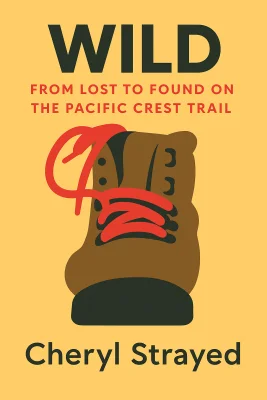
Wild
From Lost to Found on the Pacific Crest Trail
Categories
Nonfiction, Biography, Memoir, Nature, Audiobook, Travel, Autobiography, Biography Memoir, Book Club, Adventure
Content Type
Book
Binding
Hardcover
Year
2012
Publisher
Knopf
Language
English
ASIN
0307592731
ISBN
0307592731
ISBN13
9780307592736
File Download
PDF | EPUB
Wild Plot Summary
Introduction
# Cheryl Strayed: A Journey from Brokenness to Wholeness At twenty-six, Cheryl Strayed stood at the edge of the Mojave Desert with a backpack so heavy she could barely lift it, staring down a 1,100-mile trail that would test every fiber of her being. She was a woman shattered by grief, divorce, and poor choices, carrying not just an impossibly heavy pack but the weight of a life that had spiraled out of control after her mother's death. What began as an impulsive decision to hike the Pacific Crest Trail alone became a raw, transformative journey through some of America's most unforgiving wilderness. This extraordinary memoir reveals how one woman's desperate attempt to find herself led to profound discoveries about resilience, healing, and the power of solitude. Through her harrowing yet ultimately redemptive experience on the trail, readers witness the painful process of confronting one's deepest wounds and the unexpected strength that can emerge from our most broken moments. Her story illuminates the transformative power of physical challenge, the healing potential of nature's harsh embrace, and the courage required to face ourselves without the distractions of modern life.
Chapter 1: Loss and the Unraveling of Identity
The unraveling began with a single word from a doctor at the Mayo Clinic: incurable. Cheryl's mother, only forty-five and the gravitational center of their close-knit family, had late-stage lung cancer. The woman who had held them all together through poverty, domestic violence, and countless challenges would live, at most, a year. In that sterile examination room, watching her mother receive this death sentence, Cheryl felt her world split in two—the person she had been before that moment and the lost soul she would become after. Her mother's death forty-nine days later didn't just take away the person Cheryl loved most; it obliterated her sense of who she was. The woman who had sewn her clothes, built their house with her own hands, and loved with an intensity that seemed to encompass "ten thousand things" was gone. Without her mother's organizing presence, the family scattered like leaves in a storm. The carefully constructed life Cheryl had built—college, marriage to her devoted husband Paul, plans for the future—suddenly felt like a costume that no longer fit. In the aftermath of this devastating loss, Cheryl made choices that would have horrified the woman she used to be. She cheated on her loving husband repeatedly, experimented with heroin, and engaged in reckless sexual encounters that left her feeling empty and disconnected. Each destructive decision seemed to take her further from the person her mother had raised, yet she felt powerless to stop the downward spiral. The grief was so overwhelming that self-destruction felt like the only way to match her internal pain with external consequences. The final blow came when she realized she had to divorce Paul, not because she didn't love him, but because she couldn't be the wife he deserved while she was so fundamentally broken. Standing in the snow outside the courthouse after signing their divorce papers, she felt the full weight of her isolation. She had lost not just her mother and her marriage, but her very sense of self. It was in this moment of complete desolation that the idea of the Pacific Crest Trail began to take root—not as an adventure, but as a desperate attempt to find her way back to herself.
Chapter 2: Self-Destruction as a Response to Grief
The months following her mother's death revealed how completely Cheryl's identity had been intertwined with being Bobbi's daughter. Without that anchor, she drifted into increasingly dangerous territory, making choices that seemed designed to complete the destruction that cancer had begun. The heroin use started as an experiment in numbness, a way to silence the constant ache of missing her mother, but it quickly became another form of self-punishment for being alive when her mother was not. Her affairs were perhaps even more destructive than the drug use because they systematically destroyed the one relationship that might have saved her. Paul's love had been a constant through her mother's illness and death, but Cheryl found herself unable to accept or reciprocate it. Each betrayal felt both inevitable and foreign, as if she were watching someone else make these choices while being powerless to intervene. She was proving to herself and the world that she was unworthy of love, that her mother's death had revealed some fundamental flaw in her character. The most painful aspect of this period was how completely it contradicted everything her mother had taught her about resilience and hope. Bobbi had raised her children to believe they were "rich in love" even when materially poor, to find beauty and meaning even in the darkest circumstances. Cheryl's self-destructive behavior felt like a betrayal of those lessons, a rejection of the values that had shaped her childhood. She was not just destroying her own life but dishonoring her mother's memory in the process. Yet even in her darkest moments, some part of Cheryl recognized that this behavior was a symptom of grief rather than her true character. The woman who had once been a good student, a loving daughter, and a faithful wife was still there beneath the chaos, waiting to be reclaimed. The trail would become the path back to that buried self, a way of proving that her mother's love and lessons had not been destroyed by death but were still alive within her, waiting to be rediscovered.
Chapter 3: The Call of the Wilderness: Seeking Redemption
The Pacific Crest Trail called to Cheryl from the pages of a guidebook she encountered during one of her lowest moments, offering a vision of redemption that seemed both impossible and necessary. The trail stretched 2,650 miles from Mexico to Canada, a ribbon of wilderness that promised both punishment and purification for those brave enough to walk it. For someone who had lost her way so completely, the trail's clear direction—always north, always forward—held an almost mystical appeal. Her decision to hike alone for three months was born not from confidence or experience but from desperation. She had never actually been backpacking, possessed minimal wilderness skills, and had no real understanding of what such a journey would entail. But perhaps that ignorance was necessary. If she had truly comprehended the physical and emotional challenges ahead, she might never have taken the first step. Instead, she approached the trail with the desperate faith of someone who had nothing left to lose. The preparation process became a form of therapy in itself, giving her something constructive to focus on for the first time since her mother's death. She spent months researching the route, purchasing gear, and mailing supply boxes to remote outposts along the trail. Each box was an act of faith that she would actually make it that far, a commitment to her own survival that had been absent from her life for years. The very act of planning for the future suggested that she believed she had one. The trail represented more than just a physical challenge; it was a pilgrimage back to the person she had been before tragedy and poor choices led her astray. In the wilderness, there would be no opportunities for self-destruction, no distractions from the work of healing, no way to avoid confronting the pain she had been running from. She would walk until she found herself again, or until the trail broke her completely. Either outcome seemed preferable to the limbo of her current existence.
Chapter 4: Physical Trials and Mental Transformation
The reality of the Pacific Crest Trail hit Cheryl like a physical blow the moment she strapped on her impossibly heavy backpack in a Mojave motel room. The pack, which she nicknamed "Monster," was so overloaded that she couldn't lift it off the ground without performing an elaborate ritual of sitting down, threading her arms through the straps, and essentially doing a dead lift to get upright. This humiliating struggle was a preview of the challenges that lay ahead. Those first days on the trail were a brutal education in her own limitations. Every step was agony as she struggled under a pack that weighed more than half her body weight, hiking barely more than a mile per hour across the scorching desert. Her feet developed massive blisters, her shoulders were rubbed raw by the pack straps, and the relentless sun beat down without mercy. She had expected difficulty, but nothing had prepared her for this level of physical suffering. The mental challenges were equally intense but less visible. Instead of the peaceful contemplation she had imagined, her mind was consumed with immediate survival needs—finding water, treating wounds, simply putting one foot in front of the other. The grand philosophical insights she had hoped for were replaced by an endless loop of advertising jingles and song fragments. She realized she had romanticized the experience, imagining herself as some kind of wilderness sage when she was actually just a woman in way over her head. Yet even in those darkest moments, something began to shift. The very impossibility of her situation forced her to dig deeper than she ever had before. When faced with dangerous wildlife, treacherous terrain, or seemingly impassable obstacles, she discovered reserves of determination she didn't know she possessed. Each small victory—crossing a dangerous section, reaching a water source, simply surviving another day—built a foundation of self-reliance that had been shattered by grief and poor choices. The trail was teaching her that she was capable of far more than she had believed.
Chapter 5: Solitude, Strangers, and Human Connection
The Pacific Crest Trail introduced Cheryl to a unique form of community—the loose fellowship of hikers who shared the same impossible dream of walking from Mexico to Canada. These encounters, brief but intense, provided crucial moments of human connection in the vast wilderness. Meeting experienced hikers who accepted her presence on the trail despite her obvious inexperience was a gift she desperately needed. Their matter-of-fact encouragement helped her believe that she might actually be capable of completing her journey. The trail angels—people who positioned themselves at key points specifically to help PCT hikers—revealed a generosity of spirit that touched her deeply. These strangers offered food, shelter, rides, and encouragement without expecting anything in return, simply because they understood the magnitude of what she was attempting. Their kindness stood in stark contrast to the harsh indifference of the wilderness itself, reminding her that human compassion could flourish even in the most unlikely places. Perhaps most importantly, she learned to be alone with herself in a way she never had before. The solitude of the trail was different from the loneliness she had felt in her regular life—it was chosen, purposeful, and ultimately healing. Without the constant noise and distractions of civilization, she was forced to confront her thoughts and feelings directly. The silence became a companion rather than an enemy, teaching her that she could survive without constant external validation or stimulation. The brief partnerships she formed with other hikers showed her that she could connect with people without losing herself in the process. These relationships were honest and straightforward, based on mutual respect for what each person was attempting rather than the complex games and manipulations that had characterized many of her past relationships. On the trail, stripped of pretense and social masks, she discovered a more authentic way of relating to others that would serve her long after she returned to civilization.
Chapter 6: Finding Strength Through Suffering
As the miles accumulated beneath her feet, Cheryl began to notice profound changes in both her body and spirit. The physical transformation was obvious—her soft flesh had been replaced by lean muscle, her pale skin bronzed by constant sun exposure, her hands roughened by daily contact with rock and wood and earth. But the internal changes were even more dramatic. The woman who had felt so powerless in the face of grief and loss was discovering reserves of strength she never knew existed. Each challenge overcome on the trail became proof of her capability. Crossing snow-covered passes with an ice ax she barely knew how to use, fording dangerous streams swollen with snowmelt, navigating by compass when the trail disappeared—these accomplishments built a foundation of self-confidence that had been completely absent from her life before. The trail was teaching her that she could endure far more than she had ever imagined possible. The simplicity of trail life was also transformative. Stripped down to the most basic needs—food, water, shelter, forward movement—she discovered what was truly essential and what was merely distraction. The complicated emotional dramas that had consumed her in regular life seemed less important when viewed from the perspective of someone who had walked hundreds of miles carrying everything she needed on her back. The trail was teaching her to distinguish between what she wanted and what she actually needed. Perhaps most importantly, she was learning to trust herself again. Every decision on the trail—which route to take, where to camp, how to handle dangerous situations—had to be made by her alone. There was no one else to blame if things went wrong, but also no one else to credit when things went right. This responsibility was both terrifying and empowering, slowly rebuilding the sense of agency that had been destroyed by grief and poor choices. She was becoming her own authority, her own source of strength and guidance.
Chapter 7: Integration and the Return to Life
By the time Cheryl reached the end of her journey at the Bridge of the Gods, she had walked more than a thousand miles and traveled even farther emotionally. The woman who stepped off the trail was fundamentally different from the one who had started—not because the trail had given her something new, but because it had stripped away everything that wasn't truly her. The grief over her mother's death would always be with her, but it no longer defined her completely. She had learned to carry it as part of her story rather than letting it write the entire narrative. The trail had taught her that healing doesn't happen all at once in a moment of dramatic revelation, but gradually, one step at a time. Each mile had been a small act of faith in her ability to continue, each day a choice to keep moving forward despite pain and uncertainty. The cumulative effect of these small acts of courage had been transformative, rebuilding her sense of self from the ground up. She understood now that strength wasn't about never falling down, but about getting back up each time she did. She had also learned valuable lessons about solitude and self-reliance. The trail had shown her that she could be alone without being lonely, that she could depend on herself in ways she had never imagined possible. This didn't mean she no longer needed other people, but rather that she could choose relationships from a position of strength rather than desperate need. She was no longer looking for someone else to complete her or fix her—she was whole on her own. The physical accomplishment of completing such a challenging hike gave her a new relationship with her own body and capabilities. She had pushed herself beyond what seemed possible and discovered that her limits were far beyond what she had believed. This knowledge would serve her well in all the challenges that lay ahead, reminding her that she was capable of far more than she knew. The trail had given her back herself, scarred but stronger, broken but healing, ready to write the next chapter of her story with hard-won wisdom and unshakeable self-knowledge.
Summary
Cheryl Strayed's journey on the Pacific Crest Trail stands as a powerful testament to the human capacity for transformation through adversity, proving that sometimes we must lose ourselves completely before we can find who we truly are. Her story reminds us that healing is not a destination but a process, one that requires the courage to face our deepest wounds and the determination to keep moving forward even when the path ahead seems impossible. The wilderness served as both teacher and mirror, reflecting back her true strength while demanding she discover resources she never knew she possessed. Her experience offers profound lessons for anyone struggling with loss, identity crisis, or the feeling of being fundamentally broken. It demonstrates that we are often far stronger than we believe, that solitude can be healing rather than punishing, and that sometimes the most important journey we can take is the one that leads us back to ourselves. For those seeking inspiration to overcome their own challenges or simply looking for a reminder of the resilience of the human spirit, this story provides both comfort and motivation to take the next difficult step forward.
Best Quote
“What if I forgave myself? I thought. What if I forgave myself even though I'd done something I shouldn't have? What if I was a liar and a cheat and there was no excuse for what I'd done other than because it was what I wanted and needed to do? What if I was sorry, but if I could go back in time I wouldn't do anything differently than I had done? What if I'd actually wanted to fuck every one of those men? What if heroin taught me something? What if yes was the right answer instead of no? What if what made me do all those things everyone thought I shouldn't have done was what also had got me here? What if I was never redeemed? What if I already was?” ― Cheryl Strayed, Wild: From Lost to Found on the Pacific Crest Trail
Review Summary
Strengths: The reviewer acknowledges the book's initial chapters as engaging, highlighting the author's openness and the raw, real portrayal of her dreams and certain emotional scenes. Weaknesses: The review criticizes the book for lacking compelling content, noting that the author's life events are not particularly unique or inspiring. The writing is described as vague and unremarkable, with a confused chronology that diminishes the impact of significant life choices. The author is also critiqued for not effectively conveying the emotional depth of her experiences. Overall: The reader expresses strong dissatisfaction with the book, ultimately rating it poorly due to its perceived lack of engaging narrative and emotional depth. The recommendation level is low, as the reader found the book frustrating and unremarkable.
About Author

Cheryl Strayed
Strayed probes the complexities of personal transformation through her poignant and introspective writing, offering readers a glimpse into life's trials and triumphs. Her experiences in a rural Midwestern upbringing inform the authenticity and rawness found in her narrative voice, drawing readers into a space of honesty and introspection. In her book "Wild: From Lost to Found on the Pacific Crest Trail," Strayed navigates themes of grief and self-discovery, compelling readers to reflect on their own paths. This memoir not only achieved bestseller status but also became an acclaimed film, demonstrating the universal resonance of her journey.\n\nHer approach extends beyond memoirs, as seen in "Tiny Beautiful Things," a compilation of advice essays that blend empathy with directness, originating from her popular "Dear Sugar" column. Meanwhile, her debut novel "Torch" addresses themes of loss and healing, showcasing her versatility across genres. Strayed's ability to intertwine personal narrative with universal themes underscores her impact on readers, offering them both wisdom and solace.\n\nCheryl Strayed's works resonate with a broad audience, connecting deeply with those seeking inspiration and guidance through life's challenges. Her podcasts "Dear Sugars" and "Sugar Calling" further expand her reach, offering another platform for her empathetic storytelling. As an influential author and voice in modern memoir and advice literature, Strayed continues to inspire with her unflinching exploration of the human condition, ensuring her place as a vital literary figure.
Read moreDownload PDF & EPUB
To save this Black List summary for later, download the free PDF and EPUB. You can print it out, or read offline at your convenience.
Wild
by Cheryl Strayed
