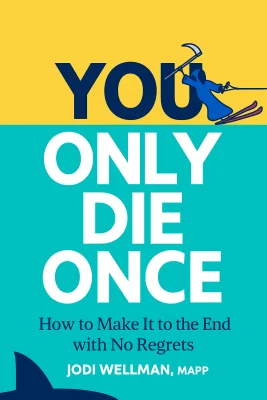
You Only Die Once
How to Make It to the End with No Regrets
Categories
Nonfiction, Self Help, Psychology, Philosophy, Personal Development, Death
Content Type
Book
Binding
Hardcover
Year
2024
Publisher
Voracious
Language
English
ASIN
0316574279
ISBN
0316574279
ISBN13
9780316574273
File Download
PDF | EPUB
You Only Die Once Plot Summary
Introduction
I remember the exact moment when time became precious to me. It was a Tuesday afternoon, and I was mindlessly scrolling through emails when my phone lit up with a message from an old friend: "Just wanted to let you know that Mark passed away last night." Mark—vibrant, funny, always-planning-the-next-adventure Mark—was gone at 42. In that moment, the illusion of unlimited time shattered. I looked at my calendar filled with meetings I didn't care about and projects that didn't matter to me, and wondered: Is this how I want to spend my finite days? This question lies at the heart of our shared human experience. We all know intellectually that our time is limited, yet we live as if we have forever—postponing joy, delaying dreams, and sleepwalking through precious moments. The paradox is striking: death awareness, rather than being morbid, can be the very catalyst that awakens us to life. When we acknowledge our mortality, we gain clarity about what truly matters. This perspective shift doesn't diminish our lives; it enriches them with purpose, vitality, and meaning. Throughout these pages, we'll explore how confronting our finite nature can transform how we spend our days—not through fear, but through the liberating realization that our time is the most valuable currency we possess.
Chapter 1: The Monday Countdown: Quantifying Your Remaining Time
Have you ever calculated how many Mondays you have left to live? For the average person, it's about four thousand in total. If you're halfway through your life, you might have around two thousand remaining. This isn't meant to be depressing—it's meant to be clarifying. When we quantify our time, something shifts in our perception. The author shares a powerful personal story about keeping a tarnished coin in her desk drawer with the sole purpose of reminding her that she will die someday. "I'm going to be dead soon," she whispers whenever she encounters the coin. The coin bears an engraving of a skeleton alongside the Latin phrase "memento mori"—remember you must die. This practice might seem morbid at first glance, but it serves as a powerful recalibration tool. One client, upon calculating her remaining Mondays, was shocked into action. She had been postponing a trip to Montenegro for "someday," but after realizing she likely had only five more opportunities for international travel in her lifetime, she booked the tickets that same day. Another person, after doing the Monday calculation, recognized he had just one or two more business acquisitions left before retirement, which helped him prioritize which opportunities to pursue. The author also introduces us to a revealing exercise where participants are asked: "How likely is it that you would recommend your exact life to a friend or colleague?" This question forces us to evaluate not just our satisfaction but our enthusiasm for the lives we're leading. Are we merely existing, or are we living lives we'd enthusiastically recommend to others? One executive realized that while his career looked impressive from the outside, he wouldn't recommend his 80-hour workweeks and constant stress to anyone he cared about. What makes this approach so powerful is that it's not about inducing anxiety—it's about inducing awareness. When we confront the finite nature of our time, we naturally become more intentional about how we spend it. We begin to distinguish between what's urgent and what's important, between obligations that drain us and commitments that fulfill us. The Monday countdown isn't a morbid exercise but a clarifying one that helps us recognize the preciousness of each day we're given and inspires us to make choices that align with what truly matters to us.
Chapter 2: Death as Life's Greatest Teacher: Stories of Awakening
"Though the fact, the physicality, of death destroys us, the idea of death may save us," writes Irvin Yalom. This paradox lies at the heart of memento mori—the ancient practice of reflecting on mortality as a path to living more fully. The author describes interviewing Dr. Martin Seligman, the founder of positive psychology, about how death awareness shapes his life choices. "I think about death very often," Seligman admitted. "But I'm not afraid of death—it just reminds me how much time I have left. And why it's important to go to places like Bora Bora." He explained that at 80 years old, recognizing he likely had ten good years left helped him budget his time accordingly, ensuring he completed meaningful work while also experiencing life's pleasures. This perspective finds scientific support in research on temporal scarcity. In one study, college seniors were divided into two groups before graduation. One group received instructions prefaced with "Given how little time you have left," while the other group's instructions began with "Given that you have lots of time left." The results were striking: students reminded of their limited remaining time experienced greater subjective well-being and participated in more college-related activities. The awareness of an ending enhanced their present enjoyment and motivated action. The author shares a moving email from Victoria, a 33-year-old woman who wrote to colleagues a month before dying of cancer: "It's tragic that it took a cancer diagnosis to teach me what living is really about. It's about cups of tea, enjoying the sunshine, having a laugh, and sharing love... you are healthy, and you are loved, and every day the sun rises you get a new opportunity to feel great." Victoria's perspective mirrors what researchers have found in studies of those who've had brushes with death—they often report profound shifts in priorities, heightened gratitude, and a deeper immersion in everyday moments. What makes memento mori so powerful isn't that it makes us fearful, but that it makes us focused. When we recognize that our time is limited, we naturally become more discerning about how we spend it. We stop postponing joy, connection, and meaning for some imagined future that may never arrive. The awareness of death doesn't diminish life—it illuminates what makes life worth living in the first place, helping us distinguish between what's merely urgent and what's truly important in the precious time we have.
Chapter 3: Breaking Free from Autopilot: The Habit Trap
"How we spend our days is, of course, how we spend our lives," writes Annie Dillard. Yet how many of us truly choose how we spend our days? The author describes a revealing moment when, disenchanted with her corporate job, she found herself stapling papers together mindlessly. When her stapler ran out, she loaded a fresh row of two hundred staples, thinking, "I'd better not still be here by the time I have to reload this stapler." It was a deadline, a promise to herself. Yet a year later, when the stapler emptied again, she was still there, still unhappy, still doing nothing about it. "I whispered softly to my filing cabinet, 'I'd better not still be here by the time I have to reload this stapler again,'" she recalls. And then she "promptly and unproudly did nothing about it." This stapler story perfectly captures how we can become trapped in routines that slowly drain our vitality. The author explains that habits exist on a continuum from "Habit Impoverishment" (chaotic disorganization) to "Habit Domination" (rigid adherence that diminishes life satisfaction). In the middle lies "Habit Utility"—habits that support rather than stifle our aliveness. The problem isn't habits themselves but how easily they can shift from serving us to enslaving us. In research conducted with thousands of participants, over 54% admitted their lives were "quite a bit" or "constantly" on autopilot, describing themselves as "basically highly functioning zombies." One client described how her initially helpful weekend routines gradually became constricting. She used to include healthy activities on weekend mornings while keeping afternoons open for spontaneity—what she called "TBD afternoons." But gradually, habit creep set in. She started stopping at Target after workouts, then bringing work home, until suddenly her free time had vanished. "SOS: WTF TBD!?!?!?" she texted one Sunday night, realizing her life had been colonized by routines. The antidote to autopilot isn't chaos but conscious choice—what researchers call "psychological richness." This dimension of well-being comes from experiences characterized by novelty, curiosity, complexity, and perspective change. When we introduce variety into our lives—even small changes like taking a different route home or trying a new cuisine—we expand our awareness and slow our perception of time passing. Breaking free from autopilot isn't about abandoning all structure but about reclaiming our agency to choose how we spend our precious days rather than letting habit and inertia decide for us.
Chapter 4: Widening Life with Vitality: Rediscovering Joy and Wonder
"I am so grateful I had cancer because it put a giant stop sign in my life," Shay Moraga explained to the author. "Cancer gave me a second chance at life." During her chemotherapy treatments, Shay drew a circle on a blank page. Inside the circle, she placed all the things she wanted in her life; outside, she put everything she wanted to eliminate—her people-pleasing tendencies, toxic relationships, and activities that drained her energy. This simple yet profound exercise helped her reclaim her vitality by consciously choosing what deserved her limited time and attention. This widening of life through intentional choices about how we spend our energy appears repeatedly in stories of those who've had close encounters with mortality. Chris Baccash, who had an "avocado-sized" brain tumor removed at age 27, described how his brush with death heightened his appreciation for everyday moments. Sitting outside the hospital after receiving good news from an MRI, he watched helicopters landing on the rooftop. "I felt so grateful that as people we've been able to harness these machines and so delicately balance them to land in place on hospital rooftops. I was so grateful for the capacity humans have to care, both physically and emotionally." He calls these waves of gratitude his "helicopter moments." The author introduces us to Chris-Tia, a client who passed away from breast cancer at 42. In their last session together, Chris-Tia shared how she had learned to embrace the mundane aspects of life that most people overlook: "She was enjoying walking up and down the Home Depot aisles looking for light bulbs. She was actually enjoying watching the exposed pipes get dusted in her high-ceilinged loft. She was enjoying sifting and sorting through her junk mail." These weren't extraordinary experiences by conventional standards, but her awareness transformed them into sources of genuine pleasure. What these stories reveal is that widening life isn't necessarily about adding more activities but about deepening our engagement with the experiences we already have. Research on the psychology of time perception shows that novel experiences—whether big adventures or small departures from routine—help us feel more alive and present. When we introduce variety into our days, we counteract the "hedonic adaptation" that causes even pleasurable experiences to lose their impact through repetition. By consciously seeking out new experiences and bringing fresh attention to familiar ones, we can expand our perception of time and enhance our sense of vitality, making our finite days feel both richer and fuller.
Chapter 5: Deepening Existence Through Meaning: Finding Your Purpose
"Of all sad words of mouth or pen, the saddest are these: it might have been." This quote from John Greenleaf Whittier captures the ache of regret that haunts so many lives. The author shares the poignant story of her mother who died with what she calls "a Compendium of Lost and Unfulfilled Dreams." Cleaning out her mother's apartment after her death, she discovered manuscripts, drawings, business cards printed at home, and other artifacts of dreams never pursued. Her mother had written a children's book called "Dreamdust" in the early '80s but abandoned it after the first wave of rejections. She had started a hiking stick business called "Take a Hike" that folded before it truly began. These dormant dreams became a powerful wake-up call for the author: "I did not want to live a life with dead-on-arrival dreams." Research reveals that regrets of omission—paths not taken—tend to haunt us more persistently than regrets of commission—things we did but wish we hadn't. While we can rationalize our mistakes through the softening lens of time, the roads not traveled shine a spotlight on the gap between our actual selves and our ideal selves. One study participant expressed this common sentiment: "I'd regret not standing up for myself against my tough boss." Another shared: "I'd wish I had gone to med school." These weren't just idle musings but reflections of deeper yearnings for lives more aligned with their authentic values and aspirations. The author introduces us to Alfred Nobel, whose unique opportunity to read his own obituary—mistakenly published when his brother died—transformed his legacy. Horrified to see himself described as "The Merchant of Death" due to his work manufacturing dynamite, Nobel was motivated to redirect his fortune toward the improvement of humanity through the Nobel Prizes. This dramatic wake-up call allowed him to align his remaining years with more meaningful purposes than mere profit. What emerges from these stories is that meaning isn't something we find but something we create through deliberate choices. When we identify our "regrets-in-the-making" before they materialize, we gain the opportunity to course-correct while there's still time. The most fulfilled lives aren't necessarily those with the fewest hardships but those with the clearest sense of purpose—where our daily actions align with our deepest values. By confronting our mortality, we gain the perspective needed to distinguish between what's merely urgent and what's truly important, allowing us to invest our finite time in creating a legacy we'll be proud to leave behind.
Chapter 6: From Regret to Action: Creating Your Living Legacy
"I want us to die happy, especially because we only do it once," writes the author. "I want us to live lives remarkably free of regret, just as tarnished as my memento mori coin: worn, beautifully weathered, valued, and fully spent." This sentiment captures the essence of moving from awareness to action—from recognizing our mortality to living differently because of it. The author shares the transformative story of Trish Kendall, who at twenty was about to end her life through a drug overdose. "I was on the bathroom floor, a cold and moldy and grimy and dirty bathroom floor," Trish recounted. "I made the choice that I was going to overdose on crystal meth by plunging a needle in my vein—because I didn't believe there was anything else." But in that moment, her sister called. Trish chose to answer, beginning a journey of recovery that led to what she describes as her "dream life" twenty-five years later. This pivotal moment illustrates what psychologists call "quantum change"—sudden epiphanies that lead to deep and lasting transformations. While most of us won't experience such dramatic turning points, we can engineer our own epiphanies by asking powerful questions: If you were pulled back from the brink of death today, what would you do tomorrow? Who would you be? What would you savor? What would you dispense with? These questions help us simulate the clarity that often comes from brushes with mortality without having to experience them firsthand. The author introduces us to Scott DeLuzio, who lost his brother in Afghanistan and found powerful motivation in that loss: "If you're going to just sit there on your ass at home doing nothing with your life, like how much of a slap in the face is it to that person who sacrificed themselves to give you that next however many more Mondays? I feel like if I'm just gonna sit around wasting away, then his sacrifice, as far as I'm concerned, was for nothing." This perspective transformed how Scott approached his remaining time. What these stories reveal is that creating a living legacy isn't about grand gestures but about consistent choices that align with our deepest values. It's about asking ourselves what we want our lives to stand for and then taking concrete steps—however small—in that direction. The author encourages us to identify one meaningful action we can take within the next month, reminding us that we don't need to overhaul our entire lives at once. By making deliberate choices about how we spend our days, we gradually create lives that feel purposeful and authentic—lives we can look back on without regret when our time eventually runs out.
Summary
Time awareness transforms how we live. Throughout these stories—from the executive with her stapler deadline to Chris appreciating helicopters after his brain tumor—we see how confronting mortality clarifies what truly matters. The Monday countdown isn't about inducing anxiety but about inspiring intentionality. When we recognize our finite time, we naturally become more discerning about how we spend it. We stop postponing joy for some imagined future and start living fully in the present. The most profound insight from these explorations is that death awareness doesn't diminish life—it enriches it. By acknowledging our mortality, we gain the perspective needed to break free from autopilot, widen our experiences with vitality, deepen our existence through meaning, and transform potential regrets into purposeful action. The question isn't whether we'll die—that's certain for all of us—but whether we'll truly live before we do. As Victoria wrote shortly before her death: "Remember how blessed we are to have this thing called life. It's so beautiful, and I would do anything to have more of it left, so don't let it pass you by." This isn't just wisdom for the dying but for all of us with Mondays still ahead—an invitation to spend our time in ways that matter, creating lives we can look back on with satisfaction rather than regret.
Best Quote
“I want people to know that it’s possible to be destroyed by life’s circumstances, and yet it’s possible that it could be the best thing for you.” ― Jodi Wellman, You Only Die Once: How to Make It to the End with No Regrets
Review Summary
Strengths: The book presents compelling points and offers a fun and engaging read. It effectively explores living a meaningful life with minimal regrets and emphasizes the importance of appreciating life by contemplating mortality. The author provides practical exercises, like calculating the remaining weeks of an average lifespan, to make the concept of finite time more tangible.\nWeaknesses: The review notes that the book is "way too long," suggesting that it may be overly verbose or drawn out.\nOverall Sentiment: Mixed. While the review appreciates the book's engaging and thought-provoking content, it also criticizes its length.\nKey Takeaway: "You Only Die Once" by Jodi Wellman encourages readers to live life with more awareness and purpose by confronting mortality and integrating activities that bring genuine joy and aliveness into daily life.
About Author

Jodi Wellman
Jodi Wellman is a speaker, author, and the founder of "Four Thousand Mondays." She holds a Master’s in Applied Positive Psychology from the University of Pennsylvania. Wellman’s work centers on the concept of "memento mori"—remembering that we must die—but she uses it as a tool for vitality rather than morbidity. She transitioned from a corporate executive career to studying the science of living well.\n\nShe is the author of You Only Die Once: How to Make It to the End with No Regrets. Wellman’s philosophy is that the scarcity of time is what gives life its value. She categorizes people into different archetypes based on how much "aliveness" and meaning they experience. Her work offers practical strategies to combat boredom and "autopilot" living, encouraging people to count their Mondays and make them count.
Read moreDownload PDF & EPUB
To save this Black List summary for later, download the free PDF and EPUB. You can print it out, or read offline at your convenience.
You Only Die Once
by Jodi Wellman
