
Angus Deaton
Deaton probes the intricate relationships between consumption, poverty, and welfare, fundamentally reshaping economic thought. His work focuses on understanding how these elements influence inequality and societal well-being. By analyzing global disparities, Deaton reveals how health and wealth interact to create modern inequality. This approach has made his book "The Great Escape: Health, Wealth, and the Origins of Inequality" a critical piece of literature, challenging traditional views on prosperity and progress.\n\nHis methodology combines empirical rigor with narrative clarity, enabling a broader audience to engage with complex economic concepts. Deaton's analytical framework is most notable for the Almost Ideal Demand System (AIDS), developed with John Muellbauer, which allows for practical applications in consumer demand and welfare analysis. Meanwhile, his insights into the effects of unanticipated inflation on savings provide a nuanced perspective on economic behavior. Through these contributions, Deaton has informed policy-making and scholarly debates, earning him the Nobel Memorial Prize in Economic Sciences in 2015.\n\nReaders of Deaton's work gain a deeper understanding of socioeconomic structures and their impact on human welfare. His research highlights the importance of examining the intersection of economic data with human stories, fostering a more holistic view of economic systems. As both a British and American economist, Deaton's bio reflects a career dedicated to advancing knowledge and offering fresh insights into the dynamics of inequality.
Books by Angus Deaton
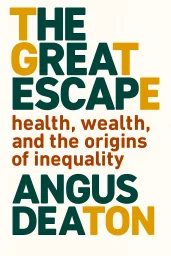
The Great Escape
Popular Authors

Robin Sharma
5 books

James Clear
2 books

Sarah Knight
4 books

Daniel Goleman
9 books

Stanley D. Rosenberg
1 books

Anthony Scaramucci
1 books

Niall Kishtainy
1 books

J. Richard Gott
1 books

Trevor Moawad
2 books

Mark McNeilly
1 books

Lara Love Hardin
4 books
