
Barry Z. Posner
Ishiguro investigates the complexities of memory and identity, often weaving these themes into narratives that blur the boundaries between reality and fiction. His exploration typically highlights the fallibility of human recollection, using unreliable narrators to delve into personal and collective histories. By engaging with these concepts, Ishiguro invites readers to question the very nature of truth and perception. His method of intertwining past and present creates a layered narrative structure, which serves to engage the reader in active interpretation and reflection.\n\nIn one of his notable works, Ishiguro challenges the notion of a singular, unchanging identity. This approach is evident as he contrasts different perspectives within the same narrative framework, enabling readers to consider the fluidity of self-conception over time. Meanwhile, his attention to the subtle interplay between personal and societal narratives provides a backdrop for broader existential questions. For those interested in psychological and philosophical themes, Ishiguro’s writing offers a rich tapestry of insights that provoke thoughtful analysis.\n\nIshiguro’s impact on literature is significant, particularly for readers who appreciate narratives that demand critical engagement. His books are well-suited for those who enjoy dissecting complex character studies and exploring the nuances of human nature. While his narrative style can challenge conventional storytelling, the rewards lie in the depth of understanding and empathy cultivated through his artful prose. This brief bio captures Ishiguro's ability to extend beyond the written page, leaving a lasting impression on the world of fiction.
Books by Barry Z. Posner
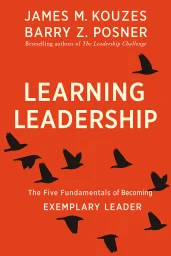
Learning Leadership
Popular Authors

Robin Sharma
5 books

James Clear
2 books

Sarah Knight
4 books

Daniel Goleman
9 books
Stanley D. Rosenberg
1 books

Anthony Scaramucci
1 books

Niall Kishtainy
1 books

J. Richard Gott
1 books

Trevor Moawad
2 books

Mark McNeilly
1 books

Lara Love Hardin
4 books
