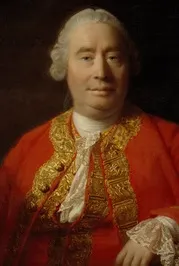
David Hume
Hume probes the complexities of human understanding through a philosophy that embraces empiricism and skepticism. He reframes traditional notions of causality and personal identity, arguing that our understanding of these concepts stems from habitual associations rather than rational certainty. While Hume's philosophy dismisses metaphysical knowledge beyond experience, it opens avenues for rigorous inquiry into human nature and ethics, exemplified in his pivotal book, "A Treatise of Human Nature." This work aims to introduce the experimental method into moral subjects, seeking a naturalistic understanding of humanity.\n\nIn challenging established dogmas, Hume connects with readers who seek to scrutinize the foundational elements of knowledge and morality. His secular ethics and views on free will, which argue that reason is subordinate to passion, provide a framework for those interested in the interplay between human emotions and rational thought. Meanwhile, his historical writings, notably "The History of England," offer an empirical narrative approach, enriching the reader's comprehension of history as shaped by human behavior and choices.\n\nThis bio highlights how Hume's intellectual legacy benefits a diverse audience, from philosophers to historians, who draw upon his critical methods to inform contemporary debates. His work has notably influenced areas beyond philosophy, such as cognitive science and economics, demonstrating the broad applicability of his insights. Readers find value in Hume's ability to provoke thought and inspire deeper inquiry, thereby securing his place as a transformative figure in Western thought.
Books by David Hume

An Enquiry Concerning Human Understanding
Popular Authors

Robin Sharma
5 books

James Clear
2 books

Sarah Knight
4 books

Daniel Goleman
9 books

Stanley D. Rosenberg
1 books

Anthony Scaramucci
1 books

Niall Kishtainy
1 books

J. Richard Gott
1 books

Trevor Moawad
2 books

Mark McNeilly
1 books

Lara Love Hardin
4 books
