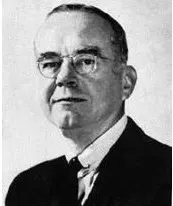
James Burnham
Burnham interrogates the shifting power dynamics within modern societies, transitioning from traditional capitalism to a managerial class, as articulated in his influential book, "The Managerial Revolution." His exploration of power, bureaucracy, and societal transformation delves into the erosion of capitalism, suggesting that a new managerial elite supplants traditional capitalists and workers. This analysis reveals tensions between democracy and elite rule, emphasizing the limitations of democratic institutions. His work stands out for its analytical rigor and empirical evidence, drawing from historical and sociological perspectives, thereby resonating with political thinkers who examine governance and societal change.\n\nReaders interested in understanding power structures and political theory will find Burnham’s writings particularly enlightening. His style combines incisive prose with a lucid exposition of complex ideas, which not only informs but also challenges contemporary audiences to reassess the roles of bureaucracy and power in politics. Burnham's bio highlights his contributions to the conservative movement, particularly through his writings for the National Review, solidifying his influence in American political thought. By tracing these themes, his work provides valuable insights for those examining the evolution of political and social systems in the 20th century, offering a critical perspective on the interplay between governance and societal evolution.
Books by James Burnham
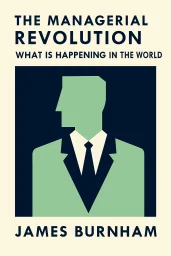
The Managerial Revolution
Popular Authors

Robin Sharma
5 books

James Clear
2 books

Sarah Knight
4 books

Daniel Goleman
9 books

Stanley D. Rosenberg
1 books

Anthony Scaramucci
1 books

Niall Kishtainy
1 books

J. Richard Gott
1 books

Trevor Moawad
2 books

Mark McNeilly
1 books

Lara Love Hardin
4 books
