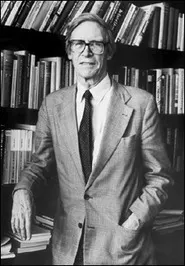
John Rawls
Rawls reimagines the principles of justice through a framework that prioritizes fairness and equality, challenging conventional perspectives within political philosophy. His revolutionary concept, the "original position," situates individuals in a hypothetical state of ignorance regarding their personal attributes, ensuring that principles of justice are chosen impartially. This thought experiment, integral to his seminal work "A Theory of Justice," emerges from Rawls's deep-seated belief in egalitarian liberalism, a philosophy refined amidst the backdrop of the 20th century's socio-political upheavals and his own experiences during World War II. Rawls's method combines elements of Kantian ethics and the social contract tradition, providing a robust structure for addressing contemporary political concerns beyond metaphysical debates.\n\nReaders and scholars benefit profoundly from Rawls's clear and analytical writing style, which distills complex philosophical ideas into accessible and actionable insights. By emphasizing the need for justice systems to operate under a veil of impartiality, his work propels debates on democracy and ethical governance, encouraging policymakers and theorists to re-evaluate foundational assumptions about rights and distribution. As a result, Rawls's contributions serve not only as a guide for academics but also as a valuable resource for anyone invested in fostering a just society that supports the least advantaged.\n\nRawls's influence extends beyond "A Theory of Justice," with his early essays like "Outline of a Decision Procedure for Ethics" laying the groundwork for later explorations. His recognition, including the National Humanities Medal, underscores his impact as one of the most important political philosophers of the 20th century. Therefore, this short bio encapsulates the author’s enduring legacy and relevance, which continue to inform and inspire discourse in moral and political philosophy.
Books by John Rawls
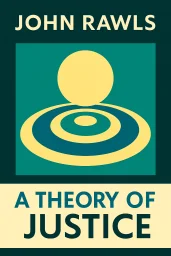
A Theory of Justice
Popular Authors

Robin Sharma
5 books

James Clear
2 books

Sarah Knight
4 books

Daniel Goleman
9 books

Stanley D. Rosenberg
1 books

Anthony Scaramucci
1 books


Niall Kishtainy
1 books
J. Richard Gott
1 books

Trevor Moawad
2 books

Mark McNeilly
1 books

Lara Love Hardin
4 books
