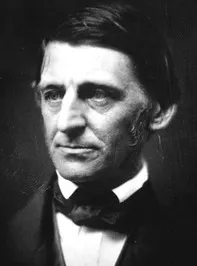
Ralph Waldo Emerson
Emerson probes the intricate relationship between humanity and nature, serving as a cornerstone of Transcendentalist thought. His philosophy, articulated through essays like "Nature" and "Self-Reliance," champions individualism and a spiritual connection to the natural world. Emerson's departure from conventional religious practices, catalyzed by personal tragedy and profound European influences, shaped his role as a leading intellectual who critiqued social norms while celebrating personal autonomy.\n\nIn the realm of literature, Emerson's distinctive style—rich in metaphor and aphorism—offers deep philosophical insights coupled with incisive social critique. His works, including the "Divinity School Address" and "The American Scholar," not only challenged traditional doctrines but also invited readers to embrace introspection and nonconformity. His exploration of self-reliance and the over-soul continues to inspire modern thinkers and readers who seek to understand the power of the individual spirit within the broader context of society.\n\nReaders gain significant insights from Emerson's works, as they continue to resonate with those interested in philosophy, literature, and social reform. Emerson's legacy, preserved in his essays and lectures, underscores the enduring impact of his thought on American literature and intellectual history. Through his influential writings, this bio of the author captures the essence of Emerson's contribution to a more profound understanding of individuality and communal harmony.
Books by Ralph Waldo Emerson

Self-Reliance
Popular Authors

Robin Sharma
5 books

James Clear
2 books

Sarah Knight
4 books

Daniel Goleman
9 books

Stanley D. Rosenberg
1 books

Anthony Scaramucci
1 books

Niall Kishtainy
1 books

J. Richard Gott
1 books

Trevor Moawad
2 books

Mark McNeilly
1 books

Lara Love Hardin
4 books
