
Ryūnosuke Koike
Koike reframes the modern understanding of Buddhism by advocating a return to its primitive form, which he views as more scientific and structural in exploring human nature. He believes that contemporary Japanese Buddhism has become intertwined with Chinese Taoist thought, leading to a diluted practice. This stance, emphasizing purity and foundational principles, led to tensions with the Jōdo Shinshū establishment, ultimately resulting in his expulsion when he inherited his father's temple. His literary works focus on Zen Buddhism, mindfulness, and meditation, promoting accessible methods to clear the mind and cultivate present-moment awareness.\n\nThrough his writings, Koike addresses what he calls "thinking disease," a condition where overthinking obstructs our sensory experiences. His approach integrates Eastern philosophical concepts with Western psychology and neuroscience, making complex ideas relatable to a broad audience. In his well-received book "The Practice of Not Thinking", Koike provides practical advice for incorporating mindfulness into everyday activities, such as speaking and listening, to achieve calmness and centeredness. This book, along with his other works, has sold over a million copies in Japan and is available in multiple languages, underscoring his international impact as an influential author. His bio highlights how readers can benefit from his teachings, which offer transformative strategies for a more centered and aware life.
Books by Ryūnosuke Koike
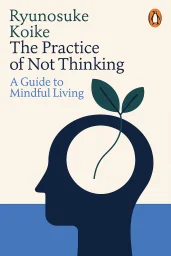
The Practice of Not Thinking
Popular Authors

Robin Sharma
5 books

James Clear
2 books

Sarah Knight
4 books

Daniel Goleman
9 books

Stanley D. Rosenberg
1 books

Anthony Scaramucci
1 books

Niall Kishtainy
1 books

J. Richard Gott
1 books

Trevor Moawad
2 books

Mark McNeilly
1 books

Lara Love Hardin
4 books
