
William A. Adams
Orwell investigates the mechanisms of power and control through dystopian narratives, emphasizing the individual’s struggle against oppressive systems. His works often explore themes of surveillance, propaganda, and language manipulation as tools for domination. By interrogating these dynamics, Orwell’s writing invites readers to question the integrity of political structures and the erosion of personal freedoms. His narratives serve as cautionary tales, urging vigilance and critical thought in the face of authoritarianism.\n\nOrwell’s method combines vivid storytelling with political analysis, enabling a profound critique of totalitarian regimes. In his renowned book, he constructs a world where language is deliberately distorted to limit free thought, illustrating how linguistic control can lead to societal manipulation. Such themes resonate with audiences concerned about contemporary issues of privacy and truth, offering them a lens to understand and critique their own societal contexts. The author’s ability to weave these elements into compelling stories ensures that his work remains relevant, prompting readers to reflect on the balance between state power and individual rights.\n\nThrough his compelling narratives, Orwell extends his impact beyond literature into the realms of political theory and social discourse. His work provides a framework for analyzing current events and fostering discussions about governance, making it essential for students of political science, literature, and history. This bio, although brief, captures the essence of Orwell’s contribution to literature and thought, highlighting how his exploration of power and control continues to influence and inform.
Books by William A. Adams
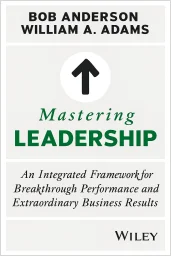
Mastering Leadership
Popular Authors

Robin Sharma
5 books

James Clear
2 books

Sarah Knight
4 books

Daniel Goleman
9 books

Stanley D. Rosenberg
1 books

Anthony Scaramucci
1 books

Niall Kishtainy
1 books

J. Richard Gott
1 books

Trevor Moawad
2 books

Mark McNeilly
1 books

Lara Love Hardin
4 books
