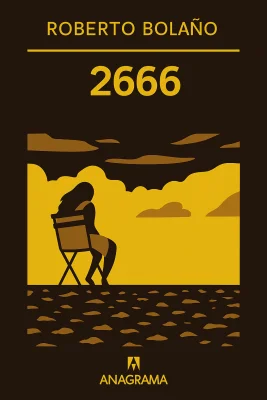
2666
Categories
Fiction, Classics, Mystery, Literature, Contemporary, Novels, Spanish Literature, Crime, Literary Fiction, Latin American
Content Type
Book
Binding
Paperback
Year
2004
Publisher
Anagrama
Language
English
ASIN
843396867X
ISBN
843396867X
ISBN13
9788433968678
File Download
PDF | EPUB
2666 Plot Summary
Introduction
# 2666: The Desert of Broken Angels and Hidden Giants In the sprawling desert city of Santa Teresa, where the Mexican border bleeds into American dreams, women disappear like prayers whispered into an indifferent wind. Their bodies surface in vacant lots and drainage ditches, silent testimonies to a violence that has become as routine as the morning shift change at the maquiladoras. This is a place where literature professors chase phantom writers across continents, where philosophy teachers hang geometry books from clotheslines like flags of surrender, and where the machinery of justice grinds forward with the efficiency of a slaughterhouse. But beneath the surface of this nightmare runs a deeper current, connecting a German giant who vanished into his own fiction to a nephew rotting in a Mexican prison cell. The invisible threads that bind families together stretch across decades and oceans, pulling the living and the dead into a final reckoning with the violence that shapes our world. In Santa Teresa, all stories converge like tributaries feeding a poisoned river, flowing toward the hidden center where truth and fiction become indistinguishable from the desert heat that shimmers on the horizon.
Chapter 1: The Literary Pilgrims: In Search of the Invisible Master
Four European professors moved across the academic landscape like hunters tracking an elusive prey. Jean-Claude Pelletier from France, Piero Morini from Italy, Manuel Espinoza from Spain, and Liz Norton from England had devoted their careers to studying the works of Benno von Archimboldi, Germany's most enigmatic novelist. The writer had published dozens of books over five decades but never appeared in public, never gave interviews, never allowed his photograph to be taken. Their obsession began in scholarly conferences and academic journals, but soon evolved into something more personal, more desperate. They traveled together to literary festivals and symposiums, always hoping for news of their invisible master. Norton, the only woman among them, became the center of a rivalry between Pelletier and Espinoza that simmered beneath their professional collaboration like a slow-burning fuse. The breakthrough came in Turin, where an Italian publisher mentioned meeting Archimboldi years earlier. The man had been tall, gaunt, with the bearing of someone who had seen too much. But the trail went cold again, leaving only fragments and rumors. In London, Norton's relationship with both men reached a breaking point when she took a younger lover, a Pakistani taxi driver who represented everything they were not. Then came the letter from Mexico. Amalfitano, a Chilean professor teaching in Santa Teresa, claimed to have met someone who knew Archimboldi personally. The four critics saw their chance and boarded planes for the desert, carrying their obsession across the Atlantic like pilgrims bearing relics to a distant shrine. They had no idea they were flying toward a city where literature was the least of anyone's concerns, where women died in numbers that defied comprehension. In Santa Teresa's suffocating heat, surrounded by the constant hum of industrial machinery and the whispered stories of disappeared daughters, the professors would discover that some mysteries are better left unsolved. Their literary quest would collide with a reality so brutal that even Archimboldi's darkest fiction seemed pale by comparison.
Chapter 2: Voices in the Desert: A Professor's Descent into Madness
Professor Oscar Amalfitano hung a geometry book from his clothesline like a flag of surrender to the desert wind. The Chilean philosophy teacher had followed his teenage daughter Rosa to Santa Teresa, fleeing memories of his wife's abandonment and seeking refuge in academic routine. But the border city offered no sanctuary from the ghosts that haunted his mind. The book swayed in the hot breeze, its pages fluttering as if trying to escape their binding. Amalfitano had discovered it among his possessions without memory of purchasing it, a mystery that seemed to mirror his own displacement. Each morning he checked on his experiment, watching the desert transform abstract mathematical principles into something more elemental and strange. At night, voices began speaking to him through the walls. They claimed to be his dead father, offering advice and warnings in the tone of someone who had crossed an unbridgeable distance to deliver urgent news. The conversations became Amalfitano's secret comfort, a nightly ritual that made the daylight world of university politics and Rosa's teenage concerns seem manageable by comparison. The fat man in the black car appeared at irregular intervals, always at night, always watching. Amalfitano began to understand that he had brought his daughter to the edge of the world, to a place where civilization's promises meant nothing and the only law was the law of disappearance. Women vanished from bus stops and factory gates while the authorities offered explanations that satisfied no one. Marco Antonio Guerra, the dean's son, materialized beside Amalfitano's car with the unsettling timing of someone who had been watching and waiting. Beautiful and dangerous, he spoke of poetry with the passion of a convert while seeking out violent encounters in the city's worst neighborhoods. In Santa Teresa, they were all conducting experiments with their own destruction, seeing how much reality they could endure before something essential broke.
Chapter 3: The Killing Fields: Women Who Vanish in Santa Teresa
Esperanza Gomez Saldana was thirteen when they found her in the vacant lot in Colonia Las Flores. The children who discovered her body thought at first she was sleeping among the weeds, but the unnatural stillness and the flies circling overhead told a different story. Strangulation marks ringed her neck like a grotesque necklace, and the medical examiner would confirm what everyone already suspected. The desert around Santa Teresa had always been unforgiving, but now it seemed to be claiming victims with deliberate malice. The city's rapid growth, fueled by American factories seeking cheap labor, had created a perfect hunting ground for predators. Thousands of young women arrived daily from the impoverished south, seeking work in the maquiladoras, only to find themselves trapped in a nightmare of violence and indifference. Margarita López Santos was sixteen when she disappeared walking home from her night shift at the K&T maquiladora. Her mother filed a missing person report the next day, but the police suggested she had probably run off with a man. For forty days, her mother haunted the police stations, demanding answers that never came. When Margarita's body finally turned up in Colonia Maytorena, decomposed beyond recognition, her left hand rested on guaco leaves as if she had been reaching for medicine that might heal the world's sickness. The victims shared certain characteristics: they were young, poor, and powerless. They worked in factories or walked dark streets or simply existed in the wrong place at the wrong time. Their deaths were treated as inevitable, the cost of living in a city where human life was valued less than the products manufactured in its gleaming industrial parks. Lucy Anne Sander had come to Santa Teresa for a night of adventure, crossing the border from Huntsville with her friend Erica Delmore in search of authentic Mexican nightlife. When they found Lucy Anne's body near the border fence, stabbed multiple times and discarded in a ditch, the crime scene told a story of prolonged torture. The message was clear: Santa Teresa's violence recognized no boundaries, claiming victims regardless of nationality or social status.
Chapter 4: Blood and Bureaucracy: The Machinery of Impunity
The Santa Teresa police force operated like a machine designed to protect everything except the innocent. In the basement cells of Precinct Number One, justice wore a different face entirely. Lalo Cura, barely seventeen and newly recruited from the village of Villaviciosa, witnessed his first lesson in institutional corruption on a night that would haunt him forever. Inspector Juan de Dios Martínez stood in the morgue, staring at another nameless victim whose story would never be told. The medical examiner's report lay open on the metal table beside her, clinical language failing to capture the horror of her final hours. The investigation would follow its predictable pattern: witnesses would claim to have seen nothing, evidence would mysteriously disappear, and suspects would either flee across the border or die in convenient accidents. Klaus Haas arrived in Santa Teresa like a character from a fever dream, six feet three inches of Germanic precision transplanted into the chaos of the Mexican border. When seventeen-year-old Estrella Ruiz Sandoval disappeared after visiting his computer shop, Haas became the face of evil the city desperately needed. Epifanio Galindo orchestrated his arrest with theatrical flair, and during four days of interrogation, Haas maintained his innocence even as his body bore the marks of police persuasion. The arrest of Los Bisontes gang in January 1997 provided temporary relief from the city's growing anxiety. Five young men confessed to multiple murders after interrogations that left them broken and bleeding. Yet the killings continued even as Los Bisontes rotted in prison cells. The authorities adapted their narrative with practiced ease: these were copycat crimes, they explained, or murders committed by associates still at large. By 1997, Santa Teresa had become a laboratory for studying the intersection of economic development and social collapse. The machinery of impunity operated with clockwork precision. Politicians spoke of isolated incidents while business leaders emphasized the need for stability. The system protected itself through a thousand small compromises, each individually defensible but collectively damning.
Chapter 5: The Giant's Shadow: Hans Reiter's Journey Through War and Words
Hans Reiter entered the world in 1920 like a strand of seaweed washed ashore, born to a one-legged father and one-eyed mother in a forgotten Prussian village. By age six, he had learned to dive into the Baltic's icy waters, moving through underwater forests of seaweed like something not quite human. While other children feared the cold depths, Hans descended eagerly, his eyes wide open, studying the swaying kelp forests that seemed to hold all the world's secrets. When Hans turned thirteen, his parents found him work at Baron Von Zumpe's country estate, where he dusted the enormous library and discovered Hugo Halder, the baron's nephew who was systematically stealing from his uncle. Instead of reporting the thefts, Hans helped, and in return Halder introduced him to literature. The first book Hans chose was Wolfram von Eschenbach's Parzival, and though Halder warned he wouldn't understand it, Hans found himself captivated by the medieval knight who wore his madman's garb under his armor. In 1939, Hans was drafted into the Wehrmacht and assigned to the 310th Light Infantry Regiment. His height made him conspicuous, but something unexpected happened in combat. Hans moved through the fighting as if he weren't really there, as if the quarrel had nothing to do with him. The enemy seemed unable to hit him, their shots going wide with increasing desperation, while Hans followed orders and advanced with his comrades like a sleepwalker navigating a nightmare. In the winter of 1942, wounded and voiceless after a bullet pierced his throat, Hans found himself billeted in the abandoned Ukrainian village of Kostekino. Behind the hearth of an empty farmhouse, he discovered a notebook written in German by Boris Abramovich Ansky, a young Jewish intellectual who had fled Moscow during Stalin's purges. The notebook contained fragments of a brilliant mind grappling with literature, philosophy, and the approaching darkness of the Holocaust. As Hans read Ansky's words by candlelight, his voice slowly returned. The young Jewish writer had vanished into the chaos of war, probably murdered by the same forces that had destroyed his village. But his words lived on, carried by a German soldier who had learned that literature could be a form of resistance, a way of preserving what the world seemed determined to destroy.
Chapter 6: The Writer's Exile: Becoming Benno von Archimboldi
The war ended, but Hans Reiter did not return home. Instead, he drifted to Cologne, a city of rubble and ghosts where survivors moved through the ruins like sleepwalkers. He found work as a doorman at a bar frequented by Allied soldiers, and in this twilight world of black markets and broken dreams, he began to write. The stories came slowly at first, fragments inspired by Ansky's notebook and his own memories of the Eastern Front. When he needed a name for his literary identity, he chose Benno von Archimboldi, inspired by the Italian painter whose portraits were composed of fruits and vegetables, faces that dissolved into their component parts when viewed too closely. In a bombed-out apartment building, he met Ingeborg Bauer, a young woman whose beauty was matched by her fragility. She had survived the bombing of Berlin and carried within her lungs the dust of her destroyed city. Their love affair unfolded against the backdrop of Germany's reconstruction. They made love in rooms with no heat, surrounded by the sound of hammers and saws as the city slowly rebuilt itself. Ingeborg encouraged Hans's writing, typing his manuscripts on a borrowed typewriter while coughing blood into handkerchiefs she tried to hide from him. When her tuberculosis worsened, they fled to the Bavarian Alps, seeking the clean air that might heal her damaged lungs. Jacob Bubis was a Jewish publisher who had returned to Hamburg after years of exile in London, determined to rebuild German literature from the ashes of the Third Reich. When the manuscript of "Lüdicke" arrived at his office, signed by the unknown Benno von Archimboldi, Bubis recognized something extraordinary. The early novels sold poorly, dismissed by critics who found them too strange, but Bubis believed in Archimboldi's genius. Archimboldi himself remained a mystery. He never appeared at readings or gave interviews, communicating with his publisher only through letters and the occasional brief visit. As the years passed, he disappeared into his own legend, becoming a figure more mythical than real. He wandered through Europe like a medieval pilgrim, carrying only a suitcase and his typewriter, writing in cheap hotels and rented rooms while his reputation grew slowly but steadily.
Chapter 7: The Hidden Center: Family Bonds Across Time and Distance
Thirty thousand feet above the Atlantic, Lotte Haas opened a slim novel and discovered her childhood staring back at her. The book, "The King of the Forest" by Benno von Archimboldi, told the story of a one-legged father and one-eyed mother, details only her vanished brother could know. The author's birth year matched perfectly: 1920. Her brother's year. Hans, who had disappeared into the war and never came back, had been hiding in plain sight all along. In a Mexican prison, her son Klaus waited behind bars, convicted in Santa Teresa where women disappeared like smoke. Lotte had crossed oceans and deserts to save him, learning Spanish through desperation, watching her life drain away in visiting rooms that smelled of disinfectant and defeat. When she mentioned the book to Klaus, his face changed. Something flickered behind his eyes, recognition or hunger. The conversation with Mrs. Bubis in Hamburg flowed like water through a broken dam. Lotte told this stranger everything about Klaus rotting in prison, about her dead husband, about learning Spanish out of desperation. Mrs. Bubis listened with the patience of someone who had heard many confessions, who understood the weight of family secrets. She remembered a pale, blond child who came with her mother to dust and sweep at the Baron Von Zumpe's estate. Three months passed like a held breath. Then the doorbell rang at midnight. Lotte was in her nightdress, ready for bed, when she heard the voice through the intercom. "It's me. Your brother." Simple words that carried the weight of decades, of wars survived and stories told, of a man who became a ghost who became a writer who became, finally, just a brother standing at his sister's door. He looked smaller than she remembered, older than the giant in Klaus's dreams. But his eyes were the same, and when he touched the shelf that held his books, she saw the boy who used to swim in quarries, who followed paths that led away from everything they knew. They talked until dawn, about Klaus and the women dying in Santa Teresa, about dreams of rescue and the weight of promises made to sons who have no one else.
Summary
In the end, all paths lead to Santa Teresa, that border city where violence blooms like desert flowers and families discover what they're willing to sacrifice for each other. The literary pilgrims who crossed oceans chasing a phantom writer found instead a reality so brutal that even fiction seemed inadequate to contain it. The women who vanished into the desert's embrace became more than statistics, their voices joining the chorus of the disappeared that haunts every page. The invisible giant who had spent decades hiding in his own literature finally emerged when family called him home. Archimboldi's books will outlive him, but his choice to board a plane to Mexico, to become Hans Reiter again for his sister's sake, transforms him from a literary ghost into something more dangerous and necessary: a brother who keeps his promises. In Santa Teresa, where the desert wind carries the whispers of murdered women and justice remains as elusive as morning mist, the hidden center reveals itself not as a place or a date, but as the moment when stories stop being stories and become the weight we carry for each other, the darkness we're willing to enter when love demands it.
Best Quote
“Reading is like thinking, like praying, like talking to a friend, like expressing your ideas, like listening to other people's ideas, like listening to music, like looking at the view, like taking a walk on the beach.” ― Roberto Bolaño, 2666
Review Summary
Strengths: The review highlights the ambitious nature of Roberto Bolaño's "2666" and its recognition by various critics as a significant literary work. It is noted for its complexity, epic scope, and the unique blend of Bolaño's biography with his art. Weaknesses: The reviewer criticizes the novel for lacking an engaging plot, character development, and thematic clarity. It is described as failing to evoke emotional responses or convey meaningful messages. The narrative is perceived as joyless, with characters depicted as distant and disconnected. Overall: The reviewer expresses disappointment with "2666," viewing it as an unsuccessful attempt at literary greatness. The novel is seen as failing to meet the expectations set by its critical acclaim, and the recommendation level is low.
About Author

Roberto Bolaño
Bolaño charts a literary landscape that delves into the complexities of human obsession and moral ambiguity, often embedding these themes within a tapestry of intricate narratives and multifaceted characters. He first emerged as a poet, deeply connected to the avant-garde infrarrealista movement he co-founded in Mexico, yet his shift to fiction in the 1990s marked a significant turning point in his career. This transition, prompted by a desire to provide for his family, resulted in a series of critically acclaimed works. His novels, such as "The Savage Detectives" and the posthumously published "2666," blend genres and perspectives, employing non-linear storytelling and multiple narrators to create a rich literary universe.\n\nThe author's books, recognized for their complex narrative structures, offer readers a profound exploration of the intersection between literature and lived experience. Bolaño's use of diverse voices and layered plots invites readers to engage deeply with his stories, thereby enhancing their understanding of the thematic depth within his work. "The Savage Detectives" won prestigious awards like the Herralde Prize, demonstrating his impact on Spanish and Latin American letters. Meanwhile, his short story collections, including "Llamadas telefónicas" and "Putas asesinas," further solidify his reputation for literary innovation.\n\nThis bio highlights Bolaño’s commitment to literary exploration and the recognition he received, underscoring how his work resonates with audiences who appreciate narrative complexity and thematic richness. His ability to weave intricate stories has left a lasting impression on the literary world, drawing in readers and scholars alike with its dazzling depth and provocative themes.
Read moreDownload PDF & EPUB
To save this Black List summary for later, download the free PDF and EPUB. You can print it out, or read offline at your convenience.
2666
by Roberto Bolaño
