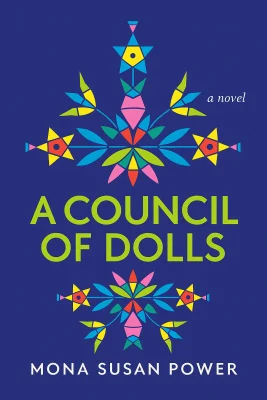
A Council of Dolls
Categories
Fiction, Audiobook, Historical Fiction, Book Club, Historical, Magical Realism, Indigenous, Literary Fiction, Native American, Native Americans
Content Type
Book
Binding
Hardcover
Year
2023
Publisher
Mariner Books
Language
English
ASIN
0063281090
ISBN
0063281090
ISBN13
9780063281097
File Download
PDF | EPUB
A Council of Dolls Plot Summary
Introduction
# The Council of Dolls: Guardians of Memory and Healing Chicago, 1969. Seven-year-old Sissy presses herself against the cold apartment wall as her mother Lillian advances, kitchen knife glinting in the fluorescent light. But the real blade cuts deeper—generations of trauma carved into Dakota women's souls, passed down like cursed heirlooms from grandmother to mother to daughter. In Sissy's trembling hands, her Black doll Ethel whispers urgent warnings, her painted eyes holding secrets older than the concrete city outside. This story spans a century of survival, from the massacre fields of Whitestone Hill to the brutal machinery of Carlisle Indian School, finally landing in the urban wilderness where broken families try to heal. At its center stands a council of dolls—Winona, Mae, and Ethel—silent witnesses who carry the weight of unspeakable memories. They are more than toys. They are vessels of ancestral strength, guardians of stories too dangerous to speak aloud, protectors of children caught in cycles of violence that echo across time itself.
Chapter 1: Sacred Keepers: The Birth of Protector Spirits
The doll Winona is born from grief in 1850, her deerskin body sewn by desperate hands. Her creator watches helplessly as her sister Wičháŋȟpi Wiŋ wastes away after losing her newborn, the young mother's heart frozen solid as winter ground. No food tempts her. No words reach her. She has become a ghost walking among the living. The sister works through sleepless nights, crafting salvation from deer hide and porcupine quills. She weaves her own hair into braids for the doll, fills the body with cottonwood down soft as clouds. But her greatest gift remains hidden—a small black stone, warm as blood, tucked inside where a heart should beat. This stone absorbed Wičháŋȟpi Wiŋ's life force during her failed labor, clutched in her fist through hours of desperate gripping. When the finished doll touches those empty hands, tears finally come. Salt water stains Winona's face, marking her as a sorrowful doll, born to carry the weight of loss. The stone heart pulses with its own rhythm, and Winona understands her purpose. She will be passed down through generations, a keeper of stories, a witness to survival. The healing flows through fingertips into deerskin. Wičháŋȟpi Wiŋ begins to eat again, to speak again, to live again. But something has changed. The doll now carries a piece of her creator's soul, a fragment of maternal love so fierce it transcends death itself. Winona's eyes hold knowledge no toy should possess—the understanding that some children need more than human protection to survive what's coming.
Chapter 2: Fire and Ash: Cultural Destruction at Boarding Schools
The train carries them east like cargo, dozens of Dakota children torn from everything sacred. Twelve-year-old Cora clutches Winona tight as the locomotive devours miles, taking them toward the Carlisle Indian Industrial School where Captain Pratt waits with his cold smile and colder mission: "Kill the Indian, save the man." The children are photographed first in their traditional clothes, allowed to hold their precious belongings one final time. Then comes systematic destruction. Every braid is shorn. Every sacred object thrown into metal drums and set ablaze. Cora watches in horror as flames consume Winona, her beloved companion reduced to ash and smoke. But something survives the fire. A boy named Jack Holy Thunder risks everything to pull Winona's stone heart from the burning barrel, the black rock searing his palm as he saves what cannot be replaced. The doll's body may be destroyed, but her spirit endures, waiting for a new vessel to inhabit. Sister Frances rules the dormitories with particular cruelty, her eyes holding the cold light of someone who believes suffering is holy. Children are beaten for speaking their language, starved for showing emotion, locked in dark boxes for remembering who they were. When Cora's little sister Blanche refuses to stop singing honor songs, the nun forces lye soap down her throat until she drowns in her own blood. The murder is listed as an accident. Another Indian child who simply couldn't adapt to civilization. But Cora survives by learning to live in two worlds simultaneously, excelling at her studies while secretly maintaining her connection to Winona's spirit. The stone heart pulses against her chest, a talisman against complete erasure.
Chapter 3: Inherited Wounds: Trauma's Echo Through Generations
Cora survives Carlisle, but survival comes with a price carved into bone and blood. She marries Jack, the broken boy who saved Winona's heart from the flames. Their love is real but twisted, shaped by violence they endured as children. Jack carries his own demons—memories of his father's hands around his little sister's throat, the year in prison that shattered what remained of his boyhood innocence. They have a daughter, Lillian, who inherits their unspoken pain like a genetic curse. The child grows up walking on eggshells, her nervous system calibrated to detect the slightest shift in her mother's mood. Cora's rages come without warning, triggered by memories she cannot name, trauma she cannot process. The family moves to Chicago, where Cora works as a seamstress and Jack drinks away his ghosts. Their daughter learns to make herself small, invisible, hoping that if she causes no trouble, maybe the storms will pass over her. But trauma doesn't skip generations—it burrows deeper, finding new ways to express itself in each successive child. Lillian grows up hypervigilant, her childhood stolen by the constant need to monitor her parents' moods. She learns that love and danger are inextricably linked, that the people who should protect you can become your greatest threat. The hole in her heart, diagnosed at birth, seems to grow larger with each betrayal. When Lillian has her own daughter, Jesse, the cycle seems destined to continue. The same walking on eggshells, the same sense that safety is an illusion, the same understanding that survival requires becoming someone else entirely. The wounds travel through bloodlines like inherited jewelry, beautiful and cursed.
Chapter 4: The Breaking Point: When Love Becomes Violence
Jesse is ten when her father Cornelius brings home Ethel, a Black Tiny Thumbelina doll from Sears. The saleslady tried to steer him toward the white version, but this Lakota journalist stands firm. His daughter deserves a doll who looks like her, who can understand her world. From the moment Jesse unwraps the box, Ethel is alive. Not in any way others can see, but in the secret language between a lonely child and her most trusted companion. Ethel listens to Jesse's fears about her mother's unpredictable moods. She offers comfort when Lillian's rages shake the apartment walls. The doll has her own opinions, her own fierce personality. She is protective, wise beyond her manufactured years, and utterly loyal to the girl who needs her most. When Lillian's mental state deteriorates, when the violence in their Old Town Gardens apartment escalates, Ethel stands guard with painted eyes that miss nothing. The day everything changes, Jesse comes home from the grocery store and drops a bag. Milk splatters across the linoleum, and Lillian's fury ignites like gasoline meeting flame. She chases Jesse up four flights of stairs, her hands already reaching, her eyes holding a terrible emptiness that speaks of generations of accumulated pain. Jesse reaches the top landing with nowhere left to run. She closes her eyes and raises her hands in surrender, clutching Ethel tight against her chest. What happens next will haunt her for decades—the sound of splintering wood, her mother's scream, the awful silence that follows. When she opens her eyes, Lillian lies broken at the bottom of the stairs, and Ethel's painted smile seems to hold secrets too dark for a child to understand.
Chapter 5: Silent Guardians: Dolls as Witnesses and Protectors
The police arrive with gentle questions that Jesse cannot answer. How do you explain that your doll saved your life? How do you tell them that sometimes love looks like violence, and sometimes violence looks like salvation? Her father Cornelius's hand rests heavy and warm on her head as she stares at the place where her mother used to be. Ethel whispers in the aftermath, her voice carrying no regret: "I took care of it. Somebody had to." The doll understands what the adults cannot—that Lillian's death was not murder but mercy, the breaking of a cycle that had already claimed too many generations. Jesse grows up carrying the weight of survival, the guilt of being saved, the confusion of loving someone who tried to hurt her. She moves through adolescence and into adulthood convinced that she is dangerous, that her love can kill. She builds a careful life of solitude, writing stories but never her own. Ethel waits in storage, wrapped in tissue paper that still smells of Lillian's Chanel No. 5. The doll holds her secrets patiently, knowing that someday Jesse will be ready to hear the truth about that day on the stairs. The painted smile never fades, the knowing eyes never close. Decades pass. Jesse becomes a successful writer living alone with her cockatoo Prince, convinced that isolation is safety. She has never married, never had children, never allowed herself to love fully. The fear lives in her bones—that she carries the same violence that consumed her mother, that she is one bad day away from becoming the monster she escaped. But the dolls remember everything. They carry not just trauma but the tools for transcending it, the accumulated wisdom of women who refused to let their people's story end in silence.
Chapter 6: Ancestral Voices: The Past Speaks Through Objects
Forty years after her mother's death, Jesse finds herself drawn to the storage unit where family artifacts wait in darkness. The trunk hasn't been opened in decades, but when she lifts the brass latches, the scent of Chanel No. 5 rushes out like a ghost seeking air. Inside, wrapped in faded tissue paper, lies Ethel—her childhood companion with the chubby brown cheeks and knowing eyes. The moment Jesse's fingers touch the vinyl skin, a voice whispers clear as morning: "My hair! My hair!" The doll's synthetic curls have been damaged by time, but her spirit remains unbroken. Other dolls emerge from the shadows of memory. Mae, the Shirley Temple doll that belonged to her grandmother Cora, carries stories of boarding school brutality and small acts of resistance. Finally comes Winona, the ancient Dakota doll whose deerskin body holds the original stone heart, still pulsing with ancestral memory after more than a century. They come with stories—not just their own, but the stories of all the women who held them. Tales of massacre and survival, of boarding schools and broken families, of trauma passed down like heirloom jewelry, beautiful and cursed. Jesse finds herself writing their narratives, her fingers flying across the keyboard as voices from the past pour through her. She writes about Winona witnessing the slaughter at Whitestone Hill, about Mae's desperate attempts to protect young Cora from Sister Frances's cruelty, about Ethel's final act of love that saved Jesse but damned her to a lifetime of guilt. The stories are medicine, each word a stitch in the torn fabric of memory. As Jesse writes, she begins to understand that she was never alone, had never been alone. The women who came before her stand at her shoulders, their love transcending death itself. The dolls were not just toys but vessels of that love, carriers of strength that could survive any assault.
Chapter 7: Breaking the Cycle: Healing Across Time
The breakthrough comes on a night when the moon hangs full and heavy, casting silver light through Jesse's bedroom window. She stands in its glow and feels the weight of generations lifting from her shoulders—the guilt, the shame, the terrible certainty that she was responsible for her mother's death. Three figures step from her shadow: her mother Lillian, her grandmother Cora, and the ancient ancestor Wičháŋȟpi Wiŋ, whose wounds have finally healed. They form a chain of clasped hands, four generations of women who survived the unsurvivable. In that moment, Jesse understands the truth Ethel has been trying to tell her. Her mother's death was not her fault, not the doll's fault, but the culmination of trauma that had been building for generations. Lillian chose to fall rather than hurt her daughter, breaking the cycle of violence that had defined their family for too long. The healing flows backward through time, touching each woman who carried these wounds. Cora can finally set down her rage at the boarding school that stole her childhood. Lillian can release the guilt that poisoned her love. The ancient ancestor can let her massacred body rest at last. Jesse feels herself changing, becoming someone new. The hypervigilance that defined her life melts away, replaced by a deep sense of peace. She is no longer the frightened child hiding in her mother's shadow, but a woman with her own power, her own story to tell. The dolls have done their work. Through Jesse's writing, their stories have been told, their purpose fulfilled. They carried the pain of generations, absorbed the trauma that might have destroyed their girls, and finally found a way to transform suffering into healing.
Chapter 8: The Circle Restored: Memory as Medicine
Ethel speaks one last time, her voice clear and strong: "We thought we were Things. We were always more than Things. Together, we have lived through many branches of Story. We did what we could to help. We all want happy endings. We are nudging everyone closer to Love." Jesse understands now that the dolls were not separate beings but aspects of herself—the part that had always been watching, protecting, remembering. They were the keepers of family memory, the guardians of stories too important to lose. Their presence in each generation served as proof that cultural identity could survive any assault, that the connections between past and present remained strong even when they seemed severed. The healing they accomplished was not just personal but ancestral. By facing the truth of what happened, by refusing to let trauma define her, Jesse has broken a chain of suffering that stretched back to the first boarding schools, the first massacres, the first attempts to destroy her people's spirit. The dolls return to their quiet vigil, no longer burdened with the weight of unspoken stories. They have served their purpose, transforming from vessels of trauma into instruments of healing. Their silence is no longer empty but full—pregnant with the possibility of new stories, new beginnings. Jesse emerges from her cocoon of solitude, ready to engage with the world again. She carries her ancestors' strength in her bones, their wisdom in her heart. The stories she will write now will be different—not just chronicles of survival but celebrations of resilience, maps for others seeking their way home to themselves.
Summary
The council of dolls—Winona, Mae, and Ethel—serves as a through-line connecting three generations of Dakota women, each guardian spirit adapting to the needs of her time while carrying forward the essential wisdom of survival. Their presence transforms individual trauma into collective strength, private pain into shared understanding. Through their silent witness and active protection, they demonstrate that healing is possible even in the face of systematic destruction. The true power of this story lies not in its catalog of horrors but in its testament to resilience. Each generation faces its own particular form of violence—the massacre and forced assimilation experienced by Cora, the domestic brutality that shapes Lillian, the urban alienation that threatens Jesse. Yet each also finds ways to preserve what matters most, to pass forward not just trauma but also the tools for transcending it. The dolls become vessels for this transmission, carrying forward the accumulated wisdom of women who refused to let their people's story end in silence. In their small hands rests the proof that love can survive any assault, that memory can outlast any attempt at erasure, and that the circle of protection, once broken, can always be made whole again.
Best Quote
“...I learned that we can't heal the story by changing the plot, pretending the awful stuff didn't happen. Tragedy just breaks out somewhere else along the line. The story won't heal until the players do.” ― Mona Susan Power, A Council of Dolls
Review Summary
Strengths: The review highlights the book's powerful narrative that intertwines Native American history with personal stories across generations. The first-person perspectives and the symbolic use of dolls add depth and intimacy. The narrative is praised for its simplicity, insightfulness, and thought-provoking nature. Overall: The reviewer expresses a strong emotional connection to the book, indicating it is a compelling yet challenging read. The combination of fact and fiction is effectively executed, making it a recommended read for those interested in themes of identity, trauma, and healing within Native American contexts.
About Author

Mona Susan Power
Dawkins investigates the intersection of science and culture, aiming to unravel the complexities of belief systems. His work often challenges readers to question widely accepted norms, thereby fostering a deeper understanding of the world through empirical evidence. By addressing the tension between scientific inquiry and traditional beliefs, he encourages critical thinking and rational discourse. This approach not only illuminates the underlying principles of scientific thought but also questions the role of religion and mythology in modern society.\n\nIn his influential book, Dawkins delves into the mechanisms of evolution, using clear explanations to make complex scientific concepts accessible to a broad audience. His method of juxtaposing scientific facts with societal myths serves to debunk misconceptions while highlighting the beauty and intricacy of natural phenomena. Readers who seek to comprehend the scientific underpinnings of life will find his work both enlightening and thought-provoking. His writing is particularly impactful for those interested in the intersection of science, philosophy, and ethics.\n\nThe author's contributions extend beyond the realm of science communication, offering valuable insights into the human condition. His bio reflects a commitment to education and advocacy, aiming to cultivate a more informed and skeptical populace. By synthesizing science with broader cultural themes, Dawkins not only educates but also inspires readers to engage with the world more thoughtfully. This dynamic approach ensures his work resonates with a diverse audience, from avid science enthusiasts to those new to the field.
Read moreDownload PDF & EPUB
To save this Black List summary for later, download the free PDF and EPUB. You can print it out, or read offline at your convenience.
A Council of Dolls
by Mona Susan Power
