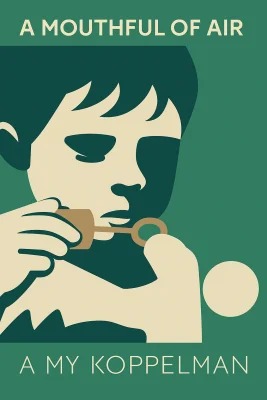
A Mouthful Of Air
Categories
Psychology, Fiction, Mental Health, Audiobook, Mental Illness, Family, Contemporary, Novels, Drama, Horror Thriller
Content Type
Book
Binding
Paperback
Year
2004
Publisher
MacAdam/Cage
Language
English
ISBN13
9781931561891
File Download
PDF | EPUB
A Mouthful Of Air Plot Summary
Introduction
Julie Davis stands at her apartment window on West Seventy-Seventh Street, watching snowflakes drift past Central Park. Her wrists bear fresh scars, pink and bumpy reminders of the morning she pressed a blade to her skin and begged for silence. One month later, she's home from the hospital, medicated and functional, pushing her baby son Teddy in his stroller through the December cold. To any casual observer, she's simply another young mother in Manhattan, tallish and attractive in her fur-lined coat, navigating the careful choreography of motherhood. But beneath the surface of this seemingly ordinary scene lies a more complex truth. Julie's return to life carries the weight of questions that have no easy answers. How does a woman rebuild herself after wanting to die? How does she love a child when she fears herself? The pills in her medicine cabinet promise stability, yet the darkness that drove her to that bathtub still lurks in the corners of her consciousness, patient and familiar as an old friend.
Chapter 1: After the Storm: Julie's Return to Life
The elevator doors open and Raymond steps back, his eyes careful and kind. He'd been the one to carry her stretcher down these same floors just weeks before, her blood painting abstract patterns on the pristine lobby carpet. Now Julie holds Teddy closer, feeling the weight of unspoken gratitude and shame pressed between them like static electricity. Her apartment feels different now, inhabited by ghosts of the woman she used to be. Georgie, once just a cleaning lady, has become a live-in guardian angel, sleeping in the maid's room and watching Julie with the vigilance of someone who knows how quickly everything can unravel. The strawberry-patterned wallpaper that once seemed cheerful now appears garish, evidence of a mind that collected happiness in theme parks and lunch boxes, desperate to wallpaper over the void. Dr. Edelman's office becomes her new church, a place where she learns the language of survival. Depression isn't a character flaw or a luxury, the doctor explains, but a medical condition as real as diabetes. The blue Zoloft pills represent hope measured in milligrams, a chemical scaffolding to hold up a collapsing sky. Julie swallows them religiously, feeling her edges soften, her thoughts slow to manageable speeds. Yet even medicated, the world feels fragile as tissue paper. She finds herself counting pizza parlors on taxi rides, focusing on concrete details to anchor herself to reality. The simple act of grocery shopping becomes an expedition requiring military precision. When panic rises in her chest like floodwater, she breathes through it, remembering the hospital's lessons about living in the present tense. Ethan moves around her with the delicate precision of a bomb disposal expert, his love now measured in careful gestures and worried glances. Their marriage has become a rehabilitation project, each shared meal a small victory against the gravity of despair. He calls her Tiny, as if diminutives could make her less likely to break.
Chapter 2: The Architecture of Normal: Building a Family Facade
The Knicks game at Madison Square Garden becomes Julie's first public performance since her return. Courtside seats courtesy of Ethan's law firm, surrounded by familiar faces wearing carefully neutral expressions. Robin leans in with practiced sympathy, asking how she's feeling with the tone reserved for cancer patients or recent widows. The arena's bright lights feel surgical, exposing every imperfection. Julie watches Cameron Diaz laugh in the VIP section, her joy effortless and genuine. What would it feel like to inhabit such lightness? To exist without the constant internal weather report of mood and medication? She touches the scars on her wrists beneath her sleeves, feeling the raised skin like a secret alphabet spelling out her shame. The game blurs into noise and motion. She finds herself studying the other wives, cataloging their handbags and confidence levels, wondering if any of them have ever stood in a bathroom at 3 AM contemplating the physics of drowning. Ethan's hand finds hers during a timeout, his palm warm and steady. He squeezes twice, their private morse code for "I love you," and she squeezes back, meaning "I'm trying." On the way home, snowflakes catch in the taxi's headlights like tiny dancers. The city feels manageable from behind glass, its dangers contained by distance and medication. Julie allows herself a moment of optimism, imagining herself as one of those mothers she used to envy, pushing strollers with genuine smiles, their internal weather systems stable and predictable. But even as hope unfurls in her chest, she remains aware of its fragility. Happiness feels borrowed, temporary as a library book that must eventually be returned. She holds Ethan's hand tighter, anchoring herself to his belief that love can triumph over chemistry, that will can overpower the brain's betrayals.
Chapter 3: Ghosts and Expectations: Confronting the Past
The past arrives unexpectedly at Madison Square Garden, wearing black jeans and a too-young girlfriend. Ron, her father, leans against a phone booth with practiced casualness, his hair artificially dark, his smile the same weapon that once carved her world into pieces. Twenty years dissolve like sugar in rain, and Julie is six years old again, waiting on the stairs for a man who made promises he never intended to keep. His new woman towers over him, blonde and gleaming with the confidence of someone who believes in fresh starts. Julie watches them walk away, her father's hand protective on his girlfriend's lower back, the same gesture he once reserved for her mother. The easy intimacy between them feels like theft, love stolen from one family and gifted to another. Her mother Harriet has transformed herself into a different woman entirely, face lifted and tightened until she resembles a soap opera version of herself. The private investigator's video plays on endless loop in her Park Avenue apartment: Ron feeding ice cream to his new life on the Asbury Park boardwalk, the same tender ritual Julie remembers from childhood. Harriet studies the footage with scientific intensity, searching for clues to decode twenty-seven years of marriage. The apartment feels like a mausoleum of their former life, family photographs in silver frames creating a shrine to an extinct species. Julie recognizes the particular hell of loving someone who made loving them dangerous, the way her father's affection came wrapped in conditions that could never be met. Even now, seeing him triggers muscle memory of wanting to please, to be chosen, to matter enough to stay. Visiting her mother becomes an exercise in controlled demolition. They sit among the carefully preserved artifacts of their former life, two women who survived the same wreckage but drew different conclusions about rebuilding. Harriet's new face promises resilience, but her shoulders still carry the weight of abandonment, curving inward like parentheses around her pain.
Chapter 4: The Second Chance: Pregnancy and Dangerous Choices
Dr. Salzman's examining room holds secrets in its fluorescent lighting. Julie's feet rest in stirrups as he delivers news that feels both inevitable and impossible: she's pregnant again. Eight months until August, eight months of carrying new life while managing the chemistry of her own survival. The pregnancy test strips away her careful defenses, exposing the gap between who she wants to be and who she actually is. The medication question looms like a storm system on radar. Dr. Edelman advocates caution, explaining that antidepressants remain largely untested in pregnancy, their effects on developing brains still mysterious. Dr. Salzman waves away her concerns with the confidence of a man who's never faced the choice between his sanity and his child's safety. Ethan transforms into a prosecutor, cross-examining both doctors with the desperation of someone watching his carefully reconstructed world tilt off its axis. The decision becomes a negotiation with probability. Julie's depression is chronic, predictable as weather patterns, while the risks to the baby remain theoretical. She agrees to stop the medication, trading her chemical safety net for the hope that pregnancy hormones might provide natural protection. The pills disappear down the drain like tiny blue prayers she no longer believes in. Without medication, her internal landscape shifts subtly at first, then dramatically. Colors become more vivid but also more threatening. Sounds amplify until ordinary conversation feels like assault. The familiar darkness doesn't rush back immediately but seeps in slowly, a tide that rises incrementally until she realizes she's drowning again in three inches of water. Ethan begins house hunting with missionary zeal, as if the right zip code could cure whatever ails them. The suburbs promise space and safety, jungle gyms and good schools, the architectural embodiment of normal. Julie finds herself nodding along to his vision while privately calculating the distance between kitchen windows and quiet bedrooms, mapping escape routes from a life she's not sure she wants to inhabit.
Chapter 5: Rachel's Arrival: Love, Lies, and Hidden Suffering
The labor ward at dawn feels like a space station, sterile and removed from earthly concerns. Julie's contractions arrive with pharmaceutical precision, induced and monitored, her body performing on medical schedule. Dr. Salzman moves between her legs with practiced efficiency while Ethan holds her hand and whispers reassurances neither of them quite believes. Rachel emerges perfect and ancient, her face carrying wisdom that predates language. Julie feels the familiar surge of protective love, fierce and terrifying in its intensity. This daughter will need defending from a world that devours girls, teaches them to make themselves smaller, to apologize for taking up space. The weight of that responsibility settles on Julie's chest like a stone. The decision to breastfeed becomes an act of rebellion against medical advice and husband's wishes. In stolen moments, she nurses Rachel while lying about taking her medication, each feeding a small betrayal that feels like love. The pills remain hidden in her cosmetic bag like contraband, insurance she refuses to cash while her daughter depends on her body for sustenance. The suburbs embrace them with aggressive normalcy. Their new house boasts cherry blossom trees and regulation lawns, the approved setting for approved lives. Tupperware parties and playgroups provide structured social opportunities, forcing Julie to perform stability for an audience of other mothers who seem genuinely content with their designated roles. But beneath the carefully curated surface, fault lines spread like hairline cracks in expensive china. Julie's mood swings grow more pronounced, her temper shorter, her grip on ordinary tasks increasingly precarious. She hides these failures from Ethan, from the baby nurse, from everyone except Rachel, who absorbs her mother's distress through milk that tastes of desperation.
Chapter 6: The Breaking Point: When Perfection Becomes Poison
The paper dolls flutter from Rachel's ceiling like tiny accusations, perfectly cut chains of smiling figures that mock Julie's attempts at maternal creativity. Three months old and Rachel cries with the persistence of a fire alarm, her distress triggering something primal and dangerous in her mother's chest. The sound burrows into Julie's skull, amplifying until it drowns out rational thought. Without medication, Julie's perception warps like funhouse mirrors. Simple tasks become mountainous obstacles. The bottle preparation that once felt automatic now requires conscious effort for each step: water, powder, shake, test temperature. Rachel's refusal to drink triggers panic that builds exponentially, each second of crying adding weight to an already unbearable load. The kitchen sink becomes ground zero for disaster. Rachel's head under the running water, Julie's desperate attempt to wash away blood from her daughter's cut lip transformed into something unspeakable. The silence that follows arrives too suddenly, too completely, carrying with it the awful understanding that some mistakes cannot be undone, some damage cannot be repaired. Ethan and Teddy return from their haircut appointment to find their world fundamentally altered. The afternoon light streaming through kitchen windows illuminates a scene that makes no narrative sense, a puzzle with pieces that refuse to fit together into anything resembling sanity or hope. Some sounds, when they emerge from human throats, contain entire universes of regret. The weight of realization settles like concrete in Julie's chest. She has become the thing she most feared: a mother whose love turns toxic, whose attempts at nurturing destroy what they mean to protect. The paper dolls continue their cheerful dance overhead, witnesses to the moment when depression revealed its true face, patient and implacable as gravity.
Chapter 7: Into the Water: A Mother's Final Act
The late afternoon light transforms their backyard into something ethereal, golden hour magic casting everything in soft focus. Julie walks barefoot across grass still damp from sprinklers, Rachel's small weight familiar against her chest. The neighborhood hums with ordinary life: children selling acorns from their driveway, a gardener blowing leaves into neat piles, an airplane tracing its path toward LaGuardia. The pool water reflects clouds and sky, creating the illusion of infinite depth. Julie remembers planning this space, imagining summer barbecues and birthday parties, Teddy learning to swim in these same waters. The future they'd built together seems as insubstantial as the reflection she disturbs with her entry. Each step deeper feels like surrender to forces beyond her control. The depression that stalked her through hospitals and medication, through love and therapy and desperate hope, finally claims its victory. Water fills her lungs with surprising gentleness, quieting the internal storm that raged for so long she'd forgotten what silence actually sounded like. Somewhere above the water's surface, Teddy calls to his father about ice cream flavors and swimming pools, his voice bright with the unshakeable faith children place in tomorrow's promises. Ethan will have to explain the unexplainable, find words for losses that exist beyond language's reach. The paper dolls will continue their eternal dance, outlasting the woman who cut them so carefully from folded sheets. The plane passes overhead, carrying families toward reunion and arrival, passengers who don't know they're witnessing the conclusion of a story that began with a woman desperate to be good enough, to love without destroying, to exist without causing pain. Water holds them both now, mother and daughter, in an embrace that promises the only peace Julie ever learned to trust.
Summary
The suburban dream that was meant to save Julie Davis becomes her final stage, its perfect lawns and regulation happiness unable to contain the storm system of her depression. Despite medical intervention and family devotion, despite medication and therapy and countless small victories, the illness that lived in her bones finally demanded payment in full. Her last act carries the terrible logic of maternal love corrupted by mental illness: believing her children safer without her, she chooses drowning over the daily drowning of despair. Amy Koppelman's unflinching portrait reveals depression not as weakness or failure but as a force of nature, predictable and patient as weather systems that build beyond the horizon. Julie's story serves as both warning and witness, documenting the particular hell of wanting to be a good mother while battling a brain that transforms love into liability. In the end, the paper dolls dancing from Rachel's ceiling outlast their creator, cheerful and eternal as the hope that sometimes arrives too late to matter. The water that claims them both reflects only sky, infinite and indifferent as the illness that proves, finally, stronger than love itself.
Best Quote
Review Summary
Strengths: The review highlights the book's brilliant writing and its ability to provide an insightful look into post-partum depression, drawing from the author's personal experience. The narrative is described as engaging, with twists and turns that maintain interest until the final page. Weaknesses: The review notes the book's dark and somber tone, cautioning that it is not a happy story. Additionally, it suggests that the protagonist, Julie, may suffer from more than just post-partum depression, indicating a complexity that might not be fully explored. Overall: The reader finds the book to be a compelling and informative read, offering a deep understanding of post-partum depression. However, potential readers should be prepared for its heavy and dark themes. The book is recommended for those interested in psychological narratives.
About Author

Amy Koppelman
Koppelman interrogates the complexities of mental health, motherhood, and psychological trauma in her literary work, driven by a mission to dismantle the stigma surrounding mental illness. Through deeply personal narratives, she extends her exploration of these themes over more than two decades, reaching readers with emotional honesty and an elegant yet quietly devastating prose style. This approach reflects her distinctive creative method, where she immerses herself in extensive writing until a pivotal scene emerges, defining the thematic core of her book. Her novels often probe unsettling topics such as depression and addiction, capturing the interior struggles of her characters.\n\nHer novels offer readers an intense emotional experience, providing insight into the psychological depths that influence people's lives regardless of their external stability or privilege. Among her critically acclaimed works, "A Mouthful of Air" stands out for its groundbreaking examination of postpartum depression, whereas "I Smile Back" received cinematic attention with an adaptation starring Sarah Silverman. Meanwhile, "Hesitation Wounds," described by Koppelman as her most hopeful book, presents a psychiatrist confronting personal trauma. Readers interested in understanding the nuanced terrain of mental health may find her work particularly impactful, as Koppelman's narratives not only explore these themes but also advocate for broader societal awareness and empathy.\n\nRecognition of Koppelman’s work extends beyond the literary field, as two of her novels have been adapted into films. Her advocacy for women's mental health further complements her narrative endeavors, underscoring her commitment to societal change through storytelling. This bio encapsulates an author whose literary contributions continue to resonate with audiences, fostering a deeper understanding of complex psychological landscapes.
Read moreDownload PDF & EPUB
To save this Black List summary for later, download the free PDF and EPUB. You can print it out, or read offline at your convenience.
A Mouthful Of Air
by Amy Koppelman
