A New Translation Of The Nichomachean Ethics
Categories
Nonfiction, Philosophy, History, Politics, Classics, School, Greece, Ancient History, Ancient, College
Content Type
Book
Binding
Hardcover
Year
2018
Publisher
Franklin Classics
Language
English
ASIN
0342461176
ISBN
0342461176
ISBN13
9780342461172
File Download
PDF | EPUB
A New Translation Of The Nichomachean Ethics Plot Summary
Introduction
# Aristotelian Virtue Ethics: Excellence Through Character and Practical Wisdom Human excellence represents one of philosophy's most enduring puzzles. What constitutes a life well-lived? How should we understand the relationship between moral character, rational deliberation, and human flourishing? These questions demand careful examination of both the nature of virtue itself and the practical wisdom required to navigate ethical choices in daily life. The systematic approach taken here reveals virtue not as a collection of arbitrary rules or cultural preferences, but as a coherent framework grounded in human nature and rational analysis. Through rigorous examination of moral psychology, the relationship between emotion and reason, and the social dimensions of ethical life, a comprehensive theory emerges that challenges both relativistic and overly rigid approaches to ethics. The analysis proceeds through careful definition of key concepts, examination of specific virtues and their corresponding vices, and exploration of how practical wisdom guides ethical decision-making in complex situations.
Chapter 1: Human Flourishing Through Rational Excellence: The Supreme Good Argument
Every human action aims toward some perceived good, yet these goods form a hierarchy. Some activities serve merely as means to other ends, while others possess intrinsic value. The highest good must be final and self-sufficient, chosen for its own sake rather than as a stepping stone to something else. This supreme good is happiness, though not happiness as commonly understood through fleeting pleasures or external circumstances. True happiness emerges from the excellent performance of distinctly human functions. Just as a skilled musician achieves excellence through the masterful exercise of musical abilities, human beings achieve their highest good through the excellent exercise of rational capacities. This involves both theoretical reasoning about eternal truths and practical reasoning about action and choice. The happy life requires the sustained exercise of virtue over a complete lifetime, not momentary achievements or temporary states of pleasure. The argument rests on a functional analysis of human nature. Humans possess unique rational capacities that distinguish them from other animals. Excellence in any domain involves performing the characteristic function of that domain with skill and consistency. Human excellence therefore consists in the excellent exercise of rational capacities, both in contemplation and in the guidance of action and emotion. This provides an objective foundation for ethics grounded in human nature rather than arbitrary convention. External goods like wealth, honor, and friendship contribute to happiness but cannot constitute its essence. They provide necessary conditions for the full exercise of virtue but remain subordinate to the internal goods of character and rational activity. A person of excellent character can maintain happiness even amid misfortune, though extreme deprivation may impede the full flowering of human excellence. The political dimension of this analysis reveals that individual happiness connects intimately with the flourishing of communities. The highest human good serves not merely private interests but contributes to the common good of political association. This establishes ethics as fundamentally concerned with both personal excellence and social responsibility.
Chapter 2: The Doctrine of the Mean: Virtue as Balance Between Extremes
Moral virtue consistently manifests as a balanced disposition between opposing extremes of excess and deficiency. This principle of the mean provides a systematic framework for understanding how virtues relate to the natural human tendencies they regulate and perfect. Courage exemplifies this pattern clearly, lying between the extremes of cowardice and recklessness. The courageous person feels appropriate fear in genuinely dangerous situations while maintaining sufficient confidence to act when action is called for. This mean is not a mathematical average but rather the appropriate response relative to circumstances, persons, and purposes. What counts as generous giving varies dramatically between a wealthy philanthropist and a struggling student. The mean is determined by practical wisdom's assessment of what the situation genuinely requires, not by splitting the difference between extremes. The doctrine applies across the spectrum of moral virtues. Generosity lies between stinginess and wasteful spending. Proper pride occupies the mean between vanity and undue humility. Even in social interactions, virtues like friendliness avoid both obsequiousness and hostility. Each virtue represents the excellent functioning of some aspect of human nature that can go wrong in two directions. Moral virtue emerges through habituation rather than instruction alone. Like learning to play a musical instrument, developing virtuous character requires repeated practice of virtuous actions until they become second nature. We become courageous by acting courageously, temperate by acting temperately, and generous by acting generously. This process shapes both our emotional responses and our practical reasoning abilities. This framework reveals why virtue requires both natural capacity and careful cultivation. People possess natural tendencies toward various extremes, but achieving the mean demands practice, experience, and the development of sound judgment. Virtue emerges not from following rigid rules but from developing the kind of character that naturally tends toward appropriate responses across the full range of human situations.
Chapter 3: Practical Wisdom: The Intellectual Foundation of Moral Character
Excellence of character requires the guidance of practical wisdom, an intellectual virtue that enables sound deliberation about human affairs. Unlike theoretical knowledge, which grasps universal truths, practical wisdom deals with particular circumstances that admit of being otherwise and require action. This capacity operates through deliberation, the process of reasoning backward from desired ends to available means. A person with practical wisdom can identify what truly contributes to human flourishing and determine appropriate action in specific situations. This capacity involves both universal knowledge of moral principles and particular knowledge of circumstances, persons, and consequences. The relationship between practical wisdom and moral virtue proves reciprocal and inseparable. Moral virtue ensures that a person desires the right ends, while practical wisdom determines the appropriate means. Without moral virtue, cleverness in achieving goals serves potentially vicious purposes. Without practical wisdom, good intentions fail to translate into effective action. This intellectual virtue develops through experience rather than abstract study alone. Young people may master mathematics or logic but typically lack practical wisdom because they have not yet encountered the full range of human situations that inform mature judgment. The complexity of human affairs requires extensive acquaintance with how people actually behave and what consequences follow from various choices. Practical wisdom also integrates the various moral virtues into a coherent character. Someone with genuine practical wisdom necessarily possesses all the moral virtues, since sound deliberation about human flourishing requires understanding the full range of human excellences. This unity of the virtues explains why partial virtue, though better than vice, falls short of the complete excellence that practical wisdom makes possible. The cultivation of practical wisdom therefore represents a crucial goal of moral education and personal development, bridging the gap between knowing what is right and actually doing it.
Chapter 4: The Akrasia Problem: When Moral Knowledge Fails to Guide Action
The phenomenon of incontinence presents a puzzling challenge to understanding moral psychology. How can someone know what is right yet consistently act against that knowledge? This breakdown between understanding and action reveals important truths about the nature of moral knowledge and human motivation. Incontinence differs fundamentally from both virtue and vice, creating an internal conflict absent from both. The virtuous person acts well from a stable disposition, while the vicious person acts badly but in accordance with their own corrupt principles. The incontinent person, however, acts badly while maintaining correct beliefs about what should be done. The explanation lies in recognizing different types of knowledge and their varying relationships to action. Someone may possess universal knowledge that certain actions are wrong while failing to grasp how this applies to their immediate situation. Alternatively, strong emotions can render knowledge temporarily ineffective, similar to how intoxication or illness can impair the use of knowledge one clearly possesses. When passion overwhelms reason, the incontinent person acts on immediate desire rather than considered judgment. They may even repeat correct moral principles while acting, but these words lack the force they would have in a calmer state. The knowledge exists but fails to control behavior because emotion has disrupted the normal connection between understanding and action. This analysis reveals why incontinence is curable in ways that vice is not. The incontinent person retains correct principles and will feel regret after passion subsides. Education and habituation can strengthen the connection between knowledge and action. The vicious person, by contrast, acts from corrupt principles and feels no genuine regret, making reform much more difficult. Understanding incontinence also illuminates the importance of emotional education alongside intellectual development.
Chapter 5: Pleasure, Friendship, and Contemplation: Components of the Complete Life
The role of pleasure in human flourishing requires careful analysis to avoid both hedonistic excess and puritanical rejection. Pleasure serves as a natural completion or perfection of excellent activity rather than as an end pursued for its own sake. Genuine pleasures accompany the exercise of human capacities when those capacities are functioning well and engaging with appropriate objects. The pleasure of learning accompanies the successful exercise of intellectual faculties, while the pleasure of courageous action accompanies the proper functioning of moral character. These pleasures are signs of excellent activity rather than separate goals. This understanding explains why pleasures differ in kind and value, with those accompanying virtuous activities being inherently more valuable than those accompanying base activities. Friendship represents one of the highest expressions of human social nature, manifesting in three distinct types based on their motivating grounds: utility, pleasure, and virtue itself. While friendships based on utility or pleasure can be valuable, they remain inherently unstable because they depend on changeable external circumstances. The highest form of friendship exists between people of good character who appreciate each other's virtue. These friends wish each other well for the other's own sake, not for any external benefit. Such friendships combine the advantages of the other types while adding stability and depth that only shared commitment to excellence can provide. They contribute essentially to human flourishing by providing opportunities for virtuous action, companionship that makes life's activities more meaningful, and a context for the full expression of human excellence. The ultimate expression of human excellence lies in contemplative activity, which exercises the highest human capacity: the ability to contemplate eternal truths. This activity possesses several characteristics that mark it as supreme among human pursuits. It exercises the best part of human nature, can be sustained more continuously than other excellent activities, is most self-sufficient, and is pursued entirely for its own sake.
Chapter 6: Evaluating Character-Based Ethics: Strengths and Contemporary Relevance
The systematic examination of virtue, character, and moral decision-making reveals that human excellence consists not in following external rules but in developing the kind of character that naturally tends toward appropriate action across the full spectrum of human situations. This character-based approach provides a more complete and psychologically realistic account of moral life than approaches focused solely on duties or consequences. The framework offers particular strength in explaining the connection between moral knowledge and effective action. By recognizing the role of emotion, habit, and practical wisdom in ethical behavior, it addresses the common experience of knowing what is right while struggling to act accordingly. The analysis of incontinence, the doctrine of the mean, and the integration of intellectual and moral virtues provide sophisticated tools for understanding moral psychology. The emphasis on habituation and character development offers practical guidance for moral education and personal growth. Rather than simply prescribing rules or calculating outcomes, this approach focuses on the kind of person one should become and the practices that foster such development. The recognition that virtue requires both universal principles and particular judgment provides flexibility while maintaining objective standards. The integration of individual excellence with social responsibility addresses contemporary concerns about the relationship between personal fulfillment and civic engagement. The analysis of friendship, justice, and political virtue demonstrates how character-based ethics naturally extends to social and political dimensions without losing its focus on individual flourishing. Contemporary relevance emerges particularly in contexts where rule-based approaches prove inadequate to address complex moral situations. Professional ethics, leadership development, and character education all benefit from frameworks that emphasize practical wisdom, emotional intelligence, and the cultivation of stable dispositions toward excellence. The approach provides resources for navigating moral complexity while maintaining commitment to objective standards of human flourishing.
Summary
The systematic examination of human excellence reveals virtue as the reliable disposition to choose and act appropriately in response to life's challenges and opportunities. This excellence emerges through the integration of rational insight, emotional maturity, and habituated practice, creating persons capable of both individual flourishing and meaningful contribution to community life. The enduring value of this analysis lies not in providing simple answers to ethical dilemmas, but in offering a framework for thinking clearly about the relationship between character, choice, and human flourishing. By grounding ethics in careful observation of human nature and rational analysis of virtue's structure, it provides resources for anyone seeking to live thoughtfully and well in complex social circumstances.
Best Quote
“One swallow does not make a summer, neither does one fine day; similarly one day or brief time of happiness does not make a person entirely happy.” ― Aristotle, The Nicomachean Ethics
Review Summary
Strengths: The review highlights the book's exploration of philosophical themes, particularly the influence of Aristotle and Plato on Christianity and the concept of intrinsic goodness. It appreciates the book's ability to provoke thought on modern interpretations of goodness and happiness. Weaknesses: The review lacks specific details about the book's narrative, characters, or writing style, making it difficult to assess the book's overall quality. It also digresses into personal reflections, which may detract from a focused analysis of the book itself. Overall: The reader seems to appreciate the philosophical depth of "Chasing Eden" and its challenge to modern perceptions of goodness. However, the review's lack of specific details about the book may limit its usefulness for potential readers seeking a comprehensive evaluation.
About Author
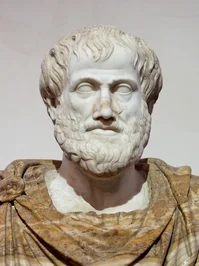
Aristotle
Aristotle probes the nature of reality and human experience, intertwining logic, metaphysics, and ethics into a cohesive philosophical framework. His work challenges readers to explore the profound questions of existence, presenting a systematic approach to understanding the world. By developing the first formal system of logic, Aristotle offers tools for rigorous reasoning, thereby establishing a foundation that underpins much of Western intellectual thought. Meanwhile, his ethical teachings, particularly in the "Nicomachean Ethics," emphasize the pursuit of virtue through the "golden mean," suggesting that balance leads to true human flourishing or "eudaimonia". These core themes demonstrate his pursuit of a balanced and analytical perspective on human nature and society.\n\nThrough meticulous analysis, Aristotle's philosophy extends into politics and natural sciences, offering a blueprint for understanding complex systems. His book "Politics" illustrates the dynamics of city-states and the notion of humans as "political animals," suggesting that governance is central to human fulfillment. His scientific explorations, exemplified in "History of Animals," reflect his empirical approach to studying the natural world, which continues to influence modern scientific inquiry. For readers, these contributions reveal the interconnectedness of disciplines, providing a framework that bridges theoretical and practical realms. Therefore, those engaged in philosophy, political science, or natural sciences can find enduring insights within Aristotle’s expansive works.\n\nBy integrating observation with theoretical analysis, Aristotle's authorial legacy persists as a wellspring of intellectual inspiration. His philosophical inquiries, which transcend time and culture, offer a lens through which contemporary thinkers can view and question the world. This bio of Aristotle not only highlights the enduring relevance of his ideas but also underscores the transformative impact of his methods, making his work indispensable for scholars seeking to navigate the complexities of both ancient and modern thought.
Read moreDownload PDF & EPUB
To save this Black List summary for later, download the free PDF and EPUB. You can print it out, or read offline at your convenience.
A New Translation Of The Nichomachean Ethics
by Aristotle
