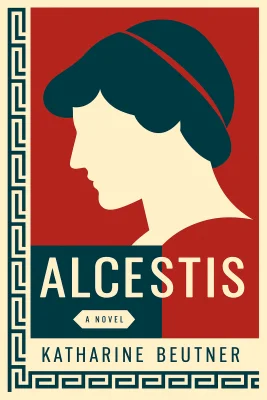
Alcestis
Categories
Fiction, Historical Fiction, Fantasy, Mythology, Historical, Greece, Greek Mythology, LGBT, Queer, Retellings
Content Type
Book
Binding
Hardcover
Year
2010
Publisher
Soho Press
Language
English
ISBN13
9781569476178
File Download
PDF | EPUB
Alcestis Plot Summary
Introduction
In the stifling heat of an ancient Greek palace, a young princess named Alcestis learned the weight of sacrifice before she could even walk. Born as her mother died cursing her name, she grew up in the shadow of death, caring for her sickly sister Hippothoe through endless nights of wheezing and gasping for breath. The palace of Iolcus echoed with the cruel laughter of her father Pelias, a king whose divine blood from Poseidon had curdled into tyranny. When the beautiful King Admetus of Pherae arrived with his lion and boar harnessed to win her hand, Alcestis thought she had found escape from her father's house. But the gods had darker plans. Apollo's promise to spare Admetus from death would demand a terrible price—and when Hermes, the messenger of the underworld, appeared at their feast with his moon-horned wand, it was not her husband he came to claim. In that moment of ultimate choice, Alcestis would discover that love and death were not opposites, but twin faces of the same cruel deity, and that sometimes the deepest sacrifice leads not to redemption, but to a love that burns brighter than life itself.
Chapter 1: Loss and Longing: Alcestis's Childhood in Iolcus
The screams echoed through the stone corridors of the palace as Queen Anaxibia fought her final battle. She lost, as women often did in those days, spitting out her newborn daughter's name like a curse before the light faded from her eyes. The servants wiped blood from their hands and looked down at the squalling infant with a mixture of pity and resignation. Another royal daughter. Another mouth to feed until marriage could carry her away. Alcestis grew up in the shadow of that first loss, sharing a cramped bedchamber with her sisters Pisidice and Hippothoe. While Pisidice dreamed of suitors and spent her mornings by the window watching the empty road, Alcestis found her purpose in the middle of the night when Hippothoe's breathing turned ragged and desperate. The youngest sister's lungs were weak, corrupted by some curse or simply the cruel lottery of birth, and Alcestis became her guardian angel, waking the servants, holding her hand through the steam treatments, whispering prayers to Apollo for healing that never quite came. Their father Pelias ruled with the casual cruelty of a man born from the union of a sea god and a mortal woman. His divine blood manifested not in wisdom but in rage, and he blamed Alcestis for her mother's death with the single-minded fury of a god. She learned to move through the palace like a ghost, avoiding his attention, finding solace only in Hippothoe's weak smile and the familiar rhythm of caring for someone more fragile than herself. On summer nights when the heat made breathing even harder, Alcestis would lie with her ear pressed to Hippothoe's chest, listening to the rattle and wheeze, counting heartbeats like prayers. She promised the gods everything—her own breath, her own life, her future children—if only they would let her sister live. The gods, as always, were listening. They simply had their own ideas about the price of such devotion.
Chapter 2: Bound by Fate: Marriage to Admetus
The dust cloud appeared on the horizon like an omen, thirty horses thundering toward the palace gates with a chariot at their head. Alcestis watched from the steps as the impossible sight resolved into reality—King Admetus of Pherae had harnessed a lion and a boar to win her hand, just as her father had mockingly demanded. The beasts strained against their traces, muscles rippling beneath hide and fur, while their golden-haired driver whispered to them in a language that sounded like sunlight given voice. Admetus stepped down from the chariot with the confidence of a man who had wrestled death itself and won. He was beautiful in the way of young kings, with dark eyes that held secrets and hands that trembled only slightly when he looked at her. When he knelt before the palace steps and spoke her name, Alcestis felt something stir in her chest—not love, not yet, but the possibility of escape from her father's house and the endless nights of watching Hippothoe fade. Pelias had no choice but to honor his word, though his fury turned the wedding feast into a battlefield of silences and sharp glances. As the rituals unfolded, Alcestis caught glimpses of the chariot driver watching from the shadows, his golden hair catching the torchlight like a crown. There was something otherworldly about him, something that made the horses calm and the very air shimmer with heat, but she was too overwhelmed by her own transformation to pay him much attention. The wedding night brought its own revelations. When serpents filled their bedchamber like a plague of nightmares, writhing across the marriage bed with eyes like black jewels, Alcestis discovered that her husband's luck came with a divine price. The golden-haired driver revealed himself as Apollo, god of light and music, come to save his mortal beloved from the consequences of forgetting to honor Artemis. As the god transformed the snakes to harmless wood with a gesture, Alcestis began to understand the true nature of the bargain she had made.
Chapter 3: The Sacrifice: Choosing Death for Love
The feast had been perfect until Hermes arrived. The god of transitions materialized in the great hall like smoke given form, his traveler's cloak trailing shadows and his moon-horned wand pointing with inexorable certainty. The assembled kings and heroes fell silent as death itself entered their celebration, their wine cups frozen halfway to their lips as the temperature in the room plummeted. Admetus went white when Hermes spoke his name. This was the price of Apollo's protection—when death came calling, someone else would have to pay. The god's bargain had seemed generous in the abstract, a distant insurance against an uncertain future. Now, with the underworld's messenger standing patient as stone, Admetus scrambled through his options like a drowning man grasping at shadows. He turned first to his dearest friend Creon, whose slight shake of the head cut deeper than any blade. Then to his aged parents, who looked at their son with the bewildered hurt of animals marked for slaughter but could not bring themselves to save him. The silence stretched like a bowstring, taut with tension and the weight of moral failure, until every man in the hall understood that they were witnessing something unprecedented—a king who would let others die for his cowardice. Alcestis stood because she could not watch any longer. The words came from some deeper place than thought, rising from the same well of devotion that had kept her awake through Hippothoe's worst nights. She belonged to this house now, these people, this flawed and frightened man who had given her escape from her father's cruelty. When Hermes wrapped her in his cloak and lifted her toward the ceiling, she felt not fear but a strange lightness, as if she had finally found the purpose for which she had been born.
Chapter 4: The Underworld's Embrace: Meeting Persephone
The descent felt like drowning in reverse. Hermes carried her through layers of earth and shadow until they emerged above a vast gray plain dotted with pale flowers—asphodel, the bloom of the dead, stretching endlessly toward a horizon that might not exist. The underworld was quieter than silence, a place where even echoes came to die, and Alcestis found herself changed by crossing its threshold, her mortal flesh becoming something between memory and mist. The palace of Hades rose from the plain like crystallized grief, its walls smoky and translucent, revealing glimpses of the shades that wandered outside. Here ruled the lords of the dead—Hades himself, dark and patient as bedrock, and beside him on a throne of equal height sat the most beautiful woman Alcestis had ever seen. Persephone, queen of the underworld, had golden hair that caught what little light existed in that realm and eyes the color of winter storms. The goddess looked at Alcestis with the intensity of a cat watching a mouse, her lips curved in a smile that promised both danger and delight. She spoke of love and sacrifice, of the curious nature of a mortal who retained her sense of self even in death, but beneath her words ran a current of something deeper—hunger, perhaps, or the terrible loneliness of immortal exile. When she offered knowledge of Alcestis's lost sister Hippothoe in exchange for stories, the bargain felt less like negotiation than seduction. As the goddess spoke of her own abduction and transformation, her fingers traced patterns in the air that made Alcestis's newly spectral flesh remember what it meant to burn with desire. This was not the fumbling passion of mortal marriage but something elemental, dangerous as lightning and twice as beautiful. When Persephone leaned forward and whispered of secrets that could only be shared in darkness, Alcestis felt the last of her resistance crumble like walls built of sand.
Chapter 5: Shadows of Memory: Finding Hippothoe
The garden where Persephone led her was a place of beautiful corruption, where dead trees bore jewel-bright fruit and wilted flowers exhaled the perfume of endings. Here the queen of the underworld shed her throne room majesty and became something more dangerous—a woman who touched with fire and kissed with the promise of oblivion. Her hands on Alcestis's skin kindled sensations that mortal flesh was never meant to contain, each caress a small death and resurrection. Between kisses that tasted of pomegranate seeds and whispered confessions, Persephone told the story of her wedding night—not the sanitized version sung by bards, but the raw truth of a virgin goddess discovering the intoxication of surrender. She spoke of power and submission, of the terrible joy of being claimed by darkness itself, while her fingers traced the geography of desire across Alcestis's trembling form. This was education in the deepest sense, a curriculum of shadows that no mortal woman was meant to survive. When it was over and they lay entwined on the dead grass, Persephone finally kept her bargain. Hippothoe, she revealed, walked beside the river Lethe where memories came to drown. The knowledge came with its own agony—to find her sister, Alcestis would have to leave this garden, abandon this impossible love for a search that might yield nothing but ashes and disappointment. The journey to Lethe confirmed her worst fears. Hippothoe stood among the shades lining the riverbank, recognizable only by her small stature and the familiar tangle of her hair. Seven years in the underworld had hollowed her out completely, leaving nothing but an empty vessel that had once contained the sister Alcestis had loved. When those vacant eyes turned toward her without recognition, Alcestis finally understood the true cruelty of death—not the ending, but the forgetting, the slow dissolution of everything that had once mattered.
Chapter 6: The Unwanted Rescue: Heracles's Intervention
The heroes always arrived too late and at exactly the right time. Heracles descended into the underworld with the casual confidence of Zeus's son, expecting to find a grateful victim awaiting rescue rather than a woman who had discovered that death could offer gifts the living world never could. He moved through the realm of the dead like a tourist, seeing only what his limited mortal vision could interpret—gray shades, dark rivers, and the woman he had come to save. Alcestis met him on the road with blood on her lips from the sacrifice he had offered, the metallic taste of his half-divine heritage sharp on her tongue. She tried to explain that rescue was the last thing she wanted, that she had found love and purpose in this shadowland, but heroes heard only the stories they came prepared to tell. Heracles saw enchantment where there was choice, captivity where there was belonging, and he would not be swayed by the protests of a mere woman. The confrontation in the crystal palace played out with the inevitability of a ritual. Hades surrendered her without a fight, understanding the larger forces at work, while Persephone wept tears that sparkled like crushed diamonds. Their final embrace carried the weight of eternities, a love affair compressed into stolen moments that would have to sustain them both through the long years of separation ahead. As Heracles led her away, Alcestis felt pieces of her soul tearing free like skin from a healing wound. The ascent to the world above reversed her transformation, mortality flooding back into her limbs with each step toward the surface. By the time they emerged through a rocky cave into the harsh light of the living world, she was flesh and blood again, her feet bleeding on the stones, her heart beating with the desperate rhythm of a caged bird. The weight of life settled over her like chains, beautiful and terrible and absolutely inescapable.
Chapter 7: Return to Silence: Life After Death
Admetus waited for her in the courtyard of their palace, surrounded by the debris of abandoned funeral games and the confused celebration of servants who had prepared to mourn and now found themselves hosting a resurrection. He looked older than his years, worn thin by three days of grief that had aged him more than three decades of comfortable rule. When Heracles presented her like a prize won at some cosmic tournament, her husband could barely bring himself to believe the evidence of his eyes. She chose silence as her shield, refusing to speak for three days while Admetus danced around her like a supplicant before an oracle. The servants feared her touch and crossed themselves when she passed, unsure whether she was blessed or cursed by her journey through death. In the evenings, her husband would tend to her wounded feet with the reverence of a priest performing sacred rites, his hands gentle but uncertain on her skin that had known the touch of gods. On the third night, she finally broke her silence with a question that cut straight to the heart of their marriage—had he learned to believe she was truly Alcestis? The words scraped out of her throat like rust from a blade, carrying with them the weight of all she could never tell him. He would never know of Persephone's garden or the taste of divine desire, never understand that death had been a liberation rather than a punishment. The life that stretched ahead of her was mapped out in the goddess's prophecy—two children, years of dutiful wifehood, the slow erosion of memory under the weight of mortal concerns. She would watch for signs of her daughter's divine inheritance, searching for glimpses of storm-gray eyes or the dangerous beauty that marked those touched by the underworld. And always, in the changing seasons, she would remember the queen who ruled beneath the earth, waiting with infinite patience for the day when age would claim her mortal lover and bring her home at last.
Summary
Alcestis returned to the world of the living forever changed, carrying within her the secret knowledge of divine love and the bitter understanding of what death truly meant for those left behind. Her marriage to Admetus continued, blessed with the children Persephone had prophesied, but beneath the surface of domestic tranquility burned the memory of passion that transcended mortality itself. She raised her son to be a hero and watched her daughter for signs of the otherworldly beauty that would mark her as touched by the gods, knowing that each season's turning brought her closer to her final reunion with the queen of the underworld. The stories they told of her in later years spoke only of sacrifice and devotion, a wife so loving she died for her husband's cowardice and returned silent and pure. They carved her image into marble and painted her reaching toward the light, always the perfect symbol of feminine virtue. But those who looked closely at the paintings might notice something else in her upward gaze—not supplication but patience, the expression of a woman counting the years until winter comes again and the earth opens to welcome her home to a love that makes mortal marriage look like a pale shadow of the real thing.
Best Quote
“The story of my marriage,” she said, her thumb skimming my collarbone. “Of my wedding. The story no one knows, for the bards do not sing it and the painters do not smear it on their walls. It is not fit for such audiences. But it is fit for you, Alcestis.” ― Katharine Beutner, Alcestis
Review Summary
Strengths: The review highlights Katharine Beutner's ability to create a poignant literary fantasy by providing a detailed backstory for Alcestis, enriching her character. The portrayal of ancient Greek misogyny is effectively conveyed through subtle, matter-of-fact storytelling. Beutner's vivid depiction of a world where gods interact with humans adds depth to the narrative. Overall: The review suggests a positive sentiment towards Beutner's debut novel, appreciating its nuanced exploration of Alcestis' character and the ancient Greek setting. The book is recommended for readers interested in literary fantasy that thoughtfully examines historical and mythological themes.
About Author

Katharine Beutner
Beutner interrogates the intersections of myth and history through her engaging narrative style, focusing on themes of identity, mystery, and reimagined histories. Her work blends a scholarly understanding of literary history with compelling storytelling, as seen in her novel "Alcestis", a creative retelling of a Greek myth first released by Soho Press in 2010 and reissued in 2023. Her subsequent book, "Killingly", explores the gothic elements of a real-life mystery from Mt. Holyoke College in 1897, reflecting her interest in historical narratives and their modern implications.\n\nHer academic career complements her fiction writing; Beutner teaches creative writing and literature at various institutions, currently at the University of Wisconsin-Milwaukee. This dual focus on teaching and writing enhances her ability to explore complex literary themes. Beutner’s research encompasses areas like environmental writing and queer studies, which inform her fiction's depth and complexity. Meanwhile, her editorial role with "The Dodge", an online eco-writing journal, allows her to engage with contemporary ecological issues, broadening the impact of her work.\n\nReaders and students alike benefit from Beutner's unique approach to fiction and academia, gaining insights into the interplay of historical context and narrative form. Her contributions to literature have been recognized with awards such as the Edmund White Debut Fiction Award for "Alcestis" and an Ohio Arts Council Individual Excellence Award. Through her novels and academic endeavors, Beutner connects past and present, challenging readers to consider the narratives that shape our understanding of history and identity. This brief bio highlights her influential role as an author and academic, offering a glimpse into the thematic richness of her work.
Read moreDownload PDF & EPUB
To save this Black List summary for later, download the free PDF and EPUB. You can print it out, or read offline at your convenience.
Alcestis
by Katharine Beutner
