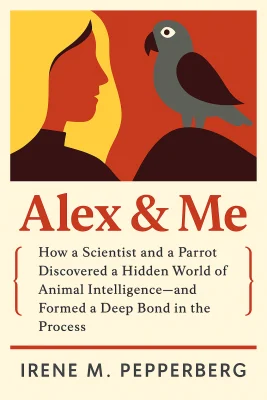
Alex & Me
How a Scientist and a Parrot Discovered a Hidden World of Animal Intelligence – and Formed a Deep Bond in the Process
Categories
Nonfiction, Psychology, Science, Biography, Memoir, Animals, Nature, Audiobook, Biology, Birds
Content Type
Book
Binding
Hardcover
Year
2008
Publisher
Collins
Language
English
ASIN
0061672475
ISBN
0061672475
ISBN13
9780061672477
File Download
PDF | EPUB
Alex & Me Plot Summary
Introduction
In a world where humans thought themselves the exclusive owners of complex cognitive abilities, a small grey parrot with a walnut-sized brain changed everything. Alex, an African Grey parrot, became the center of a thirty-year scientific journey that revolutionized our understanding of animal intelligence. When Dr. Irene Pepperberg began working with Alex in 1977, the scientific community dismissed the possibility that birds could possess anything resembling human-like cognitive abilities. Parrots were considered mere mimics - biological tape recorders that repeated sounds without understanding. Alex would prove them spectacularly wrong. Through innovative training methods and rigorous testing, Alex demonstrated abilities that shocked the scientific establishment. He mastered more than 100 English words, identified colors, shapes, and numbers, grasped abstract concepts like "same" and "different," and even displayed a rudimentary understanding of zero - a concept European mathematicians only formalized in the 17th century. But Alex was more than a collection of impressive cognitive feats. He was a personality - sometimes mischievous, sometimes affectionate, always determined to assert himself. His story invites us to reconsider fundamental assumptions about animal consciousness, challenges our understanding of intelligence across species, and reveals the profound emotional bonds that can form between humans and the creatures with whom we share our world.
Chapter 1: The Unlikely Beginning: From Chemistry to Parrot Research
Irene Pepperberg's journey to groundbreaking animal cognition research began in the most unexpected way - through theoretical chemistry. After earning her doctorate from Harvard in 1976, Pepperberg seemed destined for a traditional career in chemistry. However, a pivotal moment came when she watched several PBS television programs featuring dolphins communicating through whistles and chimpanzees learning sign language. These programs sparked something profound in her - a realization that the study of animal communication might open windows into animal minds in ways previously unimagined. Though Pepperberg had always loved birds since childhood, she had never considered them subjects for scientific study. Growing up with parakeets as companions, she had experienced firsthand their responsiveness and personality, but had never connected this with formal research possibilities. The revelation that serious scientists were studying animal communication changed everything for her. Despite having no formal training in animal behavior or biology, Pepperberg made the radical decision to change her research direction completely. She chose to work with African Grey parrots specifically because of their renowned vocal abilities and anecdotal reports of intelligence. In June 1977, Pepperberg acquired a one-year-old African Grey from a pet store near Chicago's O'Hare Airport. She named him Alex - an acronym for Avian Learning EXperiment. Their first meeting was hardly promising; the frightened bird cowered in his cage, trembling and wary of human contact. Neither could have predicted they were embarking on a three-decade partnership that would fundamentally challenge scientific orthodoxy. The scientific establishment of the time was deeply rooted in behaviorism, which viewed animals as little more than stimulus-response machines incapable of genuine understanding. Pepperberg faced immediate skepticism and even ridicule. When she submitted her first research grant application to the National Institute of Mental Health in 1977, the review panel essentially asked "what she was smoking" for suggesting a bird brain could master language-like skills. The rejection was swift and dismissive. Despite this initial setback, Pepperberg persisted with limited resources, developing an innovative training technique called the model/rival method. Unlike traditional operant conditioning, this approach placed Alex in a social context where he could observe humans interacting meaningfully with objects. When Alex correctly identified an object, he received the object itself as a reward, creating a functional connection between words and their meanings. This approach proved remarkably effective, and within months, Alex was beginning to use vocalizations to identify specific objects - not merely mimicking, but communicating with purpose.
Chapter 2: Battling Scientific Skepticism: Challenging Prevailing Paradigms
Throughout the late 1970s and early 1980s, Pepperberg and Alex faced an uphill battle against entrenched scientific beliefs. The dominant paradigm held that language and higher cognitive functions were uniquely human abilities, with perhaps some limited capabilities existing in our closest primate relatives. Birds, with their tiny brains and evolutionary distance from humans, were considered incapable of meaningful communication or complex thought. Pepperberg's claims about Alex's abilities were met with disbelief, dismissal, and sometimes outright hostility. When Pepperberg submitted her first papers to prestigious journals like Science and Nature, they were summarily rejected without even being sent for peer review. The editors deemed the very idea that a bird could use labels meaningfully as too implausible to warrant serious consideration. This dismissal was particularly painful because it denied Pepperberg the academic currency she needed most: published research. Without publications, securing research funding became nearly impossible, creating a vicious cycle that threatened to end the project before it could gain momentum. The challenges extended beyond publications. Pepperberg struggled to find institutional support, often working in borrowed lab space with minimal resources. At Purdue University, where she began her work, she had no official position for years, surviving on small grants when available and personal sacrifice when necessary. She and Alex moved from temporary space to temporary space, dealing with floods, cockroach infestations, and constant uncertainty about the future of their research. As she described it, they were "like vagabonds during our seven-plus years at Purdue, lugging our limited belongings from temporary lab to temporary lab." Even as evidence of Alex's abilities accumulated, skeptics continued to move the goalposts. When Alex demonstrated he could label objects, critics insisted he was merely mimicking without understanding. When tests showed he comprehended what he was saying, they claimed he must be responding to subtle cues from researchers - the "Clever Hans" phenomenon. Each time Alex mastered a skill previously thought impossible for birds, the scientific establishment found new reasons to doubt or diminish the achievement. The controversy reached a peak with the infamous "Clever Hans conference" in 1980, organized by prominent linguists to denounce research on animal communication. Though aimed primarily at ape language research, the conference created a hostile environment for anyone suggesting animals might possess more sophisticated cognitive abilities than behaviorist dogma allowed. Pepperberg attended, witnessing firsthand the vitriolic academic battles that would shape the reception of her own work for years to come. Despite these challenges, Pepperberg maintained scientific rigor in her approach. She designed careful experiments, collected extensive data, and documented everything meticulously. Slowly, her persistence began to pay off as Alex continued to demonstrate abilities that couldn't be explained away by conventional theories. By the mid-1980s, the evidence had become difficult to ignore, and a few prominent scientists began to take notice of the remarkable grey parrot who was redefining what science understood about avian cognition.
Chapter 3: Breakthrough Moments: When Alex Surprised the World
Among Alex's most stunning achievements was his grasp of abstract concepts like "same" and "different." When presented with two objects, Alex could identify whether they shared color, shape, or material properties. This required him to mentally compare the objects along multiple dimensions and vocalize the relevant category. When Pepperberg presented these findings at the International Primatological Congress in 1986, a senior primatologist stood up and asked incredulously, "You mean to tell me that your parrot can do what Premack's chimps can do, only in a more sophisticated manner?" The question itself revealed how thoroughly Alex was demolishing assumptions about avian cognitive limitations. Perhaps Alex's most remarkable conceptual breakthrough involved his understanding of numbers. Not only could he count items up to six, but he also grasped the concept of zero - a sophisticated abstraction that appeared nowhere in his training. During one test session, Pepperberg showed Alex a tray with sets of two, three, and six blocks of different colors, then asked, "What color three?" To her astonishment, Alex responded, "Five." When she repeated the question, he insisted, "Five." Thinking to challenge him, Pepperberg asked, "What color five?" Without hesitation, Alex replied, "None." He had spontaneously used "none" to indicate the absence of a set - essentially conceptualizing zero. This was particularly striking because a label for zero entered Western mathematics only in the 17th century. Alex frequently demonstrated that his abilities exceeded what researchers explicitly taught him. When working on phonemes (individual speech sounds), Pepperberg and her students were training Alex to identify sounds like "sss" or "ch." During a demo for sponsors, Alex grew frustrated when Pepperberg repeatedly praised him but withheld the nut he wanted. Finally, he fixed her with a slitty-eyed look and slowly sounded out, "Want a nut. Nnn...uh...tuh." He had spontaneously broken down a word into its component sounds - demonstrating phonological awareness that went beyond his training. Perhaps most intriguing were moments when Alex seemed to create novel expressions. When introduced to apples, Alex refused to say "apple" despite extensive training. Instead, he insisted on calling them "banerry." Researchers eventually realized this might be a case of lexical elision - combining elements of "banana" and "cherry" to describe something that tasted somewhat like a banana but looked like a large cherry. Though impossible to prove Alex's intention scientifically, such incidents suggested creative thinking that defied conventional understanding of bird cognition. Beyond formal experiments, Alex displayed an uncanny ability to use language functionally. If given banana when he asked for grape, he would spit it back and repeat his request more insistently. When bored with testing, he would find ingenious ways to disrupt sessions - listing every color except the correct one, or suddenly developing an urgent interest in preening. These behaviors revealed not just vocabulary but a sophisticated understanding of how communication could be used to achieve goals and express preferences - hallmarks of true language use rather than mere mimicry.
Chapter 4: The Bond Beyond Science: A Deep Connection Forms
Despite Pepperberg's initial determination to maintain scientific objectivity, a profound connection inevitably formed between researcher and subject over their three decades together. Alex was not merely a research animal but a daily presence in Pepperberg's life - a companion who shared her workspace, her challenges, and eventually her emotional life. Though Pepperberg consciously tried to maintain professional distance, Alex had his own ideas about their relationship. The emotional depth of their connection became evident in small daily interactions. When Pepperberg returned to the lab after absences, Alex would greet her enthusiastically. He could apparently detect her moods, offering comfort when she was distressed. During a particularly difficult period when Pepperberg's research funding was threatened and her marriage was under strain, Alex seemed to sense her emotional state. "He would sit close with me at these times," Pepperberg recalled, "just being Alex. Not Alex the mischievous imp; not Alex the boss of the lab; not the demanding Alex. Just Alex the empathic presence." Their relationship took on dimensions that transcended the traditional researcher-subject dynamic. Alex developed unique vocalizations specifically for Pepperberg, including his habitual evening farewell: "You be good. I love you." To which she would respond, "I love you too." Then Alex would ask, "You'll be in tomorrow?" and she would reassure him, "Yes, I'll be in tomorrow." This exchange became their ritual, repeated countless times over the years, creating a thread of connection that bound their lives together. The depth of their bond became painfully apparent during Alex's battle with aspergillosis, a potentially fatal fungal infection. When Pepperberg had to leave him at the veterinary clinic for treatment, Alex looked at her pathetically and said, "I'm sorry. Come here. Wanna go back." The incident revealed not just Alex's vocabulary but his emotional awareness - his understanding that she was leaving him in an unfamiliar, frightening place, and his desire to return to safety with her. Perhaps the most poignant evidence of their connection came when Pepperberg attempted to maintain scientific objectivity during a life-threatening illness. After surgery, as Alex was waking from anesthesia, his first words were a tremulous "Wanna go back" - his consistent request to return to familiar surroundings and to Pepperberg herself. The moment crystallized something essential about their relationship: despite all scientific protocols and cautions, they had formed a bond of mutual trust and dependence that transcended the experimental setting. When Alex died unexpectedly in 2007, at just 31 years of age, the depth of Pepperberg's grief surprised even her. "The sense of loss, grief, and desertion that tore viscerally at my heart and soul at the passing of my one-pound colleague and companion of three decades was of a degree and intensity I had never anticipated, nor could have imagined," she wrote. In that moment of devastating loss, Pepperberg realized how thoroughly Alex had embedded himself in her life and heart, despite all her professional caution.
Chapter 5: Teaching Methods: The Model/Rival Approach
Central to Alex's remarkable achievements was Pepperberg's innovative training approach, which defied the dominant behaviorist paradigm of the time. Instead of traditional operant conditioning - which involved isolating animals and rewarding correct responses with food - Pepperberg developed a model/rival technique that recognized the inherently social nature of learning. This method was inspired by research suggesting that Grey parrots in the wild learn vocalizations through social interaction, not through isolation and reward. In the model/rival approach, two human trainers would interact in front of Alex. One trainer would show an object to the second trainer and ask questions about it: "What color?" or "What's this?" The second trainer would either answer correctly and receive praise along with the object itself as a reward, or answer incorrectly and be corrected. Alex observed these interactions, seeing both how the labels were used and the social consequences of correct and incorrect responses. Crucially, the trainers would periodically direct the same questions to Alex, allowing him to participate in this communicative exchange. What made this method particularly effective was its incorporation of three essential components: reference, functionality, and social interaction. Reference ensured that Alex understood what words meant - that "paper" referred to a specific physical object. Functionality provided pragmatic motivation - learning "paper" was useful because it allowed him to request and receive paper. Social interaction created the contextual framework that made communication meaningful rather than mechanical. Together, these elements created a learning environment remarkably similar to how human children acquire language. The effectiveness of this approach was demonstrated when Pepperberg later attempted to train other Grey parrots using different methods. When she experimented with audio and video recordings as alternatives to the model/rival technique, the birds learned far less efficiently. The social context proved essential - parrots, like humans, are highly social creatures whose communication evolved in interactive contexts. Attempting to teach communication skills in isolation proved dramatically less effective than the socially embedded model/rival approach. Another critical aspect of Pepperberg's method was how rewards were structured. Rather than food rewards unrelated to the task, correct identification of an object resulted in receiving that very object. If Alex correctly labeled "paper," he received paper to chew and play with - creating a direct connection between the label and its functional use. This approach ensured that Alex wasn't simply producing sounds to receive treats but was genuinely communicating his desires and understanding the connection between words and objects. The model/rival technique also adapted over time to incorporate greater complexity. As Alex mastered basic labels, Pepperberg introduced questions about properties: "What color?" "What shape?" This required Alex to understand that objects have multiple properties that can be identified separately - that a key could be both a "key" and "green." Eventually, the method expanded to include more abstract relationships, such as same/different comparisons and relative concepts like "bigger" and "smaller." Throughout this progression, the social framework remained constant, providing a stable structure within which Alex could tackle increasingly complex cognitive challenges.
Chapter 6: Cognitive Revelations: Numbers, Concepts, and Zero
Alex's numerical abilities revealed cognitive capacities previously thought impossible for non-primates. When tested on his understanding of quantity, Alex could accurately identify sets of objects up to six. More impressively, when shown collections of different colored items - such as two green keys, four blue keys, and six red keys - and asked "What color four?", Alex could correctly respond "Blue." This required him not just to count, but to associate a specific quantity with a particular color property - a sophisticated cognitive integration. Even more remarkable was Alex's ability to add small numbers. This discovery happened accidentally when researchers were testing another parrot on counting. After the second set of clicks was produced, Alex spontaneously called out "Four," suggesting he had combined the two sets. Subsequent testing confirmed Alex could add small quantities. When shown two cups with different quantities of objects hidden beneath them - for example, two nuts under one cup and three under another - and asked "How many total?", Alex could provide the correct sum with over 85% accuracy. Alex's greatest numerical achievement came with his spontaneous development of a zero-like concept. During number comprehension trials, Alex began responding "none" when asked about a quantity that wasn't present on a tray. This represented a level of abstraction that even chimpanzees struggle with without extensive training. Zero is a highly sophisticated concept that requires understanding the absence of something as a quantifiable property. That Alex would develop this concept without explicit training suggested cognitive abilities far beyond what scientists had attributed to birds. Beyond numbers, Alex demonstrated an understanding of abstract categories and properties. He could identify objects by color, shape, and material, and correctly answer questions about these properties. When asked "What matter?" about a wooden block, he would respond "wood." When asked "What shape?" about the same object, he would identify it as "four-corner" (square) or "three-corner" (triangle). This ability to mentally separate different properties of the same object and respond appropriately to different questions is considered a hallmark of higher cognition. Perhaps most impressive was Alex's mastery of sameness and difference. When presented with two objects, Alex could identify whether they shared color, shape, or material properties. If shown a blue wooden triangle and a blue plastic square and asked "What's same?", he would respond "color." If asked "What's different?", he would say "shape" or "matter." This level of relational thinking required Alex to mentally compare objects across multiple dimensions and identify specific relationships between them - abilities previously thought to require a primate brain. Alex's cognitive abilities extended to understanding equivalence between symbols and quantities. He learned to identify Arabic numerals up to six, and without explicit training, understood that these symbols represented specific quantities. When shown a plastic numeral "5" alongside three blue blocks and asked "What color bigger?", Alex consistently identified the color of the numeral - demonstrating he understood that "5" represented five things, which was greater than the three blocks physically present. This spontaneous comprehension of symbolic representation was previously thought unique to humans and, with extensive training, great apes.
Chapter 7: Legacy and Loss: What Alex Taught Us About Minds
When Alex died unexpectedly on September 6, 2007, the outpouring of public grief was extraordinary. His obituary appeared in publications ranging from the New York Times to The Economist. The level of attention reflected how thoroughly Alex had transformed our understanding of animal cognition. As one scientist noted, "The work revolutionized the way we think of bird brains. That used to be a pejorative, but now we look at those brains - at least Alex's - with some awe." Alex's cognitive achievements fundamentally challenged long-held scientific assumptions about the uniqueness of human intelligence. For centuries, Western thought had placed humans at the pinnacle of a cognitive hierarchy, with other creatures arranged below according to their supposed mental limitations. Birds, with their small brains and evolutionary distance from primates, were assumed to possess minimal cognitive abilities. Alex demolished this comfortable hierarchy by demonstrating capabilities previously thought to require a primate brain: abstract conceptual thinking, symbolic representation, phonological awareness, and even rudimentary numerical cognition. Perhaps Alex's most profound legacy was forcing a reconsideration of what brain size and structure mean for intelligence. The avian brain, long dismissed as primitive because it lacks the neocortex found in mammals, clearly supports sophisticated cognitive functions. This realization has prompted neurobiologists to reconsider brain evolution, suggesting that different brain architectures can evolve to solve similar cognitive problems. Intelligence, it seems, has multiple evolutionary pathways, not a single linear progression culminating in humans. Beyond academic circles, Alex touched countless lives. Thousands of condolence messages poured in after his death, many from people who had never met him but felt connected to his story. One woman wrote that when struggling with a serious illness, reading about Alex gave her hope: "To think that a parrot could not only speak, but could know - could absolutely understand - what he heard and what he said, was a miracle in itself to the woman who had stopped believing in miracles." Another described Alex as "one of those rare beings that have made such a positive change in this world." Alex's story also raised profound questions about consciousness and the emotional lives of animals. Though Pepperberg maintained scientific rigor in her research, her thirty-year relationship with Alex revealed dimensions of his personality that couldn't be captured in formal experiments: his stubbornness, his sense of humor, his apparent empathy, his strategic manipulation of humans to get what he wanted. These qualities suggested a rich inner life that science has only begun to explore. Perhaps most importantly, Alex helped us recognize our connection to other minds on our planet. By demonstrating that intelligence and consciousness exist along a continuum rather than in separate categories of "human" and "other," he challenged us to reconsider our place in nature. As Pepperberg wrote, "Alex taught us that we are a part of nature, not apart from nature." In a world facing ecological crisis, this may be his most important legacy - reminding us that we share this planet with other thinking, feeling beings whose minds, though different from our own, deserve our respect and consideration.
Summary
Alex's remarkable thirty-year journey from pet store bird to scientific pioneer represents one of the most significant challenges to our understanding of animal intelligence in modern times. Through his demonstrations of abstract reasoning, numerical comprehension, and symbolic understanding, he shattered the comfortable myth that sophisticated cognition belongs exclusively to humans and our closest primate relatives. Perhaps his most profound contribution was showing that intelligence is not defined by brain size or structure, but by functionality - what matters is not how big a brain is or how closely it resembles a human brain, but what it can accomplish through its unique evolutionary adaptations. The legacy of Alex extends far beyond academic debates about animal cognition. His story invites us to reconsider our relationship with the creatures who share our world, suggesting that the gap between human and animal minds is narrower than we have imagined. For scientists, Alex's achievements open exciting new avenues for exploring how different brain architectures can support complex cognitive functions. For the broader public, his story offers a compelling reminder that intelligence and consciousness exist along a continuum in nature, not in the binary categories of "human" and "other" that have dominated Western thought. In demonstrating that a creature with a brain the size of a walnut could think, feel, and communicate in ways previously thought impossible, Alex helps us recognize our fundamental interconnection with all living beings - a recognition that has never been more important than in our current age of environmental crisis.
Best Quote
“Clearly, animals know more than we think, and think a great deal more than we know.” ― Irene Pepperberg, Alex & Me: How a Scientist and a Parrot Discovered a Hidden World of Animal Intelligence—and Formed a Deep Bond in the Process
Review Summary
Strengths: The review highlights the book's emotional depth, noting its ability to evoke laughter and tears. It praises the story of Alex the parrot as both moving and informative, emphasizing the joy of discovery and the bird's remarkable personality and intelligence. The review also commends Pepperberg's perseverance in the face of professional challenges.\nOverall Sentiment: Enthusiastic\nKey Takeaway: The review underscores the book as a compelling narrative about the cognitive and emotional capacities of animals, specifically Alex the parrot, and the profound bond between the researcher and her subject. It celebrates the book's ability to challenge preconceived notions about animal intelligence and emotion, while also being an engaging and emotionally resonant read.
About Author
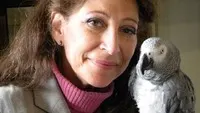
Irene M. Pepperberg
Pepperberg extends the boundaries of animal cognition research by unveiling the sophisticated communicative abilities of Grey parrots. Her work with Alex, an African Grey Parrot, challenges the notion that complex communication and cognitive processes are exclusive to humans and certain primates. This focus on comparative cognition reveals that avian intelligence encompasses concepts like color, shape, and number understanding. By aligning these capabilities with those observed in great apes and young children, Pepperberg redefines traditional views on animal intelligence, illustrating that learning mechanisms in birds are both intricate and advanced.\n\nIn her acclaimed book "Alex & Me," Pepperberg not only shares her research but also her deeply personal journey with Alex, offering readers insights into the inner lives of animals. Her narrative intertwines scientific rigor with emotional depth, making her research accessible and engaging to a broad audience. This approach has inspired further exploration into animal behavior and cognition, prompting both scientific and lay communities to reconsider the complexity of non-human thought processes.\n\nThrough her influential publications and over 150 peer-reviewed journal articles, Pepperberg's impact extends beyond academic circles. Her pioneering work has garnered significant recognition, including a special issue of the journal "Learning & Behavior" dedicated to her contributions. Therefore, her research not only enriches the scientific understanding of animal cognition but also advocates for a deeper appreciation of animal sentience and ethical considerations in conservation efforts.
Read moreDownload PDF & EPUB
To save this Black List summary for later, download the free PDF and EPUB. You can print it out, or read offline at your convenience.
Alex & Me
by Irene M. Pepperberg
