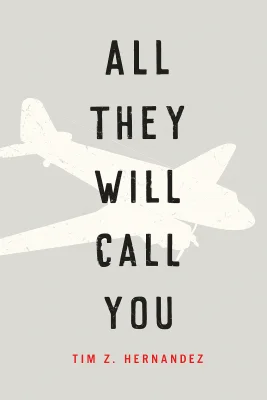
All They Will Call You
Categories
Nonfiction, History, Politics, Music, Social Justice, Book Club, Historical, American History, Death, Latinx
Content Type
Book
Binding
Hardcover
Year
2017
Publisher
University of Arizona Press
Language
English
ASIN
0816534845
ISBN
0816534845
ISBN13
9780816534845
File Download
PDF | EPUB
All They Will Call You Plot Summary
Introduction
On a cold January morning in 1948, a Douglas DC-3 aircraft carrying twenty-eight Mexican deportees crashed in Los Gatos Canyon, California, killing all aboard. The victims were nameless in death as they had been in life—dismissed merely as "deportees" in newspaper headlines. This tragedy might have remained forgotten were it not for Woody Guthrie's haunting poem about the crash, later set to music and performed by folk singers like Pete Seeger. The song asked a simple but profound question: "Who are these friends all scattered like dry leaves?" Decades later, that question would inspire a remarkable journey of remembrance and restoration of dignity. This account reveals how one man's quest to identify the crash victims uncovered not just names, but entire family histories spanning generations and borders. It illuminates the human cost of America's complex relationship with Mexican labor—a relationship marked by cycles of welcome and rejection, need and deportation. Through meticulous research across two countries, the story transforms anonymous victims into individuals with dreams, families, and profound connections to the land they helped cultivate.
Chapter 1: The Fateful Day: Los Gatos Canyon Crash of 1948
The morning of January 28, 1948, began like countless others for the Mexican workers held at the San Francisco Immigration Detention Center. Most had been detained for days or weeks, sleeping on concrete floors and sharing meager rations. They were part of a larger sweep as post-war America no longer needed the labor that had been essential during World War II. What made this transport different was the method—instead of the usual "wretched trains," these men would return to Mexico by airplane, a Douglas DC-3 that promised a faster journey home. Among the passengers were men like Luis Miranda Cuevas from Jocotepec, Jalisco, who carried a photograph of his beloved Casimira and dreams of marriage upon his return. There was José Sánchez Valdivia, a talented baseball player from Zacatecas who had traded places with his cousin to take the flight rather than the bus. Ramón Paredes González and Guadalupe Ramírez Lara, both from the farming community of Charco de Pantoja in Guanajuato, were returning with plans to dig a much-needed irrigation well for their village. The flight departed Oakland at 9:30 AM under clear skies. Captain Frank Atkinson, a decorated World War II pilot, flew with his wife Bobbie serving as stewardess—she had volunteered when the regular crew couldn't make it. For about an hour, the journey proceeded normally as passengers marveled at the aerial view of California's vast agricultural valleys where they had labored. Then, over the Diablo Range, disaster struck. At approximately 10:40 AM, the left engine caught fire. Despite Captain Atkinson's experience flying damaged aircraft during the war, the wing separation was catastrophic. Witnesses on the ground watched in horror as bodies fell from the disintegrating plane before it spiraled into Los Gatos Canyon Creek. The crash killed all thirty-two people aboard instantly, creating a scene so devastating that even hardened prison camp inmates assigned to the recovery were traumatized by what they found.
Chapter 2: Searching for Identity: Mexican Workers in Post-War America
The anonymity of the crash victims reflected the broader invisibility of Mexican workers in American society. During World War II, these men had been essential to keeping America fed through the Bracero Program, which brought hundreds of thousands of Mexican nationals to work in U.S. fields. They harvested the crops that fed both the home front and the military, yet remained largely unseen by mainstream American society. When the war ended and soldiers returned home, the same workers who had been welcomed as necessary allies were suddenly viewed as expendable. The post-war period marked a dramatic shift in immigration policy and public sentiment. The efficient deportation system that claimed these lives was part of a broader effort to remove Mexican workers from the United States. Immigration officials boasted of new methods, including the use of aircraft to speed up deportations. What had once been celebrated as international cooperation in wartime became a bureaucratic process of removal, with human beings reduced to cargo manifests and deportation statistics. This transformation revealed deep contradictions in American attitudes toward Mexican labor. Agricultural interests still desperately needed these workers, as evidenced by continued lobbying from farming groups, yet popular sentiment and official policy favored removal. The result was a schizophrenic system where buses carried deportees south while trains brought new workers north, sometimes passing each other on the same routes. Workers lived in constant uncertainty, never knowing whether they would be welcomed for their labor or detained for their presence. The dehumanizing language used to describe the crash victims—simply listed as "deportees" in news reports—exemplified this broader pattern of erasure. Even in death, these men were denied individual recognition, their names mangled by officials who couldn't be bothered to spell them correctly. This linguistic violence reflected the systematic denial of personhood that characterized the treatment of Mexican workers throughout this period.
Chapter 3: Lives Interrupted: Stories of the Deportees and Their Families
Behind each name on the passenger manifest lay a complex web of relationships, dreams, and obligations that stretched across borders. Luis Miranda Cuevas had called his girlfriend Casimira just days before the crash, promising to return with a mariachi band for their wedding. His death not only ended their love story but also devastated his family's economic hopes—his mother had been depending on his remittances to survive. The tragic irony was that insurance money from the crash eventually allowed the family to buy real beds instead of sleeping on twigs, but only after Luis's ultimate sacrifice. Ramón Paredes González left behind a wife, Elisa, and six young children in Charco de Pantoja. His last letter home, written months before the crash, revealed the desperation that drove so many men north: caught by immigration officers, unable to find work, yet desperate to provide for his family. His partnership with his compadre Guadalupe Ramírez Lara represented the communal approach to survival that characterized their village—they had traveled together multiple times, pooling resources and sharing the burden of family responsibility across borders. The farming community of Charco de Pantoja embodied the complex relationship between Mexican villages and American agriculture. Both Ramón and Guadalupe were skilled farmers who had fought to defend their land during the Mexican Revolution's aftermath. Yet the very agricultural expertise that made them valuable to American employers was insufficient to sustain their families in Mexico without the supplemental income from seasonal migration. Their planned irrigation well represented not just agricultural improvement but community survival. José Sánchez Valdivia's story illustrated how personal dreams intersected with economic necessity. His passion for baseball and hope of emulating players like Babe Ruth drew him north, but he found himself picking crops rather than playing in stadiums. His generosity in trading places with his cousin to take the airplane rather than the bus demonstrated the bonds of solidarity that helped Mexican workers survive in an often hostile environment. His death devastated not only his immediate family but the entire amateur baseball league he had helped establish in Stockton.
Chapter 4: The Power of Memory: Woody Guthrie's Immortalizing Song
Woody Guthrie's response to the Los Gatos Canyon crash transcended typical news coverage by focusing on the fundamental humanity of the victims. His poem "Plane Wreck at Los Gatos (Deportee)" challenged readers to see beyond the dehumanizing label of "deportee" to recognize these men as individuals with names, families, and dignity. The central question—"Who are these friends all scattered like dry leaves?"—became a powerful indictment of a system that treated human beings as disposable commodities. The song's journey from poem to global anthem revealed the power of folk music to preserve memory and demand justice. Guthrie himself, suffering from Huntington's disease, was unable to perform the piece. It was Martin Hoffman, a young college student in Colorado, who first set the words to music, creating a haunting melody in the ranchera style that honored the Mexican musical traditions of the victims. When Pete Seeger learned the song from Hoffman and began performing it widely, it reached audiences far beyond those who might read news accounts of immigration policy. The musical collaboration across generations and backgrounds—from Guthrie's initial outrage to Hoffman's melodic interpretation to Seeger's popularization—demonstrated how art could succeed where journalism failed in humanizing marginalized people. The song became a vehicle for cultural memory, ensuring that the story of Los Gatos Canyon would not disappear from collective consciousness even as official records reduced the victims to statistical abstractions. Tragically, Martin Hoffman's own story embodied the fragility of human connection and memory. His suicide in 1971, alone in his house on the Navajo Nation where he taught, suggested the personal cost of carrying others' pain. Yet his musical contribution ensured that the deportees' story would outlive both Guthrie and himself, continuing to pose uncomfortable questions about dignity, identity, and belonging to new generations of listeners.
Chapter 5: Reclaiming Dignity: The Quest to Name the Nameless
The modern search to identify the crash victims began with a simple refusal to accept anonymity as the final word. Decades after the crash, the victims remained buried in a mass grave marked only by a vague placard that told nothing of who lay beneath the ground. This erasure was particularly striking given the meticulous records kept for the American crew members, whose bodies were returned to their families for individual burial with full honors. The contrast revealed how nationality determined not just life opportunities but death dignities. The investigation required reconstructing family networks across multiple countries and generations. Many relatives had never been informed of their loved ones' deaths, learning the truth only when researchers arrived at their doors decades later. In Charco de Pantoja, Elisa Paredes had died without ever knowing what happened to her husband Ramón. In Jocotepec, Casimira had spent her entire life wondering about Luis's fate, carrying their unfinished love story in solitude. The process of identification revealed how immigration policies had scattered families across vast geographic distances, making communication and closure nearly impossible. Sons had searched for decades for fathers who never returned, not knowing whether they had died, been imprisoned, or simply abandoned their families. The crash investigation became a broader excavation of how deportation policies had created countless untold tragedies beyond the immediate victims. Perhaps most remarkably, the search demonstrated the persistence of family memory across generations. Grandchildren and great-grandchildren had preserved stories, photographs, and documents that proved crucial to identification. Even when official records failed or contradicted each other, family testimony provided the human threads needed to weave these men's identities back together. This grassroots preservation of memory stood in stark contrast to institutional forgetting.
Chapter 6: Connecting Across Borders: Reuniting Families with Their History
The ultimate memorial service in 2013 brought together families from both sides of the border in an unprecedented act of collective remembrance. For the first time, Mexican families could mourn their dead in a formal ceremony, while American families of the crew members gained broader context for their own losses. The gathering transformed individual grief into shared recognition of common humanity across lines of nationality, language, and class. The new memorial headstone, inscribed with all thirty-two names, represented more than corrected records—it embodied a fundamental shift from erasure to acknowledgment. Yet the monument also highlighted ongoing challenges, as many families remained unlocated despite years of searching. The headstone stood as both achievement and reminder of work still undone, names still unclaimed, stories still untold. The cross-border collaboration required overcoming significant barriers of language, distance, and institutional indifference. Mexican families had to trust researchers they had never met, sharing precious family documents and painful memories with strangers. American institutions had to acknowledge their role in systematic dehumanization while working to make amends. The process suggested possibilities for addressing historical injustices through patient, grassroots reconciliation efforts. Most profoundly, the memorial created new connections between communities that had been artificially separated by borders and policies. Descendants of the deportees living in the United States could finally visit their relatives' graves, while families in Mexico gained concrete knowledge of their loved ones' final resting places. These human connections, built through shared grief and remembrance, offered models for bridging the divisions that immigration policies had created.
Summary
The Los Gatos Canyon tragedy illuminates the central contradiction of American immigration history: the simultaneous dependence on and rejection of foreign labor. This pattern of exploitation followed by expulsion has repeated across different groups and eras, suggesting that the 1948 crash victims were casualties of a deeper structural problem rather than an isolated incident. Their deaths revealed how policies that treat human beings as economic units rather than individuals create conditions for both physical and moral catastrophe. The decades-long effort to restore the victims' identities offers hope that historical injustices need not remain permanent. Through patient investigation, cross-border collaboration, and recognition of shared humanity, it becomes possible to recover what seemed irretrievably lost. The project demonstrates that dignity can be restored even posthumously, and that memory can serve as a form of justice when legal remedies fail. Perhaps most importantly, it shows how art and activism can work together to ensure that the marginalized are not forgotten, and that every human life deserves to be remembered by name rather than reduced to a category or statistic.
Best Quote
Review Summary
Strengths: The review highlights the book's in-depth investigative work and its success in humanizing the victims of the 1948 Los Gatos plane crash. The narrative is praised for transforming a tragic event into a broader story of immigration, providing personal vignettes that bring the victims' stories to life. The book is described as engaging and emotionally moving, with a heartfelt and sensitive approach to the subject matter. Weaknesses: The review notes that the author includes fictionalized details in some scenes, which may detract from the factual accuracy of the narrative. Overall: The reader expresses a strong positive sentiment, finding the book both heartbreaking and necessary. It is highly recommended, especially for those interested in immigration stories, though it is advised against reading it before flying.
About Author

Tim Z. Hernandez
Hernandez delves into the intersection of forgotten histories and marginalized voices through a blend of investigative research and creative storytelling. His literary focus on the 1948 Los Gatos DC-3 plane crash highlights this commitment, as he tirelessly worked to identify the tragedy's victims and secure their recognition, resulting in monuments at both the mass grave and crash sites. This approach is evident in his documentary novel, "All They Will Call You," which seamlessly blends factual research with narrative depth, while his memoir "They Call You Back" further documents his investigative journey.\n\nHis body of work spans poetry, fiction, and non-fiction, each reflecting his dedication to amplifying underrepresented stories. For example, the novel "Mañana Means Heaven" explores the life of Bea Franco, providing a narrative voice to the real-life inspiration behind Jack Kerouac's "Mexican Girl." Meanwhile, Hernandez’s poetry collections, such as "Natural Takeover of Small Things," capture the nuanced realities of marginalized communities through vivid imagery and introspective themes. Readers gain a deeper understanding of overlooked narratives and a richer appreciation for the diverse cultural tapestry that shapes contemporary literature.\n\nHernandez's impact extends beyond the written word. As an associate professor at the University of Texas at El Paso, he influences aspiring writers in a bilingual M.F.A. program, while his performances at venues like the Getty Center showcase his multidisciplinary talents. His community involvement, including collaborations with Poets & Writers Inc. and the California Center for the Book, underscores his commitment to accessibility and engagement in literature. Hernandez’s work has earned significant accolades, such as the American Book Award for "Skin Tax," and his contributions continue to inspire readers and writers alike to explore the depth and breadth of human stories.
Read moreDownload PDF & EPUB
To save this Black List summary for later, download the free PDF and EPUB. You can print it out, or read offline at your convenience.

All They Will Call You
by Tim Z. Hernandez
