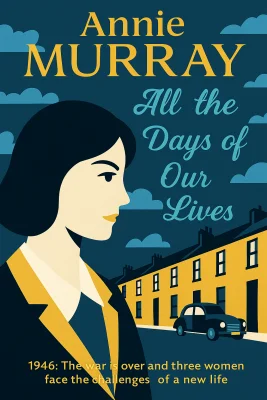
All the Days of Our Lives
Categories
Fiction, Historical Fiction, Historical
Content Type
Book
Binding
Paperback
Year
2011
Publisher
Pan Publishing
Language
English
ASIN
0330458213
ISBN
0330458213
ISBN13
9780330458214
File Download
PDF | EPUB
All the Days of Our Lives Plot Summary
Introduction
# Shattered Lives, Enduring Hearts: Women's Journeys Through War and Peace The hangman's rope had done its work by eight o'clock that morning, and Em Brown walked through Birmingham's fog-choked streets to pay respects no one else would offer. Bert Fox—her childhood friend Molly's brother—had strangled his girlfriend in a fit of rage, and now his body swung lifeless in Winson Green Prison. Em clutched her three-year-old son Robbie's hand tighter as they approached the prison gates, knowing that somewhere in the crowd of curious onlookers, other broken lives were watching their own futures unfold. This was 1945, and the war's shadow still stretched across Britain's bomb-scarred streets. Three girls who had once played together in Birmingham's grimy yards were now scattered like leaves in a winter wind, each carrying wounds that would shape their destinies. Katie O'Neill, the dark-haired beauty with dreams beyond her station, had learned that love could be the cruelest trap of all. Em Brown, steady and kind-hearted, discovered that loyalty sometimes demanded the highest price. And Molly Fox, scarred by family horrors that would drive her brother to murder, found salvation in the disciplined ranks of the army during Britain's darkest hour. Their paths had diverged through betrayal and war, but the threads of their lives would weave together again in ways none of them could imagine.
Chapter 1: Broken Childhoods: The First Betrayals
The first crack appeared on a cold morning in 1931, when eight-year-old Katie O'Neill crept through her front door, praying her mother wouldn't hear the latch click. But Vera O'Neill's ears were sharp as a cat's, and her voice cut through the gloom like a blade. "Katie, is that you down there? Come up here—now." Katie climbed the stairs with dread pooling in her stomach. Her mother sat in the attic workroom, a ramrod-straight silhouette against the window, brass thimble gleaming on her finger. The task had been simple enough—cruel enough. Tell Emma Brown that their friendship was over. Tell her that her mother's madness made her unfit company for a respectable girl. Katie had found Em outside the Browns' green door, her freckled face lighting up with hope. The words tumbled out like poison: "Mom says she doesn't want me having anything to do with you. She says your mom's not right in the head." The hurt that painted Em's face would haunt Katie for years to come. Back in the attic, Vera nodded with satisfaction. "Good girl. We don't want anything else to do with people like that. Anyone who gets sent to the asylum is a different kettle of fish altogether." Her voice dropped to a hiss. "What's bred in the bone comes out in the flesh." That night, Katie buried her face in her pillow and wept for the friendship she'd murdered at her mother's command. She didn't understand then that Vera's cruelty stemmed from terror—terror that madness might be contagious, that their own precarious respectability might crumble if they associated with the wrong sort of people. The Browns' house, just doors away, had become a place of whispered conversations and worried glances. Em's mother Cynthia had slipped into a darkness so deep that the asylum's cold walls seemed the only refuge. Em, barely nine years old, had become mother to her siblings while her father Bob worked double shifts, his face grey with exhaustion and shame.
Chapter 2: War's Shadow: Paths Diverging in Service and Sacrifice
By 1941, the girls had grown into young women shaped by their separate sorrows. Katie, now seventeen, had blossomed into a dark-haired beauty working as a shorthand typist at Arthur Collinge's engineering works. The factory hummed with wartime production, and when Simon Collinge—the boss's son—offered her a lift home in his sporty Austin 10, her heart hammered with possibilities she'd never dared imagine. Their courtship unfolded in stolen moments. Simon was charming and attentive, calling her his "Dark Lady" and speaking of love with the easy assurance of a man who'd never been denied anything he wanted. When he finally led her to his bedroom, Katie surrendered not just her virginity but her entire future to his hands. The reckoning came on a grey October evening in 1943. Katie's expanding waistline had finally betrayed her secret, and Vera's discovery unleashed a fury that shook the house to its foundations. "You stupid, dirty girl!" The slap that followed left Katie's cheek burning, but the words cut deeper than any physical blow. By midnight, Katie found herself on Simon's doorstep with a suitcase, her entire world collapsed into a single desperate gamble. But Simon's response was swift and brutal. "I'm not ready for all that yet," he said, fumbling for his wallet. "I'll be taking over the firm one day, and I suppose I'll have to get married, bring up a family with the right sort of girl." The hundred pounds he thrust at her felt like thirty pieces of silver. Katie's cup of tea caught him squarely in the forehead, the dregs splashing down his face like tears he'd never shed for her. Meanwhile, Molly Fox had taken a different path entirely. The blonde girl had endured horrors in her family home that would eventually drive her brother Bert to violence. When she walked into the army recruitment office and signed up for the Auxiliary Territorial Service, she was trading the hell of her family for the disciplined salvation of military life.
Chapter 3: Cast Adrift: Finding Shelter in the Post-War Ruins
Winter 1944 brought Katie's son into the world in a cramped bedroom, and when Mrs Miller placed the dark-haired infant in her arms, Katie felt a fierce protectiveness she'd never known before. "Michael Patrick O'Neill," she whispered, naming him for the father and uncle she'd lost. Her attempts to reconcile with Vera met with stone-cold rejection. When she appeared at the old house with baby Michael in her arms, a suitcase waited on the doorstep—her belongings packed and ready for disposal. "A bastard born out of wedlock is no grandchild of mine," Vera hissed through the barely opened door. "You're no daughter of mine—not after this!" The door slammed with the finality of a coffin lid. Katie stood in the darkness, her infant son the only witness to her complete abandonment. But something hardened in her that night—a resolve born of desperation and maternal love. She found work as a typist, passing herself off as Mrs O'Neill, a war widow whose husband was conveniently overseas. The brass ring on her finger was her shield against society's judgment, though it couldn't protect her from the loneliness that gnawed at her bones. The rain hammered against grimy windows as Katie walked Birmingham's streets with two-year-old Michael balanced on her hip, a battered suitcase in her free hand. Every door she'd knocked on had closed in her face once the landladies learned about the child. "We don't want children," they'd say, eyes narrowing with suspicion. As twilight deepened, Katie spotted a hand-written card pressed against a window: "ROOM FOR RENT." The woman who answered the door was unlike any landlady Katie had encountered. Sybil Routh stood wearing a shapeless green dress and broken slippers, her gray hair escaping from its pins. She had the bearing of faded gentility and the direct gaze of someone who'd seen too much of the world to be easily shocked. "You're not a young man," Sybil observed, studying Katie's neat appearance and the child clinging to her skirt. Katie's desperate honesty about being alone, about the rejections, about the fear of ending up on the streets, seemed to move something in the older woman's heart.
Chapter 4: Chosen Families: Building Home from Unlikely Bonds
The great freeze of 1947 arrived with a vengeance that no one in Britain would forget. In Sybil's house, the pipes froze solid, and they melted snow in an old tin bath to flush the toilets. But adversity revealed the true character of their makeshift family. Katie found herself naturally taking charge, organizing the household while Sybil's arthritis kept her chair-bound. The dining room became a nightly gathering place where an unlikely family assembled—Mr. Treace the banker, the elderly Gudgeons, and now Katie and Michael, all sharing whatever Sybil had managed to conjure from their pooled rations. "We're not a boarding house," Sybil declared. "We're a household. Civilization requires that we eat together." Michael blossomed under the attention of the other lodgers. Mr. Gudgeon would slip him sweets, and even stern Mr. Treace would ruffle his dark hair. But it was Sybil who became his unlikely champion, letting him bang away at the old piano and defending his right to be a child in a house full of adults. When Mrs. Gudgeon died in the hospital, the household rallied around her widowed husband with quiet efficiency. Katie watched Sybil organize this care with matter-of-fact kindness and began to understand that this was what family really meant—not the accident of birth, but the deliberate choice to care for one another. The arrival of two Polish refugees changed the household's dynamic entirely. Marek was lean and sharp-featured, with ice-blue eyes that seemed to hold depths of sorrow. His companion Piotr beamed at everyone, his round face radiating warmth despite the language barrier. "We come from everywhere," Piotr explained when Sybil asked about their journey. "Before that—Polska, Poland, our homeland." The piano drew Marek like a magnet. That first evening, the melody that emerged was haunting, unfamiliar—something from his lost homeland that spoke of forests and rivers and people who would never come home. Michael crept closer, fascinated by the music and the gentle giant who created it.
Chapter 5: Confronting Ghosts: When the Past Demands Reckoning
The knock on the door came on a November evening in 1948, sharp and insistent. Katie found herself face to face with a ghost—a tall, graying man with eyes the same vivid blue as her son's. He held his hat in hands that she recognized from her earliest memories. "Are you Katie O'Neill?" he asked, and she saw him staring at Michael with wonder and recognition. "My name is Michael O'Neill," her son piped up indignantly. "That's my name!" The man smiled sadly. "Is it now? Well, I think I must be your grandfather, young man. And your mother's father, though she has every right to tell me to go to hell." Katie's legs gave way, and she sank onto the bottom step. The careful fiction of her life crumbled around her. Her father, supposedly dead of tuberculosis when she was three, stood before her very much alive. Everything she had believed about her family, about her mother's tragic widowhood, about her own identity, had been built on lies. "But you died," she whispered. "She told me you died." "I was sick, yes, but not with anything fatal. I left, Katie. I couldn't live with your mother anymore. She was impossible. She would have destroyed us both if I'd stayed." The revelation hit Katie like a physical blow. Vera O'Neill had chosen to tell her daughter that her father was dead rather than admit she had been abandoned. Marek stepped forward as Katie began to sob, his strong arms encircling both her and Michael as her world reorganized itself around this new truth. The conversation that followed was painful and necessary, full of explanations that explained nothing and apologies that couldn't undo decades of absence. But as Katie looked into her father's eyes, she saw genuine remorse and a desperate hope for redemption. Walking through the familiar streets of Nechells with Marek and Michael, Katie felt like an archaeologist exploring the ruins of her former life. Outside Mr. Perry's greengrocer shop, she encountered Em Stapleton, now a young mother struggling with the disappointments of peacetime marriage. The recognition was mutual and immediate.
Chapter 6: Love Amid Loss: The Courage to Begin Again
The friendship Katie rebuilt with Em was different from their childhood bond, tempered by experience and loss, but real in a way their schoolgirl intimacy had never been. Em's life was a study in quiet desperation masked by determined cheerfulness. Her husband Norm had returned from the war changed, restless and emotionally distant. "Sometimes I feel like I'm disappearing," Em confided during one of their Sunday afternoon visits. "Like I'm just a shadow of who I used to be, going through the motions without really feeling any of it." Katie understood that feeling all too well. The war had shown women what they were capable of, had given them purpose and independence, only to snatch it away again when peace returned. But Katie had found something Em was still searching for—a love that saw her as she truly was. Marek's presence in her life was transforming, not because he rescued her from her circumstances, but because he valued her strength and shared her burdens. When he asked her to marry him, she said yes not out of desperation or social pressure, but from a deep certainty that they could build something beautiful together. The wedding preparations were modest but joyful. Katie made her own dress, carefully saving fabric coupons and working by lamplight to create something beautiful from limited resources. Sybil's house buzzed with activity as the Polish community prepared traditional foods. Their wedding day dawned bright and clear, a perfect May morning that seemed to promise better times ahead. Katie walked down the aisle on her father's arm, feeling the weight of all the broken promises in her past lifting away. At the altar, Marek waited with tears in his eyes, this man who had traveled so far and lost so much to find love in a Birmingham suburb. The ceremony was conducted in Latin, but the words that mattered most were spoken in the wordless language of touch and glance that lovers understand. When they exchanged rings, Katie felt the last of her defenses crumble away. She was no longer the frightened girl who had knocked on Sybil's door—she was simply Katie Wozniak, beloved wife and chosen family member.
Chapter 7: Weaving Together: Creating Community from Scattered Lives
By 1953, the little family in Sybil's attic had grown to include two more children: Tomas, who inherited his father's pale eyes and serious demeanor, and Dorothy, a whirlwind of dark curls and determined mischief. The house that had once sheltered broken individuals had become the center of a thriving extended family. The Coronation tea party in Sybil's garden was a celebration of more than just the young Queen's accession to the throne. It marked the transformation of a group of displaced persons into a genuine community, bound together by choice rather than circumstance. Katie watched her children play with Em's new baby Christine, marveling at how far they had all traveled from those dark days after the war. Molly Fox had found her way back to them too, resplendent in her WRAC uniform and full of stories about her new life in the army. The girl who had once been the object of schoolyard cruelty had become a confident woman, proud of her service and secure in her chosen path. "The army is my family now," she told them, and Katie understood completely. Em had finally gotten her miracle baby, and with Christine's arrival came the promise of a council house on the new estate where Katie and Marek were moving. The three friends who had been scattered by war and circumstance were weaving their lives back together, creating a support network that would sustain them through whatever challenges lay ahead. As the afternoon sun slanted through the apple trees, Katie felt the deep satisfaction of a life well-lived. She had survived abandonment, poverty, and social shame to build something beautiful and lasting. Her children would grow up knowing they were loved and wanted, surrounded by the kind of chosen family that had saved her own life. Sybil, now in her seventies but still formidable, surveyed the chaos of children and dogs and conversations with obvious pleasure. "Look what we've built here," she said to Katie as they cleared the tea things. "Not bad for a bunch of strays and misfits, is it?" Katie smiled, thinking of all the doors that had been slammed in her face, all the rejections and cruel words that had led her to this garden, this family, this life. Sometimes the most beautiful things grew from the most unlikely soil, and sometimes the families we chose were the ones that chose us back.
Summary
The threads of three women's lives, torn apart by war and social upheaval, had been rewoven into something stronger and more beautiful than any of them could have imagined alone. Katie found love and family in the most unexpected places, learning that home was not a building but the people who chose to share their lives with you. Em discovered that happiness sometimes came in forms you didn't expect, and that friendship could survive any distance or misunderstanding. Molly embraced the truth that some people were meant for unconventional paths, and that service to something larger than yourself could be its own form of family. Their stories were part of a larger tapestry, the slow rebuilding of a nation that had been shattered by war and was learning to dream again. In the suburbs of Birmingham, in the council estates and army barracks, in the quiet moments between one life and the next, ordinary people were performing the extraordinary act of choosing hope over despair, love over fear, connection over isolation. The war had ended, but the real victory was still being won, one small act of courage at a time, one chosen family at a time, one thread at a time in the great weaving of human lives that would define the century to come.
Best Quote
“without” ― Annie Murray, All the Days of Our Lives
Review Summary
Strengths: The book features gentle twists and turns, and the alternating presence of the three main characters is appreciated. The story is described as enthralling and hard to put down, with a satisfying conclusion. It explores post-World War II life, touching on themes of friendship, love, and betrayal, which some readers found relatable. Weaknesses: The narrative is criticized for being monotonous and repetitive, with poorly developed characters. Some readers found it dragged on too long and lacked the gripping nature of previous books in the trilogy. The protagonist and other characters failed to engage some readers, leading to disappointment. Overall: The book received mixed reviews, with some readers enjoying the emotional depth and character dynamics, while others were dissatisfied with the storytelling and character development. Recommendations vary, with some readers eager to continue the trilogy, while others would not pursue further works by the author.
About Author

Annie Murray
Murray explores the emotional depth of family dynamics and historical narratives, weaving these themes into her engaging regional sagas. Her writing often illuminates the vulnerable perceptions of children, reflecting the intense emotions of formative years, which frequently appear in her gritty yet heartwarming tales. With a backdrop rooted in Birmingham's rich social history, she connects readers to the industrial heritage and wartime experiences of the region, as seen in her breakout novel "Birmingham Rose" and her renowned "Chocolate Girls" series. \n\nA defining aspect of Murray's method is her attention to Birmingham's social context, which shapes her storytelling. Her participation in the Tindal Street Fiction Group played a crucial role in honing her craft, while winning the SHE/Granada TV Short Story Competition in 1991 provided an important boost to her career. Beyond mere settings, her books delve into themes of love, war, and the resilience of familial bonds, inviting readers into immersive experiences of life in the Midlands. \n\nReaders gain not only entertainment but also a deeper understanding of societal changes over time through Murray's evocative portrayals. With more than 30 books to her name and sales exceeding 1 million copies, she stands as a significant voice in British literature. Her works, while specific in location, offer universal insights into the human condition, thereby appealing to a broad audience interested in stories of personal and historical significance. This bio, capturing the essence of her contributions, affirms her status as a bestselling author with an enduring impact on readers worldwide.
Read moreDownload PDF & EPUB
To save this Black List summary for later, download the free PDF and EPUB. You can print it out, or read offline at your convenience.
All the Days of Our Lives
by Annie Murray
