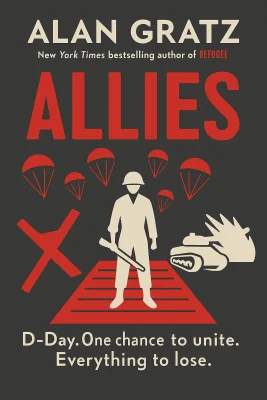
Allies
Categories
Fiction, Audiobook, Historical Fiction, Young Adult, Historical, World War II, Adventure, Childrens, War, Middle Grade
Content Type
Book
Binding
Hardcover
Year
2019
Publisher
Scholastic Press
Language
English
ISBN13
9781338245721
File Download
PDF | EPUB
Allies Plot Summary
Introduction
Dawn breaks over the English Channel on June 6, 1944, as thousands of Allied ships slice through dark waters toward the Nazi-occupied coast of France. In the pre-dawn darkness, paratroopers tumble from aircraft into hostile skies while landing craft packed with seasick soldiers navigate through mine-infested waters. This is D-Day—the largest amphibious invasion in human history, where the fate of the free world hangs in the balance. Among these warriors are unlikely heroes: Dee Carpenter, a sixteen-year-old German refugee fighting under an assumed name to atone for his homeland's sins; Samira Zidane, an eleven-year-old French-Algerian girl whose mother serves the Resistance; James McKay, an average Canadian paratrooper who never expected to find himself behind enemy lines; Bill Richards, a British tank driver dreaming of following his father's footsteps; Henry Allen, a black American medic whose healing hands know no color; and Monique Marchand, a thirteen-year-old French girl who transforms from hiding in beach huts to saving lives on blood-soaked sand. Their stories converge on history's most pivotal day, when ordinary people perform extraordinary acts to turn the tide of war.
Chapter 1: Crossing the Channel: Identity and Courage Under Fire
The Higgins boat pitched violently in the choppy seas as Dee Carpenter gripped the metal sides, his knuckles white against the olive drab paint. Around him, forty American soldiers sat in grim silence, their faces pale in the pre-dawn darkness. The steady drone of aircraft overhead mixed with the distant thunder of naval bombardment, creating a symphony of approaching war. Dee's stomach churned, though whether from seasickness or terror, he couldn't tell. At sixteen, he was the youngest soldier in his unit, though his forged papers claimed he was eighteen. What none of his fellow soldiers knew—what his best friend Sid Jacobstein could never know—was that Dee wasn't Douglas Carpenter at all. He was Dietrich Zimmermann, born in Berlin, a German fighting against his own former countrymen. The irony wasn't lost on him. When he was five, his parents had fled Germany in the dead of night, carrying him away from the rising Nazi tide that would have swept him into the Hitler Youth. They'd made it to America, changed their names, and built new lives. Now, eleven years later, Dee was returning to Europe as an American soldier, carrying a rifle instead of the swastika armband he might have worn. Beside him, Sid muttered something about killing Germans, his Brooklyn accent thick with hatred. Sid was here for revenge—for his people, for the synagogues burned, for the families destroyed. He talked constantly about making the Nazis pay, unaware that his closest friend shared their blood. The boat shuddered as enemy shells exploded in the water nearby. Through the spray and darkness, Dee could see the French coast materializing like a nightmare made real. Flashes of gunfire erupted from the cliffs, and the rattle of machine guns carried across the water. This was Omaha Beach, and death waited on every grain of sand. Sergeant Taylor stood at the front of the boat, his weathered face grim in the flickering light of explosions. "This is it, boys," he shouted over the din. "Everything comes down to this moment. Don't screw it up." The boat lurched as it hit the sandbar, still yards from shore. The ramp began to lower, and Dee's heart hammered against his ribs. In seconds, he would step into the maelstrom, carrying with him the weight of two identities, two histories, two reasons to fight.
Chapter 2: Behind Enemy Lines: Resistance and Sabotage
Eleven-year-old Samira Zidane pressed herself against the cold stone wall of the farmhouse as Nazi soldiers dragged her mother from the shadows. The radio message had been delivered—the invasion was coming—but now everything had gone wrong. Her mother, Kenza, had risked everything to help a French family escape a German roundup, and now she too was being hauled away to the prison trucks. The white dog beside Samira trembled as German voices echoed in the farmyard. She clamped her hand over its muzzle, her heart breaking as she watched her mother's blue kerchief fall to the muddy ground. The soldiers shoved Kenza into the truck with the other prisoners, their fate sealed unless the Allied invasion succeeded. Samira had grown up in the shadows of the French Resistance, carrying messages through the Norman countryside while her mother served as a courier for the Maquis. They were French-Algerians, outsiders fighting for a country that had never fully accepted them, but the Nazi occupation had made strange allies of everyone who valued freedom. Now, alone except for the small dog she'd christened Cyrano, Samira made her way through the darkness toward the woods where the Resistance fighters waited. The code words burned in her memory: "The dice are on the carpet. It's hot in Suez." The Allied invasion was beginning, and it was her duty to deliver the message that would coordinate sabotage operations across Normandy. She found them in a forest clearing—shadowy figures in mismatched uniforms, armed with stolen German weapons and British guns dropped by parachute. Their leader, who called himself Odysseus, listened grimly to her report about her mother's capture. "We can't help her," he said simply. "Our job is to stop German reinforcements from reaching the beaches. If we succeed, she lives. If we fail, we all die." The words cut deep, but Samira understood. The train tracks ahead carried German tanks toward the invasion beaches. A single train filled with panzers could turn the tide against the Allied forces. She watched as the Maquis fighters prepared their explosives, knowing that her mother's life—and the lives of thousands of Allied soldiers—depended on their success. The sound of an approaching train echoed through the valley, its whistle a death knell in the Norman night.
Chapter 3: From Above: Paratroopers in the Night
James McKay tumbled through the darkness, his parachute finally snapping open with a violent jerk that threatened to pull his shoulders from their sockets. Anti-aircraft fire blazed around him as he drifted toward enemy territory, one of thousands of Allied paratroopers scattered across Nazi-occupied France like deadly seeds. The nineteen-year-old Canadian had never wanted to be a hero. Back in Winnipeg, he'd been determinedly average—average grades, average looks, average everything. But "If Day," a staged Nazi invasion of his hometown, had shown him what occupation really meant. Now, floating down toward German guns, he wondered if being average would be enough to keep him alive. His landing was hard and graceless, sending him tumbling through a hedgerow into a Norman field. The weight of his equipment dragged him down, and for a moment he lay gasping in the grass, grateful to be on solid ground. Around him, the night erupted with gunfire and explosions as scattered paratroopers engaged German defenders. His friend Sam Tremblay materialized from the shadows, limping but alive. The Cree soldier from Quebec grinned despite their predicament. "Fancy meeting you here," he said in accented English. "Ready to see some real action?" They found themselves far from their intended drop zone, part of a makeshift group of Canadian paratroopers led by Major MacLeod. Their target was Varaville, where German forces controlled strategic positions that could devastate the beach landings at dawn. With barely twenty men against a fortified garrison, the odds were impossible. "We're here to do a job," MacLeod declared as explosions lit the horizon. "Those boys on the beaches are counting on us to clear the way." James checked his rifle and tried to summon courage he wasn't sure he possessed. The château ahead bristled with German guns, and dawn was still hours away. But somewhere behind enemy lines, French families waited for liberation, and on distant beaches, Allied soldiers prepared to storm Hitler's Atlantic Wall. The Battle of Normandy had begun, and there was no turning back.
Chapter 4: Steel Beasts: The Tank Battalions' Charge
Bill Richards gripped the controls of his Sherman tank as Achilles roared down the landing craft ramp into the churning waters of Omaha Beach. The Liverpool dockworker's son had dreamed of following his father's path—another tank driver, another war, another chance to carve the Richards name into history. Around him, the four other members of Achilles' crew braced against their stations as German shells exploded in the surf. Thomas Owens-Cook, his co-driver and friend, had gone pale as chalk watching other tanks disappear beneath the waves. The specially fitted "swimming" Shermans were supposed to reach the beach under their own power, but the rough seas and German fire were claiming them one by one. "Coventry's Revenge is hit!" Lieutenant Lewis shouted from the commander's position. Bill watched in horror as the tank ahead of them erupted in flames, its crew's screams lost in the thunder of battle. Suddenly they were alone, one of the last tanks to make it through the killing zone between the ships and the shore. The beach ahead was a nightmare of bodies and burning metal. American soldiers huddled behind obstacles while German machine guns raked the sand from clifftop bunkers. Bill could see them clearly now—the pillboxes that had survived the naval bombardment, their guns trained on the landing zones like mechanical vultures. A massive shell struck nearby, showering Achilles with sand and shrapnel. The tank lurched sideways as it hit a buried mine, throwing off its left track and leaving them immobilized but still firing. Davies, their gunner, swiveled the turret toward the largest German gun emplacement. "Range seven hundred yards!" Lewis called. But the angle was wrong. They were stuck in a crater, unable to elevate their gun high enough to reach the bunker that was methodically destroying every boat that approached the beach. American soldiers began gathering behind their disabled tank, using it as shelter while bullets pinged off its armor. Among them was a young American soldier named Dee, barely old enough to shave, who grabbed a shovel and began digging frantically at the sand beneath their tracks. Others joined him, and soon a dozen men were working to free Achilles while German shells exploded around them. Bill watched these soldiers risk their lives to give his tank a chance, and he understood something his father had never told him about war: victory wasn't about individual heroism, but about ordinary people choosing to stand together when everything seemed lost.
Chapter 5: Healing Hands: Medics Amid the Chaos
Henry Allen ran through the storm of bullets and shrapnel, his medical bag bouncing against his hip as another cry of "Medic!" echoed across Omaha Beach. The twenty-year-old corpsman from Chicago's South Side had trained for this moment, but nothing could have prepared him for the scale of carnage that awaited him on the Norman shore. Bodies littered the waterline like driftwood after a storm. Some were beyond help, their stories ended in the first minutes of the invasion. Others clung to life by threads, waiting for someone brave enough to venture into the killing zone where German machine guns swept the beach like deadly scythes. Henry's skin color made him an anomaly among the medics—the U.S. Army was strictly segregated, and black soldiers were typically relegated to support roles far from combat. But here on the beach, with bullets flying and men dying, nobody cared about the color of the hands that might save their lives. He dropped beside a wounded soldier, a big kid from New York who'd taken shrapnel in the leg. The boy was going into shock, his pulse racing as blood soaked the sand beneath him. Henry worked quickly, applying a tourniquet and injecting morphine while explosions shook the ground around them. "Where you from?" Henry asked, keeping the soldier talking. "Brooklyn," the boy gasped. "What's your favorite movie?" "Casablanca." Henry smiled as he bandaged the wound. "Of all the beaches in all of occupied France, you had to land on this one." The joke earned him a weak laugh, but there was no time to celebrate. Another voice was calling for help, and Henry grabbed his medical bag and ran back into the storm. Behind him, the soldier from Brooklyn would live to see another day, one small victory in a battle that seemed to have no end. As he worked, Henry thought about the irony of his situation. Here he was, risking his life to save men who might not sit next to him in a restaurant back home. But on this beach, under fire from an enemy that would kill them all equally, such distinctions seemed meaningless. Perhaps, he hoped, some of that understanding would survive the war and make it back to America.
Chapter 6: The Rising Tide: Breaking Through the Atlantic Wall
The ramp dropped with a crash, and Dee plunged into hell itself. German machine guns opened fire immediately, cutting down the first rows of soldiers before they could take a step. The water was deeper than expected—five feet instead of the promised shallows—and men laden with equipment sank like stones. Dee felt a bullet tear through his arm as he struggled toward shore, the salt water turning pink around him. Bodies floated past—some he recognized, others were strangers who'd become brothers in the space between the boat and the beach. The weight of his gear dragged him down until he shed everything but his rifle, survival trumping orders. Sergeant Taylor was drowning nearby, too heavy with equipment to stay afloat. Dee grabbed him, pulling the older man toward shore even as machine gun bullets fwipped into the water around them. Only when they reached the shallows did Dee realize the sergeant was already dead, a bullet through his neck. The beach was a killing field. Czech hedgehogs—massive steel obstacles designed to stop tanks—dotted the sand, providing the only cover for survivors. Behind them, soldiers huddled in terror as mortars rained down from the cliffs. Among them was Sid, his best friend, alive but shaken. A British tank, Achilles, had made it to shore but was stuck in the sand, its main gun unable to reach the German pillboxes that commanded the beach. Without hesitation, Dee joined other soldiers in digging frantically around the tank's treads, giving it the elevation needed to return fire. The tank's gun roared, sending a shell screaming toward the clifftop bunkers. A direct hit. The German gun fell silent, and for a moment, the deadly crossfire lessened. But victory was short-lived—another German gun, previously hidden, opened fire on Achilles. The tank disappeared in a ball of flame, taking its crew with it. Dee had known them, had helped dig them out. Bill, the friendly tank driver who'd talked about following his father's footsteps. Now they were gone, vaporized in an instant, leaving only twisted metal and smoke. But their sacrifice had meaning. The breach they'd opened in the German defenses allowed other soldiers to move forward, inch by bloody inch, toward the seawall that marked the first line of Nazi fortifications.
Chapter 7: Allies United: When Paths Converge
By nightfall, the impossible had happened. Against all odds, the Allied forces had gained their foothold on Hitler's Atlantic Wall. In the liberated city of Bayeux, Dee lay on a stretcher in the town square, his wounds finally receiving proper medical attention from Henry, the black medic who'd saved so many lives on the beach. Nearby, James McKay and his Canadian paratroopers shared war stories with other survivors, their successful assault on Varaville having helped prevent German reinforcements from reaching the beaches. The château they'd captured had housed a garrison three times their size, but surprise and determination had carried the day. Samira walked among the wounded Allied soldiers with her mother, both of them freed when the German prison convoy was overrun by advancing American forces. The girl distributed white lilies to the men who had liberated her country, her dark eyes bright with tears of gratitude. The train full of German tanks her Resistance cell had destroyed lay twisted in a Norman valley, no longer a threat to anyone. Monique Marchand worked alongside Dorothy Powell, the disguised reporter, carrying stretchers and bandaging wounds with skills that belied her thirteen years. She'd emerged from hiding in a beach hut to save lives, discovering courage she never knew she possessed and a calling that would shape her future. The human cost had been staggering. Thousands of Allied soldiers would never see home again, their bodies scattered across the beaches and fields of Normandy. But their sacrifice had opened the door to Europe's liberation, giving the free world its first real foothold on the continent since 1940. Sid found Dee among the wounded, his anger over his friend's German birth finally overcome by their shared ordeal on the beach. "You saved my life," he said simply, and that was enough. In the crucible of combat, they'd discovered that friendship transcended the accidents of birth and nationality. As dawn broke over Bayeux on June 7th, the survivors looked eastward toward Paris and Berlin, knowing that D-Day was only the beginning of a longer campaign that would carry them deep into the heart of the Third Reich.
Summary
The Allied invasion of Normandy succeeded not because of any single act of heroism, but because thousands of ordinary people chose to stand together against tyranny. From the beaches of Omaha to the fields of the Norman interior, young men and women from different countries, different backgrounds, and different races united in common cause. Dee Carpenter found redemption for his homeland's sins, while Samira Zidane helped coordinate the resistance that kept German reinforcements at bay. James McKay discovered that being average could be heroic when multiplied by courage, and Henry Allen proved that healing hands recognize no color when lives hang in the balance. The victory at Normandy opened the second front in Europe that would ultimately bring Nazi Germany to its knees. Within a year, the soldiers who survived D-Day would march through the streets of Paris as liberators, then push on to Berlin to witness the Third Reich's final collapse. But the true victory was not just military—it was the demonstration that free peoples, despite their differences, could unite against oppression and prevail. In the crucible of that June morning, a new world was forged from the ashes of the old, proving that democracy's greatest strength lies not in any individual, but in the bonds that connect us all when we choose to stand as allies.
Best Quote
“motorboat” ― Alan Gratz, Allies
Review Summary
Strengths: The review highlights Alan Gratz's ability to vividly depict the events of D-Day through diverse perspectives, including soldiers, civilians, and resistance fighters. The narrative's shifting viewpoints provide a comprehensive view of the battle's impact. The inclusion of characters from various backgrounds, such as an American soldier with German roots and an Algerian girl in the French Resistance, adds depth and complexity to the story. Overall: The review conveys a positive sentiment towards "Allies," emphasizing its engaging storytelling and rich character development. The book is recommended for its immersive portrayal of a pivotal World War II event and its exploration of themes like identity and resistance.
About Author

Alan Gratz
Gratz interrogates historical events to create narratives that illuminate moral courage and resilience. His novels often tackle themes of survival and human rights, weaving together historical and contemporary perspectives to educate while entertaining young readers. Through works such as "Prisoner B-3087," which details a Holocaust survival story, and "Refugee," following the lives of young refugees across different periods, Gratz crafts compelling stories that resonate with middle-grade and young adult audiences. His approach combines adventure with significant historical contexts, aiming to provide readers with both insight and empathy towards challenging topics.\n\nThe author's diverse writing portfolio, which includes not only novels but also plays, magazine articles, and radio commercials, reflects his broad understanding of storytelling. This versatility enriches his method, allowing him to connect deeply with his audience. Young readers benefit from Gratz's ability to present difficult topics in a relatable and engaging manner, making historical events accessible and personal. His book "Ban This Book" further explores themes of censorship and intellectual freedom, encouraging readers to think critically about societal issues. Gratz's bio reveals his commitment to educating young minds, as demonstrated by the accolades his work has received, including the Sydney Taylor Book Award for "Refugee," solidifying his impact in the realm of children's literature.
Read moreDownload PDF & EPUB
To save this Black List summary for later, download the free PDF and EPUB. You can print it out, or read offline at your convenience.
Allies
by Alan Gratz
