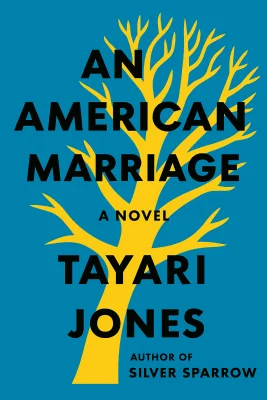
An American Marriage
Categories
Fiction, Audiobook, Romance, Adult, Book Club, African American, Contemporary, Race, Adult Fiction, Literary Fiction
Content Type
Book
Binding
Hardcover
Year
2018
Publisher
Algonquin Books
Language
English
ISBN13
9781616201340
File Download
PDF | EPUB
An American Marriage Plot Summary
Introduction
The axe bit deep into Old Hickey's ancient bark, each blow echoing across the suburban Atlanta street like gunshots. Roy Hamilton swung with desperate fury, wood chips flying as his wife Celestial stood frozen in their driveway, tears streaming down her face. Five years in prison had carved new lines into his face, built muscle over old wounds, and left him a stranger in his own home. The key still worked in the front door—she hadn't changed the locks—but everything else had shifted in ways that couldn't be unlocked with brass and determination. This is the story of what remains when the state tears a marriage apart, when innocence means nothing against the machinery of justice, and when love becomes both salvation and destruction. It begins with promise, dissolves into separation, and rebuilds itself into something unrecognizable. Three hearts circle each other in an impossible dance, each seeking what the others cannot give, until the only choice left is who will break first.
Chapter 1: Promise and Possibility: The Beginning of a Marriage
Roy first spotted Celestial in a Manhattan restaurant where she waited tables, her hair streaked purple, her accent pure Atlanta despite the New York setting. Snow fell outside as he chased down a purse snatcher for her, losing a tooth in the process but gaining something far more valuable—her attention. She was an artist, a doll maker with fierce independence and dreams bigger than her craft. He was a textbook salesman with Morehouse polish and entrepreneurial fire burning in his chest. Their courtship unfolded across state lines and time zones, letters and phone calls weaving them together until he could no longer imagine a future without her face in it. When he proposed, it wasn't with flowers and violins but with practical love—he quit his job, moved back to Atlanta, and made space for her art to flourish. She called her creations poupées, cloth dolls with crystalline hair and knowing eyes that sold for thousands to collectors who understood their power. They married in spring, surrounded by dogwood blossoms and the promise of children to come. Her father Franklin, a genius inventor turned millionaire, gave them his blessing along with the house on Lynn Valley Road. Andre Tucker, Roy's college friend and Celestial's childhood neighbor, signed as witness, his signature steady despite the tremor in his hand. The reception lasted until dawn, their faces flushed with champagne and possibility. In the early months, they played at being grown-ups in their gifted house, learning each other's rhythms and rituals. Roy worked his territory, selling mathematics textbooks to schools across the Southeast, while Celestial transformed the spare room into a workshop where dolls emerged like small miracles from silk and imagination. They talked of babies, of the children who would fill the empty bedrooms and justify the suburban dream they'd inherited. But even then, cracks showed in the foundation. Roy collected phone numbers like souvenirs, harmless flirtations that left Celestial feeling like a prize he'd already won and could now take for granted. She threw wedding china in the trash after finding another woman's number in his wallet, their first anniversary cake destroyed in a moment of rage that felt both childish and necessary.
Chapter 2: Unjust Separation: When the System Fails
Labor Day weekend took them to Eloe, Louisiana, where Roy's parents waited with country hospitality and old wounds barely healed. His mother Olive, small and fierce, had never quite approved of her son's cosmopolitan wife, while his father Big Roy offered the steady strength that had raised another man's child as his own. The visit crackled with unspoken tensions—questions about babies, about belonging, about the secrets Roy had carried since childhood. They stayed at the Piney Woods Inn, a motel that remembered better days, where Roy finally confessed that Big Roy wasn't his biological father. The revelation shattered something between them, an argument that left them both raw and desperate. By morning, they'd made peace the way young couples do, with bodies and promises and the naive belief that love could smooth any rough edge. The door burst open at midnight—or perhaps it was opened with a key, the reports would never agree. Police dragged them from the bed, Roy and Celestial separated by violence and authority, their vacation clothes scattered across parking lot asphalt. A woman in room 206 had been assaulted, and she identified Roy with the certainty of trauma, her finger pointing across a courtroom at the wrong man's face. The trial unfolded with the grim inevitability of tragedy. Celestial took the stand, her voice clear as she testified that Roy had been with her all night. The jury saw a well-dressed young woman defending her husband, but they heard something else—class, education, the sort of privilege that small-town Louisiana didn't trust. Her uncle Banks, the family lawyer, filed motions and objections with desperate precision, but the machinery of justice ground forward regardless. Twelve years, the judge announced, his gavel falling like an executioner's axe. Roy collapsed at the defendant's table, sobbing with the raw grief of a man who'd lost everything in an instant. Celestial reached for him as the bailiff led him away, their fingers touching briefly before the system swallowed him whole. She was twenty-six years old and suddenly alone in a house too big for one person's dreams.
Chapter 3: Letters from Prison: Distance and Detachment
The Louisiana State Penitentiary swallowed Roy like a mouth full of broken teeth. He wrote letters on lined paper with cheap ink, his handwriting growing smaller as the months passed and the reality of his situation settled into his bones. Celestial answered faithfully at first, her responses filled with news of her growing success and promises to wait, to fight, to never give up hope. Prison aged Roy in ways that couldn't be measured in years. He learned the currency of cigarettes and favors, the weight of silence, the precise mathematics of survival. His cellmate Walter turned out to be Othaniel Jenkins, the father who'd abandoned Roy's teenage mother decades before—a cruel joke of genetics and circumstance that left Roy questioning everything he'd believed about family and fate. The letters became lifelines thrown across an impossible distance. Roy described the metallic taste of fear, the way violence hung in the air like humidity, the dreams that brought him back to better days before he woke to concrete and steel. Celestial shared her successes—gallery showings, magazine features, the dolls that now sold for five figures to collectors who saw art where others saw toys. But time eroded even their written connection. Visits grew less frequent as Celestial's business demanded more attention. Roy sensed the change in her carefully chosen words, the way she wrote around the edges of her real life rather than inviting him into its center. When she missed Christmas, then Easter, then his birthday, he began to understand that love could starve on good intentions alone. The final blow came wrapped in careful language and legal precision. She wanted a separation, not divorce—she couldn't bring herself to cut the cord completely—but she needed space to breathe, to live, to become something other than a prisoner's wife. Roy read her letter until the words blurred, then tore up every other letter she'd ever sent him. Only her Dear John remained, kept like a splinter too deep to dig out.
Chapter 4: Shifting Loyalties: Finding Comfort Elsewhere
Andre Tucker had loved Celestial Davenport since they were children drawing hopscotch squares on Lynn Valley Road. He'd introduced her to Roy in college, signed their marriage certificate, and buried his feelings so deep he almost forgot they existed. Almost. When Roy disappeared into the Louisiana correctional system, Andre remained—the loyal friend, the helpful neighbor, the man who fixed broken things and asked for nothing in return. The transformation happened gradually, like seasons changing or hair growing gray. Andre helped Celestial move furniture after Roy left, fixed her leaky faucets, drove her to lawyer meetings when she couldn't trust her own hands on the wheel. They shared meals and memories, the comfortable intimacy of two people who'd known each other's secrets since childhood. He loved her the way you love sunlight or breathing—as something essential and unexamined until it's gone. Olive's death brought them together in grief's harsh mathematics. Andre carried the casket Roy couldn't bear, stood in the church where Roy couldn't stand, held Celestial's hand while she sang hymns that could resurrect the dead. After the burial, drunk on sorrow and bottom-shelf whiskey, they finally acknowledged what had been growing between them like wildflowers in abandoned lots. Their relationship bloomed in the spaces Roy's absence had created. Andre understood Celestial's art in ways Roy never had, appreciated the fierce independence that Roy wanted to tame. They built a life of quiet mornings and shared silences, love without the desperate intensity that had marked her marriage. When Andre proposed with a ruby ring chosen for its uniqueness rather than its size, Celestial said yes to companionship, to peace, to a future that looked nothing like the past. But Roy's name still appeared on legal documents and in the dark corners of their contentment. Neither could forget the man who'd brought them together, the friend who'd trusted them both, the husband who'd never stopped believing his key would still work in the door he'd left behind.
Chapter 5: Unexpected Freedom: Return to a Changed World
The call came on a Tuesday morning in November—Uncle Banks had worked a miracle, found prosecutorial misconduct buried in five years of legal briefs. Roy's conviction was overturned, his sentence vacated, his freedom restored with the casual brutality of bureaucratic efficiency. No apology, no compensation, just a paper sack of personal effects and directions to the parking lot where Big Roy waited beside his ancient Chrysler. Louisiana looked different through free eyes, smaller and more fragile than memory had painted it. Roy spent his first days learning to sleep without the sound of metal doors and others' breathing, eating food that didn't come from institutional kitchens, remembering how to move through the world without permission. His father watched him with careful eyes, noting the way prison had hardened his son's body while hollowing out something essential inside. Davina Hardrick found him at Walmart, buying flowers for his mother's grave. She'd known him in high school, remembered him before his fall, and offered the gift of seeing him as human rather than victim. For two days, she fed him home-cooked meals and restored his faith in gentle touch, asking nothing but his presence, giving everything she had to give. When he left for Atlanta, she didn't ask him to stay—she knew better than to compete with ghosts. The drive to Atlanta felt like traveling through time itself. Roy carried Olive's letter in his pocket, her warnings about dreams and prophecies that had proved all too accurate. He thought of Celestial's hands, the way she used to trace patterns on his back while he slept, the life they'd planned before the world showed them how little planning mattered when your skin was the wrong color in the wrong place at the wrong time. He parked across from Poupées and watched his wife through plate glass windows, her hair shorn close, her movements confident and strange. A customer bought the angel doll hanging from the ceiling while Roy clutched his keys like talismans, brass promises that some doors never fully close. The key still worked. That had to mean something. It had to.
Chapter 6: Confrontation: Three Hearts at the Breaking Point
Roy appeared in Celestial's living room like a resurrection, his key still turning locks that should have been changed years ago. She stood in her doorway holding groceries and explanations, both inadequate for the moment at hand. He'd grown larger in captivity, his shoulders broader and his face marked by experiences she couldn't imagine, couldn't share, couldn't heal with words or wishes. They circled each other through the familiar rooms of their former life, polite as strangers, desperate as drowning swimmers. Roy saw evidence of Andre's presence in the careful organization, the fixed appliances, the comfortable domesticity that should have been his to build. Celestial saw the wild energy that prison had cultivated in her husband, the way he moved like violence contained in expensive clothes, the gap in his smile where a tooth used to live. Andre returned from Louisiana to find Roy's axe buried in Old Hickey's trunk, wood chips scattered like confetti across the lawn where children once played. The two men faced each other across five years of separation and loss, friends become strangers, strangers become enemies. Words failed where fists succeeded, Roy's prison-learned brutality overwhelming Andre's suburban softness until blood mixed with winter grass beneath the ancient tree. Celestial stood between them with a phone in her hand, threatening police intervention while her heart broke for both men and neither. The neighbors watched from behind curtains as Christmas lights blinked cheerfully over a scene of domestic collapse. When the actual police arrived, they saw what they expected—two black men, one broken marriage, another case for the files that would solve nothing and heal no one. In the aftermath, Roy sat beneath the wounded tree and asked the question that had no good answer: what now? His wife loved another man but hadn't divorced him. His best friend had become his rival but hadn't stolen what wasn't freely given. The life he'd fought to preserve had continued without him, evolved beyond his recognition, left him standing in his own driveway like a ghost haunting his former happiness.
Chapter 7: Redefinition: Finding Peace in New Beginnings
The divorce papers arrived with Davina's notarized signature, her presence a kindness that made the ending official. Roy signed his name with the same careful precision he'd once used on love letters, each letter a small death of old dreams. Celestial kept her maiden name and her independence, choosing Andre without choosing marriage, love without ownership, connection without the legal bonds that had proven so fragile under pressure. Roy returned to Eloe and found his place in the smaller world of his father's love. He opened a barbershop with Big Roy, learned to live with the music of the bridge over the old stream where he'd once promised Celestial forever. Davina accepted his proposal with the clear-eyed pragmatism of a woman who'd survived her own disappointments, building something new from the ruins of what they'd both lost. Andre and Celestial moved forward without fanfare or ceremony, their love matured beyond the need for public validation. When she told him about the baby, he didn't ask whose child it was—the timing made the answer irrelevant, and the future mattered more than the past's complex mathematics. They raised their daughter beneath Old Hickey's healing branches, the tree that had witnessed their beginning and their near-destruction, now standing guard over their careful happiness. Letters crossed between Atlanta and Eloe like prayers answered and unanswered. Roy wrote of his morning visits to the stream, where he listened to the wind play music through the bridge's metal grating while he made peace with what had been lost and found gratitude for what remained. Celestial shared news of the baby's first steps, first words, first attempts to climb the tree that had nearly died but chose to live instead. The past remained present in the scar tissue of their separate lives, but it no longer dictated their futures. Three hearts had broken in the collision between love and justice, between loyalty and survival, between the life they'd planned and the life they'd received. What grew from that breaking was different, smaller perhaps, but real in ways that promises and papers could never guarantee.
Summary
In the end, the story of Roy and Celestial Hamilton becomes a meditation on the true cost of injustice, the weight of survival, and the terrible mathematics of the heart. Roy found freedom not in the courtroom that restored his name, but in the barbershop where he learned to live with scars both visible and hidden. Celestial discovered that love could change shape without changing essence, that choosing happiness didn't require forgetting pain. Andre learned that sometimes the greatest act of friendship is fighting for what you need rather than what you deserve. The tree survived, as ancient things sometimes do, its wounded trunk healing slowly around the axe marks that would forever tell the story of one terrible day. New growth spiraled up from damaged wood, reaching toward light that promised nothing but possibility. In the end, that was enough—not the ending they had planned, but the beginning they could live with, the peace they could make with their own imperfect hearts in an imperfect world that had tested them beyond their limits and found them, somehow, still breathing.
Best Quote
“But home isn't where you land; home is where you launch. You can't pick your home any more than you can choose your family. In poker, you get five cards. Three of them you can swap out, but two are yours to keep: family and native land.” ― Tayari Jones, An American Marriage
Review Summary
Strengths: The review highlights the novel's vivid language and its ability to explore complex themes of injustice and marital strain with depth and humanity. The narrative's compelling portrayal of a wrongful conviction's impact on a young African-American couple is noted as haunting and deeply humane. The use of letters between the protagonists adds an intimate, voyeuristic element to the storytelling. Overall: The reviewer expresses a strong emotional response to the novel, describing it as a powerful and visceral exploration of a difficult marriage. The book is recommended for its ability to engage the reader's head and heart, despite its painful themes.
About Author

Tayari Jones
Jones interrogates the African American experience through a lens that combines personal narratives with broader societal issues. Her novels, such as "An American Marriage," delve into themes of race, justice, and family dynamics, offering readers a profound exploration of the modern South. By employing multiple perspectives, Jones skillfully considers the effects of societal injustices on personal lives, a method that brings emotional depth and authenticity to her storytelling. Her literary work not only enriches the reader’s understanding of the complexities faced by the Black middle class but also highlights the enduring impact of historical and cultural contexts.\n\nThe author’s commitment to exploring the intersections of race, gender, and social justice is evident in her book "Silver Sparrow," which uncovers the hidden layers of familial bonds and secrecy. Jones's ability to weave intimate, character-driven stories with sharp social observations allows her narratives to resonate deeply with readers, making her work a staple in discussions about race and identity. Her accolades, including the Women’s Prize for Fiction, underscore the significant impact of her work. This bio offers a glimpse into Jones’s influential role in literature, where her storytelling not only reflects but also challenges societal norms, engaging a diverse audience in meaningful discourse.
Read moreDownload PDF & EPUB
To save this Black List summary for later, download the free PDF and EPUB. You can print it out, or read offline at your convenience.

An American Marriage
by Tayari Jones
