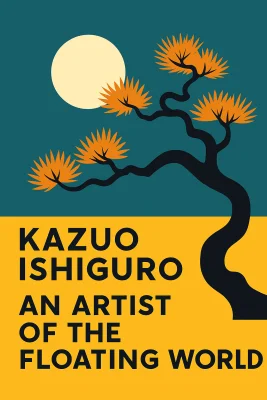
An Artist of the Floating World
Categories
Fiction, Historical Fiction, Literature, Asia, Japan, Historical, Contemporary, Novels, Japanese Literature, Literary Fiction
Content Type
Book
Binding
Paperback
Year
2005
Publisher
Faber and Faber
Language
English
ASIN
0571225365
ISBN
0571225365
ISBN13
9780571225361
File Download
PDF | EPUB
An Artist of the Floating World Plot Summary
Introduction
In post-war Japan, autumn light filters through the windows of Masuji Ono's hillside house, illuminating a man whose artistic legacy has become his greatest burden. The distinguished painter sits alone, contemplating his granddaughter's failed marriage negotiations and the whispered accusations that follow his name through the rebuilt streets of his city. Once celebrated as a master artist whose patriotic works inspired a nation's war effort, Ono now faces a different kind of reckoning—one that demands he confront the true cost of his influence during Japan's darkest years. The story unfolds through Ono's memories as he navigates the delicate negotiations for his younger daughter Noriko's marriage prospects. Each conversation, each suspicious glance from potential in-laws, forces him deeper into his past—from his apprentice days in the pleasure districts to his rise as a propaganda artist whose paintings helped fuel imperial ambitions. As the investigation into his background threatens to destroy his daughter's future happiness, Ono must decide whether to continue hiding behind the comfortable fiction of his artistic innocence or face the uncomfortable truth about his role in Japan's wartime tragedy.
Chapter 1: The Master of a Changing House
The imposing cedar gateway and elegant tiles of Masuji Ono's hillside residence tell the story of a man who once commanded respect in Japan's art world. Built by the influential businessman Akira Sugimura, the house came to Ono through an unusual "auction of prestige"—the Sugimura family choosing their buyer not by wealth, but by moral character and achievement. They deemed the distinguished painter worthy of their patriarch's legacy, a decision that seemed prophetic in 1933 when Ono's career soared to unprecedented heights. Now, in October 1948, the same house feels like a monument to a different era. War damage scars the eastern wing, and tarpaulin sheets cover gaps where bomb fragments tore through Sugimura's elegant corridor. Ono tends to the repairs himself, moving slowly through rooms that once hosted gatherings of ambitious young artists who looked to him as their master and guide. The silence echoes with memories of heated debates about art's role in national destiny, discussions that once seemed so vital and are now so dangerous to recall. His younger daughter Noriko returns from work each evening with barely concealed irritation, her unmarried status at twenty-six a source of growing family anxiety. The previous year's marriage negotiations with the Miyake family collapsed mysteriously at the final moment, leaving questions that no one dares to answer directly. When Noriko suggests with bitter humor that her father has become "domesticated" in retirement, the barb carries deeper implications—in this new Japan, the mighty have indeed fallen far from their pedestals. The morning sun illuminates the garden where Ono once painted scenes of noble sacrifice and imperial glory. Those canvases now remain hidden away, their bold proclamations of Japanese destiny transformed from celebrated art into potential evidence of complicity. As he surveys his domain from the veranda, Ono understands that his house, like his reputation, rests on foundations that the post-war world increasingly views as built on moral quicksand.
Chapter 2: Apprentice to the Floating World
Young Masuji Ono's artistic journey began in the cramped attic rooms of Furukawa, where he worked by oil-light for Master Takeda's commercial firm, mass-producing "Japanese" scenes for foreign buyers. The work was exhausting and artistically hollow—cherry blossoms, swimming carp, and geishas painted quickly to meet shipping deadlines. But it was here that Ono first encountered Yasunari Nakahara, nicknamed "the Tortoise" for his painstakingly slow pace, a gentle soul whose devotion to artistic integrity would later haunt both their destinies. When the renowned master Seiji Moriyama noticed Ono's work and offered him patronage, it seemed like salvation from the artistic assembly line. Moriyama's villa in the Wakaba countryside was a decaying paradise where ten disciples lived and worked, devoted to capturing the ephemeral beauty of Japan's "floating world"—the night-time realm of pleasure houses, geishas, and lantern-lit entertainment districts. Here, art was worship, and Moriyama was the high priest of an aesthetic philosophy that celebrated transient beauty over lasting substance. The villa's ritualistic atmosphere bordered on religious fanaticism. When Moriyama completed a new painting, his disciples would gather in reverent silence, analyzing every brushstroke while their master feigned indifference. The leading pupil Sasaki served as chief interpreter of Moriyama's intentions, his pronouncements carrying the weight of holy scripture. Any work deemed "disloyal" to their teacher's vision was immediately destroyed, often by the artist's own hand in desperate attempts to maintain group acceptance. Yet beneath this devotion to artistic purity, darker currents flowed. When Sasaki eventually questioned their master's approach and was branded a traitor, the other disciples turned on him with vicious unity. The night he left the villa, Sasaki moved from room to room seeking even a single word of comfort from his former friends, finding only silence. Ono lay listening in the darkness as his former colleague's footsteps faded into the night, carrying away not just a person but a warning about the price of artistic independence in a world that demanded absolute conformity.
Chapter 3: Betrayal in the Name of Patriotism
The first crack in Ono's artistic faith appeared during a chance encounter with Chishu Matsuda, a sharp-dressed representative of the Okada-Shingen Society who arrived at Moriyama's villa like a serpent in Eden. Matsuda's mocking smile and calculating eyes sized up the villa's decay with cruel amusement, seeing through the disciples' pretensions of aesthetic purity to the rotting foundation beneath. His invitation to Ono was simple: abandon the floating world's meaningless beauty and create art that could change Japan's destiny. Walking through the Nishizuru slums with Matsuda, Ono witnessed poverty that his sheltered artistic life had never revealed. Three small boys torturing some helpless animal while their elders struggled in sewage-stained hovels—this was the reality his master's elegant pleasure-house paintings ignored. Matsuda's words cut deep: while artists celebrated courtesans and lantern light, Japan's children starved and the nation's enemies grew stronger. Real artists, he argued, must serve purposes greater than private aesthetic pleasure. The tension reached its breaking point when Ono began painting "Complacency"—a work that violated every principle of Moriyama's teaching. Gone were the subtle colors and European influences; in their place stood bold Japanese calligraphy and hard traditional outlines depicting ragged children ready to fight while wealthy men laughed in comfortable bars. When the Tortoise discovered the heretical work, his horrified reaction—"You are a traitor"—echoed through the villa like a death sentence. The final confrontation came in the pavilion at Takami Gardens, where master and pupil faced each other as the sun set over their shared past. Moriyama's disappointment was measured and cold—he had invested years in nurturing Ono's talent, only to watch it perverted by crude political concerns. When he demanded the surrender of all such "experimental" works, Ono's refusal marked the end of more than an apprenticeship. It was the death of one artistic philosophy and the birth of another, more dangerous vision of art's role in shaping national character and imperial destiny.
Chapter 4: The Failed Marriage Negotiations
The Miyake family's sudden withdrawal from marriage negotiations with Noriko the previous year left wounds that still fester in the Ono household. Young Jiro Miyake had seemed genuinely fond of Noriko, and the families had progressed to the point where an engagement announcement appeared imminent. Then, without warning or adequate explanation, the Miyakes declared their son "inadequately placed" to marry above his station—a formal excuse that fooled no one but provided a face-saving exit from an increasingly uncomfortable situation. Ono's chance encounter with Jiro at a tram stop offered disturbing clues about the real reasons behind the withdrawal. The nervous young man spoke of his company president's recent suicide—a gesture of apology for wartime activities that had brought shame upon the entire organization. More troubling were Jiro's bitter comments about war criminals who still walked free, cowards who refused to acknowledge their responsibility for leading the nation astray. The implication hung unspoken but clear: some men had the courage to face their wartime actions, while others lacked even that basic honor. The investigation that preceded all respectable marriage negotiations had clearly uncovered something about Ono's past that made him unsuitable as a father-in-law. Professional detectives hired by prospective families routinely examined every aspect of a candidate's background, and Ono's wartime activities as a celebrated propaganda artist would not have escaped their attention. His paintings had appeared in exhibitions promoting Japanese expansion, his students had created recruitment posters, and his reputation had been built on art that served the military's imperial ambitions. Now, as new negotiations begin with the prestigious Saito family for Noriko's future, the same shadow threatens to destroy another chance at happiness. Dr. Saito's position as a respected art critic means he would be fully aware of Ono's wartime reputation, making the success of these negotiations even more uncertain. The weight of hidden history presses down on the household like an approaching storm, promising revelations that could shatter more than one family's carefully maintained facade of respectability.
Chapter 5: Confronting the Ghosts of Wartime Legacy
The investigation into Ono's past intensifies as Noriko's marriage negotiations progress, forcing him to confront former pupils and colleagues whose own fates reveal the true scope of his wartime influence. His most gifted student, Kuroda, now lives in a cramped apartment in the deteriorating Yanagawa district, his career rebuilt from the ashes of imprisonment and disgrace. When Ono attempts to visit, Kuroda's young protégé Enchi greets him with barely concealed hostility, his fresh face twisted with the righteousness of youth judging the compromises of age. Enchi's accusations cut deep: Kuroda spent years in prison as a political dissenter, suffering beatings and neglect while his former teacher enjoyed honors and recognition. The young man's words paint a picture of systematic torture—untreated shoulder injuries, daily humiliation, the constant label of "traitor" applied to someone whose only crime was questioning the wisdom of artistic propaganda. The irony is razor-sharp: the student who maintained artistic integrity was imprisoned, while the teacher who abandoned it for political expediency prospered. Kuroda's cold rejection of Ono's attempted reconciliation arrives in a brief, formal letter that drips with wounded dignity. "I have no reason to believe a meeting between us would produce anything of value," the former pupil writes, each word carefully chosen to inflict maximum emotional damage. The courtesy is devastating in its politeness—this is not hot anger but the icy contempt of someone who has had years to contemplate the nature of betrayal and found it unworthy of heated response. The encounters with other former associates paint a consistent picture of men trying to escape the shadow of their wartime actions. Some, like his old drinking companion Shintaro, desperately attempt to rewrite history, seeking teaching positions by claiming they resisted Ono's influence during the "patriotic campaigns" of the late 1930s. The sight of former disciples scrambling to distance themselves from their master's legacy forces Ono to recognize that his influence had been both broader and more destructive than he had ever acknowledged to himself.
Chapter 6: A Public Confession of Private Sins
The crucial miai meeting with the Saito family at the Kasuga Park Hotel becomes the stage for Ono's most significant moral reckoning. Surrounded by the family's polished sophistication and his daughter's nervous hope for happiness, Ono finds himself trapped between the comfortable lies of the past and the harsh necessities of the present. Dr. Saito's casual mention of Kuroda—now teaching at the new college—lands like a carefully placed blade, reminding Ono that his former student's imprisonment is well-known among the city's artistic community. Young Mitsuo Saito's hostile stare from across the dinner table serves as a mirror reflecting Ono's reputation among the younger generation. Here is someone who sees through the polite social facade to the moral bankruptcy beneath—an artist who prostituted his talent for political approval, a teacher who led impressionable students down a path that ended in prison cells and burned paintings. The weight of that accusatory gaze grows heavier with each course of the elaborate meal, each polite exchange about democracy and reconstruction. The alcohol and anxiety combine to produce a moment of searing honesty that shocks everyone present, including Ono himself. "I admit this quite readily," he declares, his voice cutting through the civilized conversation like a sword through silk. "Much of what I did was ultimately harmful to our nation. Mine was part of an influence that resulted in untold suffering for our own people." The words hang in the air like smoke from a funeral pyre, impossible to take back and too true to deny. The confession transforms the entire evening, shifting the family dynamic from suspicion to something approaching respect. By acknowledging his mistakes publicly and explicitly, Ono removes the weapon that threatened to destroy his daughter's chances. The Saitos, prepared for denial and defensiveness, find themselves dealing instead with a man willing to face the consequences of his choices. It is a gamble that pays off in the most essential way—Noriko's future happiness secured by her father's willingness to sacrifice his own pride on the altar of truth.
Chapter 7: Reconciliation Amidst the Rebuilding Nation
The successful conclusion of Noriko's marriage negotiations marks the beginning of Ono's genuine reconciliation with his past, though the process proves more complex than simple confession can address. His younger daughter's happiness provides a foundation for family healing, but the broader questions of responsibility and redemption continue to echo through his daily life. When his old friend Shintaro visits seeking a letter of recommendation that would whitewash his own wartime activities, Ono's refusal signals a commitment to honesty that extends beyond his own convenience. The changing city around him offers daily reminders of both destruction and renewal. Where the Migi-Hidari pleasure house once stood—the establishment where Ono and his disciples planned their artistic campaigns—construction workers now build modern office buildings filled with young people focused on Japan's democratic future. The sight of these energetic employees, laughing together in the sunshine with the open innocence of those unburdened by wartime guilt, fills him with genuine hope for the nation's recovery. His final encounters with old colleagues reveal the variety of ways men handle the weight of historical complicity. Matsuda, dying slowly but maintaining his dignity, acknowledges their shared ordinariness: "We at least acted on what we believed and did our utmost. It's just that in the end we turned out to be ordinary men." There is comfort in this recognition—they were not monsters but flawed human beings who made serious mistakes during extraordinary times, and that distinction matters even if it doesn't absolve. The birth of new grandchildren provides Ono with tangible reasons for optimism about the future. As he watches his family grow and prosper in the rebuilt nation, he understands that his role now is not to defend the past but to ensure that its lessons serve the generations that will inherit Japan's destiny. The country that emerges from the ashes of war may be diminished in military power, but it offers something his imperial version never could—the possibility of genuine moral progress built on acknowledged mistakes rather than denied ones.
Summary
Masuji Ono's journey from celebrated propaganda artist to remorseful elder reveals the personal cost of a nation's collective reckoning with its wartime past. His willingness to acknowledge his role in Japan's imperial disasters—publicly, explicitly, and without the comfort of self-serving excuses—transforms him from a symbol of discredited authority into something more valuable: a man capable of genuine moral growth. The price of this transformation is steep, measured in lost friendships, damaged reputation, and the painful recognition that his artistic achievements were built on a foundation of political complicity. Yet in the rubble of the old Japan, Ono discovers possibilities that his imperial version never offered. His daughters find happiness in marriages built on honesty rather than hidden shame. Former enemies become neighbors in a reconstruction project that values democratic principles over military glory. The young office workers who occupy the space where his old haunts once stood represent not just Japan's future but its capacity for reinvention. In choosing truth over comfort, confession over denial, Ono helps create the moral foundation upon which this new nation can build something genuinely worthy of the sacrifices made in its name. The floating world of his youth may have vanished forever, but the solid ground of acknowledged responsibility offers a more durable foundation for whatever emerges from the ashes of empire.
Best Quote
“When you are young, there are many things which appear dull and lifeless. But as you get older, you will find these are the very things that are most important to you.” ― Kazuo Ishiguro, An Artist of the Floating World
Review Summary
Strengths: The review highlights the book's exploration of post-WWII Japan, providing a vivid depiction of cultural clashes and societal changes. The narrative's focus on personal loss, cultural adaptation, and the protagonist's introspection offers depth. The portrayal of generational differences and the protagonist's complex character development are also noted as strengths. Weaknesses: The review suggests potential ambiguity in the protagonist's memory, possibly hinting at cognitive decline, which might confuse readers. Additionally, the narrative's reliance on cultural nuances may not resonate with all audiences. Overall: The review presents a generally positive sentiment, appreciating the book's rich historical context and character exploration. It is recommended for readers interested in post-war cultural dynamics and personal introspection.
About Author
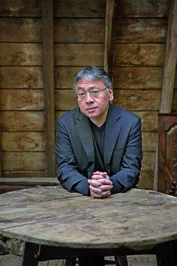
Kazuo Ishiguro
Ishiguro interrogates the intricate interplay of memory and identity in his novels, drawing deeply from his cross-cultural experiences as a Japanese-born British author. Through narratives that often feature introspective first-person perspectives, Ishiguro reflects on themes of memory, loss, and the passage of time. His works, such as "The Remains of the Day," engage readers with their exploration of the silent regrets and unfulfilled duties that haunt the human experience, which can prompt readers to reconsider their understanding of history and personal connections. This reflective approach enables readers to explore the delicate constructs of human relationships and the often-unreliable nature of memory.\n\nThe author’s method involves setting his stories against varied historical and speculative backdrops, for which his restrained prose enhances the emotional depth of the narrative. For instance, "Never Let Me Go" blends science fiction elements with a poignant meditation on human mortality and the ethics of scientific advancement, whereas "Klara and the Sun" extends this exploration into the realm of artificial intelligence and emotional companionship. Such thematic diversity allows readers to immerse themselves in different facets of the human condition, offering a multifaceted view that resonates across genres. Therefore, Ishiguro's books serve not only as compelling stories but also as tools for introspection, urging readers to grapple with their own notions of identity and belonging.\n\nReaders of Ishiguro's work benefit significantly from his nuanced portrayal of complex emotions and societal dynamics, offering insights that are particularly valuable for those interested in the intersections of cultural and personal identity. This approach has garnered him numerous accolades, including the Nobel Prize in Literature, which recognized his ability to unearth the profound emotional forces behind human connections. Through his novels, Ishiguro crafts narratives that continue to influence and inspire, solidifying his place in the contemporary literary canon.
Read moreDownload PDF & EPUB
To save this Black List summary for later, download the free PDF and EPUB. You can print it out, or read offline at your convenience.
An Artist of the Floating World
by Kazuo Ishiguro
