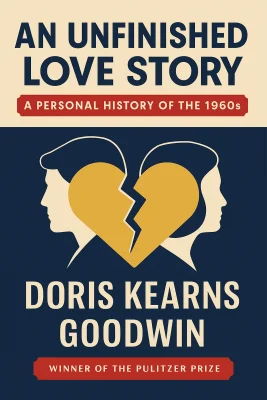
An Unfinished Love Story
A Personal History of the 1960s
Categories
Nonfiction, Biography, History, Memoir, Politics, Audiobook, Biography Memoir, Book Club, Historical, American History
Content Type
Book
Binding
Hardcover
Year
2024
Publisher
Simon & Schuster
Language
English
ISBN13
9781982108663
File Download
PDF | EPUB
An Unfinished Love Story Plot Summary
Introduction
# Richard Goodwin: The Speechwriter Who Shaped American History In the swirling chaos of 1960s America, when the nation teetered between hope and despair, one man wielded words like weapons of transformation. Richard Goodwin possessed a rare gift that would shape the very language of American democracy during its most turbulent decade. From the soaring rhetoric of John F. Kennedy's New Frontier to Lyndon Johnson's Great Society, from the civil rights battlegrounds to the antiwar movement, Goodwin's pen crafted the speeches that moved mountains and changed minds. This brilliant Harvard lawyer turned speechwriter stood at the epicenter of power, translating presidential visions into words that could inspire a nation. Yet his story reveals far more than political craftsmanship. Through Goodwin's remarkable journey, we witness the complex dance between idealism and pragmatism, the price of loyalty in the corridors of power, and the enduring struggle to align America's highest aspirations with its daily realities. His life illuminates the profound responsibility that comes with shaping public discourse, the courage required to speak truth to power, and the ultimate discovery that words, when wielded with purpose and integrity, possess the power to bend the arc of history toward justice.
Chapter 1: From Boston to Harvard: The Making of a Political Mind
Richard Goodwin's transformation from a working-class Boston kid to one of America's most influential political voices began in the unlikely setting of his childhood neighborhood. Born in 1931 to Jewish immigrant parents, young Dick grew up in a world where words mattered deeply but opportunities seemed scarce. His father ran a small business, his mother kept house, and the family lived modestly in a community where intellectual ambition was both nurtured and constrained by economic reality. The first glimpse of Goodwin's extraordinary mind emerged during his high school years, where teachers recognized an unusual combination of analytical brilliance and creative flair. Unlike his peers who saw education as a path to steady employment, Dick viewed learning as a form of liberation. He devoured books with an appetite that bordered on obsession, developing the voracious reading habit that would later inform his speechwriting with literary depth and historical perspective. Harvard Law School became the crucible where Goodwin's political consciousness truly crystallized. As editor of the Harvard Law Review, he encountered the intersection of law and social justice that would define his career. The young man who had grown up watching his parents struggle with economic uncertainty now found himself surrounded by privilege, yet rather than being intimidated, he was energized by the possibilities that education and talent could unlock. It was during these formative years that Goodwin developed his core belief that government could be a force for positive change in ordinary people's lives. This wasn't abstract political theory for him but personal conviction born from witnessing inequality firsthand. His clerkship with Supreme Court Justice Felix Frankfurter further refined his understanding of how legal principles could be transformed into practical policies that improved lives. The young lawyer's early exposure to power taught him a crucial lesson that would guide his entire career: ideas without eloquent expression remain powerless, but when properly articulated, they can reshape society itself. This realization would soon propel him from the quiet chambers of the Supreme Court into the tumultuous arena of presidential politics.
Chapter 2: Kennedy's New Frontier: Crafting Presidential Vision
The phone call that changed Richard Goodwin's life came in 1959, when Senator John F. Kennedy's campaign reached out to the brilliant young lawyer who had caught their attention through his work on congressional investigations. At twenty-eight, Goodwin possessed exactly what the Kennedy operation needed: a razor-sharp intellect, an outsider's perspective on Washington politics, and an ability to translate complex policy ideas into compelling public language. Goodwin's first major test came during the 1960 presidential debates, where he served as Kennedy's chief researcher and debate coach. Working eighteen-hour days, he compiled what became known as the "Nixopedia," a comprehensive catalog of Vice President Nixon's statements and positions that Kennedy could deploy during their televised encounters. The young aide watched with satisfaction as his preparation helped Kennedy project the image of a knowledgeable, confident leader ready to guide America into a new decade. The relationship between Kennedy and Goodwin transcended typical political partnerships. The president-elect recognized in his young aide not just a skilled writer but a kindred spirit who shared his vision of America's potential. When Kennedy delivered his inaugural address with its famous call to "ask not what your country can do for you," Goodwin felt the profound satisfaction of seeing ideas he had helped shape inspire an entire generation. As a White House aide, Goodwin found himself at the center of the New Frontier's most ambitious initiatives. He traveled extensively throughout Latin America, crafting the Alliance for Progress that promised to transform relationships between the United States and its southern neighbors. His work on this program revealed his talent for understanding complex international dynamics and translating them into policies that served both American interests and humanitarian ideals. The tragic end of the Kennedy presidency in Dallas devastated Goodwin personally and professionally. He had not merely lost a boss but a mentor who had shown him how power could be wielded with grace and purpose. Yet even in grief, Goodwin recognized that the ideals they had championed together would require new champions and new voices to carry them forward.
Chapter 3: The Great Society: Architect of Johnson's Domestic Revolution
The transition from John Kennedy's elegant rhetoric to Lyndon Johnson's earthy populism might have challenged a lesser wordsmith, but Richard Goodwin discovered in LBJ a leader whose passion for social justice matched his own deepest convictions. When Johnson summoned Goodwin to help articulate his vision for America, the young speechwriter found himself working with a president whose understanding of poverty and inequality was both personal and profound. Goodwin's first major collaboration with Johnson produced the speech that would define an era. At the University of Michigan in 1964, Johnson delivered Goodwin's words about building "a Great Society" where Americans would be "more concerned with the quality of their goals than the quantity of their goods." The phrase captured perfectly Johnson's ambitious domestic agenda while providing a memorable banner under which to rally support for sweeping social reforms. The partnership between Johnson and Goodwin proved remarkably productive because both men understood that effective policy required effective communication. Johnson's intimate knowledge of congressional politics combined with Goodwin's gift for language created speeches that not only inspired audiences but also built practical support for legislation. Their collaboration on Medicare, civil rights, and anti-poverty programs demonstrated how presidential rhetoric could become a powerful tool for social change. Perhaps nowhere was Goodwin's influence more profound than in the realm of civil rights. He played a crucial role in crafting Johnson's response to the crisis in Selma, Alabama, helping to write the president's address to Congress that culminated in the immortal words: "We shall overcome." The speech represented a watershed moment in American history, with a president from the South fully embracing the cause of civil rights. Working with Johnson taught Goodwin valuable lessons about the relationship between idealism and political reality. The president's willingness to use every available lever of power to advance progressive causes showed Goodwin that noble goals required pragmatic methods. Johnson's famous ability to cajole, threaten, and charm senators into supporting his agenda revealed how personal relationships and strategic thinking could transform abstract policy proposals into concrete improvements in people's lives. Yet Goodwin also witnessed the darker side of political power during his time with Johnson. The president's volcanic temper, his tendency toward paranoia, and his increasing obsession with loyalty tests created an atmosphere of tension that would eventually drive Goodwin away. These experiences taught the young aide that even leaders with admirable goals could be corrupted by the very power they wielded in service of those goals.
Chapter 4: Vietnam's Moral Crisis: From Loyalty to Conscience
The Vietnam War created the most painful chapter of Richard Goodwin's government service, forcing him to choose between personal loyalty and moral conviction. As Johnson escalated American involvement in Southeast Asia, Goodwin watched with growing alarm as the conflict consumed resources and attention that might have been devoted to the domestic programs he had helped create. Initially, Goodwin hoped that private counsel might influence Johnson's thinking about Vietnam. He drafted memos arguing that the war was undermining the Great Society's achievements and damaging America's moral authority around the world. But as casualties mounted and Johnson became increasingly defensive about his war policies, Goodwin realized that quiet dissent was insufficient to address what he saw as a moral crisis. The decision to break publicly with Johnson over Vietnam represented one of the most difficult moments in Goodwin's career. He understood that speaking out would end his influence within the administration and likely damage his future prospects in Democratic politics. Yet he also recognized that his privileged position as a former presidential aide gave him both the credibility and the responsibility to challenge policies he believed were wrong. Goodwin's growing opposition to Vietnam reflected a broader crisis within the liberal establishment of the 1960s. Many of the same individuals who had championed progressive domestic policies found themselves torn between loyalty to Democratic leaders and opposition to an increasingly unpopular war. For Goodwin, this tension was particularly acute because of his close personal relationship with Johnson and his deep investment in the Great Society programs that the war was undermining. The breaking point came in 1965 when Goodwin submitted his resignation from the White House staff. His departure was officially attributed to his desire to pursue other opportunities, but insiders understood that Vietnam had driven him away. In leaving the administration, Goodwin sacrificed significant influence and career advancement for the sake of his principles. After leaving the White House, Goodwin became increasingly vocal in his opposition to the war, writing articles and giving speeches that challenged the administration's policies. His critique was particularly powerful because it came from someone who had been at the center of power and who understood the decision-making process from the inside. He argued that the war was not only morally wrong but strategically counterproductive, diverting attention and resources from the domestic challenges that should be America's primary focus.
Chapter 5: The Campaign Trail: McCarthy, RFK and Political Transformation
Richard Goodwin's opposition to the Vietnam War led him into one of the most dramatic and consequential political campaigns of the twentieth century. In early 1968, he joined Eugene McCarthy's insurgent presidential campaign, bringing his considerable skills as a strategist and communicator to what many considered a hopeless cause. The decision to work for McCarthy represented both a personal and political transformation for Goodwin, as he moved from the corridors of established power to the grassroots movement that would ultimately help bring down a sitting president. The McCarthy campaign revealed new dimensions of Goodwin's political talents. Working with a candidate who was cerebral and sometimes aloof, Goodwin helped transform McCarthy from a single-issue antiwar candidate into a credible alternative to Lyndon Johnson. He understood that defeating an incumbent president would require more than just opposition to Vietnam; it would demand a comprehensive critique of Johnson's leadership and a compelling vision for America's future. The success in New Hampshire created a political earthquake that reverberated throughout the Democratic Party. Within days of the primary results, Robert Kennedy announced his own candidacy for president, creating a complex and emotionally charged situation for Goodwin. Kennedy had been not just a political ally but a close personal friend, and his entry into the race created divided loyalties that would test Goodwin's principles and relationships. When Kennedy entered the race, Goodwin faced an agonizing decision. His commitment to McCarthy was both professional and moral, based on the senator's courage in challenging Johnson when others remained silent. Yet his friendship with Kennedy ran deep, and he recognized that Kennedy might be better positioned to win both the nomination and the general election. After much soul-searching, Goodwin made the difficult decision to leave the McCarthy campaign and join Kennedy's effort. Working for Robert Kennedy's presidential campaign proved to be one of the most intense and rewarding experiences of Goodwin's career. He helped craft Kennedy's message of reconciliation and healing, developing themes that appealed to both African American voters in urban areas and white working-class voters who felt left behind by social change. Goodwin's speeches for Kennedy emphasized the candidate's unique ability to bridge racial and class divides. The campaign was cut tragically short by Kennedy's assassination in Los Angeles on June 5, 1968, just moments after celebrating his victory in the California primary. For Goodwin, Kennedy's death represented not just the loss of a friend but the end of a political movement that had promised to transform American politics. The idealistic energy that had driven both the McCarthy and Kennedy campaigns seemed to die with Kennedy in that hotel kitchen.
Chapter 6: Beyond Politics: Writer, Historian and Public Intellectual
Following the traumatic events of 1968, Richard Goodwin made a conscious decision to step back from the front lines of electoral politics and pursue a different kind of public service through writing and commentary. He retreated to the mountains of western Maine, where he could reflect on his experiences and contribute to public discourse through books, articles, and occasional speeches. This transition from political operative to public intellectual allowed Goodwin to maintain his influence on American political thought while preserving his independence and moral authority. Goodwin's post-Washington career demonstrated his remarkable versatility as a writer and thinker. He produced penetrating analyses of American politics and society, drawing on his insider knowledge to offer unique insights into how power really works in Washington. His writing combined the practical wisdom of someone who had operated at the highest levels of government with the moral clarity of someone who had been willing to sacrifice position for principle. During the 1970s and 1980s, Goodwin wrote extensively about the need for political reform and the dangers of concentrated power. He was particularly prescient in his warnings about the corrupting influence of money in politics and the growing disconnect between political elites and ordinary citizens. His columns and articles often challenged conventional wisdom, offering fresh perspectives on issues ranging from campaign finance to foreign policy. Goodwin also turned his attention to historical writing, producing works that examined the relationship between power and principle in American politics. His historical perspective, informed by his own experiences in government, allowed him to offer unique insights into the motivations and constraints that shape political leaders. He understood that history was not just about great men and women making momentous decisions, but about the complex interplay of personal ambition, moral conviction, and political necessity. Throughout this period, Goodwin remained engaged with contemporary political issues, serving as an advisor to various candidates and causes when his principles aligned with their goals. He was particularly active in supporting politicians who shared his commitment to social justice and his skepticism of military intervention abroad. His endorsement carried special weight because of his reputation for independence and his willingness to criticize leaders of both parties when they fell short of his standards. The writer's life also allowed Goodwin to explore his creative interests, including playwriting and literary criticism. His play about Galileo's conflict with the Catholic Church reflected his own experiences with institutional power and the price of speaking truth to authority. These creative endeavors demonstrated the breadth of his intellectual interests and his ability to find universal themes in both historical and contemporary events.
Chapter 7: Love and Partnership: The Doris Kearns Goodwin Story
The most transformative chapter of Richard Goodwin's later life began with an unexpected romance that blossomed into one of the most remarkable intellectual partnerships in American letters. His relationship with Doris Kearns, a young Harvard professor and former White House Fellow, represented not just a personal love story but a meeting of minds that would enrich both of their careers and contribute significantly to American historical scholarship. Doris Kearns brought her own impressive credentials to the relationship, having served as a White House Fellow under Lyndon Johnson and earned recognition as a rising star in political science and history. Her academic background and analytical skills perfectly complemented Goodwin's practical political experience and literary talents. Together, they formed a formidable team that could bridge the worlds of scholarship and public affairs in ways that neither could have achieved alone. Their collaboration extended far beyond their personal relationship to encompass professional projects that drew on both of their strengths. Goodwin's insider knowledge of political processes and personalities provided invaluable context for Kearns's historical research, while her scholarly rigor and analytical framework helped him organize and present his experiences in ways that illuminated broader patterns in American political life. The partnership also represented a new model for how public intellectuals could maintain their influence and relevance across changing political landscapes. Rather than being tied to particular administrations or political movements, they created an independent platform from which they could comment on and influence public discourse. Their combined reputation for integrity and insight gave them access to political leaders and media platforms that amplified their impact on national conversations. Their home in Concord, Massachusetts, became a gathering place for politicians, journalists, historians, and other public figures who valued serious conversation about American politics and history. The couple's dinner parties and informal gatherings created a unique salon atmosphere where ideas could be exchanged and relationships built across party lines and professional boundaries. Perhaps most importantly, their partnership demonstrated how personal relationships could enhance rather than compromise professional achievement. Rather than competing with each other or allowing their relationship to limit their individual ambitions, they found ways to support and amplify each other's work. Their marriage became a model for how two accomplished individuals could maintain their separate identities while creating something new and valuable together.
Summary
Richard Goodwin's remarkable journey from Harvard Law School to the highest echelons of American political power, and ultimately to his principled opposition to the Vietnam War, embodies the idealistic spirit and moral complexity that defined the 1960s generation. His life demonstrates that true influence comes not from the positions one holds, but from the courage to align one's actions with one's deepest convictions, even when doing so requires significant personal sacrifice. The partnership between Richard and Doris Kearns Goodwin offers profound lessons about how shared intellectual passions can create lasting impact across multiple spheres of influence. Their collaboration suggests that the most meaningful contributions to public life often come from the intersection of different perspectives and experiences, combined with an unwavering commitment to truth-telling and moral clarity. For anyone seeking to understand how individual conscience can shape historical events, or how personal relationships can enhance professional achievement, Goodwin's story provides both inspiration and practical wisdom about the possibilities and responsibilities that come with influence and talent.
Best Quote
“We had lived surrounded by books all our married lives. They were our element. We had written them, read for pleasure, amassed mini libraries for particular projects, collected them, organized them into ever shifting categories, and in the end, dwelled inside what we joyfully called our house of books.” ― Doris Kearns Goodwin, An Unfinished Love Story: A Personal History of the 1960s
Review Summary
Strengths: The review highlights the unique perspective offered by Richard Goodwin's memoir, emphasizing his significant role in crafting influential speeches for prominent political figures of the 1960s. It underscores the book's personal narrative style, which provides an intimate look at historical events and figures. The memoir is praised for its insightful discussions on pivotal moments in American history, particularly the Civil Rights movement and legislative achievements under President Johnson. Weaknesses: The review suggests a potential bias in Richard Goodwin's portrayal of the era, particularly in his depiction of the 1960s as a period of decline post-Kennedy, possibly overlooking some of Lyndon Johnson's accomplishments. Overall: The review conveys a generally positive sentiment towards the memoir, appreciating its historical insights and personal anecdotes. It recommends the book for those interested in a personal recount of the 1960s political landscape, despite some perceived bias in the narrative.
About Author

Doris Kearns Goodwin
Kearns Goodwin situates her works within the rich tapestry of American presidential history, examining how leadership and personal relationships intertwine to shape political decisions. Her narrative-driven style, marked by a blend of rigorous scholarship and engaging storytelling, allows her to delve into the complexities of leadership as seen in figures like Abraham Lincoln and Franklin Roosevelt. Goodwin’s use of personal interviews and archival research provides readers with intimate insights into the lives of historical figures, bridging the gap between past and present.\n\nFocusing on themes such as the interplay between public and private life, Goodwin’s books like "Team of Rivals" and "No Ordinary Time" offer readers a nuanced understanding of how personal dynamics influence political landscapes. Her bio, as reflected through these works, reveals an author deeply committed to making complex political narratives accessible to a broad audience. The impact of her work is further amplified by her involvement in producing documentary series, thereby reaching diverse audiences beyond the traditional reader. \n\nAs a result, those who seek a deeper understanding of American political history will find her approach invaluable, benefiting from her ability to animate historical figures and make their challenges resonate with contemporary issues. Goodwin's recognition, including a Pulitzer Prize for "No Ordinary Time," underscores her standing as a distinguished figure in historical writing, confirming her ability to transform meticulous research into compelling storytelling that enlightens and educates.
Read moreDownload PDF & EPUB
To save this Black List summary for later, download the free PDF and EPUB. You can print it out, or read offline at your convenience.
An Unfinished Love Story
by Doris Kearns Goodwin
