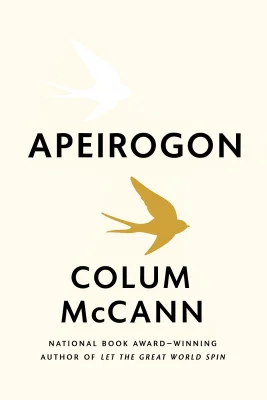
Apeirogon
Categories
Fiction, Politics, Audiobook, Historical Fiction, Book Club, Contemporary, War, Literary Fiction, Israel, Middle East
Content Type
Book
Binding
Kindle Edition
Year
2020
Publisher
Random House
Language
English
ASIN
B07T3XGLW1
ISBN
067960460X
ISBN13
9780679604600
File Download
PDF | EPUB
Apeirogon Plot Summary
Introduction
# When Walls Become Bridges: Two Fathers Transform Grief Into Hope The motorcycle cuts through Jerusalem's morning mist, its rider pushing the machine harder than most men his age would dare. Rami Elhanan, sixty-seven, navigates checkpoints and barriers with practiced ease, his yellow Israeli license plate a small act of defiance in territory marked by red signs warning of mortal danger. Behind him, the city awakens to another day of walls both visible and invisible, of lives lived in the shadow of ancient hatreds. Meanwhile, in the Palestinian village of Anata, Bassam Aramin moves through his morning prayers with quiet dignity, each step marked by the slight limp that never quite healed from his childhood. These two fathers have never met, yet they are bound by the most terrible of commonalities. Both have buried daughters killed by this conflict. Both have chosen to transform their anguish into something the world desperately needs to hear. Their journey from enemies to unlikely allies will challenge everything their peoples believe about forgiveness, revenge, and the possibility of peace in a land that has forgotten how to hope.
Chapter 1: Shattered Lives: Two Daughters Lost to Ancient Hatred
Smadar Elhanan moved through Ben Yehuda Street with the unconscious grace of thirteen-year-old invincibility. Her cropped hair caught the September afternoon light as she walked with two friends, buying books for the new school year. The pedestrian mall buzzed with the familiar rhythms of Jerusalem life—café conversations, street musicians, the casual vigilance of a city that had learned to live with danger. The three Palestinian suicide bombers approached disguised as women, their bodies packed with nails and ball bearings designed to maximize carnage. When they detonated simultaneously, the blast wave threw Smadar backward onto the blood-soaked pavement. Her face remained untouched, peaceful even, as if she had simply fallen asleep amid the chaos. Rami received the call at his graphic design studio. Hospital. Explosion. Come immediately. He rode his motorcycle through Jerusalem's sirens and smoke, his mind refusing to process what awaited him. At Hadassah Hospital, a doctor led him to a room where his daughter lay on a metal table, covered by a white sheet. The silence that followed would echo through every moment of his remaining life. Ten years later, ten-year-old Abir Aramin skipped out of her school in Anata during morning break. She clutched two shekels in her small hand, enough for a candy bracelet from the shop across the street. Her voice had filled their apartment that morning as she practiced multiplication tables, her dreams of becoming an engineer as bright as the winter sun. An Israeli border police jeep rounded the corner from the cemetery road. Through the vehicle's firing port, eighteen-year-old soldier Y.A. aimed at what he would later claim were stone-throwing rioters. But there were no rioters that morning, only a girl in a blue school uniform walking back to class with her candy bracelet. The rubber bullet struck Abir in the back of the head, shattering her skull and sending her small body crumpling to the dusty asphalt. By the time Bassam reached the hospital, his daughter was already gone, another casualty in a conflict that devoured children with mechanical indifference.
Chapter 2: Opposite Shores of Grief: Initial Responses to Unspeakable Loss
Rami's first instinct burned through him like acid. He wanted to take his military-issued Kalashnikov and empty its magazine into the first Palestinian he encountered. The rage consumed sleep, appetite, the ability to form coherent thoughts. He would sit in his motorcycle gear at three in the morning, keys in hand, planning routes through Palestinian neighborhoods where he might find someone to blame. But his wife Nurit would not let him drown in hatred. She had already begun speaking to journalists, her words cutting through Israel's shocked silence like a blade. The government of Israel killed my daughter, she declared, refusing the comfortable narrative of innocent victims and terrorist monsters. Their shiva period became a battlefield of competing stories. Netanyahu called to offer condolences and was curtly refused. Some friends stopped coming. Others argued. A few began to listen. Bassam's response was different but equally radical. Within days of Abir's death, he announced his intention to file a civil lawsuit against the Israeli state. Not for money, but for acknowledgment. He wanted the world to know that his daughter had not been a stone-thrower or a threat, but a ten-year-old girl who loved mathematics and English literature. The Palestinian community whispered that Bassam's years in Israeli prison had somehow compromised him, made him too willing to work within the system that had killed his daughter. But Bassam understood something they did not. Silence was complicity. Accepting Abir's death as just another casualty would make him responsible for the next child's murder. The Israeli military's initial response was swift and predictable. No shots had been fired from the border police jeep that morning, they claimed. The girl had been killed by a stone thrown by Palestinian rioters. The autopsy Bassam demanded told a different story. The wound pattern, the trajectory, the fragments recovered from his daughter's skull all pointed to a rubber bullet fired from close range. He sold everything he owned to pay for the legal battle that would consume the next seven years of his life.
Chapter 3: Breaking the Cycle: From Vengeance to Understanding
The transformation wasn't sudden or clean for either man. Rami had fought in three wars, had never seen Palestinians as fully human. They were lawn mowers, dishwashers, the people who fixed your refrigerator on Sabbath. But grief has its own mathematics, and slowly, painfully, he began to calculate the true cost of hatred. When Yitzhak Frankenthal from the Parents Circle approached him during the shiva period, Rami had wanted to throw him out. The idea of joining a group of bereaved families seemed obscene, a betrayal of Smadar's memory. But months later, standing in a bookstore, he found himself confronting Frankenthal again. Something in the older man's eyes made him pause. The first meeting was torture. Sitting in a school classroom in northern Jerusalem, listening to other parents tell their stories, Rami felt his skin crawling with discomfort. These people seemed to have found meaning in their loss, purpose in their pain. He wanted to vomit his rage all over their careful hope. Then he saw her. A Palestinian woman stepping off a bus, clutching a photograph of her daughter to her chest. Something in her posture, the careful way she held the picture, made him understand that grief was a language that transcended the barriers their societies had built. For the first time since Smadar's death, Rami felt less alone. Bassam's transformation had begun years earlier, in an Israeli prison cell. Watching a documentary about the Holocaust, he felt something crack inside him. He had been raised to believe the Shoah was a lie, to celebrate Jewish suffering. But as the images flickered across the screen, he began to understand that Palestinians had become victims of victims, inheriting the trauma of a people who had themselves been brutalized. Seven years behind bars had taught him Hebrew, the language of his captors. He studied his enemies with the intensity of a scholar, reading their poets, learning their history. When he emerged from prison, he carried a dangerous new understanding. The cycle of violence could only be broken by those who refused to participate in it.
Chapter 4: Unlikely Recognition: When Enemies Discover Shared Humanity
The first time Rami and Bassam met, they circled each other like wary animals. It was at a Parents Circle meeting in 2007, just months after Abir's death. Rami arrived on his motorcycle, leather jacket marking him as different from the other bereaved parents. Bassam came by car, his slight limp making him move carefully through the room. They were introduced by Yitzhak Frankenthal, who understood that these two men might find something in each other that the rest of the world could not offer. The handshake was brief, formal. Rami noticed the calluses on Bassam's hands, the careful way he held himself. Bassam saw the barely contained energy in Rami's movements, the way his eyes never stopped scanning the room. Their first conversation was stilted, conducted through the careful language of mutual recognition. Yes, they had both lost daughters. Yes, they both rejected revenge. But beneath the polite words, each man was taking the measure of the other, wondering if this stranger could possibly understand the specific weight of his loss. The breakthrough came when they began traveling together to speaking engagements. Confined in cars for hours, navigating checkpoints and roadblocks, they discovered the dark humor that sustained them both. Bassam would joke about his years in prison, mimicking the guards who had beaten him. Rami would describe his fantasies of revenge with such black comedy that they both ended up laughing at the absurdity of their situation. They developed their own language, their own rhythms. At hostile audiences, Rami would go first, his Israeli identity providing cover for the harder truths Bassam would deliver. When faced with Palestinian crowds suspicious of any cooperation with Israelis, Bassam would lead, his prison credentials and obvious suffering creating space for Rami's message of shared humanity. The friendship deepened through small gestures. Rami teaching Bassam to ride a motorcycle. Bassam inviting Rami to his home in Jericho, where they would sit in the garden smoking and playing cards late into the night. They began finishing each other's sentences during presentations, their stories weaving together into something larger than either could create alone.
Chapter 5: Building Bridges: The Formation of an Impossible Friendship
Their first joint appearance at a Jewish settlement was a disaster. The audience of American immigrants, many of them armed, listened to Rami with polite attention until Bassam began to speak. The moment he said I am from Palestine, chairs scraped against the floor as people stood to leave. Shouts of terrorist and murderer filled the room. Security guards moved toward the stage. But Rami stepped forward, placing himself between Bassam and the hostile crowd. This man, he said, his voice cutting through the noise, lost his daughter the same way I lost mine. If you cannot listen to him, you cannot listen to me. The room fell silent, caught between their respect for an Israeli father's grief and their hatred for the Palestinian standing beside him. They learned to read audiences like weather patterns, sensing the moment when hostility might turn to violence. In Palestinian refugee camps, Bassam would field accusations that he had been bought by the Israelis, that his friendship with Rami was a betrayal of his people's struggle. In Israeli schools, Rami faced students who had been taught that all Palestinians were potential terrorists. Their most challenging appearance was at AIPAC, the powerful pro-Israel lobby in Washington. Bassam stood at the podium in his best suit, facing an audience of wealthy American Jews who had never seen a Palestinian speak except on television news reports about terrorism. When he began with My name is Bassam Aramin and I come from Palestine, the reaction was immediate. Walkouts, angry murmurs, the scraping of chairs. But Bassam had learned to use silence as a weapon. He waited, letting the discomfort build, until the room settled into reluctant attention. Then he told them about Abir, about the candy bracelet, about the rubber bullet that had cost American taxpayers a few cents and had taken his daughter's life. By the end of his speech, the audience sat in stunned silence, confronted with a narrative that shattered their comfortable assumptions. The breakthrough came when they began appearing together in Germany, speaking to audiences haunted by their own history of violence and genocide. German crowds provided a space where both men's stories could be heard without the immediate political calculations that poisoned discussions in their homeland. In Berlin, standing before the remnants of another wall that had once divided a city, they found their most powerful metaphor. All walls fall eventually, Rami would say. But we don't have to wait for politicians to tear them down.
Chapter 6: Speaking Truth to Power: Joint Activism in Hostile Territory
Years passed, and their partnership evolved into something neither had expected. A form of family. Their children grew up knowing each other, Palestinian and Israeli kids playing together in defiance of the walls that separated their peoples. Bassam's son Araab and Rami's son Yigal would eventually stand together on a Tel Aviv stage, continuing their fathers' work of refusing hatred. The legal victory in Abir's case came after years of struggle. The Israeli court's acknowledgment that the state bore responsibility for her death was unprecedented, a crack in the wall of official denial. But for Bassam, the real victory was not the monetary settlement. What price could be placed on a child's life? The victory was the simple recognition that his daughter's life had mattered, that her death was not just another casualty to be forgotten. Rami found his own form of justice in transformation. The rage that had once threatened to consume him became fuel for a different kind of resistance. Every audience they reached, every mind they changed, every person who left their presentations with a more complex understanding of the conflict became small victories against the machinery of hatred that had killed Smadar. Their friendship became a model for others. The Parents Circle grew, bringing together more bereaved families from both sides of the divide. Each new member carried their own story of loss and transformation, their own refusal to let grief become a weapon against the other side's children. But the work took its toll. Both men aged visibly under the weight of constantly reliving their daughters' deaths, of facing hostile audiences who saw their message of reconciliation as betrayal. Rami's hair went completely gray. Bassam's limp became more pronounced. Yet they continued traveling together, two fathers united by loss and sustained by a shared vision of a future where no other parent would have to bury a child killed by this conflict. The most powerful moments came when they visited schools, speaking to teenagers who had been raised on narratives of eternal enmity. Watching young Israelis and Palestinians in the audience begin to see each other as human beings rather than enemies, these glimpses of possibility made all the hostility and exhaustion worthwhile.
Chapter 7: Legacy of Light: How Love Transcends the Machinery of War
The monastery bells echo across the Judean hills as two men approach from opposite directions for another speaking engagement. Rami guides his motorcycle through the winding roads from Jerusalem, his weathered hands steady despite carrying nineteen years of grief. From the other side of the valley, Bassam drives his black Kia up the steep incline, cigarette smoke trailing from his window, carrying thirteen years of his own unbearable loss. They are an unlikely pair, an Israeli graphic designer and a Palestinian former prisoner, yet bound by the most terrible of commonalities. Both have buried daughters. Both have chosen to transform their anguish into something the world desperately needs to hear. Today, like countless days before, they will stand before strangers and tell their stories, hoping that in the telling, some small crack might appear in the wall of hatred that divides their peoples. Their daughters remained present in everything they did. Smadar and Abir became more than victims. They became symbols of what was possible when people chose understanding over revenge, dialogue over violence. In death, these two ten-year-old girls had accomplished something that armies and politicians had failed to achieve. They had created a bridge across the divide that separated their peoples. The road home is dark and full of checkpoints, but both men carry with them the echo of applause, the memory of faces changed by their testimony. Tomorrow they will wake to the same divided landscape, the same impossible conflict. But tonight, for a few hours, their daughters' names have been spoken in a room where enemies chose to listen. In that choosing, perhaps, lies the seed of whatever peace is possible in this wounded land.
Summary
In the end, Rami Elhanan and Bassam Aramin discovered that the most radical act in a land consumed by ancient hatreds was the simple decision to refuse the logic of revenge. Their daughters, Smadar killed by Palestinian suicide bombers and Abir shot by an Israeli soldier, became the foundation for an unlikely friendship that challenged everything their societies believed about enemies and forgiveness. Through years of joint activism, facing hostile audiences and navigating the complex geometry of grief, these two fathers proved that even the deepest wounds could become sources of healing rather than weapons of war. Their story offers no easy answers to the Israeli-Palestinian conflict, no simple path to peace in a land where every stone carries the weight of history. But in their refusal to let their daughters' deaths become justification for more killing, in their insistence on seeing the humanity in their supposed enemies, Rami and Bassam created something precious and rare. Proof that love can be stronger than hatred, that understanding can triumph over the machinery of perpetual conflict. Their legacy lives on in every person who chooses dialogue over violence, in every parent who refuses to sacrifice another generation to the ancient cycle of revenge.
Best Quote
“Rumi: Yesterday I was clever, so I wanted to change the world. Today I am wise, so I have begun to change myself.” ― Colum McCann, Apeirogon
Review Summary
Strengths: The review highlights the book's extraordinary nature, emphasizing its unique structure and emotional depth. It praises the blend of storytelling elements, including historical figures, literature, and art, and commends the prose as unparalleled. The book's ability to convey profound grief and empathy is noted, as well as its epic scope and the meaningful connections it draws between past and present events. Overall: The reader expresses a highly positive sentiment, recommending the book to fans of Colum McCann and those seeking a unique reading experience. The book is described as both cerebral and emotional, leaving a lasting impact and being considered a favorite of the year.
About Author

Colum McCann
McCann connects global narratives through the lens of empathy and shared human experience. By weaving together themes of political conflict, trauma, and resilience, his literary works invite readers to engage with complex societal issues. His commitment to storytelling as a means to foster understanding is evident in his involvement with Narrative 4, a nonprofit organization dedicated to building empathy through story exchanges. This method is reflected in his writing style, which combines literary depth with stylistic elegance, often exploring multiple perspectives and timelines.\n\nReaders who delve into McCann's books are offered a profound exploration of the human condition. His novel "Apeirogon" intricately portrays the Israeli-Palestinian conflict through the stories of two fathers, while "American Mother," co-authored with Diane Foley, narrates a poignant journey of resilience and radical empathy. Meanwhile, his award-winning "Let the Great World Spin" considers themes of trauma and hope in the aftermath of 9/11. By engaging with his narratives, readers gain insight into the interconnectedness of human experiences and the potential for empathy to bridge divides.\n\nColum McCann's bio highlights his significant contributions to literature, marked by numerous prestigious awards, including the National Book Award. As a professor at Hunter College, he continues to influence the literary landscape, mentoring new generations of writers. His body of work, acclaimed for its thematic richness and international scope, serves as a testament to the power of storytelling in fostering global understanding and connection.
Read moreDownload PDF & EPUB
To save this Black List summary for later, download the free PDF and EPUB. You can print it out, or read offline at your convenience.
Apeirogon
by Colum McCann
