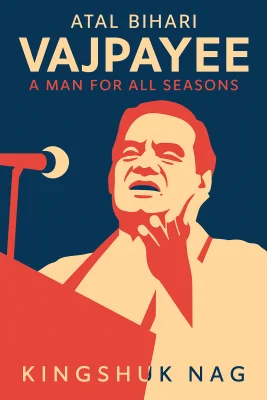
Atal Bihari Vajpayee
A Man for All Seasons
Categories
Nonfiction, Biography, History, Politics, India
Content Type
Book
Binding
Kindle Edition
Year
2015
Publisher
Rupa Publications India
Language
English
ASIN
B01855FUX8
ISBN13
9788129139016
File Download
PDF | EPUB
Atal Bihari Vajpayee Plot Summary
Introduction
On a cold winter morning in November 1984, as communal violence erupted across Delhi following Indira Gandhi's assassination, a lone figure emerged from his home in Raisina Road. Atal Bihari Vajpayee, then a BJP Member of Parliament, witnessed a frenzied mob preparing to attack Sikh taxi drivers across the street. Without hesitation, this soft-spoken leader crossed the road and stood between the mob and their intended victims. Through patient persuasion and moral authority, he dispersed the crowd, saving innocent lives while risking his own safety. This moment of courage under pressure exemplified the essence of a man who would become one of India's most revered statesmen. Atal Bihari Vajpayee embodied the rare combination of unwavering principles and pragmatic flexibility that defines true leadership. Born in 1924 in Gwalior, he witnessed India's struggle for independence, participated in its democratic evolution, and ultimately served as Prime Minister for six years across three terms. His journey from a young RSS volunteer to the nation's most acceptable face of the BJP reveals fascinating insights into political evolution, the art of consensus-building, and the delicate balance between ideology and governance. Through his story, we discover how personal integrity, poetic sensibility, and deep understanding of India's pluralistic ethos can transform not just individual destiny but the very fabric of a nation's political discourse.
Chapter 1: Early Life and Formative Influences
The foundation of Atal Bihari Vajpayee's remarkable character was laid in the cultural heartland of Gwalior, where he was born on Christmas Day 1924. His family embodied the traditional middle-class values that would shape his worldview throughout his life. His grandfather, Pandit Shyam Lal, was a Sanskrit scholar with a deep love for poetry, while his father, Krishna Bihari, served as a schoolteacher who also composed verses in Hindi and Braj Bhasha. This literary environment cultivated young Atal's appreciation for language, rhythm, and the power of words to move hearts and minds. The intellectual atmosphere of the Vajpayee household was enriched by exposure to revolutionary literature. Atal was deeply influenced by the works of Bankim Chandra Chatterjee, Munshi Premchand, and Maithili Sharan Gupt, whose writings exposed social inequities and inspired political awakening. Even as a tenth-grade student, Atal penned the stirring lines "Hindu Tan-man, Hindu Jeevan, Rag Rag Hindu Mera Parichay," demonstrating an early identification with his cultural roots while simultaneously developing a broader vision of inclusive nationalism. His introduction to organized activism came through a chance encounter in 1939. When fifteen-year-old Atal attended an Arya Kumar Sabha meeting, senior worker Bhoodev Shastri suggested he join the local RSS shakha. This recommendation would prove transformative, introducing him to the disciplined worldview of the RSS while exposing him to diverse perspectives through interactions with Marathi-speaking swayamsevaks in Gwalior. The physical exercises, intellectual discourses, and sense of service instilled by his mentor Narayanrao Tarte helped shape Atal's character, teaching him the value of dedication while respecting different viewpoints. The defining moment of his youth came during the Quit India Movement of 1942. Despite his father's attempts to keep him away from political activities by sending him to the village of Bateshwar, Atal found himself swept up in the independence struggle. When arrested for participating in a demonstration against British forest offices, the seventeen-year-old experienced his first taste of government detention. Though he spent only twenty-three days in Agra jail, this experience planted the seeds of his lifelong commitment to democratic principles and peaceful resistance.
Chapter 2: Political Rise Through the Jana Sangh
Atal's transition from activism to political leadership began with his work in journalism, where he served as editor of RSS publications like Rashtradharma and Panchajanya. His writing skills and organizational abilities caught the attention of Deen Dayal Upadhyaya, who recognized in the young man the potential to bridge ideological commitment with broader appeal. When Jana Sangh founder Shyama Prasad Mukherjee needed capable assistants, Upadhyaya recommended Atal, launching a political career that would span six decades. The sudden death of Shyama Prasad Mukherjee in 1953 created a leadership vacuum that inadvertently accelerated Atal's rise. Though his first electoral attempt from Lucknow in 1953 ended in defeat, the experience taught him valuable lessons about connecting with voters and understanding their concerns. His persistence paid off in 1957 when he won from Balrampur, entering Parliament as one of the youngest members of the Lok Sabha. His maiden victory required contesting from three constituencies simultaneously, demonstrating both his determination and the party's recognition of his importance. In Parliament, Atal quickly distinguished himself as an orator of exceptional caliber. His Hindi speeches combined emotional appeal with substantive content, earning respect even from political opponents. Prime Minister Nehru took special notice of this young parliamentarian, often introducing him to foreign dignitaries and praising his potential for future leadership. This early recognition from India's most prominent leader validated Atal's approach of principled opposition that critiqued policies while maintaining respect for institutions and individuals. The 1962 election defeat from Balrampur proved to be a temporary setback that ultimately strengthened his position within the party. Moving to the Rajya Sabha allowed him to focus on policy issues and foreign affairs, areas where his intellectual curiosity and analytical abilities flourished. His speeches on Tibet and China demonstrated prescient understanding of geopolitical challenges, while his work as chairman of the Committee on Government Assurances showcased his commitment to parliamentary accountability. When Deen Dayal Upadhyaya's sudden death in 1968 necessitated new leadership, Atal emerged as the consensus choice despite initial resistance from hardliner Balraj Madhok. His elevation to Jana Sangh president at age forty-three reflected not just organizational politics but recognition that the party needed a leader capable of building broader coalitions while maintaining ideological coherence.
Chapter 3: The Moderate Face in a Right-Wing Party
Throughout his political career, Atal Bihari Vajpayee mastered the delicate art of maintaining ideological authenticity while projecting moderation and inclusivity. Within the Jana Sangh and later the BJP, he consistently advocated for a broader vision that could appeal beyond the party's core Hindu constituency. His famous 1960 essay articulated this philosophy clearly, stating that the party should remain open to all citizens regardless of creed, emphasizing that the state should maintain secular character while avoiding the dangers of mixing religion with politics. This moderate positioning often put him at odds with hardline elements within his own party and the RSS. When Balraj madhok demanded more aggressive Hindu-centric policies, Atal argued for pragmatic coalition-building that could actually bring the party to power. His willingness to work with socialist leaders like Ram Manohar Lohia and his enthusiastic support for Jayaprakash Narayan's anti-corruption movement demonstrated his commitment to democratic values over narrow partisan interests. The formation of the BJP in 1980 provided Atal with an opportunity to institutionalize his moderate approach. As the party's founding president, he insisted on adopting "Gandhian socialism and positive secularism" as core principles, consciously distancing the new party from the more rigid positions of its Jana Sangh predecessor. His choice of the lotus as the party symbol reflected this philosophy perfectly - like the lotus that remains pure despite growing in muddy waters, the BJP should maintain principled positions while engaging with the complexities of Indian politics. Even during the height of the Ayodhya movement in the late 1980s and early 1990s, when L.K. Advani's leadership pushed the party toward more aggressive Hindu mobilization, Atal maintained his moderating influence. Though he could not prevent the demolition of the Babri Masjid, his immediate response calling it "the saddest day of my life" demonstrated his genuine discomfort with extremist tactics. His absence from Ayodhya on the fateful day of December 6, 1992, was widely interpreted as deliberate distancing from actions he could not publicly oppose but privately deplored. This consistent moderation eventually proved to be the BJP's greatest asset. When the party needed broader acceptability to form coalition governments in the 1990s, regional parties and allies found in Atal a leader they could trust and work with. His reputation for fairness, his respect for democratic norms, and his willingness to prioritize governance over ideology made him the indispensable link between the BJP's ideological base and India's diverse political landscape.
Chapter 4: Prime Minister: Leading a Coalition Government
Atal Bihari Vajpayee's journey to the Prime Minister's office was marked by perseverance through initial failures and ultimate vindication of his moderate approach. His first stint as Prime Minister in 1996 lasted only thirteen days, but his graceful acceptance of defeat and his stirring resignation speech broadcast nationally established him as a statesman who placed constitutional propriety above personal ambition. This dignified exit paradoxically enhanced his stature and made him more acceptable to potential allies for future coalition arrangements. When he returned to power in 1998, Atal demonstrated remarkable skill in managing the National Democratic Alliance, a diverse coalition of regional parties with varying ideologies and interests. From Chandrababu Naidu's technology-focused Telugu Desam to the agricultural concerns of Bihar's regional parties, the NDA represented a complex web of competing demands. Atal's success lay in his ability to compartmentalize issues, allowing allies autonomy in their states while maintaining unity on national policies. The early months of his stable tenure from 1999 to 2004 revealed his governing philosophy of delegating authority while maintaining ultimate accountability. Unlike many prime ministers who micromanaged their ministries, Atal trusted his cabinet colleagues to handle their portfolios while intervening only in matters of national importance or when coalition unity was at stake. This approach allowed talented ministers like Jaswant Singh, Yashwant Sinha, and George Fernandes to implement significant reforms while ensuring that credit and responsibility were appropriately shared. Perhaps most remarkably, Atal managed to keep the RSS and hardline elements of the Sangh Parivar at arm's length while remaining respectful of his ideological roots. When RSS chief K.S. Sudarshan attempted to influence government policy or ministerial appointments, Atal politely but firmly maintained the autonomy of his administration. His famous retort to Sonia Gandhi's accusation of working under RSS pressure - "I do not work under anybody's pressure" - reflected his genuine independence while acknowledging his philosophical heritage. The true test of his coalition leadership came during crises like the 1999 Kargil conflict and the 2001 Parliament attack. In both instances, Atal demonstrated the rare ability to build national consensus while managing international relations and domestic political pressures. His decision-making process involved extensive consultations with allies and opponents alike, ensuring that major national security decisions enjoyed broad support across party lines.
Chapter 5: Foreign Policy and Peace Initiatives
Atal Bihari Vajpayee's approach to foreign policy was deeply shaped by his understanding that India's rise as a global power required both strength and wisdom in equal measure. His decision to conduct nuclear tests in May 1998, just two months after assuming office, demonstrated his conviction that India needed to announce its arrival as a serious player on the world stage. The tests, conducted despite intense international pressure and the certainty of economic sanctions, reflected his belief that strategic autonomy was essential for India's long-term interests. The nuclear tests, however, were not an end in themselves but a means to achieve the strength necessary for meaningful peace initiatives. Atal understood the paradox that sometimes nations must demonstrate their capacity for war to create conditions for lasting peace. His invitation to Pakistan Prime Minister Nawaz Sharif and the historic bus journey to Lahore in February 1999 represented this philosophy in action - India was extending a hand of friendship from a position of strength, not weakness. The betrayal of the Lahore spirit through Pakistan's Kargil aggression could have permanently soured Atal's approach to peace-making, yet he demonstrated remarkable resilience in his commitment to normalization. Even after the IC-814 hijacking and the Parliament attack, he continued to believe that sustained engagement was the only path to resolving the Kashmir dispute and achieving regional stability. His invitation to General Pervez Musharraf for the Agra summit in 2001, despite the general's role in Kargil, showed his willingness to separate personal grievances from national interests. Beyond the subcontinent, Atal's foreign policy was marked by successful relationship-building with major powers while maintaining India's strategic independence. His warming of ties with the United States, symbolized by President Clinton's historic visit to India in 2000, was balanced by continued strong relations with Russia and innovative engagement with emerging powers. The twelve rounds of talks between Jaswant Singh and Strobe Talbott created a framework for US-India partnership that would benefit both nations for decades to come. Perhaps most importantly, Atal's approach to international relations was characterized by moral clarity combined with pragmatic flexibility. His formal recognition of Tibet as part of China in 2003, despite his earlier passionate advocacy for Tibetan independence, reflected his understanding that successful diplomacy sometimes requires acknowledging ground realities while working within them to advance national interests and human values.
Chapter 6: Economic Reforms and Infrastructure Development
When Atal Bihari Vajpayee assumed office as Prime Minister, India's economy was at a critical juncture. The initial wave of liberalization initiated in 1991 had begun to lose momentum, and the country needed decisive leadership to complete the transition from a controlled economy to a market-driven one. Despite pressure from the Swadeshi Jagran Manch and other conservative elements within the Sangh Parivar, Atal demonstrated remarkable clarity in his commitment to economic modernization. His approach to economic reform was characterized by ideological pragmatism rather than doctrinaire adherence to any particular school of thought. While maintaining sensitivity to social concerns and employment implications, he steadily pushed forward with privatization of public sector undertakings, telecommunications liberalization, and infrastructure development. The successful disinvestment of companies like Maruti Udyog, VSNL, and several public sector hotels demonstrated his commitment to reducing the state's role in commercial activities while ensuring transparent and competitive processes. The crown jewel of Atal's economic legacy was the National Highways Development Project, particularly the Golden Quadrilateral initiative that connected Delhi, Mumbai, Chennai, and Kolkata through world-class expressways. This visionary project, financed through innovative road cess mechanisms, not only transformed India's transportation infrastructure but also created millions of jobs in the construction sector while facilitating trade and commerce across the country. His government's approach to economic policy was notable for its balance between growth promotion and social responsibility. While pursuing aggressive reforms in telecommunications, insurance, and manufacturing sectors, the administration also launched the Sarva Shiksha Abhiyan for universal elementary education and maintained essential subsidies for the poor. This dual focus reflected Atal's understanding that economic growth must be inclusive to be sustainable in a democracy as diverse as India's. The results spoke for themselves: India's GDP growth rate climbed from 6.5% in 1998-99 to 8.5% in 2003-04, while interest rates fell from 14.5% to 9.5% and savings rates increased from 23% to 30%. Foreign exchange reserves crossed the psychological barrier of $100 billion, providing India with unprecedented financial security. These achievements laid the foundation for India's subsequent emergence as one of the world's fastest-growing major economies.
Chapter 7: Legacy of Statesmanship and Consensus Building
The essence of Atal Bihari Vajpayee's political genius lay in his intuitive understanding that in a democracy as diverse and complex as India's, sustainable leadership requires occupying and defending the center ground. Throughout his career, he demonstrated that principled moderation was not weakness but strength, that building consensus was not compromise but wisdom. His ability to remain true to his core beliefs while adapting to changing circumstances created a unique political persona that transcended party lines and ideological boundaries. His approach to governance was fundamentally different from the command-and-control style that had characterized much of Indian politics since independence. Instead of concentrating power in the Prime Minister's Office, Atal created a system of distributed leadership where capable ministers could take ownership of their portfolios while remaining accountable to the collective vision of the government. This democratic style of leadership not only produced better policies but also created a generation of leaders who learned to balance individual initiative with collective responsibility. Perhaps most significantly, Atal's career demonstrated that it was possible to rise to the highest office in the land while maintaining personal integrity and moral authority. In an era when political leaders were increasingly viewed with suspicion and cynicism, he represented the possibility of principled leadership that served the nation's interests above personal or partisan gain. His voluntary retirement from active politics in 2005, despite remaining popular and potentially electable, showed a rare understanding of the appropriate relationship between individual ambition and national service. The three new states created during his tenure - Jharkhand, Chhattisgarh, and Uttarakhand - represent his belief in decentralized governance and the principle that smaller administrative units could better serve diverse populations. His success in managing coalition politics provided a template for future governments in an era when single-party dominance was no longer feasible. The institutions he strengthened, the precedents he established, and the political culture he promoted continue to influence Indian democracy long after his active involvement ended.
Summary
Atal Bihari Vajpayee's life embodied the profound truth that in a complex democracy, the greatest leaders are those who can hold the center while others gravitate toward the extremes. His journey from a young RSS volunteer to a universally respected statesman illustrates how personal character, intellectual flexibility, and genuine commitment to democratic values can transcend ideological limitations and create lasting positive change. The lessons of his career remain remarkably relevant for contemporary leaders facing similar challenges of governing diverse societies while maintaining core principles. His example suggests that true leadership lies not in imposing one's will but in building consensus, not in claiming infallibility but in learning from mistakes, and not in seeking power for its own sake but in using authority to serve larger purposes. For anyone seeking to understand how democracy can function effectively in diverse societies, or how leaders can maintain integrity while achieving practical results, Vajpayee's story offers timeless insights into the art of principled governance and the patient work of building a more inclusive and prosperous nation.
Best Quote
“journalist Vinod Mehta wrote, ‘I am convinced if Vajpayee had not been the PM, India would have been sent to fight in George Bush’s Iraq invasion. He dreaded phone calls from George imploring him to send even a token force. “His soldiers are dying and now he wants my soldiers to die. I will never let that happen,”’ Mehta remembered Atal having told him.” ― Kingshuk Nag, Atal Bihari Vajpayee: A Man for All Seasons
Review Summary
Strengths: The book covers various aspects of Atal Bihari Vajpayee's life, including his political career and personal interests. It is divided into thirteen chapters, providing a structured overview of his journey from his early years to his time as Prime Minister. Weaknesses: The review criticizes the book for lacking depth and detailed accounts of Vajpayee's early life, focusing instead on excessive praise. The writing is described as mediocre, and the author is perceived as biased, not allowing readers to form their own opinions. Overall: The reader expresses disappointment with the book's lack of detail and objectivity, suggesting it is more of a tribute than a comprehensive biography. The book is rated higher due to its subject, Vajpayee, rather than its content quality.
About Author

Kingshuk Nag
Nag delves into contemporary Indian politics and economic intricacies through his investigative works, highlighting issues such as corporate fraud and political transformations. His career in journalism, particularly with "The Times of India", reflects a commitment to uncovering complex narratives that shape India's socio-political landscape. As a journalist, he covered significant events including the Bhuj earthquake and the Gujarat riots, which earned him the prestigious Prem Bhatia Award for his courageous reporting.\n\nHis writing often synthesizes political and economic analysis, with notable books like "The Double Life of Ramalinga Raju" exploring corporate scandals, while "The Namo Story" delves into the political ascent of Narendra Modi. These works illustrate his ability to dissect the intersection of business and politics, offering readers a nuanced understanding of India’s evolving identity. His method combines clarity with investigative depth, drawing from his extensive experience in journalism to provide a balanced perspective.\n\nReaders interested in Indian politics, corporate dynamics, and geopolitical issues will find Nag’s books invaluable for their thorough analysis and engaging style. His bio as an author includes works that not only chart the stories of prominent figures but also extend to broader themes of governance and national identity. Nag’s contributions continue to impact public discourse, offering insights that are both informative and thought-provoking.
Read moreDownload PDF & EPUB
To save this Black List summary for later, download the free PDF and EPUB. You can print it out, or read offline at your convenience.
Atal Bihari Vajpayee
by Kingshuk Nag
