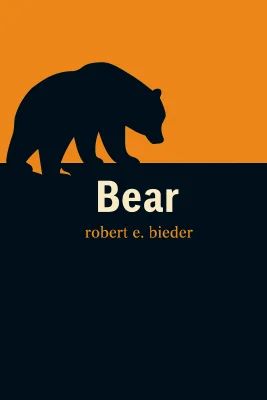
Bear
Categories
Nonfiction, Science, Animals, Nature, Wildlife
Content Type
Book
Binding
Paperback
Year
2005
Publisher
Reaktion Books Limited
Language
English
ISBN13
9781861892041
File Download
PDF | EPUB
Bear Plot Summary
Introduction
Few animals capture our imagination quite like bears. These powerful creatures have roamed the Earth for millions of years, evolving from fox-sized ancestors into the magnificent giants we know today. From the cave paintings of our earliest human ancestors to the teddy bears clutched by children worldwide, bears have woven themselves into the fabric of human culture and consciousness in ways both profound and unexpected. Yet behind their cuddly reputation lies a remarkable story of survival, adaptation, and an increasingly precarious future. Today's eight bear species represent the survivors of a much larger family tree that once included giants capable of standing twelve feet tall. As we face an era of unprecedented environmental change, understanding the journey of bears through deep time offers crucial insights into evolution, extinction, and the delicate balance between human progress and wildlife conservation. Their story is ultimately our story too, revealing how two intelligent species have shaped each other's destiny across millennia.
Chapter 1: The Origin and Evolution of Ursidae
The bear family tree stretches back an astounding 25 million years, beginning with a small, fox-terrier-sized creature called Ursavus elemensis, or the "dawn bear." This ancient ancestor lived in the subtropical forests of early Miocene Europe, a world dramatically different from today where warm seas covered much of the continent and lush tropical vegetation thrived where we now find temperate climates. What makes bear evolution particularly fascinating is how it mirrors the planet's own dramatic transformations. As Earth's climate shifted from warm and humid to cold and dry, bears adapted accordingly. The early Ursavus gradually grew larger and developed more specialized teeth, giving rise to a succession of bear species that spread across continents. By studying fossilized teeth, the hardest part of any animal to survive millions of years, paleontologists can trace this remarkable evolutionary journey with surprising precision. The most spectacular chapter in bear evolution unfolded during the Ice Age, when massive glaciers advanced and retreated across the northern hemisphere. This period saw the rise of the cave bear, Ursus spelaeus, a massive creature with a high-domed skull and powerful grinding teeth that indicate a predominantly vegetarian diet. These giants roamed Europe's limestone caves for hundreds of thousands of years, leaving behind enormous bone deposits that early humans may have arranged in primitive ceremonies. Perhaps most remarkably, bears survived multiple mass extinctions that claimed countless other species. The cave bear itself vanished only about 15,000 years ago, possibly due to climate change, habitat loss, or competition with early humans. Yet other bear lineages persisted, eventually giving rise to today's eight surviving species. This evolutionary resilience speaks to bears' remarkable adaptability, though ironically, it's this same adaptability that now makes them vulnerable to human encroachment. The bear family's evolutionary success stems largely from their omnivorous flexibility and intelligence. Unlike specialized predators that depend on specific prey, bears developed the ability to eat everything from berries and nuts to salmon and seals. This dietary versatility, combined with their problem-solving abilities and remarkable memory for food sources, allowed them to colonize diverse habitats from tropical rainforests to Arctic ice sheets.
Chapter 2: Bear Species: Survival Adaptations Across Ecosystems
Today's eight bear species showcase evolution's creative solutions to survival in vastly different environments. At one extreme, we find the sun bear of Southeast Asian rainforests, weighing as little as 60 pounds and perfectly adapted for an arboreal lifestyle with its long, curved claws and short coat. At the other extreme prowls the polar bear, the largest carnivore on land, whose hollow white fur and black skin create a remarkably efficient solar heating system that allows it to thrive in one of Earth's most hostile environments. The giant panda represents perhaps evolution's most specialized bear, having committed almost entirely to a bamboo diet despite retaining the digestive system of a carnivore. This evolutionary compromise forces pandas to spend up to 14 hours daily eating, consuming enormous quantities of bamboo to extract sufficient nutrition. Their famous "pseudo-thumb," actually an enlarged wrist bone, demonstrates how evolution can repurpose existing structures for new functions, allowing pandas to grasp bamboo stalks with surprising dexterity. Each species exhibits unique adaptations that reveal evolution's ingenuity. The sloth bear's mobile nose and gap-toothed mouth transform into a powerful vacuum system for extracting termites and ants. American black bears showcase remarkable color variation, from jet black to pure white, with different colors prevailing in different habitats as natural camouflage. Polar bears have evolved specialized kidneys that minimize water loss and allow them to thrive in an environment where fresh water is scarce. These adaptations extend beyond mere physical features to encompass sophisticated behaviors. Brown bears demonstrate phenomenal spatial memory, returning to specific feeding sites at precisely the right times as different foods reach peak nutritional value throughout the seasons. Polar bears exhibit patient hunting strategies that would impress any human angler, waiting motionless for hours at seal breathing holes in temperatures that would quickly kill most other mammals. The diversity among bear species also illustrates how closely evolution tailors organisms to their environments. Arctic-dwelling polar bears never truly hibernate, remaining active during the harsh winter months when hunting is most productive. In contrast, their temperate cousins must accumulate massive fat reserves to survive months of winter dormancy when food becomes scarce. What unites all bears despite their diverse adaptations is their remarkable intelligence and behavioral flexibility. This cognitive sophistication, combined with their physical prowess, made bears both valuable allies and dangerous competitors to early human societies, setting the stage for a complex relationship that continues to evolve today.
Chapter 3: Bears in Human Culture and Mythology
Throughout human history, no animal has commanded such a complex mixture of reverence, fear, and fascination as the bear. Across the circumpolar regions of the northern hemisphere, cultures separated by vast distances and millennia developed strikingly similar beliefs about bears, suggesting either ancient shared origins or fundamental truths about the human-bear relationship that transcend cultural boundaries. Ancient peoples recognized bears as fellow omnivores who walked upright, showed recognizable emotions, and demonstrated problem-solving abilities that seemed almost human. This perceived kinship gave rise to widespread beliefs that bears were essentially people in disguise, capable of understanding human speech and possessing supernatural powers. Many cultures developed elaborate taboo systems around bears, referring to them only through respectful euphemisms like "Old Man of the Forest," "Dark Thing," or "Owner of the Earth." Creation myths from the Modoc of California to the Mansi of Siberia often featured bears as ancestral figures or divine messengers. These stories typically portrayed bears as beings who descended from heaven, lived among humans, and eventually returned to the sky realm, embodying cycles of death and rebirth that resonated deeply with agricultural societies. The constellation Ursa Major, visible throughout the northern hemisphere, became incorporated into numerous mythologies as celestial bears forever circling the pole star. The widespread legend of women marrying bears, found from British Columbia to Scandinavia, reveals both fascination and anxiety about the boundaries between human and animal worlds. These stories often served as cautionary tales about respecting natural laws while simultaneously acknowledging bears' human-like qualities and their dangerous unpredictability. The offspring of such unions frequently became the mythical founders of clans or royal lineages. As human societies transitioned from hunting and gathering to agriculture, bear symbolism underwent dramatic transformation. The once-sacred forest dweller became recast as a threat to civilization, a change reflected in folk tales where bears appeared as clumsy antagonists or dangerous obstacles to be overcome. Medieval Christian Europe further transformed bear imagery, turning them into symbols of sloth and brutality while simultaneously creating saints who tamed bears through spiritual power. This cultural evolution of bear symbolism from sacred ancestor to agricultural pest to entertainment commodity reveals how human societies construct meaning around wildlife. Modern bear imagery, dominated by cuddly teddy bears and cartoon characters, represents perhaps the most dramatic transformation yet, turning apex predators into symbols of childhood comfort and innocence.
Chapter 4: Human-Bear Interactions Through History
The relationship between humans and bears has been shaped by competition, cooperation, and mutual respect across thousands of years. Archaeological evidence suggests that early humans may have conducted elaborate ceremonies honoring cave bears, arranging skulls in limestone chambers in ways that suggest ritual significance. Whether these represent genuine bear cults or natural formations remains hotly debated, but the possibility points to sophisticated early relationships with these powerful creatures. For many indigenous cultures, bears served as crucial teachers and providers. Native American traditions credit bears with showing humans which plants were medicinal and which foods were safe to eat. The Inuit claim to have learned seal-hunting techniques by observing polar bears, while countless cultures developed complex ceremonial protocols for bear hunting that emphasized respect and reciprocity rather than simple predation. The advent of agriculture fundamentally altered human-bear relationships, transforming bears from revered co-inhabitants to dangerous competitors for resources. As forests gave way to farms and pastures, bears found their traditional food sources disappearing while human settlements offered tempting alternatives in the form of crops and livestock. This shift initiated centuries of conflict that continue today in modified forms. Medieval and early modern Europe witnessed systematic campaigns to eliminate bears from inhabited regions. Bear-baiting, where captive bears were tormented by dogs for public entertainment, became popular across Europe, representing a cultural shift toward viewing bears as objects for human use rather than subjects deserving respect. The Roman Empire's appetite for bears in arena spectacles had already established precedents for commodifying these animals as entertainment. The colonial expansion into North America brought European attitudes toward bears into collision with indigenous perspectives that still viewed them as sacred beings. Professional hunters like Ben Lilly made careers from eliminating bears to protect livestock, while the fur trade, though never as lucrative for bears as for other animals, contributed to population declines across vast territories. Perhaps most significantly, the Industrial Revolution accelerated habitat destruction on a scale that dwarfed all previous human impacts. Railroads, mining, logging, and urban expansion fragmented bear populations and eliminated the large territories these far-ranging animals require. What had once been a relationship between two intelligent species sharing overlapping territories became increasingly one-sided as human populations exploded and technological capabilities expanded. Today's human-bear interactions reflect this complex history while grappling with new challenges like climate change, pollution, and global trade in wildlife products. Understanding this historical context proves crucial for developing effective conservation strategies that account for both ecological needs and cultural attitudes.
Chapter 5: Conservation Challenges and the Future of Bears
Today, six of the eight bear species face declining populations and shrinking habitats, presenting one of wildlife conservation's most urgent challenges. The primary threat comes from habitat destruction, as expanding human populations convert forests, grasslands, and tundra into agricultural land, urban areas, and industrial sites. This loss proves particularly devastating for bears, which require vast territories to find sufficient food throughout the seasonal cycles that govern their lives. Climate change adds another layer of complexity to bear conservation. Polar bears face perhaps the most immediate threat as Arctic ice melts earlier each spring and forms later each fall, shortening their hunting season and forcing longer fasting periods. Grizzly bears in the American West confront the loss of whitebark pine forests, whose nuts provide crucial pre-hibernation nutrition, while coastal brown bears may lose salmon runs as warming waters push fish populations northward. The illegal trade in bear parts represents an equally serious threat, driven by traditional medicine practices and culinary traditions that value bear gallbladders, paws, and other body parts. This trade operates on an industrial scale, with bear farms in Asia confining thousands of bears in deplorable conditions to extract bile from their gallbladders. The profits involved, comparable to those from drug trafficking, make enforcement extremely difficult despite international agreements. Pollution presents yet another conservation challenge, particularly for polar bears whose position at the top of Arctic food webs concentrates toxins in their tissues. Industrial chemicals like PCBs and mercury accumulate in the seal blubber that forms polar bears' primary food source, leading to reproductive problems and birth defects that could devastate already vulnerable populations. Bear conservation efforts face unique biological challenges due to these animals' slow reproductive rates and late maturity. Female bears typically produce only small litters every few years, meaning that population recovery from declines can take decades even under ideal conditions. This reproductive strategy, which evolved to match bears' long lifespans and stable historical environments, becomes a liability in rapidly changing modern conditions. Despite these daunting challenges, successful conservation examples offer hope. The International Agreement on Polar Bear Conservation, signed by all five nations with polar bear populations, has helped stabilize numbers through coordinated management. Some regional populations, like American black bears in parts of the eastern United States, have recovered dramatically when given adequate protection and habitat.
Chapter 6: Bears as Cultural Icons in Modern Society
The transformation of bears from feared wilderness predators to beloved cultural symbols represents one of the most remarkable shifts in human-animal relationships. This change began in earnest with the creation of the teddy bear in 1902, inspired by President Theodore Roosevelt's refusal to shoot a captive bear during a hunting expedition. The resulting toy phenomenon swept across continents, establishing bears as symbols of comfort, security, and childhood innocence. Modern bear imagery pervades popular culture in ways that would astonish earlier generations who viewed these animals primarily as dangerous obstacles to civilization. From Winnie-the-Pooh's gentle wisdom to the dancing bears of circuses and advertisements, contemporary representations emphasize bears' perceived human-like qualities while carefully omitting their predatory nature and wild unpredictability. This cultural transformation serves important psychological functions, allowing humans to maintain emotional connections with nature while living increasingly urbanized lives. Teddy bears provide comfort to children worldwide, while bear imagery in advertising exploits positive associations with strength, reliability, and natural authenticity. The popularity of bear-watching tourism and wildlife documentaries reflects a deep longing for connection with wilderness that many modern humans rarely experience directly. However, this romanticized imagery sometimes creates unrealistic expectations about real bear behavior that can prove dangerous for both humans and bears. When actual bears fail to conform to their cuddly representations, conflicts often result in the animals' destruction. The gap between cultural symbolism and biological reality presents ongoing challenges for conservation education and wildlife management. The global appeal of pandas as conservation symbols demonstrates both the power and limitations of charismatic megafauna in environmental protection. While panda imagery has raised millions for wildlife conservation, this focus on appealing species sometimes overshadows less photogenic but equally important creatures whose survival may be more critical for ecosystem health. Corporate use of bear symbolism reveals fascinating cultural attitudes toward nature and authenticity. Companies employ polar bears to advertise coolness and purity, grizzlies to suggest strength and durability, and bear cubs to convey safety and gentleness. This commercial appropriation of bear imagery reflects deeper human needs to maintain symbolic connections with natural power and wildness even as actual wilderness disappears. The evolution of bears from sacred ancestors to agricultural pests to entertainment commodities to conservation symbols illustrates how human societies continuously reconstruct their relationships with nature. Understanding these cultural dimensions proves crucial for effective conservation, as protecting bears ultimately depends on human choices shaped by cultural values and emotional attachments.
Summary
The story of bears through deep time reveals evolution's remarkable capacity for innovation and adaptation, as these magnificent creatures survived mass extinctions, ice ages, and dramatic climate shifts to become one of nature's most successful mammalian families. Their journey from tiny forest dwellers to diverse modern species showcases the power of behavioral flexibility and omnivorous adaptability in an ever-changing world. Yet this same evolutionary success story now faces its greatest challenge as human activities reshape the planet at unprecedented speed and scale. The future of bears depends not only on biological factors like reproduction and habitat requirements, but equally on human cultural attitudes and conservation commitments. As we face difficult choices about land use, climate action, and wildlife protection, the fate of bears will ultimately reflect our species' wisdom in balancing human needs with the intrinsic value of the natural world that shaped us both.
Best Quote
Review Summary
Strengths: The book provides a comprehensive overview of bears, covering evolutionary history, extant species, cultural interactions, and conservation efforts. The format is praised for its structure, and the book is noted for its high-quality illustrations and production. The folklore and mythology chapter is highlighted as particularly interesting. Weaknesses: The book's depth is variable due to its slimness and the broad scope it covers. The reviewer notes disappointment with the depth in other series entries, like "Spider," due to the number of species covered. Overall: The reviewer expresses a positive sentiment, considering this book their favorite in the Reaktion Series. It is recommended as a reasonable guide for laymen, despite some limitations in depth.
About Author

Robert E. Bieder
Bieder reflects on the intersection of scientific thought and Native American history, focusing on how 19th-century ethnological theories shaped U.S. Indian policy. His work delves into complex themes such as monogenism, polygenism, and determinism, illustrating the broader societal implications of these scientific debates. By analyzing influential figures like Albert Gallatin and Lewis Henry Morgan, Bieder highlights shifts in anthropological perspectives between 1820 and 1880, thereby offering a nuanced view of historical narratives surrounding Native American cultures.\n\nIn his notable book "Science Encounters the Indian, 1820-1880", Bieder dissects the era's scientific discussions about race and progress. Meanwhile, "Native American Communities in Wisconsin, 1600–1960" explores the enduring cultural presence of Indigenous peoples in specific regions, reinforcing the theme of continuity amidst change. This scholarly focus on Native American history and anthropology provides readers with a rich context for understanding past and present issues faced by Indigenous communities. Academics, historians, and those interested in ethnological studies will find Bieder's research particularly enlightening, as it combines rigorous analysis with a deep appreciation for the cultures it studies.\n\nWhile his authorial contributions are mainly academic, Bieder's work is crucial for those looking to deepen their understanding of Native American histories. His bio reveals a commitment to exploring the intricate ties between historical scientific thought and Indigenous realities, a commitment that informs and enriches discussions within history and anthropology fields.
Read moreDownload PDF & EPUB
To save this Black List summary for later, download the free PDF and EPUB. You can print it out, or read offline at your convenience.
Bear
by Robert E. Bieder
