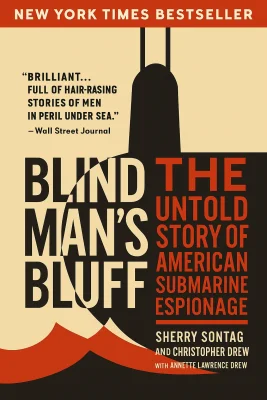
Blind Man's Bluff
The Untold Story of American Submarine Espionage
Categories
Nonfiction, History, Politics, Audiobook, Military Fiction, Military History, American History, War, Naval History, Espionage
Content Type
Book
Binding
Paperback
Year
2000
Publisher
William Morrow Paperbacks
Language
English
ASIN
006097771X
ISBN
006097771X
ISBN13
9780060977719
File Download
PDF | EPUB
Blind Man's Bluff Plot Summary
Introduction
# Cold War Submarine Espionage: The Hidden Intelligence War Beneath the Waves In the crushing darkness three miles beneath the Pacific Ocean, a Soviet sailor's skeleton lay beside his sunken submarine, still dressed in his sheepskin coat and heavy boots. His bones had been picked clean by deep-sea creatures that weren't supposed to exist at such depths. When American submarine spies photographed this haunting scene in 1968, they were witnessing the human cost of a secret war that raged beneath the waves for half a century, invisible to the world above. This underwater conflict began in 1949 when a young radioman named Harris Austin huddled inside the USS Cochino, intercepting Soviet naval communications in the frigid Barents Sea. His mission launched an extraordinary campaign of submarine espionage that would span five decades, involving thousands of sailors who could never speak of their work. These underwater spies tapped enemy communications cables, photographed sunken submarines, and shadowed Soviet missile boats through some of the most dangerous waters on Earth. Their intelligence gathering helped prevent nuclear miscalculations that could have triggered World War III, while revealing the moral complexities of a conflict where heroism and recklessness were separated by mere fathoms. The story of these silent warriors illuminates not just the hidden mechanics of Cold War competition, but the human courage required to maintain peace through constant vigilance in the ocean's depths.
Chapter 1: Early Dangers: Diesel Submarines Enter Soviet Waters (1949-1960)
The submarine spy war began almost by accident in August 1949, when the Soviet Union's first atomic bomb test shocked American intelligence officials who had predicted it would take the Russians years longer to develop nuclear weapons. Within weeks, the Navy dispatched the USS Cochino on a desperate reconnaissance mission to the Barents Sea, carrying electronics specialist Harris "Red" Austin whose job was to intercept Soviet naval communications and assess how rapidly the enemy was building its submarine fleet. The early missions revealed both the extraordinary potential and mortal dangers of submarine espionage. Cochino's voyage ended in disaster when battery explosions filled the submarine with toxic gases, forcing the crew to abandon ship in Arctic waters. Seven men died during the rescue operation, swept overboard in mountainous seas as the USS Tusk struggled to save survivors. Yet Austin's intelligence proved invaluable, confirming that Soviet submarines were multiplying rapidly, many based on advanced German U-boat designs captured at the war's end. Despite these tragic losses, the Navy pressed forward with submarine surveillance operations throughout the 1950s. Diesel boats like the USS Gudgeon pushed deeper into hostile territory, playing deadly games of cat and mouse with Soviet patrol vessels and aircraft. The most dramatic encounter came in 1957 when Gudgeon was caught inside Soviet territorial waters off Vladivostok and subjected to a forty-eight-hour siege. Commander Norman Bessac's submarine was trapped underwater with failing air supplies and dying batteries while Soviet ships dropped depth charges in methodical patterns above. The primitive nature of these early operations underscored a fundamental limitation that would drive technological revolution. Diesel submarines, dependent on air-breathing engines and limited battery power, could not match the endurance and stealth required for extended intelligence missions. As Soviet defenses grew more sophisticated and their submarine fleet expanded, it became clear that America needed a revolutionary new kind of underwater spy. The stage was set for nuclear power to transform not just naval warfare, but the entire nature of Cold War intelligence gathering beneath the waves.
Chapter 2: Nuclear Revolution: Advanced Espionage and Technical Breakthroughs (1960-1970)
The marriage of nuclear propulsion and submarine espionage created possibilities that seemed more like science fiction than military reality. Unlike diesel boats that surfaced frequently for air, nuclear submarines could remain submerged for months, powered by reactors that needed no oxygen and produced their own fresh water. This capability transformed submarine spying from brief, dangerous raids into sustained intelligence operations that could monitor Soviet activities around the clock without detection. The conversion of USS Halibut from a missile submarine to a deep-sea spy vessel in the mid-1960s represented this new thinking, creating an underwater laboratory capable of operations no surface ship could attempt. Under the visionary leadership of scientist John Craven, Halibut became the centerpiece of operations that pushed the boundaries of what submarines could accomplish. Her massive missile compartment was transformed into a technological wonderland dubbed the "Bat Cave," filled with computers, cameras, and remotely operated vehicles that could descend miles to the ocean floor. Halibut's most spectacular success came in 1968 when she located and photographed a sunken Soviet Golf-class ballistic missile submarine in the Pacific. The submarine had been lost with all hands, carrying nuclear missiles and cryptographic equipment that represented a treasure trove of intelligence. Using a specially designed camera-equipped "fish" that could be lowered thousands of feet to the ocean floor, Halibut's crew spent weeks methodically photographing every inch of the wreckage, providing unprecedented insights into Soviet submarine design and nuclear weapons technology. Yet the nuclear revolution also brought new perils, as the tragic loss of USS Scorpion in 1968 demonstrated with devastating clarity. The submarine disappeared with all ninety-nine crew members while returning from a Mediterranean surveillance mission, possibly destroyed by one of her own malfunctioning torpedoes. Acoustic analysis revealed that Scorpion had executed an emergency 180-degree turn before her destruction, suggesting that a torpedo had "hot run" in its tube, forcing the crew into a desperate but ultimately futile attempt to escape their own weapon. The nuclear age had made submarine espionage more capable than ever before, but also more dangerous for the men who carried out these secret missions in the ocean's unforgiving depths.
Chapter 3: Deep Sea Intelligence: Cable Tapping and Underwater Surveillance (1970-1980)
The 1970s witnessed submarine espionage reach unprecedented heights of technical sophistication and operational audacity, epitomized by one of the most daring intelligence coups of the Cold War: the systematic tapping of Soviet underwater telephone cables. The concept emerged when Captain James Bradley realized that the Soviet military, like their American counterparts, relied heavily on telephone communications that traveled through cables laid across the ocean floor. If American submarines could locate these cables and attach recording devices, they could eavesdrop on the most sensitive Soviet naval communications. The first cable-tapping mission in the Sea of Okhotsk required Halibut to carry a team of saturation divers who could work at crushing depths, attaching sophisticated recording pods to Soviet telephone lines while the submarine hovered motionless above them. These operations pushed both technology and human endurance to their absolute limits, as divers worked in near-freezing water for hours while remaining vulnerable to detection by Soviet patrol vessels. The technical challenges were immense: recording devices had to withstand crushing ocean pressures and operate undetected for months while intercepting multiple communication channels simultaneously. The intelligence gathered from these cable taps provided unprecedented insight into Soviet naval strategy and operational procedures. American analysts could listen to Soviet admirals discussing their concerns about American submarine capabilities, observe how enemy forces responded to various situations, and gain insights into the Soviet military mindset that no other intelligence source could provide. This information proved crucial during some of the most tense periods of the Cold War, helping American policymakers understand Soviet intentions and avoid miscalculations that could have triggered nuclear conflict. The success of cable tapping led to increasingly ambitious operations throughout the decade, including extended trailing missions against Soviet missile submarines. The USS Lapon's successful forty-seven-day pursuit of a Soviet Yankee-class submarine in 1969 proved that American attack boats could shadow their targets virtually undetected, gathering intelligence on Soviet missile submarine operations that would prove crucial in any nuclear confrontation. However, these technical triumphs came at enormous cost in resources and human lives, as several submarines were lost or severely damaged during intelligence operations, including collisions with Soviet vessels that could have triggered international incidents and pushed the superpowers toward war.
Chapter 4: Arctic Confrontation: Peak Tensions and Strategic Escalation (1980-1985)
The early 1980s brought submarine espionage to its most perilous phase as superpower tensions reached levels not seen since the Cuban Missile Crisis. President Ronald Reagan's military buildup and confrontational rhetoric convinced many Soviet leaders that the United States was preparing for a nuclear first strike, creating a hair-trigger environment where a single submarine incident could have triggered World War III. American spy submarines found themselves operating in waters where detection could mean not just the loss of their boat and crew, but the beginning of global nuclear war. The Soviet Union had fundamentally altered its submarine strategy during this period, pulling its ballistic missile boats back to heavily defended "bastion" areas in the Arctic Ocean where they could hide beneath the polar ice cap. This defensive strategy posed a direct challenge to American naval supremacy, as it meant that Soviet nuclear submarines could potentially survive a first strike and retaliate against American cities. The USS Parche and other specially modified submarines began conducting increasingly frequent and dangerous missions to the Barents Sea, tapping Soviet communications cables to learn more about this new defensive posture. These Arctic operations revealed both the extraordinary capabilities and fundamental limitations of American submarine technology. While boats like Parche could operate successfully beneath the ice, the harsh polar environment created challenges that pushed crews beyond their limits. The submarine USS Seawolf nearly became permanently trapped in the Sea of Okhotsk during a 1981 typhoon, her hull buried so deep in the seafloor that sand clogged her cooling systems and threatened her nuclear reactor. Such incidents reminded submarine crews that they faced enemies beyond Soviet forces: the ocean itself could kill them just as surely as any torpedo or depth charge. The period's most significant intelligence breakthrough came from cable taps that recorded Soviet naval communications during the 1983 NATO exercise "Able Archer," when some Soviet leaders believed the United States was preparing for actual war rather than conducting a training exercise. The intercepted communications revealed that while the Soviet Union was indeed preparing for the possibility of conflict, they were not planning a first strike themselves but were instead taking defensive measures. This crucial intelligence helped defuse one of the most dangerous moments of the Cold War, demonstrating how submarine espionage could serve not just military intelligence gathering but the broader cause of international peace and stability.
Chapter 5: Exposure and Adaptation: Spy Scandals and Cold War's End (1985-1991)
The final phase of Cold War submarine espionage began with devastating revelations about Soviet penetration of American naval intelligence that fundamentally altered the underwater balance of power. The arrest of Navy communications specialist John Walker in 1985 revealed that the Soviets had been reading American naval communications for nearly two decades, compromising virtually every submarine operation during that period. Walker's espionage had given the Soviets advance warning of American submarine capabilities, patrol areas, and operational procedures, helping explain how they had developed such effective countermeasures to American underwater surveillance. The discovery of Soviet spies within the American intelligence community coincided with dramatic changes in the international situation as Mikhail Gorbachev came to power in Moscow. The new Soviet leader's policies of glasnost and perestroika began to reduce tensions between the superpowers, but submarine operations continued at high tempo as American intelligence agencies struggled to understand whether these changes represented genuine reform or merely tactical deception. The USS Parche continued her cable-tapping missions in the Barents Sea throughout this period, earning an unprecedented series of Presidential Unit Citations for operations that remained highly classified. The collapse of the Berlin Wall in 1989 and the dissolution of the Soviet Union in 1991 forced a fundamental reassessment of submarine espionage operations that had been built around confronting a single, monolithic enemy. With the Soviet submarine fleet rusting at pier-side and Russian naval operations drastically reduced, the massive intelligence apparatus developed over four decades suddenly found itself without a primary mission. Several embarrassing incidents, including collisions between American and Russian submarines in the early 1990s, highlighted the difficulty of transitioning from Cold War confrontation to post-Cold War cooperation. The end of the Cold War marked not the conclusion of submarine espionage, but its evolution into a new era focused on different threats and challenges. American submarines began shifting their attention to regional powers and emerging naval threats around the world, from Iranian diesel submarines in the Persian Gulf to Chinese naval developments in the Pacific. The techniques and technologies developed during decades of confrontation with the Soviet Union proved adaptable to these new missions, ensuring that the underwater intelligence war that began with Harris Austin listening to Soviet radio signals in 1949 would continue in new forms well into the twenty-first century.
Chapter 6: New Missions: Post-Soviet Transitions and Emerging Threats (1991-1999)
The decade following the Soviet Union's collapse presented American submarine espionage with both unprecedented opportunities and fundamental challenges as the underwater intelligence community adapted to a multipolar world. Russian naval forces, decimated by economic collapse and political upheaval, could no longer maintain the massive submarine fleet that had dominated American strategic planning for four decades. Yet this apparent victory created new problems, as aging Soviet nuclear submarines rusting in Arctic ports posed environmental and proliferation risks that required continued monitoring and intelligence gathering. The USS Parche, the most decorated submarine in American naval history, exemplified this transition as she shifted from Cold War cable-tapping missions to new intelligence targets around the globe. Her operations during the 1990s remained highly classified, but the submarine's continued receipt of Presidential Unit Citations suggested that she was adapting her unique capabilities to emerging threats in regions far from her traditional Arctic hunting grounds. The technical expertise developed for tapping Soviet communications cables proved valuable for monitoring the communications of regional powers and terrorist organizations that were beginning to emerge as primary security concerns. New submarine espionage targets included Iranian naval forces in the Persian Gulf, where diesel submarines posed threats to commercial shipping and American naval operations. Chinese naval modernization also attracted increasing attention as Beijing began developing more sophisticated submarines and expanding its maritime ambitions in the South China Sea. North Korean submarine activities, including the development of ballistic missile submarines, required the same kind of close surveillance that had been applied to Soviet forces during the Cold War's height. The technological revolution in communications and computing that transformed civilian life during the 1990s also affected submarine espionage operations. Fiber optic cables carrying internet traffic became new targets for intelligence gathering, while advances in underwater robotics and sensor technology opened up possibilities for intelligence collection that would have been impossible during the Cold War. The fundamental principles remained unchanged: American submarines continued to venture into hostile waters to gather intelligence that could not be obtained through any other means, risking their crews' lives in service of national security objectives that the public would never fully understand.
Summary
The fifty-year history of Cold War submarine espionage reveals a hidden dimension of superpower competition that was both more intense and more consequential than the public ever knew. From primitive diesel boats that first ventured into Soviet waters in 1949 to sophisticated nuclear submarines capable of tapping underwater cables and trailing enemy vessels for months, American submarine spies gathered intelligence that fundamentally shaped the nuclear balance of power. Their operations prevented miscalculations that could have triggered World War III while providing policymakers with information needed to negotiate arms control agreements and manage international crises during the most dangerous period in human history. The central tension throughout this underwater war was the conflict between the imperative to gather vital intelligence and the need to avoid incidents that could escalate to nuclear conflict. Submarine commanders operated under orders to take extraordinary risks to penetrate Soviet secrets, yet they were simultaneously expected to maintain complete secrecy and avoid detection at all costs. This impossible balance led to numerous collisions, near-disasters, and tragic losses that brought the superpowers to the brink of war while the world above remained largely unaware of the drama unfolding in the ocean depths. The legacy of these operations extends far beyond the specific intelligence gathered, demonstrating that effective intelligence requires not just advanced technology but human courage and professional dedication of the highest order. As new maritime powers emerge and underwater competition intensifies in the twenty-first century, the principles and practices forged in the crucible of Cold War submarine espionage remain as relevant as ever.
Best Quote
“Fuck you, God. Nothing gets through HY-80” ― Sherry Sontag, Blind Man's Bluff: The Untold Story of American Submarine Espionage
Review Summary
Strengths: The review highlights the book's engaging narrative and its focus on a specific historical period, American submarine espionage from 1949 to 1991. It praises the authors, Sherry Sontag and Christopher Drew, for maintaining a clear focus on submariners' stories, making the complex Cold War era accessible and compelling. The vivid imagery used in the review suggests the book's ability to evoke a strong sense of atmosphere and authenticity. Overall: The review conveys a positive sentiment, suggesting that "Blind Man’s Bluff" is a riveting and well-structured account of submarine espionage. It is recommended for readers interested in military history and Cold War espionage, offering an engaging and informative read.
About Author

Sherry Sontag
Sontag reframes military history and espionage through meticulous investigative journalism, focusing on the intricacies of Cold War-era events. Her work, while concentrating on lesser-known historical narratives, employs a rigorous approach that emphasizes primary source research. By delving into newspaper reports, American and Soviet archives, and firsthand testimonies, Sontag constructs compelling narratives that illuminate the complexities of submarine espionage. Her style is exemplified in the book "Blind Man's Bluff: The Untold Story of American Submarine Espionage," co-authored with Christopher Drew, where she synthesizes diverse materials into a cohesive and engaging account of covert naval operations.\n\nSontag's background as a staff writer for the National Law Journal and her contributions to major publications like The New York Times establish her credibility as a serious researcher. Her methodical examination of military affairs not only enriches the historical discourse but also provides readers with a deeper understanding of espionage's impact during the Cold War. This book, which draws extensively from varied sources, offers significant insights to enthusiasts of military history and those interested in the complexities of international espionage. Although comprehensive personal details or specific accolades of Sontag's career are not readily available, her professional contributions resonate through her writing's thoroughness and narrative strength. Therefore, this bio captures an author whose work significantly enhances public awareness of espionage's historical dimensions.
Read moreDownload PDF & EPUB
To save this Black List summary for later, download the free PDF and EPUB. You can print it out, or read offline at your convenience.
Blind Man's Bluff
by Sherry Sontag
