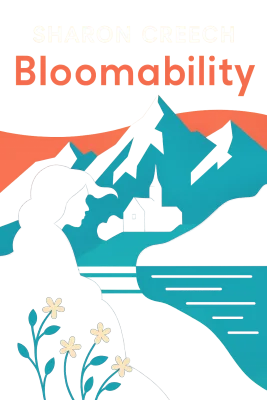
Bloomability
Categories
Fiction, Audiobook, Young Adult, Contemporary, Coming Of Age, Realistic Fiction, Childrens, Middle Grade, Juvenile, Boarding School
Content Type
Book
Binding
Paperback
Year
2012
Publisher
HarperCollins
Language
English
ASIN
006440823X
ISBN
006440823X
ISBN13
9780064408233
File Download
PDF | EPUB
Bloomability Plot Summary
Introduction
Thirteen-year-old Dinnie Doone had lived in more places than most adults visit in a lifetime. Born Domenica Santolina Doone, she carried her few possessions in a single cardboard box, following her trucker father from Kentucky to Virginia, from Texas to New Mexico, always moving toward the next opportunity. But when her sister Stella gave birth on a hilltop in New Mexico and their nomadic life finally shattered, Dinnie found herself on a plane to Switzerland, kidnapped by strangers who claimed to be family. Uncle Max, the new headmaster of an international boarding school nestled in the Swiss Alps, and Aunt Sandy swept her away from everything familiar. In this world of privilege and possibility, surrounded by mountains that seemed to watch her every move, Dinnie existed in what she called her bubble—a transparent barrier that let her observe life without fully participating. The school was filled with global nomads like herself, children from diplomatic families and international businesses, all carrying their own boxes of displacement. Yet as the seasons turned from autumn snow to spring blooms, something began to shift within Dinnie's carefully constructed protection. The question wasn't whether her bubble would burst, but what she might become when it did.
Chapter 1: The Uprooted Transplant: Dinnie's Unwilling Journey
The kidnappers arrived at dawn. Dinnie watched from behind dusty curtains as her mother's sister Sandy and her husband Max climbed out of their rental car, their clothes too clean for the New Mexico dirt roads. Inside the cramped adobe house, Stella cradled her newborn son while her Marine husband George hovered anxiously. Their father was somewhere on the road, chasing another opportunity. Their mother moved through the rooms with the practiced efficiency of someone who had packed and unpacked a hundred times before. "It's not kidnapping," Aunt Sandy insisted, though her smile couldn't quite hide the uncertainty in her eyes. "It's an opportunity." Uncle Max, tall and serious with kind eyes behind wire-rimmed glasses, explained about the international school in Switzerland where he would be headmaster. Dinnie would live with them, attend classes with children from around the world, learn languages, see mountains. Dinnie clutched her cardboard box—the sum of thirteen years of moving reduced to fishing rod, notebooks, and faded photographs. At the Albuquerque airport, she pressed her face against the small window and watched America shrink beneath her. She had expected to crash, but instead found herself suspended above clouds, seeing the world spread out like a living map. For the first time, she understood her place as a tiny dot in the vastness, floating in her transparent bubble high above the earth. The plane carried her across an ocean of darkness, through time zones that stole night and replaced it with sudden Alpine dawn. Switzerland materialized below—jagged white peaks piercing blue sky, valleys carved deep between ancient stone. The train from Zurich wound through the mountains like a determined snake, past waterfalls that appeared and vanished, through tunnels that swallowed daylight and spat them out in different valleys entirely. By the time they reached Lugano, Dinnie's bubble felt stretched thin from all the new sights pressing against its walls. The school perched on a hillside like something from a fairy tale, all red roofs and stone walls, with the dark bulk of Monte San Salvatore looming across the valley. Their house sat higher still, a white chalet with a balcony that faced the mountain. That first evening, as lights twinkled across the water and the mountain's red beacon blinked its ancient warning, Dinnie made her first sign: KIDNAPPED! HELD AGAINST MY WILL! But when Aunt Sandy gently suggested that people might not understand English, Dinnie realized she had entered a world where even her protests needed translation.
Chapter 2: Bubble Girl: Observing Life Through Transparent Walls
The avalanche warnings boomed across the valley every weekend—controlled explosions to prevent disaster, Uncle Max explained, though they sounded like the world ending. Dinnie flinched each time, but gradually learned to distinguish between manufactured thunder and the real thing. Everything in Switzerland required this kind of careful interpretation, from the three languages that swirled around her to the unspoken rules of international student life. At school, she discovered she wasn't the only nomad. Her classmates carried their own stories of displacement: Keisuke from Japan whose parents worked in Nigeria, Belen from Spain who had lived in India and Sweden, Mari from Italy whose father built bridges across five countries. They wore their rootlessness like badges of honor, comparing passport stamps and debating which airports had the best duty-free chocolate. For the first time in her life, Dinnie wasn't the new kid—everyone was new, everyone was from somewhere else, everyone was figuring out where they belonged. But it was Lila who first penetrated Dinnie's bubble. American like herself, Lila blazed through the school corridors like a pink-jacketed comet, complaining about everything with theatrical passion. The food was disgusting, the students rude, the whole place wrong. She demanded American roommates, American magazines, American water that tasted right. Yet something in her desperate performance reminded Dinnie of her own careful observation, the way she catalogued each new place before deciding whether to let it touch her. The boys presented their own mysteries. Guthrie bounded through life like a golden retriever discovering tennis balls, shouting "Fantastico!" at everything from morning cappuccino to weekend hiking trips. He called the school brilliant, Switzerland magnificent, every sunset the best thing he'd ever seen. Peter Lombardy Guthrie III, Mrs. Stirling the imperious school founder called him, though he insisted on his surname. Like Lila, he seemed to know exactly who he was, though his knowledge ran in precisely the opposite direction. As autumn painted the mountains in shades of fire and gold, Dinnie found herself caught between Lila's fury and Guthrie's joy, between her own careful distance and the gravitational pull of friendship. Her bubble remained intact, but hairline fractures had begun to appear where laughter leaked in, where genuine affection for these strange, displaced souls started to seep through her transparent walls.
Chapter 3: Expanding Horizons: New Friends and Foreign Words
Italian invaded her dreams before she could properly conjugate a verb. Words tumbled through her sleeping mind with musical precision while her waking self struggled to remember whether a red car was una macchina rossa or un battello rosso. The language twisted itself into knots of masculine and feminine nouns, of past tenses that refused to stay in the past where they belonged. Signora Palermo, young and enthusiastic with her "Viva Italia!" battle cry, insisted that Dinnie had an Italian tongue, though this felt more like curse than compliment when she accidentally told her teacher she was three hundred years old and went to bed at seven hundred o'clock. But the sounds felt familiar, echoing something deep in her memory. Her grandmother Fiorelli had spoken these words, had come from a place called Campobasso that existed somewhere in the boot-shaped country visible from the mountaintops. This connection to blood and history gave weight to her stumbling attempts at conversation, made the conjugations feel less like academic exercise and more like archaeological discovery. Her world expanded beyond the classroom walls. Weekend trips revealed Switzerland layer by layer: the crystalline streams of Val Verzasca where they leaped from Roman bridges into emerald water, the terraced vineyards that climbed impossible slopes, the mountain villages where church bells marked time in languages older than nations. Guthrie served as their unofficial tour guide, shouting "Guardate!" at every vista, making them touch ancient castle stones and taste local gelato until their faces hurt from smiling. Yet even in these moments of pure joy, Dinnie felt the weight of absence. Her family existed as phantom limbs, aching reminders of the life she'd left behind. Postcards from Kentucky aunts brought news of pot roast disasters and bum knees, while her parents' rare letters arrived weeks late with wrong addresses and brief sketches instead of photographs. Stella, now a mother herself, seemed to have vanished into her new role. Crick faced military service or jail time, though the details remained fuzzy across international phone lines that cut conversations short with expensive clicks. At night, Dinnie filled her dream journal with increasingly complex visions. She flew over mountains with transparent wings, carried entire families in fishing nets, navigated between speaking and listening, between holding on and letting go. Her bubble had become less protective barrier and more permeable membrane, allowing the world to seep in while her own essence began to leak out, mixing with Alpine air and international friendships in ways that might prove irreversible.
Chapter 4: Downfelling and Upstanding: Conquering Mountains Within and Without
The buses to St. Moritz carried two hundred students through the Julier Pass, where snow piled ten feet high and sunlight off white drifts stabbed through closed eyelids. Dinnie pressed her nose to the frost-etched window and watched Switzerland transform into something even more impossible than before. The mountains here didn't just rise—they dominated, forcing the valley town of St. Moritz to huddle in submission around the frozen lake. Her first day on skis proved that gravity held no respect for American girls with trust issues. She fell putting them on, fell getting on the lift, fell spectacularly while attempting to snowplow down the gentlest slope the mountain offered. "You do much downfelling," Keisuke observed with his characteristic understatement, while Guthrie bounded past shouting "Libero! Sono libero!" as he carved elegant arcs through fresh powder. But something magical lived in the ritual of repeated failure. Each fall taught her body new truths about balance, about the relationship between fear and forward motion. By the second week, she managed to descend the beginner slope without face-planting in the snow, and the achievement felt monumental. More than that, she began to understand what Guthrie meant by libero—not just physical freedom, but the liberty that came from accepting risk, from trusting your body to find its way down the mountain even when your mind insisted on catastrophe. The hotel nights revealed different sides of her classmates. Belen confessed her forbidden love for Keisuke while her parents back in Spain demanded she choose a nice Spanish boy. Mari laughed about makeup being called trucco in Italian—trick—as if beauty itself were sleight of hand. They talked past lights-out about the question Uncle Max had posed in assembly: "What would you do if you knew you wouldn't be caught?" The hypothetical scenarios ranged from petty theft to murder, but always circled back to the deeper question of who they were when no one was watching. Lila transformed during those two weeks, as if the mountain air had stripped away her protective layer of complaints. Everything became "marvelous" and "brilliant" instead of "horrid." She embraced strangers, laughed at Keisuke's mangled English, praised the raclette that had once been inedible slop. The change unsettled Dinnie more than the original complaints had. This new Lila seemed performance too, just painted in brighter colors. Authenticity, she realized, might be the rarest thing of all in a place where everyone was reinventing themselves daily.
Chapter 5: The Avalanche: When Snow Buries and Reveals
Global Awareness Month struck the school like its own avalanche of human misery. In every classroom, teachers unpacked the world's suffering with academic precision: war, famine, genocide, environmental destruction. The upper school Iraqi student described American bombs falling on his neighborhood while German classmates wrestled with inherited guilt for crimes committed before their births. The privileged international bubble popped, revealing the raw wound of a world that bled constantly just beyond their mountain sanctuary. Guthrie took it hardest. His boundless enthusiasm curdled into desperate activism as he wrote letters to presidents and joined every humanitarian organization that would accept a thirteen-year-old member. "What are we doing here, Dinnie?" he demanded during one of his restless prowls around campus. "People are dying and we're eating raclette and learning to ski?" The guilt consumed him, transformed his celebration of life into something darker and more urgent. Dinnie found herself questioning everything with new intensity. Who was paying for her education while refugee children went without shoes? How could she justify learning Italian when people starved in languages she couldn't even name? The comfortable assumptions of opportunity and privilege cracked like ice in spring sun, revealing dangerous currents underneath. She confronted Uncle Max in the middle of the night, demanding to know why they weren't all helping refugees instead of attending expensive schools in Swiss mountains. "Kids here have problems too," Uncle Max replied gently, though his exhaustion showed in the slump of his shoulders. "They need someone to help them, and maybe one day you can make someone else lucky." The words felt inadequate against the scale of global suffering, but they contained something essential about the nature of responsibility, about the difference between helpful action and paralyzing guilt. The month climaxed when Uncle Max finally intervened with a speech about balance. Yes, they needed to understand the world's pain, but they also needed to know beauty, art, laughter—the things that made life worth saving. Education wasn't self-indulgence but preparation, the forging of tools they would someday use to improve what they had learned to see clearly. The relief was palpable, like survivors emerging from a shelter after the storm passed. Yet something had changed permanently in how they saw their privileged position, in how they understood the weight of being lucky when luck was distributed so unevenly across the globe.
Chapter 6: Bloomability: Roots Dangling in Search of Soil
The spider plant arrived as a gift from a neighbor, its pale green leaves reaching upward while dozens of baby plants dangled from the mother on thin stems, their roots searching for soil that didn't exist. Aunt Sandy called them the plant's children, explaining how they would eventually drop off and take root wherever they landed. Dinnie stared at the dangling offspring and recognized herself—suspended between homes, reaching for ground that might or might not accept her roots. Spring erupted across Lugano with Mediterranean violence. Palm trees lined the lakefront paths while snow still crowned the mountain peaks, a geographical impossibility that somehow worked in this pocket of alpine warmth. Dinnie had learned to navigate the contradiction, just as she'd learned to speak Italian with her fingers and think in three languages simultaneously. Her world had expanded beyond recognition, yet she still felt fundamentally unmoored, floating between the family that had sent her away and the one that had taken her in. Letters from home grew more sporadic and confused. Her parents had moved again, this time back to Bybanks, Kentucky, where she'd been born but couldn't remember living. Crick had joined the Air Force to avoid jail time and was learning to survive in wilderness conditions, eating bugs and finding his way back to base by instinct. Stella was juggling motherhood and school while their mother watched the baby in shifts with neighbors. The family continued reshaping itself in her absence, adapting to her missing piece as they always had to change. Yet here in Switzerland, she was becoming someone else entirely. Not just Dinnie the adaptable nomad, but Domenica the friend, the student, the girl who could ski without falling and argue in Italian and stand on mountaintops without fear. Her classmates had become as real to her as her blood family, their faces haunting her dreams with the same intensity as her mother's paintings and her father's voice. The question that emerged wasn't whether she belonged in Switzerland, but whether she could survive splitting her heart between two worlds. The revelation came slowly, like sunrise over Lake Lugano. She could carry everyone with her, pack them all in her expanding heart the way her father had always insisted you could catch the sun, catch the day. The spider plant's babies would eventually root wherever they landed, but they would always carry something of the mother plant in their cells. Perhaps being a nomad wasn't about finding home but about becoming home, creating a portable place where love could flourish regardless of geography.
Chapter 7: Libero: Finding Freedom in Two Worlds
The Dolomites rose like stone cathedrals against the March sky, their peaks sharp enough to puncture clouds. Dinnie strapped on the yellow transceiver without thinking, just another piece of required equipment for their farewell skiing trip to honor Lila's departure. Nobody mentioned that Lila had forgotten hers in the van, that she was skiing without the device that might save her life if the mountain decided to collapse. At the top, Dinnie finally refused to follow. The drop looked impossibly steep, a white cliff that fell away into empty air. She watched Guthrie and the others shrink to colorful dots as they carved their way down the pristine slope, Lila's pink jacket bright against the snow as she led them away from the marked runs toward untouched powder. From the safety of the mountain hut, Dinnie and Mr. Bonner shared hot chocolate and congratulated themselves on their cowardice. Then the mountain moved. A deep rumble built to a roar as the entire top section of snow broke loose, carrying tons of white death toward the tiny figures below. Through binoculars, Dinnie watched Guthrie cut in front of Lila, trying to steer her to safety, watched her fall just as the avalanche reached them both. In those eternal seconds before the snow swallowed them, time stretched like taffy, each heartbeat containing hours of desperate prayer. The rescue unfolded with mechanical precision. Red-coated figures descended from above while radio voices crackled location updates. Lila's transceiver led them to her first, buried but breathing, her bright jacket like a flag of survival in the white chaos. Guthrie lay deeper, buried by the extra seconds he'd spent trying to save his friend. Twenty minutes under the snow—longer than hope usually lasted, but somehow not long enough to kill a boy who laughed at the word "stew-pod" even while suffocating. When they pulled him out alive, Dinnie felt her bubble finally burst, not into fragments but into pure joy that spread across the mountain like light. "Vivo! Vivo!" the rescuers shouted, and she took up the cry, waving her lucky red scarf at the sky. They were all chorus then, all of them singing the same song of gratitude and relief and recognition that life was both more fragile and more resilient than any of them had understood. In that moment, she wasn't American or Swiss or lost or found—she was simply, completely, gloriously libero.
Summary
The plane lifted off from Zurich carrying a different girl than the one who had arrived nine months before. Dinnie still clutched her cardboard box of belongings, but now it contained Swiss hiking passes and Italian dictionaries, photos of friends whose faces had become as familiar as family. She was flying toward Bybanks, Kentucky, toward a reunion with parents who existed more clearly in memory than in flesh, toward the endless American question of what came next. Below her, Switzerland shrank to a collection of white peaks and blue lakes, but she knew now that geography was just the surface of things. The real country she was leaving lived in the sound of St. Abbondio's bells, in the taste of gelato shared with friends, in the peculiar freedom that came from learning you could survive being buried by an avalanche of new experience and emerge not broken but expanded. She had learned to see like Emerson's transparent eyeball, absorbing everything while remaining essentially herself. Whether she returned to Switzerland in the fall or stayed in Kentucky didn't matter—she carried both worlds inside her now, and the mountains would always be there, calling her libero across whatever oceans lay between.
Best Quote
“when i reached the bottom, i finally understood what Guthrie meant when he shouted, "LIBERO!" It was a celebration of being alive” ― Sharon Creech, Bloomability
Review Summary
Strengths: The book is described as life-shaping and inspiring, particularly in fostering a love for travel, languages, and words. It is praised for its lasting impact, relatable characters, and well-crafted writing suitable for both children and adults. The narrative is noted for expanding readers' perspectives and providing meaningful connections, especially in an international context. Weaknesses: The book is critiqued for not being the best example of healthy relationships between sexes, particularly for young readers, though this is seen as a minor issue that can prompt discussions. Overall: The reader's sentiment is overwhelmingly positive, with the book being highly recommended as a formative and impactful read. It is cherished for its ability to resonate with readers over time and across different life experiences.
About Author

Sharon Creech
Creech investigates the complex tapestry of family life and the natural world, often drawing on personal experiences to fuel her storytelling. Her upbringing in South Euclid, Ohio, surrounded by a lively family and a host of friends and relatives, informs much of her narrative style. This environment, combined with memorable trips to places like Idaho and Quincy, Kentucky, provided her with a wellspring of material that later appeared in her works. Books like "Absolutely Normal Chaos" and "Walk Two Moons" reflect her childhood's vibrancy and complexity, illustrating her interest in capturing the nuances of youthful experiences.\n\nSharon Creech employs a method of storytelling that intertwines real-life inspirations with fictional elements, creating a relatable yet imaginative world for her readers. Her teaching background in England and Switzerland enriched her understanding of literature's power, which she channeled into writing stories predominantly for young people. Through engaging plots and well-developed characters, Creech explores themes of adventure and self-discovery, as seen in "Chasing Redbird" and "Bloomability." Her ability to create a vivid sense of place, often referencing her beloved Quincy as Bybanks, adds depth and authenticity to her narratives.\n\nReaders gain from Creech's bio insights into the transformative power of storytelling and its ability to bridge real and imagined experiences. Her works, particularly "Walk Two Moons," which earned the Newbery Medal, resonate with young audiences by addressing the challenges and joys of growing up. This connection is not just due to her compelling characters but also her talent for infusing stories with heartfelt emotion and humor. Her ongoing dedication to writing ensures that new generations will continue to discover the richness of her literary contributions.
Read moreDownload PDF & EPUB
To save this Black List summary for later, download the free PDF and EPUB. You can print it out, or read offline at your convenience.

Bloomability
by Sharon Creech
