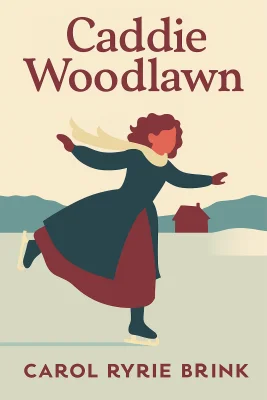
Caddie Woodlawn
Categories
Fiction, Classics, Audiobook, Historical Fiction, Young Adult, Historical, Adventure, Childrens, Middle Grade, Juvenile
Content Type
Book
Binding
Paperback
Year
2006
Publisher
Aladdin
Language
English
ISBN13
9781416940289
File Download
PDF | EPUB
Caddie Woodlawn Plot Summary
Introduction
In the Wisconsin wilderness of 1864, eleven-year-old Caddie Woodlawn stood at the crossroads between two worlds. With her wild red hair catching the autumn sunlight and her bare feet planted firmly in the prairie soil, she embodied everything her Boston-bred mother feared and her English father secretly admired. While other girls her age bent over samplers and practiced curtseying, Caddie ran wild with her brothers Tom and Warren, hunting through the woods, swimming treacherous rivers, and forming unlikely friendships with the local Menominee Indians. But beneath the surface of this frontier paradise, tensions simmered. Rumors of Indian massacres drifted down from the north, dividing the white settlers between those who trusted their Native neighbors and those who reached for their rifles at every shadow. As Caddie navigated the dangerous waters between childhood and womanhood, between civilization and wilderness, she would discover that courage comes not from denying who you are, but from choosing who you want to become. Her story unfolds against the backdrop of a changing America, where the choices made by one headstrong girl would ripple through her family's destiny like stones cast into still water.
Chapter 1: The Untamed Spirit: Caddie's Life on the Wisconsin Frontier
The morning sun painted the Menominee River gold as three red-headed children stripped off their clothes on its banks. Tom, thirteen and darkly freckled, tested the water's depth with his toe. Warren, nine and carrot-topped, bounced impatiently on the muddy shore. But it was Caddie who took the lead, her sun-bleached curls catching the light as she waded in first. The crossing was treacherous. Tom held the younger two as they formed a human chain, their heads barely above the current while their clothes balanced precariously on their heads. One slip would send all three tumbling downstream toward the village below. But Caddie had done this crossing dozens of times, drawn by the thin column of smoke that promised Indian friends and adventure on the far shore. On the opposite bank, they dressed quickly and pushed through the underbrush toward the clearing where Indian John's people were building their winter shelters. The smell of birch smoke and hot pitch filled the air as the tribe worked on their canoes, and Caddie felt her heart lift with familiar joy. Here, among these people her neighbors feared, she found acceptance for her wild ways. John himself emerged from the group, his weathered face creasing into a smile at the sight of the bedraggled white children. His dog, a wolf-like creature with intelligent eyes, padded over to nuzzle Caddie's hand in greeting. This was her world, she thought—not the parlor where Mother expected her to practice needlework, but this place where the wind moved through the pines and friendship crossed the boundaries that adults drew on their maps. As evening approached, the three adventurers made their way home, their pockets bulging with hazelnuts and their hearts full of the day's discoveries. But Caddie's triumph would be short-lived. Bursting through the dining room door at supper time, she collided with civilization in the form of the circuit rider, his dark eyes taking in her disheveled appearance with stern disapproval.
Chapter 2: Crossing Boundaries: Adventures Among the Indians
Winter's grip tightened on the Wisconsin frontier, but Caddie's spirit remained unbroken. When the circuit rider departed, leaving behind his broken clock, she discovered a new passion that would bridge the gap between her wild nature and her father's quiet expectations. In the dusty attic, surrounded by forgotten treasures and the gentle warmth of the brick chimney, she attempted to repair the timepiece herself. The clock exploded in her hands. Springs and gears flew in every direction, clattering against the rafters like metallic rain. But instead of anger, her father's face showed only amusement when he discovered her there, sitting amid the wreckage with tears streaming down her cheeks. Together, they rebuilt the circuit rider's clock, and in doing so, forged a partnership that would outlast all her other childhood adventures. Yet it was her friendship with Indian John that truly set her apart from her peers. When he arrived at their farm one winter day, bringing with him his injured dog and the fearsome scalp belt that had belonged to his father, Caddie saw not a savage but a man carrying the weight of his people's history. The belt itself, with its three dark braids of hair, spoke of a time when survival meant violence, when the boundary between life and death was as thin as a blade's edge. The other children gathered around in fascination and horror, but Caddie understood something they missed. This was not just a gruesome trophy but a sacred trust, a connection to ancestors who had fought and died for their people's survival. When John prepared to leave for the spring hunt, entrusting both his wounded dog and his father's belt to her care, she accepted the responsibility with the solemnity it deserved. As the winter winds howled around their sturdy farmhouse, Caddie tended to John's dog in the barn, watching him heal under her patient ministrations. She began to understand that true friendship required sacrifice, that caring for others meant accepting responsibility even when it was inconvenient or difficult. The dog's trusting eyes reflected a deeper truth about the bonds that could form between different worlds, different species, different ways of life.
Chapter 3: The Courage to Stand: Caddie's Ride to Prevent Bloodshed
Spring's arrival brought more than wildflowers and birdsong to the Wisconsin wilderness. It carried whispers of massacre from the territories to the west, stories that spread like wildfire among the scattered settlements. Fear transformed neighbors into enemies, and reason gave way to panic as families abandoned their homesteads and fled eastward. Caddie watched from her family's kitchen window as the Woodlawn farm became a fortress. Wagons rolled up their lane carrying frightened families with their meager possessions, their eyes wide with terror at every shadow in the treeline. The men cleaned their rifles and spoke in hushed tones about preemptive strikes, while the women gathered their children close and tried not to think about scalping knives. But it was at the root cellar that Caddie overheard the conversation that changed everything. Hidden behind the men who blocked her path, she listened as they planned their own massacre. They would strike first, they declared, wipe out John's peaceful band before the Indians could attack them. The irony was lost on these frightened men, that in their fear of becoming victims, they were preparing to become the very monsters they imagined their neighbors to be. Without hesitation, Caddie made her choice. Leading old Betsy from the barn, she mounted bareback and struck out through the fields toward the river. The ice still held, barely, creaking ominously under the mare's hooves as they crossed. Behind them lay safety and the expectations of civilized behavior. Ahead lay the unknown, and the slim chance that one girl's warning might prevent a tragedy. The ride through the wilderness tested every skill she had learned in her years of frontier freedom. Branches tore at her clothes and face, but she pressed on, driven by the knowledge that innocent lives hung in the balance. When she finally reached John's winter camp, she found not warriors preparing for battle but families going about their daily tasks, children playing near the fire, old women tending cooking pots with practiced efficiency. The sight of their peaceful domesticity only strengthened her resolve. John listened to her breathless warning with the gravity it deserved, his weathered face showing no surprise at finding a white child in his camp at nightfall. When he insisted on escorting her home through the dangerous darkness, Caddie realized that courage was not the absence of fear but the willingness to act despite it, to reach across the void between different worlds and offer the hand of friendship even when it meant risking everything.
Chapter 4: Silver Dollars and Golden Hearts: Learning Compassion
The false alarm of the massacre scare left scars deeper than any physical wound. As the neighbors returned to their abandoned farms and life resumed its normal rhythm, Caddie discovered that some damage could not be easily repaired. At school, she watched the three small Hankinson boys struggle with their lessons, their mixed heritage marking them as outsiders in both worlds. Their mother, the Indian woman who had married their white father, had disappeared into the wilderness rather than face the growing prejudice of the settlers. Caddie saw the pain in the children's eyes, the way they sat apart from their classmates, neither fully accepted nor completely rejected. Their father, weak-willed Sam Hankinson, had chosen his own reputation over his family's welfare, sending away the woman who had borne his children rather than defend her against the whispers and stares. The silver dollar in Caddie's trinket box had been her treasure for months, a symbol of independence and future possibilities. Uncle Edmund's gift had survived every temptation, every moment when she might have spent it on candy or trinkets. But seeing the Hankinson boys' hollow faces and unkempt hair, she finally found a purpose worthy of her most prized possession. At Dunnville store, she transformed her silver dollar into gifts that spoke louder than words. Candy for sweetness in bitter lives, tops for the simple joy of play, combs for dignity, and bright red handkerchiefs for hope. The storekeeper watched in amazement as this frontier girl spent her entire fortune on children who were not even her friends, asking nothing in return but the chance to drive the loneliness from their eyes. When Tom criticized her extravagance later, pointing out that she could have helped them for far less money, Caddie struggled to explain what she had learned. The gesture had to be complete, overwhelming, a demonstration that some people still saw the worth in those others had written off as worthless. Her dollar had bought more than goods; it had purchased a moment of pure human kindness in a world that seemed increasingly short of such luxuries. As she watched the three boys race away with their treasures, their red handkerchiefs streaming like banners of joy, Caddie understood that true wealth had nothing to do with what you kept and everything to do with what you gave away. The lesson would serve her well in the trials ahead, when larger choices would demand even greater sacrifices.
Chapter 5: The English Inheritance: A Family at the Crossroads
The letter arrived on a spring day when apple blossoms perfumed the Wisconsin air, but its contents carried the musty scent of old England and older obligations. Father's face went white as he read the formal script, his hands trembling slightly as he absorbed news that would reshape their entire world. His uncle, the latest Lord Woodlawn, had died childless, and the family lawyers had traced the inheritance to a most unlikely heir. The farmhouse kitchen fell silent as Father explained the impossible offer. The great estate in England, with its towers and peacocks and centuries of history, could be theirs. All they had to do was abandon their American citizenship, turn their backs on the frontier they had helped to tame, and return to the land that had once cast out his father for marrying beneath his station. Caddie stared at her father's weathered hands, trying to imagine them soft and white like an English gentleman's. She thought of his workshop, filled with broken clocks that he brought back to life with patient skill, and wondered if English lords were allowed to soil their hands with honest labor. The image refused to form, as if her mind rejected the very possibility. Mother's eyes shone with possibilities. Boston had been culture and refinement, but England represented something even grander. She spoke of presentations to the Queen, of balls and theaters, of escape from the endless cycle of butter-churning and turkey-plucking that defined frontier womanhood. For the first time since leaving Massachusetts, Caddie saw her mother's face light up with genuine excitement. But it was Clara who surprised them all. Beautiful, refined Clara, who had always seemed born for better things than farm life, listened to the descriptions of English society with growing doubt. As the days passed and the family prepared for their momentous vote, she found herself torn between the glittering future her mother painted and the solid reality of the life they had built in Wisconsin. The tension stretched taut as Father outlined the democratic process by which they would decide their fate. Each family member, down to seven-year-old Minnie, would cast a secret ballot. In a land where they had learned to govern themselves, they would choose their future the American way, by the will of the majority and the weight of individual conscience.
Chapter 6: An American Choice: Democracy in the Wilderness
The voting slips lay scattered through the family Bible like leaves of destiny, each one carrying the weight of a life-changing decision. Father's hands moved slowly as he gathered them, his face betraying nothing of his own hopes or fears. The parlor, usually reserved for deaths and weddings, seemed to hold its breath as the family's future balanced on the edge of revelation. One by one, the votes emerged from their hiding places between the sacred pages. "Stay." The first vote fell like a stone into still water, its ripples spreading through the assembled family. "Stay." Another voice from the wilderness, another vote for the frontier life they had built with their own hands. "Stay." And another, until hope began to bloom in Caddie's chest like wildflowers after rain. Only one vote read "Go," a lonely cry for the civilized world they had left behind. But as the final ballots emerged, the pattern became clear. Even Mother, who had spoken so passionately about England's advantages, had chosen to remain in the land where her husband's heart truly belonged. Even Clara, who seemed born for drawing rooms and formal gardens, had discovered that home was not a place but the people who filled it with love. The aftermath of the vote brought not celebration but quiet satisfaction, the deep contentment of a family that had chosen its path together. They would remain Americans, pioneers in a land still writing its own story. Father's relief showed in the way his shoulders relaxed, the gentle smile that spread across his weathered features as he folded the ballots away. That evening, as they sat together in the familiar warmth of their kitchen, Caddie felt the future stretching out before them like an uncharted river. There would be challenges ahead, seasons of plenty and want, moments of joy and sorrow. But they would face them as they always had, together, in the land they had chosen to call home. The rejected inheritance would pass to distant relatives who had never known the satisfaction of plowing virgin soil or the thrill of building something lasting from nothing. But the Woodlawns had found their treasure in simpler things: in the trust of Indian friends, in the changing seasons of the frontier, in the knowledge that what they possessed, they had earned through their own courage and determination.
Chapter 7: Becoming Caddie Woodlawn: The Girl Facing Westward
Summer brought unexpected visitors to the Woodlawn farm, each arrival carrying its own lessons about the complex dance between past and future. Cousin Annabelle stepped off the riverboat like a living doll, her tiny buttoned shoes and velvet ribbons speaking of a world where appearance mattered more than substance. She had come to experience the "quaint" frontier life, but her eight-and-eighty jet buttons and cultivated Boston accent marked her as clearly foreign as any immigrant. Caddie and her brothers saw opportunity in Annabelle's arrogance. They introduced her to Pete, the horse with one peculiar talent, and watched him scrape her neatly off his back beneath the low barn eaves. They let her "salt the sheep" by holding the salt herself, laughing as the hungry animals mobbed her for their treat and ate every sparkling button from her dress. The final indignity came in the hayloft, where Caddie slipped a raw egg down the back of Annabelle's blouse just before she attempted a somersault. The punishment that followed struck Caddie with unexpected force. Not because of the physical pain of Mother's riding crop, but because of the injustice of bearing sole responsibility for pranks that had been equally shared. As she lay on her narrow bed that night, burning with resentment and planning her escape to join the Indians, she felt the weight of her mother's disappointment like a stone in her chest. But it was Father who came to her in the darkness, his gentle voice cutting through her anger like sunlight through storm clouds. He spoke not of punishment or shame, but of the unique responsibility that rested on the shoulders of every woman. To civilize without destroying, to nurture without smothering, to carry forward the best of human nature while tempering its worst impulses. His words planted seeds that would grow throughout that final summer of her childhood. When Indian John returned from his distant journeys and reclaimed his dog, Caddie let him go without protest, understanding that true love sometimes meant release. When autumn brought news of other families pulling up stakes and heading further west, she felt the pull of new horizons while remaining rooted in the place that had shaped her. The circuit rider's clock ticked steadily on the mantel, marking time with the patient precision that Caddie had helped restore. Like that broken timepiece, she had been taken apart and reassembled, her scattered pieces reformed into something stronger and more purposeful. She remained the same wild-hearted girl who could outrun her brothers and cross rivers in flood, but she carried now a deeper understanding of the power that came with choosing when to fight and when to yield.
Summary
As winter settled over the Wisconsin frontier once more, Caddie Woodlawn stood at her bedroom window and watched the first snowflakes drift down like scattered prayers. The year that had begun with her feet dangling in the cold river now ended with her understanding that growing up was not about surrendering her wild spirit but learning to channel it toward worthy purposes. She had discovered that true strength came not from rejecting civilization but from helping to shape it, not from avoiding responsibility but from embracing it with clear eyes and steady hands. The frontier itself was changing, growing less wild with each passing season as more families arrived and more wilderness gave way to farmland. But Caddie had learned that the pioneer spirit was not about conquering the land so much as learning to belong to it, to find one's place in the vast tapestry of rivers and forests and endless sky. She would face whatever came next with her face turned westward, toward the promise of new tomorrows in a land still writing its own story. Her childhood was ending, but her adventure was just beginning, and America itself was young enough to need the courage and wisdom of girls who had learned to be both gentle and strong, both civilized and free.
Best Quote
“It's a strange thing, but somehow we expect more of girls than of boys. It is the sisters and wives and mothers, you know, Caddie, who keep the world sweet and beautiful. What a rough world it would be if there were only men and boys in it, doing things in their rough way! A woman's task is to teach them gentleness and courtesy and love and kindness. It's a big task, too, Caddie--harder than cutting trees or building mills or damming rivers. It takes nerve and courage and patience, but good women have those things. They have them just as much as the men who build bridges and carve roads through the wilderness. A woman's work is something fine and noble to grow up to, and it is just as important as a man's.” ― Carol Ryrie Brink, Caddie Woodlawn
Review Summary
Strengths: The book features a protagonist, Caddie Woodlawn, with a "plucky spirit" and engaging adventures, such as interacting with nearby Indians and playing pranks. These elements add a marginal charm to the narrative. Weaknesses: The review criticizes the book for being "boring and largely disappointing," with adventures feeling like "sparsely connected vignettes." The overarching theme of pushing Caddie towards traditional womanhood is seen as frustrating, undermining her character development. The narrative is compared unfavorably to the "Little House" series, lacking its charm. Overall: The reviewer expresses disappointment, particularly with the book's message and character development. While not entirely disliked, the book is not recommended due to its perceived failure to maintain the protagonist's independence and charm.
About Author

Carol Ryrie Brink
Brink situates her narrative worlds within the experiences of both youth and resilience, demonstrating how early adversity can shape creativity. Orphaned by the age of eight, she found inspiration in her grandmother, who became the model for the beloved character Caddie Woodlawn. This personal history underpins her thematic exploration of growth and survival in her works. Brink's early involvement with school newspapers, which she continued into her college years, illustrates her lifelong dedication to storytelling. Her journey through academia, including her eventual transfer to the University of California, where she graduated Phi Beta Kappa, reflects a commitment to intellectual excellence.\n\nThe core of Brink’s literary method involves crafting compelling narratives for both juvenile and adult audiences, using historical contexts to bridge generational gaps. Her debut novel, "Anything Can Happen on the River," marks the beginning of a prolific career that would later be punctuated by the success of "Caddie Woodlawn," awarded the 1936 Newbery Medal. The recognition Brink received underscores her ability to engage readers of all ages, while her diverse catalog, exceeding 30 books, ensures a wide-ranging impact. Moreover, her works often emphasize resilience and self-discovery, themes that resonate strongly with readers navigating their own life's challenges.\n\nReaders of Brink's books benefit from her insightful depictions of character growth and historical settings, which provide a framework for understanding personal and cultural narratives. Her recognition with an Honorary Doctorate of Letters from the University of Idaho further cements her influence in literature and education. The dedication of Brink Hall at the University of Idaho and the children’s section of the Moscow, ID Carnegie public library in her name highlights her lasting impact on the community and the literary world. Through her works, Brink offers a compelling lens on the past and present, fostering a deeper appreciation for narrative storytelling.
Read moreDownload PDF & EPUB
To save this Black List summary for later, download the free PDF and EPUB. You can print it out, or read offline at your convenience.

Caddie Woodlawn
by Carol Ryrie Brink
