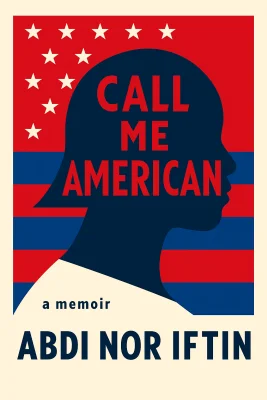
Call Me American
A Memoir
Categories
Nonfiction, Biography, Memoir, Audiobook, Africa, Autobiography, Biography Memoir, Book Club, War, Somalia
Content Type
Book
Binding
Hardcover
Year
2018
Publisher
Knopf
Language
English
ISBN13
9781524732196
File Download
PDF | EPUB
Call Me American Plot Summary
Introduction
# From Mogadishu to Maine: Abdi Iftin's Journey of Dreams and Determination In the scorching heat of war-torn Mogadishu, while other children learned to dodge bullets and scavenge for food, a young boy named Abdi Iftin was secretly watching American movies and teaching himself English. His neighbors called him "Abdi American" - a nickname that seemed like an impossible dream in a city where Hollywood films were banned and hope was a luxury few could afford. Born into Somalia's civil war in 1985, Abdi's childhood unfolded against a backdrop of clan violence, warlord rule, and Islamic extremism that would test every fiber of his being. Yet from this chaos emerged one of the most compelling refugee stories of our time, demonstrating how the power of dreams and cultural curiosity can overcome seemingly insurmountable obstacles. Through his extraordinary journey, readers will discover the transformative nature of education found in unexpected places, the complex realities of refugee survival across multiple countries, and the ongoing challenges of building identity between two vastly different worlds. His story offers profound insights into the resilience of the human spirit and the universal quest for freedom that transcends borders, cultures, and circumstances.
Chapter 1: War-torn Childhood: Growing Up in Somalia's Collapse
Abdi's earliest memories were painted in the colors of violence and uncertainty, as Somalia's civil war transformed his world overnight from middle-class comfort to desperate survival. His father Nur had been a celebrated basketball player for Somalia's national team, and the family enjoyed the trappings of urban success in pre-war Mogadishu - furniture, carpets, and the vibrant culture of a functioning society. But by 1991, as clan rivalries erupted into full-scale conflict, everything Abdi knew began to crumble with devastating speed. The family's desperate flight from Mogadishu became a journey through hell that would forever shape young Abdi's understanding of human resilience and cruelty. Walking for days through hostile territory, dodging bullets from various militias, sleeping among graves, and witnessing mass starvation, six-year-old Abdi discovered both his mother Madinah's incredible strength and his own capacity for endurance. The loss of his baby sister Sadia to malnutrition during this period served as a harsh reminder of war's cruel indifference to innocence. When the family eventually returned to a devastated Mogadishu, Abdi found a city transformed beyond recognition into a patchwork of clan territories controlled by heavily armed militias. The beautiful coastal capital had become a graveyard where children played with bullet casings and families buried their dead in their own courtyards. Schools were destroyed, hospitals looted, and basic services had vanished, replaced by the law of the gun and the rule of the strongest. His enrollment in Macalin Basbaas's madrassa represented both opportunity and constraint in this new reality. While the Koranic school provided structure and education when formal learning had largely disappeared, it also imposed rigid religious orthodoxy that conflicted with Abdi's naturally inquisitive spirit. The brutal teaching methods - beatings for minor infractions and endless memorization without understanding - reflected a society where survival often trumped compassion. Despite the harsh conditions, Abdi excelled at memorizing the Koran, displaying the remarkable memory and linguistic ability that would later serve him well. The constant presence of death and destruction taught him to read the subtle signs that preceded violence, developing the hypervigilance and mental agility that would prove crucial for navigating future challenges. Even as a child, he understood that survival required not just physical courage but the ability to adapt quickly to rapidly changing and dangerous circumstances.
Chapter 2: Hollywood Dreams: Learning America Through Movies and English
Abdi's transformation from a war-traumatized child into "Abdi American" began with an unlikely discovery that would reshape his destiny forever. When he stumbled upon Falis's makeshift video shack, a cramped, sweltering room where bootleg American movies played on a small television, he found his secret university and true calling. While other children his age were being recruited by militias or confined to religious instruction, Abdi was absorbing American culture through Terminator films, basketball documentaries, and action movies that revealed an entirely different world. What began as entertainment quickly evolved into obsessive education and cultural awakening. Abdi didn't just watch these films - he studied them with scholarly dedication, memorizing dialogue, imitating mannerisms, and slowly decoding the English language through repetition and careful observation. Arnold Schwarzenegger became his unlikely role model, representing the possibility of transformation and success in a land where laws existed, police arrested criminals instead of joining them, and children rode yellow school buses to actual schools. His dedication to English earned him both admiration and suspicion in a society where foreign influences were increasingly viewed as dangerous. He recorded movie soundtracks on cassette tapes, playing them repeatedly until he could mimic American accents, and practiced conversations with himself in preparation for a future that seemed impossibly distant. When the Islamic Courts Union later banned movies and music, Abdi's linguistic skills had already become too deeply ingrained to abandon. The nickname "Abdi American" carried the weight of both aspiration and danger, marking him as different in ways that could prove fatal under Islamic rule. His ability to translate American movies made him popular among young people seeking entertainment, but it also identified him as potentially subversive to religious authorities. This dual identity - Somali by birth but American by aspiration - would define much of his adolescence and create constant tension between survival and authenticity. Through Hollywood's lens, Abdi glimpsed democracy, gender equality, and the rule of law - concepts that seemed as fantastical as the special effects on screen. These movies became more than entertainment; they were windows into possibility, textbooks for a different way of life, and proof that worlds existed beyond Somalia's borders where individual dreams could flourish. His English proficiency opened unexpected opportunities even in war-torn Mogadishu, allowing him to teach neighborhood children and build bridges between two worlds that seemed impossibly far apart.
Chapter 3: Surviving Extremism: Resistance Under Al-Shabaab Rule
The rise of Al-Shabaab in the mid-2000s represented Abdi's greatest existential threat, as the Islamic extremist group systematically eliminated everything that had given his life meaning and purpose. Movies were banned, music was forbidden, dancing was punishable by flogging, and young men like Abdi faced constant pressure to join their ranks or face deadly consequences. The group's rigid interpretation of Islam left no room for the cultural curiosity and individual expression that had defined his identity since childhood. Abdi's relationship with his childhood friend Mukhtar, who transformed into the jihadist "Abu Jihad," illustrated the stark choices facing young Somali men in this new reality. While Mukhtar embraced religious extremism and took up arms, Abdi quietly resisted, clinging to his American dreams despite mounting dangers. When Abu Jihad came to his home armed with an AK-47, destroyed his boom box, and threatened him for his "sinful" lifestyle, Abdi realized that his very survival depended on maintaining a careful balance between outward compliance and inner resistance. The public flogging he received for walking with his girlfriend Faisa on the beach marked a brutal turning point in his understanding of the stakes involved. The twenty lashes were not just physical punishment but a warning that his Western-influenced behavior was being monitored and would not be tolerated. Being forced to watch a man's hand being severed as part of his "counseling" drove home the reality that these weren't abstract threats but immediate dangers that could end his life at any moment. Abdi's resistance took the form of quiet non-compliance rather than open rebellion, requiring extraordinary mental strength to maintain his core identity while presenting a facade of religious compliance. He stopped attending mandatory recruitment sessions, avoided mosques when they were being used for jihadist recruitment, and carefully concealed his continued interest in American culture. When his beloved video shack was bombed and destroyed, he mourned not just the loss of entertainment but the destruction of his window to the wider world. The psychological toll of living under constant threat while nurturing his American aspirations in secret taught him valuable lessons about persistence under pressure and the importance of maintaining hope in seemingly hopeless circumstances. His ability to survive Al-Shabaab's reign of terror without compromising his fundamental beliefs would later serve him well in navigating the challenges of refugee life and cultural adaptation. This period forged his understanding that true resistance sometimes requires the courage to remain unchanged while everything around you demands transformation.
Chapter 4: Refugee Reality: Life in Kenya's Little Mogadishu
Abdi's escape from Somalia marked the beginning of a new chapter filled with different but equally daunting challenges that extended far beyond mere physical safety. His arrival in Nairobi's Eastleigh district - known as "Little Mogadishu" - revealed the complex realities of refugee life that no Hollywood movie had prepared him for. While he had successfully fled the immediate dangers of Al-Shabaab, he now faced the grinding daily struggles of survival without legal status, economic opportunities, or social protection in a country that viewed Somali refugees with suspicion and hostility. Life in Little Mogadishu became a constant game of cat and mouse with Kenyan police who treated Somali refugees as both criminals and cash machines. Abdi learned to navigate the informal economy of bribes, safe routes, and warning systems that allowed refugees to survive despite their precarious legal status. The irony was stark - he had escaped a war zone only to find himself in a different kind of prison, one defined by poverty, discrimination, and the constant threat of deportation back to the very dangers he had fled. The reunion with his brother Hassan provided both emotional comfort and practical partnership in survival, as they developed the street-smart skills necessary for refugee life. Together, they sold goods on sidewalks, avoided police raids, and built networks of mutual support with other displaced Somalis. Their small shared room became a sanctuary where they could maintain their dreams of eventual resettlement while dealing with the harsh realities of their present circumstances. Abdi's work as a radio correspondent for American public radio represented a breakthrough that would ultimately change his trajectory forever. His reports from Little Mogadishu gave voice to the experiences of thousands of forgotten refugees while connecting him with Americans who would become his advocates and eventual sponsors. The work was dangerous - being identified as someone with Western connections could have made him a target - but it also provided purpose and hope during some of his darkest moments. The psychological challenges of refugee life proved as difficult as the physical hardships, with constant uncertainty about the future and the loss of dignity that came with being unwanted and invisible. Abdi watched as some refugees gave up hope and returned to Somalia despite the dangers, while others turned to crime or extremism out of desperation. His ability to maintain focus on eventual resettlement while building meaningful connections with American supporters demonstrated remarkable emotional resilience and strategic thinking that would prove crucial for his eventual success.
Chapter 5: Against All Odds: Winning the American Dream Lottery
The moment Abdi discovered he had won the diversity visa lottery represented the culmination of years of preparation meeting an extraordinary stroke of luck that would test every survival skill he had developed. His decision to apply for the lottery with friends had been almost casual - the twenty-cent application fee seemed like a small gamble with astronomical odds. When his number came up among the 155,000 winners worldwide competing for just 55,000 visas, he faced the daunting realization that winning the lottery was only the beginning of an even more challenging process. The bureaucratic obstacles that followed tested every skill Abdi had developed during his years of survival in ways he had never anticipated. Obtaining the required documentation - police clearances, medical certificates, and educational transcripts - required him to navigate systems designed to exclude people like him. Each document demanded bribes, connections, or dangerous journeys through hostile territory, creating a cruel irony where he needed to prove his good character to the same Kenyan police who had been extorting and harassing him for years. The missing signature on his university transcript that initially derailed his visa interview demonstrated how small details could derail years of preparation and hope in an instant. His desperate race across Nairobi to obtain the proper documentation, followed by anxious days waiting to hear whether his application would be reconsidered, captured the precarious nature of refugee dreams where success or failure often hinged on factors completely beyond one's control. Abdi's persistence in the face of seemingly insurmountable obstacles reflected lessons learned from a lifetime of overcoming challenges through determination and community support. When the first interview failed, he didn't accept defeat but instead mobilized every resource and connection he had built over the years. His network of American supporters, journalist contacts, and local allies all played crucial roles in ensuring his documentation reached the embassy in time, reinforcing his understanding that success required not just individual effort but collective advocacy. The final approval of his visa represented more than personal victory - it validated his lifelong belief in the possibility of transformation through determination and hope. For someone who had grown up in a society where clan identity and circumstances of birth largely determined life outcomes, the American dream represented radical possibility. His success also carried the weight of responsibility to family members who would depend on his eventual earnings and to other refugees who saw in his story proof that escape and transformation were indeed possible against all odds.
Chapter 6: Cultural Navigation: Building Identity Between Two Worlds
Abdi's arrival at Boston's Logan Airport marked the beginning of a new phase of adaptation that proved as challenging as anything he had faced in Africa, requiring him to navigate cultural differences he had never anticipated. The America he encountered was simultaneously more welcoming and more complex than the Hollywood version that had sustained his dreams for so many years. His integration into the McDonnell-Parrish family in Yarmouth, Maine, provided safety and support but also required constant negotiation between his Muslim faith and their Buddhist practices. The practical challenges of American life - using appliances, understanding social customs, learning to drive - were compounded by deeper questions of identity and belonging that no movie had prepared him for. Living with a white family while maintaining his cultural identity required him to learn advocacy for his own needs and boundaries. Simple activities like sharing meals or celebrating holidays became opportunities for cultural learning and occasional misunderstanding, though his host family's patience and generosity provided a foundation for growth. His work on construction crews introduced him to a different side of American society marked by economic struggle, substance abuse, and cultural tensions that Hollywood had never portrayed. The casual racism and exploitation he experienced from some co-workers challenged his idealized vision of American equality and opportunity. Yet these experiences taught him valuable lessons about resilience, dignity, and the importance of maintaining his values even in difficult circumstances while building the practical skills necessary for economic independence. His role as an interpreter and translator allowed him to use his linguistic skills while serving other refugees facing similar challenges, providing both income and purpose. Through helping others navigate American systems, Abdi deepened his own understanding of his adopted country while maintaining connections to his Somali identity. His ability to bridge these two worlds became both a professional asset and a source of personal fulfillment, demonstrating how his unique background could become a strength rather than a burden. The ongoing tension between individual choice and family obligation became particularly acute as Abdi achieved success while his family members remained trapped in poverty and violence in Somalia. His monthly remittances represented both love and burden - a constant reminder of the privileges and responsibilities that came with his escape. His determination to embrace American opportunities while preserving Somali connections required constant balance and occasional conflict with community expectations, illustrating the complex realities faced by immigrants who must navigate multiple loyalties and identities simultaneously.
Summary
Abdi Iftin's extraordinary journey from the war zones of Mogadishu to the universities of Maine stands as a testament to the transformative power of hope, education, and cultural curiosity in overcoming seemingly impossible circumstances. His story demonstrates that survival and success often depend not just on individual determination but on the ability to build bridges across cultural divides, maintain dreams in the darkest moments, and find unexpected sources of learning and inspiration even in the midst of chaos and oppression. His ongoing commitment to supporting family members in Somalia while building a meaningful life in America reflects the complex realities faced by many immigrants who must balance personal advancement with community obligations and cultural preservation. For anyone facing seemingly insurmountable challenges, seeking to understand the refugee experience, or exploring questions of identity and belonging in an interconnected world, Abdi's example offers both inspiration and practical wisdom about the resilience of the human spirit and the enduring relevance of dreams that transcend borders and circumstances.
Best Quote
Review Summary
Strengths: The review highlights the memoir's powerful narrative force and the author's perseverance amidst adversity. It praises the book's informative nature, particularly its exploration of Somalia's conflicts and the rise of Al-Shabaab. The memoir is commended for its ability to humanize Somali refugees and challenge stereotypes. Overall: The review conveys a highly positive sentiment, recommending the memoir for its moving and informative content. It appreciates the author's ability to transcend barriers through imagination and courage, offering a compelling perspective on the struggles of Somali refugees. The book is suggested as a must-read for those interested in understanding Somalia's complex socio-political landscape.
About Author

Abdi Nor Iftin
Iftin charts the tumultuous journey from war-torn Somalia to the United States, capturing the essence of survival and the relentless pursuit of the American Dream. In his celebrated book, "Call Me American: A Memoir", Iftin connects personal resilience with broader themes of identity and displacement. By embracing American culture and teaching himself English through films and music, he transformed his circumstances into opportunities, despite the constant threats from the extremist group al-Shabaab. This approach allowed him to secretly share his story with global media, positioning him as a voice for the refugee experience.\n\nHis experiences extend beyond mere survival, as Iftin reframes adversity into a narrative of hope and advocacy. While his background was marked by conflict and famine, his self-taught education in English opened doors to journalism and storytelling. This transition enabled him to escape Somalia, endure refugee life in Kenya, and ultimately win a U.S. green card, a pivotal moment that reshaped his future. Now a Somali-American author and advocate, he uses his platform to highlight the challenges faced by displaced people and argue for refugee rights, reflecting on themes of war, resilience, and the quest for a better life.\n\nReaders are drawn to Iftin's narrative for its raw portrayal of the refugee experience and its inspirational arc of transformation. His simple yet powerful writing style offers an accessible entry point into complex themes, making his bio a testament to the human spirit’s endurance. By sharing his journey through books and public speaking, Iftin encourages others to empathize with displaced individuals and appreciate the liberties many take for granted. His impact is felt not only through his storytelling but also in his advocacy for those who seek solace in new beginnings.
Read moreDownload PDF & EPUB
To save this Black List summary for later, download the free PDF and EPUB. You can print it out, or read offline at your convenience.
Call Me American
by Abdi Nor Iftin
