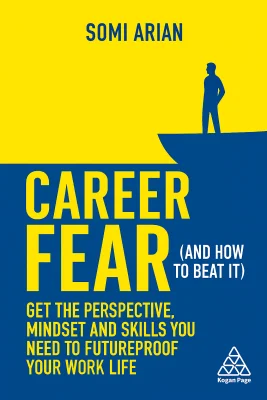
Career Fear (and how to beat it)
Get the Perspective, Mindset and Skills You Need to Futureproof Your Work Life
Categories
Business
Content Type
Book
Binding
Kindle Edition
Year
2020
Publisher
Kogan Page
Language
English
ASIN
B08DZS3CTW
File Download
PDF | EPUB
Career Fear (and how to beat it) Plot Summary
Introduction
Imagine a medieval craftsman, diligently creating a single product from start to finish, taking pride in his work. Now fast-forward to a modern worker managing AI systems from a laptop while sitting in a coffee shop. The concept of "work" has undergone a remarkable transformation throughout human history, evolving from subsistence labor to specialized crafts to industrialized production, and now to the knowledge-based and increasingly automated work of today. This evolution has been driven by technological revolutions, changing social structures, and shifting economic paradigms. Understanding this journey helps us not only appreciate where we've come from but also prepare for where we're headed. The future of work will require us to develop unique human skills that complement rather than compete with technology. By examining how work has transformed from the backbreaking manual labor of early industrial workers to the creative and cognitive work of the digital age, we gain valuable insights into what skills will remain relevant in an AI-dominated future, and how we might need to adapt our own approach to careers in this rapidly changing landscape.
Chapter 1: The Birth of Modern Work (1760-1900)
Prior to the Industrial Revolution, work primarily meant subsistence farming or skilled craftsmanship. Most people labored on the land, while a small minority practiced specialized trades in guild systems where masters taught apprentices. The concept of "jobs" as we understand them today didn't exist - there wasn't even a specific word for this activity in many languages, including Ancient Greek, who had words for leisure and learning but nothing directly defining work. The transformation began around 1760 when mechanical innovations revolutionized textile production in England. Abraham Darby's improvements in ironworking, alongside new methods of harnessing steam and water power, enabled the creation of machines that could replace human labor on a massive scale. The Industrial Revolution fundamentally altered not just how people worked, but their entire relationship with work. Tasks that once required skilled craftsmen were broken down into simple, repetitive actions that unskilled workers could perform, creating the factory system. This period also saw the rise of scientific management, pioneered by Frederick Winslow Taylor. With his engineering background and Quaker values emphasizing efficiency, Taylor meticulously studied factory operations, breaking down complex manufacturing processes into their simplest components. This task-based approach allowed for precise measurement of how long each task should take, removing worker autonomy and treating humans essentially as components in a machine. Henry Ford took this philosophy further with his assembly line, where workers remained stationary while performing repetitive tasks as products moved past them on conveyor belts. The consequences of this transformation were profound. On one hand, mass production created unprecedented economic growth and made goods affordable to ordinary people. Ford famously paid his workers enough to buy the cars they produced, creating a new middle class with disposable income. On the other hand, work became increasingly dehumanized. Workers lost the sense of craftsmanship and connection to the finished product. The division of labor into simpler tasks made jobs less engaging and inspiring, diminishing mindfulness and creativity while increasing alienation. This tension between efficiency and human fulfillment would continue to define workplace evolution for centuries to come. The period also saw the emergence of new workplaces and work cultures. Towns grew as villagers sought escape from rural poverty, especially after events like the Black Death in Europe. The printing press democratized knowledge, making it cheaper and easier to spread information. Religious movements like the Quakers played a pivotal role in establishing what would become modern corporate culture, with their emphasis on work ethic and entrepreneurship launching enterprises that still exist today, such as Barclays and Cadbury.
Chapter 2: Corporate Culture and Management Philosophy
The early 20th century witnessed the solidification of corporate culture as we know it today, deeply rooted in Protestant values, particularly those of the Quaker movement. This culture spread globally through colonial influence and American business consultants who traveled internationally to disseminate their methods. What began in Britain was perfected in America, where industrialists excelled at implementing and scaling production methods. Scientific management became the cornerstone of corporate culture. This approach, pioneered by Frederick Taylor and exemplified by Henry Ford, transformed the nature of work through a revolutionary concept: quantifying human productivity against time, what might be called "dehumanizing time." The invention of pocket watches made precise timekeeping possible, allowing employers to measure worker output with unprecedented accuracy. Taylor's method of breaking down skilled work into simple, repetitive tasks that could be performed by unskilled workers fundamentally changed manufacturing. When Ford added the assembly line, productivity soared while skill requirements plummeted. The consequences were mixed. Productivity increased dramatically—Ford reduced the price of his Model-T from $950 in 1909 to just $360 by 1916, while production jumped from 13,840 cars annually to 585,388. Workers earned more money and gained access to consumer goods previously unimaginable. However, their connection to their work diminished significantly. Instead of creating complete products, workers performed isolated tasks with no sense of ownership or creativity. Critical thinking became unnecessary, and emotional intelligence lost relevance as human interaction decreased in the workplace. This management philosophy eventually spread beyond factories into office environments. Knowledge workers found their jobs similarly compartmentalized, with complex tasks broken down into simpler components that required less skill. The satisfaction lost through this dehumanization of work was offset by increased consumerism—people could now buy cars, houses, clothes, and gadgets with their higher wages, powering capitalist economies through consumption rather than creation. By the mid-20th century, especially after World War II, this system reached its zenith. Mass production led to mass consumption, creating a prosperous middle class and what many consider the golden era of employment and advertising. Society experienced tangible progress, with people everywhere seeking better, more comfortable lives. Yet this corporate culture, with its rigid hierarchies mirroring mechanical systems, would eventually face challenges from more flexible, innovative approaches to work organization, setting the stage for the next transformation.
Chapter 3: The Digital Revolution and New Work Models
The late 20th century marked a profound shift in how we work with the arrival of personal computers and the internet. This Third Industrial Revolution, powered by digital technologies, began disrupting traditional industries almost immediately. News reporting and media were among the first casualties, as people gained access to free information online. The ripple effects soon reached retail, entertainment, advertising, and virtually every sector of the economy. Unlike previous industrial revolutions that took decades to unfold, the digital revolution accelerated at unprecedented speeds. Moore's law—the observation that computing power doubles approximately every two years while costs halve—ensured that technological advancement outpaced society's ability to adapt. Robert Tercek's concept that "everything that can be digitized will be" proved prophetic as industries dematerialized, moving from physical spaces to virtual environments, often becoming cheaper, more accessible, and sometimes completely losing their traditional value. The digital transformation also fundamentally altered the geographic boundaries of labor markets. With global connectivity, companies could outsource work to cheaper labor markets in developing countries. From manufacturing in China to technical support in India and the Philippines, digital technologies enabled the creation of a global workforce, pushing wages down in developed nations while opening opportunities in emerging economies. This era saw the emergence of what Daniel Pink calls the "conceptual age," following the physical labor of the Industrial Revolution and the knowledge work of the Information Age. The corporate culture that dominated the 20th century began facing competition from startup culture, which embraced flatter hierarchies and more flexible approaches to management. Peter Drucker's concept of self-management, developed in the 1950s, finally found fertile ground as digital technologies made rigid managerial hierarchies less necessary. Startup culture differentiated itself from corporate culture in several key ways. While corporations remained hierarchical, startups adopted flatter structures where founders worked alongside employees. The internet further eroded traditional barriers, allowing direct communication across organizational levels. Social media made leaders more accessible, with entrepreneurs like Mark Zuckerberg and Richard Branson sharing personal moments online—something corporate executives rarely did. This reflected a shift from left-brain analytical thinking toward right-brain creativity and intuition, as routine analytical tasks became increasingly automated. Alongside traditional employment, the digital revolution spawned new working arrangements: soloists (independent creative professionals), temporary workers in the gig economy, and micro-businesses employing fewer than five people. This "free agent nation," as Pink termed it, represented a growing segment of workers operating outside traditional employment structures, creating what would eventually evolve into today's influencer culture, where personal brands became business assets.
Chapter 4: AI and the Transformation of Human Skills
We now stand at the threshold of the Fourth Industrial Revolution, where artificial intelligence is redefining not just how we work, but the fundamental relationship between humans and machines. Unlike previous technological revolutions that primarily automated physical tasks, AI targets cognitive work—the very domain that humans retreated to when machines took over manual labor. This shift raises profound questions about the future role of humans in the workplace. The disagreement among experts about AI's impact is striking. Some predict catastrophic job losses of 40-50%, while others argue new technologies will create enough new positions to offset losses. Some advocate universal basic income as a solution, though this raises complex questions about implementation and global inequality. When even the most prominent AI researchers and economists cannot agree on what's coming, how can individuals prepare? What we do know is that AI excels at logical processing but struggles with subjective experience. Logic, which deals with the validity of information rather than its truth, is perfectly suited to computational approaches. When Google suggests an "exotic recipe," it's providing a valid answer based on algorithmic processing—not necessarily a true or meaningful answer based on subjective taste. This distinction between logic and emotional processing represents the current frontier between machine and human capabilities. The gap between human and machine capabilities appears most clearly in our emotional lives. While computers can win at chess or Go through superior logical processing, they cannot experience the emotions of victory or defeat. Human intelligence is driven by the subjective goal of increasing happiness and decreasing suffering—concepts that resist reduction to logical algorithms. This emotional dimension gives humans a unique advantage in understanding contexts, exercising empathy, and navigating the complex social dynamics that define most workplaces. Rather than fearing a jobless future, we might instead anticipate what some experts call "the golden age of work"—a period where humans are freed from routine tasks to focus on uniquely human contributions. The scientific management theories of Taylor and Ford that treated humans as components in a machine are becoming obsolete. The word "management" itself comes from "handling horses"—literally meaning "to manipulate." This approach is increasingly incompatible with a knowledge economy where creativity and engagement are paramount. As AI takes over more logical and routine aspects of work, three broad categories of human work are emerging: reimagining time (helping organizations redefine productivity in human rather than mechanical terms), transition architecture (facilitating adaptation to technological change), and human-machine relations (designing effective collaborations between humans and AI). These roles require technical knowledge alongside deeply human skills like emotional intelligence, creativity, and ethical judgment.
Chapter 5: Adapting to the Future Workplace
The modern workplace resembles a constantly shifting landscape rather than a stable structure. Yuval Noah Harari aptly suggests that instead of building identities like stone houses with deep foundations, we should construct them like tents that can be folded and moved as needed. This adaptability is crucial because technological disruption isn't slowing down—it's accelerating. Preparing for this future requires understanding yourself first. The ancient wisdom "know thyself" has never been more urgent than in our rapidly changing world. Your personality traits—openness, conscientiousness, extroversion, agreeableness, and neuroticism (often remembered as OCEAN)—significantly influence which work environments will suit you best. Some people thrive in structured corporate settings while others flourish in more fluid startup cultures or as independent professionals. Understanding your natural inclinations helps you find environments where you can succeed without fighting against your nature. Equally important is clarifying your definition of success. Most people think about career success in three dimensions: money, impact, and recognition. Being honest with yourself about which matters most to you is crucial for making sound career decisions. If family connections and work-life balance are central to your values, pursuing a highly scalable but all-consuming career might create misalignment between your goals and values, regardless of potential financial rewards. The economic landscape you're navigating has also fundamentally changed. We're increasingly moving toward winner-takes-all economies where platforms like Amazon, Google, and Facebook capture disproportionate value. The platform economy allows these companies to benefit from both advertising revenue and the valuable data generated by users. Meanwhile, algorithms are replacing tasks across industries—from photography to healthcare—often with fewer employees than the industries they disrupt. When Instagram, built by just 15 people, sold for $1 billion the same year Kodak (with 145,000 employees) filed for bankruptcy, it signaled a profound shift in how economic value is created and distributed. Critical thinking becomes essential in this environment. Our minds are prone to various biases: answering easier questions than those actually asked, overgeneralizing from limited samples, being influenced by irrelevant prior information, and seeing patterns where none exist. These cognitive shortcuts served our ancestors well but can lead us astray in complex modern environments. Developing awareness of these biases helps you make better career decisions based on realistic assessments of probabilities rather than wishful thinking. When choosing your path, consider whether you're pursuing a scalable career (creating something that generates income even when you're not present) or a non-scalable one (directly exchanging time for money). Scalable careers like entrepreneurship or content creation offer potentially higher rewards but statistically lower chances of success. Non-scalable careers like medicine or skilled trades offer more predictable outcomes. Neither is inherently better, but understanding the statistical realities helps you make informed choices aligned with your risk tolerance and goals.
Chapter 6: Developing Essential Human Skills
As artificial intelligence advances, four uniquely human skills emerge as critical for career success: emotional intelligence, critical thinking, contextual creativity, and mindfulness. These skills share an important characteristic—they all involve emergent properties where the output is greater than the sum of their parts, making them difficult for algorithms to replicate. Emotional intelligence begins with understanding yourself and extends to understanding others, ultimately enabling appropriate action. This skill involves recognizing your feelings accurately, understanding their origins, and regulating them effectively. Self-control plays a crucial role, requiring both physical energy (proper nutrition and rest) and psychological strength (clarity about your values and purpose). When communicating with others, emotional intelligence enables empathy—seeing situations from multiple perspectives rather than insisting on a single "truth." This ability to navigate subjective experiences gives humans a significant advantage over AI in complex social environments. Critical thinking complements emotional intelligence by helping us make better decisions. The term "critical" comes from the Greek krisis, meaning "a decision"—highlighting that critical thinking is about judgment in important matters. Good decision-making requires knowing what you want and understanding probability. Our minds, however, prefer to think associatively, metaphorically, and causally rather than statistically, leading to systematic errors. Daniel Kahneman describes two systems in our brain: System 1 (fast, intuitive, often inaccurate) and System 2 (slow, deliberate, energy-intensive). Critical thinking means engaging System 2 when necessary, despite our tendency to default to System 1, especially when tired or stressed. Contextual creativity involves understanding the context of situations and finding creative solutions that integrate multiple disciplines. While AI can demonstrate narrow creativity in specific domains like music composition or visual art, contextual creativity requires understanding subjective experiences across different fields. This skill thrives at the intersection of order and disorder, requiring the ability to connect seemingly unrelated concepts, recognize patterns, and integrate diverse knowledge. People with contextual creativity often excel by becoming "outsiders on the inside"—close enough to understand specialized fields but distant enough to bring fresh perspectives. Mindfulness serves as the foundation for all these skills. It involves observing the constant chatter between emotional and logical parts of our brain, allowing us to see which system is driving our decisions. Without mindfulness, we operate on autopilot, making poor decisions without understanding why, missing opportunities, and damaging relationships. Mindfulness practice develops through three modes: focused attention (concentrating on present experience), open monitoring (observing thoughts without judgment), and acceptance and kindness (forgiving ourselves and others for imperfections). Regular practice—whether through meditation, mindful walking, or attentive engagement in daily activities—strengthens this fundamental skill. These four skills reinforce each other: mindfulness enables the self-awareness needed for emotional intelligence; emotional intelligence provides the empathy required for contextual understanding; critical thinking prevents biased interpretations; and contextual creativity integrates these capacities to solve complex problems. Together, they form a uniquely human toolkit that complements rather than competes with artificial intelligence, creating pathways to meaningful work in an increasingly automated world.
Summary
Throughout human history, work has evolved from simple subsistence to complex, specialized endeavors, constantly reshaped by technological revolutions. The fundamental tension driving this evolution has been between efficiency and human fulfillment—between treating workers as mechanical components and recognizing their uniquely human contributions. From Frederick Taylor's scientific management to today's AI-assisted work environments, we've oscillated between dehumanizing approaches that maximize productivity and humanizing ones that prioritize creativity, engagement, and meaning. As we navigate the Fourth Industrial Revolution, this historical perspective offers crucial guidance. Rather than competing with machines at logical processing, we should focus on developing distinctly human capacities—emotional intelligence to navigate social complexities, critical thinking to make sound judgments, contextual creativity to connect disparate ideas, and mindfulness to remain present and engaged. Success in the AI age won't come from resisting technological change but from redefining work around the subjective, emotional experiences that remain uniquely human. By understanding our personal values, recognizing biases in our thinking, and cultivating these essential skills, we can transform career fear into career opportunity, finding meaningful work that complements rather than competes with intelligent machines.
Best Quote
“Now unable to find a sense of self-worth and individual indentity in skilled work, people looked for other ways of making sense of who they were, and what it meant to live in this modern society. There was a tangible void in people's lives - and entertainment became one obvious answer to fill this void. Not only that, but entertainment reshaped and reprogrammed a new sense of identity in the masses. It showed them a world that was magical and mesmerizing, where beautiful women and handsome men has passionate love affairs and enjoyes a lifestyle to envy. In this dream, the lifestyle portrayed in the movies was the image of happiness. Most people didn't question wheether hapiness was really at the end of that line, even if they got there.” ― Somi Arian, Career Fear (and how to beat it): Get the Perspective, Mindset and Skills You Need to Futureproof your Work Life
Review Summary
Strengths: The review highlights the book's comprehensive approach to self-help, focusing on emotional intelligence, mindfulness, and critical thinking as tools for personal and professional development. It emphasizes the importance of mindfulness in decision-making and emotional regulation, and the book's guidance on personality traits like openness, conscientiousness, and agreeableness.\nOverall Sentiment: Enthusiastic\nKey Takeaway: The book provides an in-depth guide on internal preparation for career development, emphasizing the role of emotional intelligence, mindfulness, and personality traits in making informed career choices and improving overall well-being.
About Author

Somi Arian
Arian interrogates the intersection of technology and society, focusing on how emerging technologies impact business, investment, and human development. With a background in the philosophy of science and technology, she explores concepts such as digital transformation and "transition architecture," which emphasizes frameworks for human adaptation to technological changes. This multifaceted approach underpins her work as a contemporary tech philosopher and filmmaker, offering insights into the digital era's challenges and opportunities.\n\nArian's career path is marked by her entrepreneurial ventures, including the founding of Smart Cookie Media and the co-founding of Career Drive, which merge technology, education, and entertainment. Her documentaries like "The Millennial Disruption" and "From Silicon Valley to Riyadh" have garnered international acclaim, reflecting her focus on millennials' engagement with brands and the venture capital ecosystem in Saudi Arabia. Her roles extend to being an advisor and investor in tech startups like NuroKor Bioelectronics, further exemplifying her commitment to integrating technology and human skills development.\n\nReaders benefit from Arian's work by gaining a deeper understanding of how AI and automation are reshaping the future of work. Her contributions are recognized through multiple international awards and honors, including being named a LinkedIn Top Voice in the UK. As a sought-after keynote speaker, her insights reach audiences at prestigious venues such as TEDx and Cambridge University, cementing her influence in the discourse on technology's role in societal evolution. This bio captures the essence of her interdisciplinary impact, appealing to those interested in the convergence of technology, business, and human adaptability.
Read moreDownload PDF & EPUB
To save this Black List summary for later, download the free PDF and EPUB. You can print it out, or read offline at your convenience.
Career Fear (and how to beat it)
by Somi Arian
