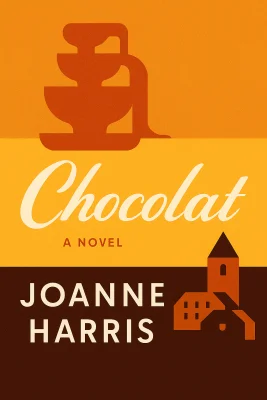
Chocolat
Categories
Fiction, Food, Historical Fiction, Romance, Fantasy, Book Club, Contemporary, France, Magical Realism, Chick Lit
Content Type
Book
Binding
Paperback
Year
2000
Publisher
Penguin Books
Language
English
ASIN
014100018X
ISBN
014100018X
ISBN13
9780141000183
File Download
PDF | EPUB
Chocolat Plot Summary
Introduction
The wind carries omens, and on this Shrove Tuesday morning it brings Vianne Rocher and her six-year-old daughter Anouk to Lansquenet-sous-Tannes. They arrive with the carnival procession, strangers in bright clothes among the drab villagers, carrying secrets older than the stones beneath their feet. Vianne's orange coat flutters like a warning flag as she surveys the sleepy French village, its whitewashed church tower standing sentinel over two hundred souls bound by tradition and fear. Father Francis Reynaud watches from his window, pale eyes tracking the newcomers with the instinct of a predator sensing rival territory. This rigid priest has spent years molding his flock into perfect submission, but something in the wind whispers of change. When Vianne opens her chocolate shop directly across from his church, the battle lines are drawn. She peddles sweetness and liberation while he preaches denial and control. In this village where nothing has changed for generations, two forces of nature prepare to collide, and only one vision of life will survive.
Chapter 1: The Wind of Arrival: Strangers in Lansquenet
The carnival masks cannot hide the hunger in their eyes. Vianne sees it immediately as she surveys the crowd gathered for Mardi Gras, recognizing the familiar signs of a community starved not for food but for joy. The villagers clutch their brown coats against the February cold, faces pinched with the peculiar grimness of those who have forgotten how to want anything beyond survival. She finds the perfect space on the town square, a derelict bakery with its carved wheatsheaf still hanging over the door like a blessing waiting to be claimed. The lease costs almost nothing, suspiciously cheap, but Vianne has learned to recognize opportunity disguised as misfortune. That first night, she and Anouk perform their cleansing ritual, lighting candles in every room and shouting at the accumulated ghosts of sadness until the walls shake with possibility. The transformation begins before dawn. Paint and determination work their own magic as the bakery sheds its funeral shroud. Red shutters bloom against fresh whitewash, geraniums cascade from window boxes, and the hand-lettered sign announces their arrival to the world: La Celeste Praline Chocolaterie Artisanale. By morning, the building wears color like armor, a deliberate provocation in this landscape of careful neutrality. Father Reynaud arrives with the inevitability of winter frost. He stands in her doorway wearing his professional smile, all politeness wrapped around a core of ice, and Vianne recognizes him immediately. The Black Man of her mother's warnings, though he wears white robes and speaks of God's love. Their conversation crackles with unspoken challenges. He offers help while radiating disapproval, she responds with sweetness sharp enough to draw blood. When he mentions her unmarried state and illegitimate child, Vianne's smile never wavers. She has faced this judgment in a dozen towns, learned to turn their contempt into a weapon against them. She presses a packet of chocolates into his startled hands, oyster-shaped pralines that remind her so much of his pinched, closed expression. He leaves carrying her gift like a small defeat, and the war between them begins in earnest.
Chapter 2: Temptations and Tensions: The Chocolate Shop During Lent
Ash Wednesday dawns gray and unforgiving, the perfect day for Father Reynaud's sermon on self-denial and spiritual purification. His voice echoes through the church like hammer blows against stone, but across the square another kind of service has begun. Vianne opens her doors to reveal wonders that mock every word he speaks: chocolate shaped like sins too beautiful to resist. The villagers approach her shop like pilgrims to a shrine, drawn by scents that bypass reason and speak directly to memory. Guillaume Duplessis shuffles in with his ancient dog Charlie, both of them carrying the weight of approaching loss. His careful selection of florentines becomes a small act of rebellion against the approaching void. Caroline Clairmont arrives with her friends, their laughter brittle as spun sugar, pretending their indulgence is merely curiosity while their eyes devour every forbidden sweetness. Even Josephine Muscat creeps to the window, her bruised face hidden beneath scarves, hands moving with practiced stealth. Vianne watches her pocket a small silver packet and says nothing, recognizing a kindred spirit trapped in hostile territory. The gift she presses into Josephine's hands later carries more than chocolate; it bears the promise that escape is possible for those brave enough to reach for it. But Father Reynaud sees everything from his tower window. Each customer becomes an accusation, each sale a personal affront to his authority. His sermons grow sharper, his gaze more penetrating as he watches his carefully controlled world begin to fracture along lines he never imagined existed. The chocolate shop glows like a wound in his ordered universe, spilling warmth and chaos into streets that have known only cold obedience. The battle becomes public when Reynaud confronts Vianne directly, his composure cracking under the assault of her scents and colors. She offers him chocolate with maternal condescension while he struggles against temptations that seem to rise from hell itself. Their words dance around the real conflict, but both understand perfectly: this village is not large enough for both their visions of salvation.
Chapter 3: Breaking Shells: Vianne's Connection with the Village Outcasts
The old woman appears like a question mark against the morning sky, her apple-doll face wrinkled with mischief and intelligence. Armande Voizin moves through Lansquenet like a force of nature wrapped in black wool, trailing cats and opinions in equal measure. At eighty-one, she has earned the right to speak uncomfortable truths, and she recognizes Vianne immediately for what she is. Their first conversation crackles with mutual recognition. Armande's eyes hold the same wildness that Vianne's mother once possessed, the gleam of someone who has never quite learned to accept the world's limitations. She orders chocolate despite her daughter's prohibitions, despite the doctor's warnings, despite everything sensible people call wisdom. Her defiance is magnificent and terrible, a torch held against the encroaching darkness. Through Armande, Vianne learns the village's secret architecture of pain. Caroline Clairmont, all pastels and propriety, wages quiet war against her mother's independence. The respectable family seeks to cage their inconvenient matriarch in a nursing home called Les Mimosas, where old people go to die quietly without disturbing anyone's carefully arranged lives. But Armande has other plans, plans that involve red silk underwear and chocolate thick enough to scandalize the dead. The friendship that blooms between the witchy old woman and the careful stranger child surprises everyone except Vianne. Luc Clairmont arrives at the chocolate shop like a secret agent, stuttering apologies while his eyes shine with desperate hunger for the grandmother he has been taught to avoid. Their conversations across cups of hot chocolate become conspiracies against the forces that would separate them, small rebellions that grow into something resembling hope. Guillaume appears at her door carrying grief like an offering, his dog Charlie finally released from the pain that neither medicine nor love could cure. Vianne watches him struggle with the terrible mathematics of loss, the way love becomes its own form of suffering when mercy demands the unthinkable. Her chocolates cannot restore what time has taken, but they can sweeten the bitter necessity of letting go, make space for new possibilities to take root in devastated ground.
Chapter 4: Upstream Currents: The River Gypsies and Rising Conflicts
The houseboats arrive like floating dreams on the muddy waters of the Tannes, their painted hulls bright as carnival wagons against the brown landscape. Twenty boats, maybe more, carrying the river people upstream with their children and dogs and dangerous freedom. Roux stands on the deck of his black houseboat, red hair catching the light like flame, and Vianne recognizes something of herself in his wary independence. Father Reynaud sees invasion where others might see simple passage. These travelers represent everything his ordered world exists to exclude: chaos, movement, the refusal to be catalogued and controlled. His sermons grow sharp with warnings about disease and theft, about the corruption that follows in the wake of those who refuse to accept their proper place in God's hierarchy. The respectable villagers nod along while their eyes slide toward the river with mixtures of fear and fascination. But Armande Voizin offers the travelers sanctuary on her property, delighting in the way her decision makes Caroline's face pinch with horror. The old woman watches from her garden as children play along the water's edge, their laughter carrying across the quiet streets like birdsong. She orders food supplies in her name when the shopkeepers refuse to serve the newcomers, turning her checkbook into a weapon against prejudice. Vianne finds herself drawn to their floating community, recognizing the particular courage required to live always at the mercy of wind and weather. She invites Roux for coffee, watching him struggle with pride and suspicion as he tries to accept kindness without surrendering dignity. Their conversation moves carefully around the barriers that separate the settled from the wandering, each testing the other's capacity for understanding. The tension builds like pressure behind a dam. Paul-Marie Muscat patrols his cafe with yellow cards declaring his refusal to serve the undesirable, his fleshy face twisted with self-righteous anger. Caroline Clairmont distributes leaflets calling for community solidarity against the invaders. The comfortable villagers rally around their familiar prejudices, drawing lines that separate us from them with the brutal efficiency of those who have never questioned their right to exclude others from the warmth of belonging.
Chapter 5: Flames of Prejudice: Violence and Transformation
The fire begins as all disasters do, with the casual cruelty of those who believe themselves righteous. Paul-Marie Muscat moves through the darkness carrying gasoline and justification in equal measure, his grievances against the world focused into a single act of destruction. He tells himself he is protecting his community, his marriage, his way of life, but the flames that consume Roux's houseboat reveal only the poverty of his imagination. Vianne watches from her window as the river explodes into orange light, the reflection of burning wood dancing across the water like demons at play. She runs toward the fire without thought, driven by instincts older than reason, and finds herself waist-deep in the Tannes pulling Roux from water that tastes of smoke and oil. His boat becomes a floating pyre, carrying away everything he owned in the world except his stubborn refusal to be driven from the only place that felt like home. The attack changes everything. Josephine Muscat appears at Vianne's door carrying her own small rebellion, a battered suitcase and the terrible courage of someone who has finally reached the limit of what she can endure. Her bruises tell stories that words cannot capture, but her decision to walk away from her husband speaks louder than any testimony. She takes refuge in the chocolate shop like a refugee from her own life, learning to move through spaces without flinching. Father Reynaud watches his careful campaign crumble as the violence he secretly encouraged spills into the open. Muscat's crude brutality embarrasses the respectable villagers, forcing them to confront the ugly reality behind their polite exclusions. The priest finds himself defending the very people he has worked to expel, trapped by the need to maintain his moral authority even as it dissolves beneath him. Roux disappears into the ruins of Les Marauds like a wounded animal, but Vianne knows he cannot run from what has been done to him. The fire has burned away more than possessions; it has exposed the true nature of the struggle taking place in this quiet village. Some will rebuild what was destroyed, others will discover they never really wanted safety if the price was their humanity. The wind carries the smell of smoke and change in equal measure, and nothing will ever be the same.
Chapter 6: Armande's Final Feast: Choosing How to Live and Die
The diagnosis arrives wrapped in medical terminology that cannot disguise its fundamental cruelty. Diabetic retinopathy, the doctor explains with professional sympathy, will steal Armande's sight piece by piece until only darkness remains. Six months, perhaps less, before the world becomes memory and shadow. After that, the nursing home waits with its institutional kindness and supervised dying, stretching her final years into decades of careful preservation. Armande receives the news with the equanimity of someone who has always understood that life is a negotiation with death. She plans her response with the same meticulous attention she once gave to her garden, consulting with Guillaume about timing and with Vianne about the menu. If she must die, she will die as she lived, surrounded by food and friends and all the sensual pleasures her daughter considers inappropriate for a woman her age. The birthday party becomes her masterpiece, a celebration disguised as farewell. Eighty-one years deserve better than a whimper, and Armande intends to go out with fireworks that will blind anyone who dares to look directly at her exit. She orders the finest china from Limoges, champagne from regions where grapes grow in soil blessed by centuries of sunshine, ingredients that cost more than most people spend on celebration in a lifetime. Vianne understands the true nature of the commission and throws herself into preparations with the fervor of someone composing a requiem. Each dish becomes a love letter to life itself: soupe de tomates with fresh basil, plateau de fruits de mer that gleams like treasure under paper lanterns, chocolate fondue rich enough to make angels weep. The menu reads like poetry, each course a verse in an epic of defiance against the forces that would reduce human existence to mere survival. The feast unfolds under stars that seem brighter than usual, as if the universe itself has decided to pay attention. Twelve guests gather around the damask tablecloth, their faces golden in the candlelight as they share stories and wine and the particular intimacy that comes from knowing such moments cannot last. Armande presides over it all like a queen abdicating her throne, gracious and terrible and utterly unrepentant about the choice she has made to write her own ending.
Chapter 7: Easter Revelations: Reynaud's Fall and Vianne's Triumph
Easter Sunday arrives with the promise of resurrection, but Father Reynaud finds only his own damnation waiting in the pre-dawn darkness. Driven by hunger and desperation and the kind of righteousness that curdles into madness, he breaks into the chocolate shop carrying destruction in his hands and absolution in his heart. He tells himself he is saving his flock from temptation, protecting the sacred from the profane. But the chocolates call to him with voices sweeter than prayer, and his righteous mission dissolves in the face of flavors he has denied himself for decades. He rolls in sweetness like a pig in mud, stuffing himself with delicacies that taste like every sin he has ever imagined. Nipples of Venus melt on his tongue while Easter bells ring the resurrection he no longer deserves, and when Vianne finds him he is beyond shame or salvation. The festival explodes across the village square like carnival come to stay, transforming the sober streets into something from a fever dream of joy. Children hunt for chocolate eggs while their parents sample delicacies that would have scandalized them weeks before. Music plays from speakers that seem to multiply sound itself, and the river people return to dance with villagers who have forgotten the steps but remember the rhythm that beats beneath all human celebration. Vianne moves through the crowd like a queen reviewing her domain, but she feels the wind changing even as she counts her victories. Success carries its own emptiness, and she recognizes the familiar restlessness that has driven her from town to town all her life. The need that brought her to Lansquenet has been satisfied; the people have learned to want things they never imagined possible, and they no longer need her to show them how to reach for joy. Josephine and Roux find each other across the spaces that once divided them, drawn together by their shared understanding of what it means to rebuild after destruction. Guillaume discovers that grief shared becomes something bearable, even precious. The village has learned to celebrate its own existence, to find magic in ordinary moments and beauty in the refusal to accept limitation as fate. The chocolate festival becomes an annual tradition, but its real triumph lies in the transformation of hearts that once seemed frozen beyond redemption.
Summary
Vianne Rocher's arrival in Lansquenet-sous-Tannes proves that change arrives not with armies or declarations but with the simple audacity of someone who refuses to accept the world as it is. Her chocolate shop becomes a catalyst for transformations that no one expects and everyone needs, turning neighbors into friends and revealing the courage hidden beneath years of careful compliance. The battle between sweetness and severity, between acceptance and control, plays out in every transaction across her counter, each sale a small vote for the radical proposition that pleasure might be sacred after all. In the end, both victor and vanquished are transformed by the struggle. Father Reynaud falls from grace but perhaps discovers his humanity in the rubble of his certainty, while Vianne learns that the greatest magic lies not in running from connection but in the courage to plant roots deep enough to weather any storm. The wind that brought them together continues to blow, carrying seeds of possibility to other villages where people wait without knowing they are waiting for someone brave enough to offer them a taste of their own potential for joy. Some stories end with departure, others with arrival, but the best ones transform ending into beginning, proving that every conclusion holds the promise of something entirely new.
Best Quote
“Happiness. Simple as a glass of chocolate or tortuous as the heart. Bitter. Sweet. Alive.” ― Joanne Harris, Chocolat
Review Summary
Strengths: The review highlights the novel's timeless quality and its ability to appeal to a wide audience, including chocolate lovers and those interested in mystery and witchcraft. The setting in a small French village adds charm, and the narrative is described as comforting, engaging, and emotionally resonant. The dual narration by Vianne and the priest adds depth and mystery to the story. Overall: The reviewer expresses a strong positive sentiment, finding the book enjoyable and emotionally impactful. They appreciate the blend of magic, morality, and community dynamics, and recommend the series, indicating a desire to continue reading subsequent books.
About Author

Joanne Harris
Harris explores the intersection of magic and reality, inviting readers into worlds where the ordinary intertwines with the fantastical. Her books, including fourteen novels and multiple short stories, often blend magic realism with suspense, historical fiction, and mythology. For instance, her 1999 novel "Chocolat," which was adapted into a film starring Juliette Binoche and Johnny Depp, delves into the transformative power of mystery and indulgence, highlighting her skill in weaving magical narratives that resonate with real-life emotions. Meanwhile, her involvement in scripting for "Zombies, Run!" and writing a "Doctor Who" novella showcases her adaptability across different storytelling platforms.\n\nJoanne Harris, also known as Joanne M. Harris, crafts stories that engage readers by challenging the boundaries of traditional fiction, therefore broadening their imaginative landscapes. Her work appeals to those who appreciate intricate narratives that defy easy categorization, providing a sense of escapism while encouraging introspection. With her honorary fellowship at St Catharine's College, Cambridge, and being awarded an OBE in 2022, she has gained recognition not just for her storytelling prowess but also for her contributions to literature. Her unique approach benefits those looking for stories that combine the whimsical with the profound, inviting an exploration of deeper themes beyond the page.\n\nIn this short bio, the author’s dedication to her craft is further underscored by her musical and theatrical projects, which enhance her narrative creativity. Working from her shed in Yorkshire, she continues to innovate, using her diverse skills to captivate a wide audience. Readers who seek a fusion of fantasy and reality, and who appreciate the depth of cultural and emotional exploration, will find Harris's work particularly rewarding.
Read moreDownload PDF & EPUB
To save this Black List summary for later, download the free PDF and EPUB. You can print it out, or read offline at your convenience.

Chocolat
by Joanne Harris
