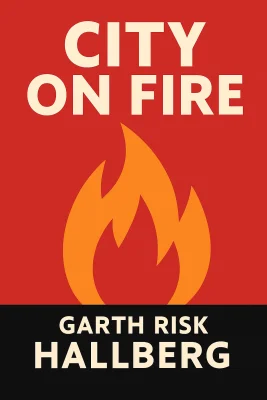
City on Fire
Categories
Fiction, Audiobook, Historical Fiction, Literature, Book Club, Historical, Contemporary, Novels, New York, Literary Fiction
Content Type
Book
Binding
Hardcover
Year
2015
Publisher
Knopf
Language
English
ASIN
0385353774
ISBN
0385353774
ISBN13
9780385353779
File Download
PDF | EPUB
City on Fire Plot Summary
Introduction
# City on Fire: Sparks in the Darkness of a Fractured Metropolis New Year's Eve, 1976. In Central Park's frozen darkness, seventeen-year-old Samantha Cicciaro lies bleeding in the snow, two bullets in her head, her camera scattered beside her like broken dreams. The gunshot echoes through a city already dying—New York teeters on bankruptcy's edge, its streets scarred by arson and abandonment, its people bound together by invisible threads of desperation and desire. The shooting connects lives that should never have intersected: Mercer Goodman, a young Black teacher from Georgia drowning in literary ambitions; William Hamilton-Sweeney III, a heroin-addicted heir fleeing his family's golden cage; Regan Lamplighter, his sister wrestling with divorce and corporate corruption; and Charlie Weisbarger, a suburban teenager whose obsession with Sam will drag him into Manhattan's underground. As investigators probe the violence, hidden connections emerge between the powerful Hamilton-Sweeney dynasty and a radical collective called the Post-Humanists, revealing a metropolis where privilege and revolution dance on the same razor's edge. When the lights go out six months later during the great blackout of 1977, all these fractured lives will converge in ways none of them could have imagined.
Chapter 1: The Gathering Storm: New York City, December 1976
The city was hemorrhaging money and hope in equal measure. Garbage rotted in the streets while municipal workers went unpaid. In the South Bronx, buildings burned nightly like ritual sacrifices to urban decay. Against this backdrop of collapse, the Hamilton-Sweeney empire—built on real estate and political connections spanning generations—faced its own reckoning. William Hamilton-Sweeney III shot heroin between his toes in a Bowery bathroom, watching his trust fund evaporate as surely as the powder dissolving in his bloodstream. The family heir had rejected everything—Harvard, the corporate throne, even his own name, performing in punk clubs as Billy Three-Sticks. His lover Mercer Goodman, a gentle English teacher who'd come north chasing literary dreams, could only watch helplessly as William disappeared into chemical oblivion. In Brooklyn Heights, William's sister Regan struggled to hold together both her crumbling marriage and her father's legal defense. Her husband Keith, a municipal bond trader, had been carrying on an affair with a girl young enough to be his daughter—a photographer named Samantha Cicciaro who documented the city's underground with fierce intelligence. Their children, Will and Cate, shuttled between apartments like refugees from their parents' careful politeness. The Hamilton-Sweeney patriarch, William II, faced federal indictment for insider trading while his brother-in-law Amory Gould positioned himself to seize control of the company. Amory had files on everyone, secrets that could destroy careers and lives. He'd been feeding information to radical groups, using their revolutionary fervor to clear land for his development projects. The kids thought they were fighting the system; they were actually feeding it.
Chapter 2: Fractured Connections: The Web of Relationships Before the Shot
In a squat on East Third Street, the Post-Humanist collective gathered around their charismatic leader, Nicky Chaos. Born Nicholas Flood, he'd reinvented himself as a prophet of destruction, preaching that only through violence could society be reborn. His followers—Sewer Girl, D. Tremens, Sol Grungy—were lost children who'd found family among the outcasts and revolutionaries. Charlie Weisbarger, seventeen and drowning in suburban loneliness, had discovered them through Sam Cicciaro. She moved through the punk scene like a ghost, her camera capturing the beautiful destruction of a generation that had given up on the future. Her fanzine, "Land of a Thousand Dances," was more than music journalism—it was investigative reporting that threatened to expose connections between the city's fires and its power brokers. Sam's father Carmine manufactured fireworks in Queens, his black powder supplies mysteriously disappearing as his daughter documented the underground. He didn't know that Nicky Chaos had been stealing his explosives, planning actions that would shake the foundations of power itself. The Post-Humanists had moved beyond symbolic bombings of empty buildings. Now they planned something that would kill dozens and send a message that could not be ignored. Detective Larry Pulaski, his spine twisted by childhood polio, worked cases that never closed in a police department that had given up on justice. He sensed larger forces at work in the city's decay, connections between the powerful and the desperate that defied easy explanation. When violence finally erupted, he would be the one to trace its bloody threads back to their source.
Chapter 3: The Turning Point: New Year's Eve and the Central Park Shooting
The snow fell like ash over Central Park as Sam waited on the bench, camera strap cutting into her shoulder. She'd been photographing the Post-Humanists for months, documenting their late-night bombing runs and passionate debates about revolution. Tonight felt different. Charlie had promised to meet her with something important to show her, but instead, two figures emerged from the shadows between the trees. Sewer Girl held a pistol with shaking hands, her real name lost to the underground. Behind her lurked D. Tremens, the group's most volatile member. "We know about the photos," Sewer Girl said, her voice barely audible above the wind. "We know you've been documenting everything." Sam raised her hands, trying to project calm, but friendship had become a luxury the Post-Humanists could no longer afford. The gun went off almost by accident, Sewer Girl would tell herself later. Sam crumpled into the snow, blood spreading in a dark stain beneath her. D.T. grabbed the weapon and fired again, point-blank into her ear. They thought she was dead as they fled toward the subway, counting on the snow to cover their tracks. But Sam wasn't dead—barely alive, brain-damaged and slipping into a coma that would last for months. Mercer discovered her body while stumbling through the park, his mind clouded by champagne and heartbreak. William had vanished again, disappeared into the needle-tracked landscape of his addiction. The scream that tore from Mercer's throat cut through the winter air like a blade, summoning sirens and setting in motion a chain of events that would consume them all.
Chapter 4: Hidden Histories: The Secrets That Bind and Divide
Detective Pulaski arrived as paramedics loaded Sam into an ambulance, her breath fogging the oxygen mask. No witnesses. No suspects. Just another body in a city that produced them like a factory. But something about this shooting bothered him—the bullet wounds were too precise, too personal. This wasn't random violence but something more intimate and therefore more dangerous. His investigation led him into Manhattan's underground music scene, where bands with names like Ex Post Facto played in clubs like the Vault. Sam had been a regular, her camera capturing the raw energy of punk rock and the radical politics that swirled around it. Witnesses described Nicky Chaos as charismatic and dangerous, capable of inspiring both devotion and fear. His followers spoke in coded language about "actions" and "targets," but no one would admit to knowing specifics. Charlie learned of the shooting from news reports that couldn't name the victim—she was a minor, her identity protected by law. But he knew. The guilt that had plagued him since his adoptive father's death now multiplied exponentially. He'd been meant to protect her, and he'd failed. The Post-Humanists welcomed him like a lost son, offering family among the beautiful losers who'd weaponized their alienation. William's heroin addiction had progressed beyond concealment. Mercer found the evidence in his coat—a small bag planted there by Detective Pulaski during their encounter in the park. But confrontation required courage Mercer didn't possess. Instead, he watched his lover disappear by degrees, each day a little more absent, a little more ghost than man. Their relationship faced its first serious crisis just as the city prepared for its own reckoning.
Chapter 5: Investigations: Following the Threads of Violence and Power
Richard Groskoph, a journalist investigating corruption in city government, stumbled onto connections between the Post-Humanists and powerful business interests. His research into the Hamilton-Sweeney Corporation revealed a web of bribes, illegal developments, and political manipulation. Someone was feeding information to the radical group, someone with access to the highest levels of corporate power. The trail led through a maze of punk rock clubs and abandoned buildings, following the mark of the Post-Humanists—five slashing strokes topped with a crown of flame. The symbol appeared on walls throughout the East Village, but when Pulaski tried to penetrate their world, he found only shadows and silence. The punks had their own code, their own justice. They didn't trust cops, especially crippled ones who asked too many questions. Keith Lamplighter discovered that his young mistress—the girl he'd known as Samantha—was the shooting victim splashed across every newspaper in the city. Guilt ate at him like acid. He'd been supposed to meet her that night but chose instead to watch fireworks from a hotel window while she walked alone into the dark. The affair that had destroyed his marriage now threatened to destroy everything else. As spring turned toward summer, the various threads of conspiracy began to tighten. Federal agents investigating the Hamilton-Sweeney Corporation found evidence of systematic fraud spanning decades. Amory Gould's machinations within the company suggested that the empire was being systematically looted by the very people meant to protect it. The shooting in Central Park was just one move in a larger game whose stakes were measured in lives rather than dollars.
Chapter 6: The City in Flames: Personal and Political Conflagrations
The Post-Humanists had been burning the Bronx for months, each fire a statement in their war against the system. Nicky Chaos led them through rubble-strewn streets like a general surveying conquered territory. To him, destruction was creation—each building that burned cleared space for something new to grow. Charlie became their newest recruit, trading his suburban innocence for a Molotov cocktail and a cause. But the fires served another master. Amory Gould had been orchestrating the arson campaign from the shadows, using the collective's revolutionary fervor to clear land for his development projects. Each building that burned increased the value of his holdings. The connection ran deeper than real estate—years ago, Amory had made a deal with Nicky Chaos, offering protection from prosecution in exchange for targeted destruction. Sam's investigation had threatened to expose the whole conspiracy. Her fanzine documented not just punk rock but the connections between the fires and the Hamilton-Sweeney empire. That's why she had to be silenced—not for love or money, but for knowledge. The manifesto was written in flame across the city's skyline, each fire telling a story of idealism corrupted by power. As July's heat built toward its climax, the various crises reached their breaking points. William's addiction finally forced a confrontation with Mercer, shattering their relationship beyond repair. Regan's attempts to manage the family's public relations crisis were overwhelmed by the scope of corruption Pulaski's investigation had uncovered. The punk scene that had provided refuge for Sam and Charlie was disintegrating under police pressure and its own internal contradictions.
Chapter 7: Aftermath: What Remains When the Smoke Clears
July 13th, 1977. Lightning struck power lines in Westchester County, and New York City plunged into darkness. The blackout wasn't just a failure of infrastructure—it was a revelation of everything the city had been trying to hide. In the sudden absence of electric light, older hungers emerged from the shadows. The Post-Humanists' carefully planned bombing of the Hamilton-Sweeney Building fell apart in the confusion. Charlie found himself on the fortieth floor with Detective Pulaski, surrounded by the components of an unexploded bomb. The young man was in shock, torn between loyalty to his comrades and horror at what they'd planned to do. In the darkness, he chose conscience over revolution. Across the city, the blackout unleashed chaos. Looters smashed store windows, fires erupted in abandoned buildings, and the thin veneer of civilization began to crack. But it also revealed unexpected connections—strangers helping strangers in darkened streets, families finding their way back to each other across the wreckage of failed relationships. The real transformation came not through bombs or bullets but through small acts of courage and compassion. When dawn broke over the powerless city, the various threads of conspiracy began to unravel. Federal agents swept into the Hamilton-Sweeney Building to collect evidence and witnesses. Amory fled the city, disappearing into the shadows of international finance. Nicky Chaos, abandoned by his followers and hunted by law enforcement, drove into the night with his remaining disciples. The revolution they'd dreamed of never came. Sam remained in her hospital bed, trapped in a coma that showed no signs of lifting. Her father Carmine kept his vigil, reading to her from newspapers and magazines, hoping for some sign of recognition that never came. The city's lights eventually came back on, but something had changed in that long night of darkness. New York had looked into the abyss and found not emptiness but the stubborn persistence of human connection.
Summary
The great blackout of 1977 revealed both the fragility and resilience of the bonds that hold civilization together. The Post-Humanists had believed that violence could transform society, that destruction was the only path to renewal. But their revolution died in the darkness, leaving behind only broken lives and shattered dreams. The Hamilton-Sweeney empire crumbled under the weight of its own corruption, while the city itself endured as it always had—scarred, cynical, but somehow still breathing. In the end, the real illumination came not from electric lights but from the moments when people chose connection over isolation, hope over despair. Mercer returned to teaching, carrying his broken heart like a stone but still believing in the power of words to change lives. William entered rehab, beginning the long struggle to reclaim himself from addiction's grip. Detective Pulaski retired upstate, his body finally succumbing to the injuries that had plagued him for years. The city's lights came back on, but the memory of that dark night lingered—a reminder that beneath the surface of civilization lay depths that could never be fully mapped or controlled, where sparks of human decency still flickered against the gathering darkness.
Best Quote
“Sometimes you weren’t yet the person you needed to be to do the work you needed to do.” ― Garth Risk Hallberg, City on Fire
Review Summary
Strengths: The review acknowledges Garth Risk Hallberg's exceptional writing ability and his skill in vividly evoking New York City's atmosphere. The detailed descriptions are noted as frequently astonishing. Weaknesses: The novel is criticized for excessive detail, unnecessary digressions, and a lack of narrative focus, leading to a bloated length of over 900 pages. The author struggles with character voice consistency, often overshadowed by his own narrative style. The prose is described as a "word salad," lacking substance upon reflection. The novel's ambitious themes and structure are seen as overly fussy and mannered, failing to deliver genuine insight or engagement. Overall: The review expresses disappointment, suggesting that while Hallberg shows promise, "City On Fire" is hindered by verbosity and lack of coherence, ultimately failing to fulfill its ambitious potential.
About Author

Garth Risk Hallberg
Hallberg explores the intricate dynamics of urban life and the intersection of personal and collective histories through expansive narratives. His writing delves into the complexities of community and the social fabric of cities, particularly New York, with richly drawn characters and a keen engagement with cultural themes. These elements are prominent in his debut novel, "City on Fire", which not only became an international bestseller but was also adapted into an Apple TV+ series. Meanwhile, Hallberg’s methodical approach to storytelling has been influenced by authors like David Foster Wallace, as seen in his attention to difficult societal issues.\n\nCentral to Hallberg’s work is a deep examination of the interplay between individual experiences and broader societal narratives. His second novel, "The Second Coming", continues to build on these themes, offering readers a profound exploration of the human condition. Readers who engage with his work often gain insights into the multifaceted nature of community life and the personal struggles within. Beyond novels, Hallberg's essays and stories appear in respected publications such as "The New York Times Magazine" and "Slate", highlighting his versatile writing style.\n\nHallberg’s contributions to contemporary literature have not gone unnoticed; he was named one of "Granta"’s “Best of Young American Novelists” in 2017 and has been a finalist for the National Book Critics Circle Balakian Prize. His influence extends to academia, where he has taught creative writing at Sarah Lawrence College, impacting aspiring writers with his narrative expertise. This short bio underscores how Hallberg's literary accomplishments, including his novella "A Field Guide to the North American Family", resonate with both a national and international audience, having been translated into seventeen languages.
Read moreDownload PDF & EPUB
To save this Black List summary for later, download the free PDF and EPUB. You can print it out, or read offline at your convenience.
City on Fire
by Garth Risk Hallberg
