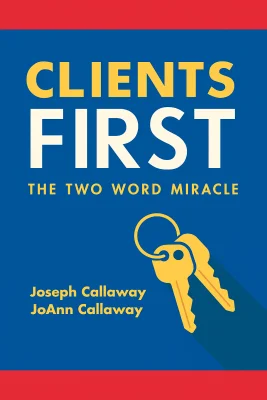
Clients First
The Two Word Miracle
Categories
Business, Nonfiction
Content Type
Book
Binding
Kindle Edition
Year
2012
Publisher
Wiley
Language
English
ISBN13
9781118431771
File Download
PDF | EPUB
Clients First Plot Summary
Introduction
In today's competitive business landscape, the difference between companies that thrive and those that merely survive often comes down to a single fundamental principle - how they treat their clients. While most businesses claim to value their customers, the reality is that genuine client-first service remains surprisingly rare. What would happen if you completely reoriented your business around serving your clients above all else? What if every decision, strategy, and interaction was guided by one simple question: "What is best for my client?" The journey to transforming your business through client service excellence isn't about implementing fancy technologies or following the latest marketing trends. It's about a profound shift in mindset - a revolution in how you view your business purpose. By placing your clients at the center of everything you do, you unlock extraordinary possibilities for growth, loyalty, and fulfillment. This transformation isn't always easy, but as you'll discover, the rewards are immeasurable. When you truly commit to putting clients first, everything else - including profitability, reputation, and personal satisfaction - naturally follows.
Chapter 1: Make the Commitment to Client Excellence
The journey toward client excellence begins with a profound moment of commitment - a decision that fundamentally changes how you view your business purpose. This commitment isn't about incremental improvements to customer service; it's about an unwavering determination to put clients first in every situation, regardless of immediate consequences. Joseph and JoAnn Callaway experienced their transformative moment on a rainy night while trying to finalize a real estate deal between two families - the Smiths and the Browns. The Smiths had found their dream home and signed a contingent contract to buy it, while the Browns had fallen in love with the Smiths' house but couldn't truly afford it. After multiple counteroffers, both parties were about to make financial decisions that weren't in their best interests. That's when JoAnn uttered the words that would change everything: "Maybe we should undo it all. We'll find the Smiths another buyer, and we'll find the Browns another house. What matters is that we keep the clients." This moment of clarity represented a complete shift in their perspective. Instead of focusing on completing the transaction and earning their commission, they chose to prioritize what was truly best for their clients - even if it meant temporarily losing the deal. When they approached both families with honest assessments of their situations, the clients felt immense relief. The Smiths held out for a buyer who could pay their price, and the Browns found a more affordable home they loved even more than the first. What seemed like a potential financial loss became the foundation of their success. Within a week, they sold the Smiths' home for more money to another buyer. More importantly, they earned deep trust from both families, who became enthusiastic advocates for their business. This single decision to prioritize client welfare above all else ultimately led to exponential business growth through referrals and repeat business. Making the commitment to client excellence isn't a one-time event but a daily choice. It requires letting go of short-term thinking and trusting that doing what's right for clients will ultimately serve your business. The commitment must be total - not just when it's convenient or profitable. When you genuinely place client needs above your own immediate interests, you create a foundation for sustainable success. To implement this commitment in your business, begin by examining your current decision-making process. When faced with choices, ask yourself: "What would happen if the client's interest was the only factor in this decision?" Start with one interaction, one client, one decision - and experience how this perspective shifts your approach. Remember that the commitment to client excellence isn't about perfection; it's about consistently prioritizing what serves your clients best.
Chapter 2: Master the Three Keys: Honesty, Competence, and Caring
The power of client-first service lies in mastering three essential keys that, when combined, create extraordinary results. These keys - honesty, competence, and caring - form the foundation of any truly client-centered business. Think of client service excellence as a locked room with three deadbolts; you need all three keys to open the door. After years of reflection on their business transformation, the Callaways identified these three elements as the essential components of their success. Honesty means complete truthfulness with clients, even when it's uncomfortable or potentially costs you business. Competence involves becoming exceptionally skilled at your craft and continuously improving. Caring requires genuine emotional investment in your clients' outcomes and well-being. The Callaways experienced the power of honesty firsthand during a real estate market crash. They missed an important homeowners' association assessment on a bank-owned property, discovering the $3,800 expense just two days before closing. This was a potential "strike one" with their biggest institutional client - a bank known for cutting off agents for minor infractions. After agonizing all day, JoAnn finally called the asset manager and simply told the truth, offering to pay the expense themselves. After a long pause, the asset manager revealed that in over 1,000 property sales, no agent had ever been so plainly honest with her. Not only did she waive the payment, but she also became their champion within the bank. This commitment to unwavering honesty fundamentally changed their business relationships. They no longer worried about what they had said or manipulating situations to their advantage. The freedom that came from complete truthfulness created a foundation of trust that attracted more clients and simplified their work. The second key, competence, manifests as an obsessive commitment to excellence in your field. For the Callaways, this meant continually upgrading their skills through thousands of hours of continuing education, attending industry conferences, participating in mastermind groups, and staying current with changing regulations. When client needs expanded to include bank-owned properties during the market crash, they devoted themselves to mastering these complex transactions despite the steep learning curve. The third key, caring, transforms transactions into relationships. It means genuinely making clients' goals your goals and their problems your problems. During the market crash, the Callaways demonstrated this when they discovered a foreclosed home scheduled for "trash-out" the next day still contained a family's furniture and personal belongings. Despite no financial incentive, they tracked down the single mother who had fled the home in fear and arranged movers to reunite her with her possessions in her new rental home. To implement these three keys in your business, start by identifying where you might be compromising on any of them. Are there situations where you shade the truth to make a sale? Areas where your expertise needs strengthening? Moments when you're just going through the motions rather than truly investing in client outcomes? Choose one key to focus on this week, making a concrete plan to strengthen it through specific actions with your next client interaction.
Chapter 3: Build a Team That Puts Clients First
Creating a truly client-centered organization requires extending your commitment beyond your personal interactions to build a team aligned with the same values. This isn't about implementing customer service policies or scripts; it's about cultivating a culture where every team member naturally puts clients first. For the Callaways, team transformation began the morning after their pivotal decision. When they shared their new commitment with their two assistants, Marta and Susan, they witnessed how quickly this philosophy could spread. Marta immediately grasped the power of this approach, saying simply, "I'm glad. It really wasn't the best thing for either of them," referring to the clients whose deal had been undone. Through her daily interactions with clients, Marta became their reminder and reinforcement of client-first values, asking in almost every situation, "What's best for the client?" As their business grew, the Callaways expanded their team using a specialized approach. Rather than having each agent try to do everything for their clients (which inevitably leads to compromises in service quality), they created a system where team members specialized in different parts of the process. Donna, their first showing agent, focused solely on helping buyers find homes. She developed an extraordinary memory for properties and market knowledge that served clients better than if Joseph or JoAnn had shown homes themselves while juggling other responsibilities. This specialization approach extended throughout their organization. When a client calls, they speak with Marti, a licensed agent with 30 years of experience who listens carefully to their needs. Property listings go to Joyce, who oversees staging, photography, and repairs. Stuart handles property presentation, lockbox installation, and becomes the clients' trusted eyes and ears during inspections. The team grew to include 30 licensed agents, each serving as specialists in different aspects of the process, all united by the same two-word mission statement: "Clients First." The power of this team-based approach became evident during the 2007-2008 real estate market crash. While other real estate offices closed locations and laid off staff, the Callaways' team remained intact and even grew to handle the increased complexity of distressed properties. New team members needed minimal training because the "Clients First" mission statement served as their entire operating manual. As one team member noted, "Our clients are confident in coming back to us and continually referring us to others because we know what we are doing... We have a process for everything." To build your own client-first team, start by openly sharing your commitment with current team members. Observe how they respond - those who naturally embrace this philosophy will become your strongest allies. When hiring, prioritize candidates who demonstrate genuine care for others over those with impressive technical qualifications alone. Consider how you might reorganize work to allow team members to specialize and excel rather than juggling too many responsibilities. Most importantly, remember that client-first values cannot be mandated; they must be demonstrated through your own consistent example of putting clients first every day.
Chapter 4: Navigate Market Challenges with Client-First Principles
When markets shift and business conditions deteriorate, most companies retrench, focusing inward on survival. Yet these challenging periods actually present the greatest opportunity to demonstrate and benefit from client-first principles. By maintaining your commitment to clients during difficult times, you build relationships that sustain your business through any crisis. The Callaways faced the ultimate test when the 2007-2008 housing crisis hit. The real estate market they operated in transformed virtually overnight. Home prices that had peaked at $262,000 began plummeting toward what would eventually become a bottom of $117,500. Foreclosures flooded the market, credit vanished, and transactions that once seemed certain fell apart as financing disappeared. Everywhere around them, real estate offices closed, agents left the business, and homeowners watched their equity evaporate. This crisis fundamentally changed the nature of their business. Before the crash, the Callaways had built their success on traditional home sales. Suddenly, more than 70 percent of available properties were bank-owned or distressed sales - transactions they had no experience handling. JoAnn initially resisted entering this market, identifying foreclosures with "misery and tragedy" she wanted no part of. Yet as they analyzed the situation, they realized their clients would be competing against these properties whether they participated or not. Rather than retreating, they expanded their commitment to clients by mastering entirely new areas of expertise. They learned the complex systems, procedures, and regulations of bank-owned properties. Their team stayed up until 3:00 AM many nights learning these processes because their clients' needs demanded it. While they could have cut expenses by reducing advertising during the downturn (as conventional wisdom suggested), they actually increased their marketing investments, creating their own publication called "Callaway Country" to showcase their listings and give their sellers every possible advantage in a brutal market. Their unwavering focus on client needs during this period revealed another dimension of the client-first approach: it creates resilience. While gross commissions across the market dropped by 70 percent, the Callaways' business declined by less than 20 percent and quickly rebounded to pre-crash levels. Their client base saved them through referrals and repeat business that continued flowing despite market conditions. This resilience extended to their ability to help clients navigate previously unimaginable circumstances. As "short sales" (where banks accept less than the balance owed) became common, the Callaways learned to guide distressed homeowners through these complex, emotionally difficult transactions. When one client facing foreclosure fled her home out of fear that child protective services would take her children, the Callaways tracked her down and arranged movers to salvage her possessions - not because it generated commission, but because it was what the client needed. To apply these principles to your own market challenges, start by identifying how your clients' needs change during difficult periods. What additional expertise might you need to develop? Where might you need to invest rather than cut back to truly serve clients during downturns? Most importantly, remember that maintaining your client-first commitment during challenging times builds relationships that will sustain your business long after the crisis passes.
Chapter 5: Turn Client Relationships into Lifetime Partnerships
The traditional transaction-focused business model treats each client interaction as a discrete event with a clear beginning and end. The client-first approach transforms these limited transactions into enduring partnerships that generate ongoing value for both parties. This shift from short-term transactions to lifetime relationships fundamentally changes your business economics. The Callaways discovered this power early in their real estate career. After helping a neighbor named Toni sell her house on Sweetwater Avenue (which took seven months and sold for $38,000 less than initially listed), they maintained contact even after she moved to Oklahoma. Years later, she continued referring clients to them from across the country. This pattern repeated itself thousands of times, creating a network of advocates who consistently brought new business without being asked. JoAnn had a strong personal belief that explicitly asking for referrals was "in poor taste," yet their business thrived on word-of-mouth. The solution to this apparent contradiction was simple: by genuinely putting clients first and delivering exceptional experiences, clients naturally wanted to share their discovery with friends and family. As the Callaways explained, "Our honesty inspired these clients—and thousands since. It became infectious. It became a huge and powerful magnet." This referral-based growth didn't happen by accident. The Callaways maintained connections with past clients through thoughtful, consistent communication. They sent Valentine cards and birthday greetings. At Christmas, they gave handmade bread dough ornaments that JoAnn designed each year. They remembered clients at Thanksgiving, Halloween, and the Fourth of July. When Joseph suggested they might economize by dropping clients who had moved out of state from their mailing list, JoAnn refused. Their commitment extended to mailing gifts to clients in dozens of states and foreign countries, regardless of the cost. The depth of these relationships was tested during the real estate crash when most sellers were losing clients to other agents in a desperate game of musical chairs. The Callaways retained their clients through multiple listing extensions and price reductions as the market collapsed. Even more remarkably, the few clients who did leave during this difficult period often returned, overcoming their embarrassment because they valued the relationship. As the Callaways observed, "Once our clients have experienced Clients First, they don't want to compromise." To transform your own client interactions into lifetime partnerships, begin by extending your timeline perspective. After completing a transaction, what specific value can you continue providing that client over the next five years? Develop a systematic approach to staying connected that fits your personal style and business. Most importantly, recognize that genuine long-term relationships cannot be faked or automated - they require authentic interest in your clients' evolving needs and circumstances over time. Remember that lifetime partnerships develop gradually through consistent demonstration of your commitment to clients' best interests. Each small interaction builds trust that compounds over time, creating relationships that generate business through referrals, repeat transactions, and advocacy that no marketing budget could purchase.
Chapter 6: Create Systems That Reinforce Client-First Values
While the client-first approach begins with personal commitment, sustaining it across an organization requires creating systems that consistently reinforce these values. Without systematic support, even the strongest commitment can falter under daily pressures and competing priorities. The Callaways recognized this challenge as their business grew beyond what they could personally handle. They needed a way to maintain their high standards while serving more clients. Their solution was creating what they called "Super Service" - a comprehensive system where specialized team members handled different phases of the client experience, each operating with the same client-first mission. This system was built on a foundation of cross-training and shared responsibility. Unlike a traditional chain where each person completes their isolated task before passing the client to the next person, their team functioned more like a honeycomb. Every member served several other team members, and they were cross-trained so that if someone was sick or on vacation, others could seamlessly cover without service interruption. This eliminated the classic problem of clients feeling passed around or neglected. Their systematic approach extended to how they organized information. While many businesses maintain separate systems for different departments, the Callaways created unified client files accessible to everyone on the team. When clients called with questions, any team member could provide informed answers without delays or transfers. This eliminated the frustration clients typically experience when dealing with compartmentalized organizations. The power of their client-first systems became evident during transitions. When they decided to train their daughter Kelly to handle listing appointments - a function they had personally performed for over 10,000 appointments across eight years - they worried clients might be disappointed not to see them. Instead, clients enthusiastically embraced Kelly because she embodied the same client-first values, demonstrating that their system was stronger than any individual's personality. Their systems also addressed potential conflicts between client needs and business priorities. Every transaction was reviewed by either Joseph or JoAnn, drawing on their experience with over 15,000 contracts. Their rule was that no client call goes unreturned, even if it meant staying late. By systematizing these priorities, they ensured client needs were never compromised for convenience. To implement client-first systems in your business, start by mapping your client journey from first contact through ongoing relationship maintenance. Identify potential failure points where client interests might be compromised for operational convenience. For each phase, develop specific protocols that prioritize client outcomes over internal efficiency. Train team members not just on procedures but on the underlying client-first values that should guide decisions when situations don't fit standard processes. Most importantly, ensure your measurement and recognition systems align with client-first values. If you reward team members primarily for sales volume or efficiency metrics without considering client outcomes, your systems will undermine your stated values. Instead, celebrate and reward examples of team members putting clients first, especially when doing so required personal sacrifice or extra effort.
Chapter 7: Transform Your Business Through Giving More
The ultimate expression of the client-first approach comes through adopting a mindset of abundance rather than scarcity. When you consistently give more than expected - more effort, more value, more care - you create a virtuous cycle that transforms your business from the inside out. The Callaways discovered this paradoxical principle through their experience with charitable giving. One year, instead of sending their traditional Christmas ornaments to clients, they decided to donate $70,000 to Habitat for Humanity to build an entire house in the name of "the Clients of Those Callaways." This was a significant financial stretch that required moving money around accounts and temporarily carrying credit card debt. With little immediate response beyond a few supportive notes, Joseph initially considered it simply "good karma" and moved on. Months later, clients began mentioning this donation as a factor in their decision to work with the Callaways. More significantly, they later discovered that an officer at a bank for which they sold foreclosed homes was deeply involved with Habitat for Humanity. This connection helped secure their relationship with the bank during a critical period when many agents were being cut. In a remarkable coincidence, when the bank assigned them a foreclosed mansion to sell, the commission exactly matched their original $70,000 donation. This pattern of giving more extended beyond charitable contributions to everyday client interactions. When other agents were cutting services during the market downturn, the Callaways increased their investments in marketing clients' properties. While competitors relied on low prices to sell homes, they continued providing professional photography, virtual tours, and customized property descriptions. They consistently asked, "What more can we do?" rather than "What's the minimum required?" Their giving mindset extended to knowledge and expertise as well. Rather than guarding their successful methods as proprietary secrets, they freely shared their approach with other agents and professionals. This openness created a network of collaborators rather than just competitors, ultimately expanding opportunities for their business. The transformative power of giving more became particularly evident during the market crash. While other agents disappeared when deals became difficult, the Callaways invested even more time and emotional energy helping clients through challenging situations. As they observed, "We don't earn our keep by serving the easy ones. Rather, it's the difficult ones who justify our efforts." This commitment created fiercer loyalty among clients who experienced their support during tough times. To implement this giving mindset in your business, look for opportunities to provide unexpected value beyond the transaction. This might involve additional services, deeper expertise, or simply giving more time and attention than clients would typically expect. Examine your standard processes for places where you might be unconsciously limiting what you provide based on immediate return calculations. Start small with one client interaction where you consciously give more than required or expected. Notice both the client's response and how this approach affects your own satisfaction and engagement. As you experience the psychological and eventual business benefits of this approach, expand to additional interactions and team members.
Summary
The client-first revolution isn't about implementing superficial customer service techniques; it's about a fundamental transformation in how you approach business. By embracing the three keys of honesty, competence, and caring, you create a foundation for sustainable success that transcends market conditions and competitive pressures. As the Callaways discovered through their journey, "The more we elevate others, the greater our personal ceiling rises." This transformation begins with a single decision - the commitment to put your clients' interests above all else, even when it appears to conflict with short-term business goals. Start today by examining your next client interaction through this lens: what would change if their best interest was your only consideration? When you make this shift, you'll discover what the Callaways found: "Clients First is a two-word miracle that makes everything easy." The journey may not always be simple, but the rewards - in business growth, personal satisfaction, and meaningful relationships - are immeasurable.
Best Quote
Review Summary
Strengths: The review highlights the book's practical approach to client relations, emphasizing the importance of focusing on clients' emotions, needs, and desires. It praises the book for demonstrating how honesty, competence, and caring can differentiate a business and sustain it during crises. The success story of the authors as a real estate team is also noted as a compelling aspect.\nOverall Sentiment: Enthusiastic\nKey Takeaway: The review suggests that the book "The Two Word Miracle CLIENTS FIRST" by Joseph & JoAnn Callaway provides valuable insights into prioritizing clients' interests, which can lead to business success and resilience, particularly in the real estate industry.
About Author

Joseph Callaway
Callaway charts the emotional landscape of military leadership and the harrowing realities of war through his writing. His experiences as an infantry platoon leader in Vietnam provide the backdrop for his acclaimed book, "Mekong First Light," which dives into the challenges and moral complexities faced by soldiers in combat. Callaway's vivid and introspective style allows readers to connect deeply with the psychological toll and pressures of leadership in a war zone, making his narrative both compelling and enlightening.\n\nFor readers interested in military history and personal narratives, Callaway's work offers an authentic glimpse into the Vietnam War era. His exploration of the human aspects of warfare not only educates but also engages those interested in understanding the intricate dynamics of military service. Moreover, the author's transition from military to a career in the private sector highlights a journey marked by resilience and adaptability, offering additional layers to his bio beyond the battlefield. As a Western sales manager for CYRO Industries post-service, Callaway exemplifies the multifaceted lives of veterans, adding further depth to his literary contributions.
Read moreDownload PDF & EPUB
To save this Black List summary for later, download the free PDF and EPUB. You can print it out, or read offline at your convenience.
Clients First
by Joseph Callaway
