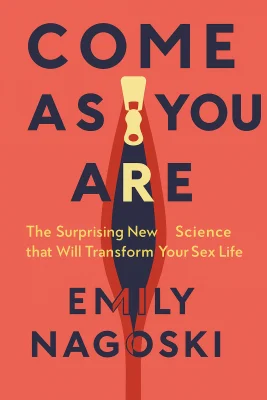
Come as You Are
The Surprising New Science that Will Transform Your Sex Life
Categories
Nonfiction, Self Help, Psychology, Health, Science, Relationships, Audiobook, Feminism, Sexuality, Womens
Content Type
Book
Binding
Paperback
Year
2015
Publisher
Simon & Schuster
Language
English
ISBN13
9781476762098
File Download
PDF | EPUB
Come as You Are Plot Summary
Introduction
# Come As You Are: The Revolutionary Science of Women's Sexual Wellbeing Sarah sits in her car after another disappointing evening with her partner, wondering what's wrong with her. Despite loving him deeply, she rarely feels desire anymore, and when they do have sex, her mind wanders to grocery lists and work deadlines. She's tried everything the magazines suggest, from candles to lingerie, but nothing seems to reignite the passion she once felt. Like millions of women, Sarah believes she's broken, that her sexuality is somehow defective compared to what she sees portrayed in media or hears whispered among friends. This story echoes in countless bedrooms and therapists' offices around the world, where women struggle with shame, confusion, and frustration about their sexual responses. The truth is, there's nothing wrong with Sarah or the millions of women like her. What's broken isn't their sexuality, but rather the myths and misconceptions they've been taught about how female desire and arousal actually work. This revolutionary understanding reveals why women's sexuality operates differently than we've been told, offering transformative insights that can change not just your intimate life, but your entire relationship with your own body and desires.
Chapter 1: The Garden Within: Discovering Your Sexual Anatomy
Maria had always felt embarrassed about her body, convinced that something was fundamentally wrong with her genitals. They didn't look like the images she'd seen in magazines or movies, and this shame had followed her into every intimate relationship. At twenty-eight, she finally gathered the courage to examine herself with a mirror, expecting to confirm her worst fears. Instead, she discovered something remarkable: her body was not only normal but beautifully designed, with each part serving a specific and wonderful purpose. What Maria found was her clitoris, not the tiny button she'd imagined, but an impressive organ with over 8,000 nerve endings extending deep into her body like the roots of a magnificent tree. She traced the delicate folds of her labia, each as unique as a fingerprint, and marveled at how they changed color and texture with arousal. For the first time, she understood that her vulva was not a simplified version of male genitalia, but a complex, sophisticated system designed specifically for pleasure and function. The revelation that transformed Maria's relationship with her body lies in understanding that we are all made of the same parts, organized in different ways. Every person begins life with identical tissue that develops into either male or female genitalia, like origami folded into different but equally beautiful forms. The clitoris and penis, the labia and scrotum, the ovaries and testes are all variations on the same magnificent theme. This knowledge dissolves shame and replaces it with wonder, revealing that anatomical diversity is not deviation but design, not flaw but feature of our incredible human garden.
Chapter 2: Brakes and Accelerator: Understanding Your Unique Response System
Jessica couldn't understand why her sexual response seemed so unpredictable. Some days, the slightest touch from her partner would ignite intense desire, while other times, even during romantic evenings, she felt completely disconnected from her body. She began to worry that something was seriously wrong with her, that she was somehow broken or defective. Her frustration grew as she tried to force herself to respond, creating a cycle of anxiety that only made things worse. The breakthrough came when Jessica learned about her sexual accelerator and brakes, two separate systems operating simultaneously in her brain and body. Her accelerator notices sexually relevant stimuli and says "turn on," while her brakes scan for reasons to stay turned off, responding to stress, distraction, or anything that doesn't feel safe or appealing. Unlike a car where you use one or the other, both systems operate constantly, creating her sexual response through their dynamic interaction. Jessica discovered that her seemingly inconsistent responses actually made perfect sense. On days when her brakes were quiet, her sensitive accelerator could easily guide her toward arousal. But when stress from work activated her brakes, or when she felt pressure to perform, those same brakes would override her accelerator's signals. Understanding this dual system freed Jessica from self-judgment and gave her practical tools for creating conditions where her accelerator could flourish while her brakes could relax. The key wasn't fixing something broken, but learning to work skillfully with the beautiful complexity of her own unique design.
Chapter 3: Context is Everything: How Environment Shapes Desire
Rachel and her partner David were mystified by the dramatic changes in their sex life. During their passionate courtship, desire seemed effortless and constant. Now, three years into marriage with demanding careers and a new baby, Rachel rarely felt interested in sex, leaving both partners confused and hurt. They wondered if their love was fading or if Rachel had simply lost her sexual spark forever, not understanding that external circumstances could so profoundly impact intimate connection. The answer lay not in their relationship or Rachel's libido, but in the radical transformation of their context. During courtship, their environment consistently activated Rachel's sexual accelerator: leisurely dinners, uninterrupted conversations, the excitement of discovery, and plenty of sleep. Now their context had shifted dramatically. Rachel's brakes responded to crying babies, work deadlines, exhaustion, and the pressure of stolen moments between overwhelming responsibilities. When Rachel and David began intentionally crafting contexts that honored her accelerator and soothed her brakes, everything changed. They discovered that her sexuality hadn't disappeared but had been temporarily obscured by circumstances that made arousal nearly impossible. By creating islands of calm, prioritizing genuine connection over sexual performance, and recognizing that context shapes desire more powerfully than willpower ever could, they rediscovered not just passion but a deeper understanding of how beautifully responsive and intelligent the female sexual system truly is.
Chapter 4: Beyond Myths: The Real Science of Female Pleasure
For years, Amanda had felt like a failure because she couldn't achieve orgasm through penetration alone. Every magazine article, movie, and cultural message suggested this was the "right" way to climax, leaving her feeling defective and broken. She tried everything, from different positions to mental techniques, but nothing worked. The pressure to perform this supposedly natural function created anxiety that made any orgasm increasingly elusive, trapping her in a cycle of self-doubt and sexual frustration. Amanda's liberation came through understanding the remarkable truth about female orgasm: there is no hierarchy, no right or wrong way to experience this profound release of sexual tension. Her clitoris, with its 8,000 nerve endings, was designed to be the primary pathway to orgasm for most women. The expectation that she should climax through penetration alone was like expecting her to see clearly through her ears, anatomically unrealistic and culturally imposed rather than scientifically sound. When Amanda embraced her body's actual design rather than fighting against cultural myths, her orgasmic capacity flourished beyond her wildest dreams. She discovered that orgasms could be gentle waves or intense storms, brief moments or extended journeys, focused sensations or full-body experiences. Each one was perfect in its own way, a celebration of her unique nervous system rather than a performance to be judged. This shift from striving to allowing, from performing to receiving, opened doorways to pleasure she never knew existed and revealed the profound wisdom encoded in female sexual anatomy.
Chapter 5: Meta-Emotions: Healing Your Relationship with Your Sexuality
Lisa carried a heavy burden of shame about her sexual desires and responses. Even when she experienced pleasure, a critical voice in her head would immediately judge her for wanting too much, responding too little, or not being the "right" kind of sexual woman. This internal critic had become so loud that it often drowned out her body's natural signals, creating an impenetrable barrier between her and her own authentic sexual experience. She felt trapped in a prison of her own making. The transformation began when Lisa learned to observe her thoughts about her sexuality without immediately believing or acting on them. She discovered that her shame wasn't about her sexuality itself, but about her feelings about her sexuality. When she felt desire, she judged herself as needy. When she didn't feel desire, she judged herself as broken. The problem wasn't her sexual response but her relationship with her sexual response, the stories she told herself about what her feelings meant. Learning to practice self-compassion toward her sexual self became Lisa's pathway to freedom. She began treating her sexual feelings with the same kindness she would offer a dear friend, recognizing that her responses were normal, healthy, and worthy of acceptance. As her internal critic softened into a supportive inner voice, Lisa found herself able to experience pleasure without immediately analyzing it, to feel desire without shame, and to embrace the full spectrum of her sexuality with curiosity rather than judgment. This shift in her meta-emotions transformed not just her intimate life but her entire relationship with herself, revealing how healing our feelings about our feelings can unlock profound transformation.
Chapter 6: From Trauma to Confidence: Reclaiming Your Sexual Self
After surviving sexual assault in college, Maya believed her capacity for healthy sexuality was permanently damaged. For years, she avoided intimate relationships entirely, convinced that her trauma had broken something essential within her. When she finally felt ready to explore intimacy again, she was devastated to find that her body seemed to have forgotten how to respond with pleasure, leaving her feeling disconnected, afraid, and convinced that she would never heal from what had happened to her. Maya's healing journey revealed the remarkable resilience of the human sexual system. Working with a trauma-informed therapist, she learned that her body's protective responses were actually signs of her nervous system working correctly, not evidence of permanent damage. Her sexual brakes had become hypervigilant to keep her safe, but with patience and proper support, they could learn to relax again in truly safe contexts. Her body's wisdom had protected her, and now it could guide her healing. The path wasn't linear or quick, but Maya discovered that healing was not only possible but could lead to deeper intimacy than she had ever imagined. By honoring her body's protective wisdom while gently expanding her window of tolerance, she gradually reclaimed her capacity for pleasure and connection. Her trauma became not a life sentence but a teacher, showing her the importance of safety, consent, and the incredible strength of the human spirit to heal and grow. Maya's journey demonstrates that even the deepest wounds can become sources of wisdom and strength when met with compassion and proper support.
Chapter 7: Creating Wellbeing: Practical Tools for Sexual Flourishing
Emma felt overwhelmed by all the information about sexuality, unsure how to translate knowledge into actual change in her life. She understood the concepts intellectually but struggled to implement them practically. Between work stress, relationship dynamics, and her own ingrained patterns, creating lasting change felt impossibly complex and daunting. She wanted transformation but didn't know where to begin or how to sustain progress when old patterns inevitably resurfaced. The breakthrough came when Emma realized that sexual wellbeing wasn't about perfecting her responses but about creating sustainable practices that honored her authentic self. She started small, with simple changes like taking five minutes each morning to check in with her body, or having honest conversations with her partner about what felt good and what didn't. She learned to see setbacks not as failures but as information, each experience teaching her more about her unique needs and responses. Emma discovered that sexual wellbeing was less about achieving some ideal state and more about developing an ongoing, compassionate relationship with her sexual self. By approaching her sexuality with curiosity rather than criticism, patience rather than pressure, and acceptance rather than judgment, she created space for her authentic desires to emerge and flourish. Her journey became not about fixing what was wrong but about nurturing what was already beautifully right within her. This shift from self-improvement to self-acceptance opened doors to joy and connection she had never imagined possible, proving that the path to sexual flourishing begins with radical self-compassion.
Summary
The stories woven throughout this exploration reveal a profound truth: women's sexuality is not a broken version of something else, but a magnificent system operating according to its own elegant principles. From Maria's anatomical awakening to Emma's practical transformation, each journey illuminates how understanding and accepting our authentic sexual selves can revolutionize not just our intimate lives but our entire relationship with our bodies and desires. These women discovered that their struggles weren't evidence of personal failure but natural responses to cultural myths and unrealistic expectations. The path forward requires courage to reject cultural messages that shame and diminish women's sexual experiences, replacing them with science-based understanding that celebrates diversity and individual variation. When we learn to work with our brakes and accelerators, honor our need for context, embrace our unique pathways to pleasure, and treat our sexual selves with compassion, we unlock possibilities for joy and connection that seemed impossible before. This transformation is not just about better sex, but about reclaiming our birthright to inhabit our bodies with confidence, curiosity, and profound self-acceptance, creating ripples of healing that extend far beyond the bedroom.
Best Quote
“I am done living in a world where women are lied to about their bodies; where women are objects of sexual desire but not subjects of sexual pleasure; where sex is used as a weapon against women; and where women believe their bodies are broken, simply because those bodies are not male. And I am done living in a world where women are trained from birth to treat their bodies as the enemy.” ― Emily Nagoski, Come as You Are: The Surprising New Science that Will Transform Your Sex Life
About Author

Emily Nagoski
Nagoski probes the complex interplay between stress, sexuality, and well-being, offering profound insights into how these elements affect women's lives. Her work underscores the significance of understanding the mind-body connection to unlock potential for improved sexual health and stress management. In her influential book "Come As You Are: The Surprising New Science That Will Transform Your Sex Life", Nagoski utilizes scientific research to debunk myths surrounding female sexuality, encouraging women to embrace their individuality and experiences. This approach empowers readers, providing them with the tools to navigate their own sexual journeys with confidence.\n\nBy integrating stress education with sexual health, Nagoski extends her influence beyond traditional sex education. Her collaborative work with Amelia Nagoski, "Burnout: The Secret to Unlocking the Stress Cycle", delves into the stress cycle and its impact on women's mental health. Through practical strategies and an empathetic tone, Nagoski addresses the importance of completing the stress cycle to foster resilience and emotional well-being. Her writing style, known for its scientific rigor and accessible prose, speaks to a diverse audience, resonating with those seeking to understand and enhance their well-being.\n\nReaders gain from Nagoski's expertise as she bridges scientific knowledge with real-world application, making her books vital resources for anyone interested in women's health and empowerment. Her role as an author transcends mere information delivery; instead, she fosters a deeper understanding of how interconnectedness between stress and sexuality can be harnessed for personal growth. Therefore, her contributions significantly impact both individual readers and the broader discourse on sexual health and stress management, ensuring her place as a leading voice in the field.
Read moreDownload PDF & EPUB
To save this Black List summary for later, download the free PDF and EPUB. You can print it out, or read offline at your convenience.
Come as You Are
by Emily Nagoski
