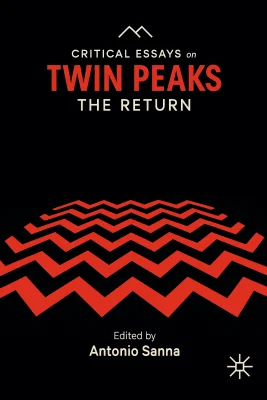
Critical Essays on Twin Peaks
The Return
Categories
Content Type
Book
Binding
Kindle Edition
Year
2019
Publisher
Palgrave Macmillan
Language
English
ASIN
B07MPSPT9N
ISBN13
9783030047986
File Download
PDF | EPUB
Critical Essays on Twin Peaks Plot Summary
Introduction
# Lynchian Liminality: Identity, Reality, and Consciousness in Twin Peaks: The Return The contemporary condition of existence reveals itself through spaces of uncertainty, where traditional boundaries between self and other, real and imagined, past and present dissolve into fluid territories of experience. These liminal zones challenge our fundamental assumptions about identity, consciousness, and the nature of reality itself, demanding new frameworks for understanding how meaning emerges in an increasingly fragmented world. The exploration of these threshold spaces becomes particularly urgent in our current moment of technological disruption and social transformation. The analytical approach employed here draws from phenomenology, psychoanalytic theory, and media studies to examine how narrative fragmentation mirrors the actual processes of consciousness and memory formation. Through careful attention to visual symbolism, temporal disruption, and the agency of non-human forces, we can trace how traditional categories of experience have become unstable, requiring new forms of attention and interpretation. This investigation reveals how contemporary media can function as a diagnostic tool for understanding the psychological and social conditions of our historical moment.
Chapter 1: The Fragmented Self: Cooper's Tripartite Identity as Contemporary Condition
The dissolution of unified subjectivity emerges as a defining characteristic of contemporary consciousness, manifested through the radical splitting of identity into multiple, often contradictory versions of the self. Agent Dale Cooper's existence across three distinct manifestations represents more than supernatural plot device—it illuminates the fundamental instability of selfhood under conditions of trauma and technological mediation. The "good" Cooper trapped in interdimensional space, the malevolent doppelganger operating in the criminal underworld, and the childlike Dougie Jones navigating suburban domesticity each embody different aspects of consciousness struggling to maintain coherence. This tripartite structure reflects the Lacanian understanding of subjectivity as inherently divided, with each version representing a different relationship to desire, language, and social reality. The original Cooper embodies idealized moral certainty that proves inadequate when confronted with contemporary complexity, while his doppelganger represents the return of repressed impulses operating with ruthless efficiency in systems that mirror legitimate social institutions. Dougie exists in a pre-linguistic state of pure sensory response, suggesting a form of consciousness unburdened by symbolic demands yet vulnerable to manipulation. The fragmentation reveals how trauma can shatter linear identity development, creating parallel versions of selfhood that coexist within the same psychological space. Cooper's eventual "awakening" occurs not through therapeutic integration but through electrical shock, emphasizing the materialist dimension of consciousness as neural configuration subject to external disruption. This process suggests that identity itself might be nothing more than temporary patterns of brain activity, constantly reconstructed through interaction with environmental forces. The three Coopers never achieve synthesis, instead existing in perpetual tension that challenges traditional narratives of heroic integration. This unresolved multiplicity proposes that fragmentation might be the natural state of contemporary subjectivity rather than pathological deviation. The condition reflects broader anxieties about authenticity and agency in an era where digital technologies increasingly mediate human experience and social connection.
Chapter 2: Object Agency and Material Consciousness: Beyond Human-Centered Reality
The recognition of non-human agency transforms our understanding of consciousness from an exclusively human property to a distributed phenomenon that emerges through networks of material interaction. The Log Lady's communication through her wooden companion exemplifies this alternative ontology, where objects serve as conduits for knowledge that exceeds human comprehension. This relationship challenges anthropocentric assumptions about intelligence and meaning-making, suggesting that consciousness might be a property of matter itself rather than a unique human achievement. Electrical phenomena throughout the narrative demonstrate autonomous behavior that exceeds programmed functions, with power lines serving as highways for interdimensional travel and outlets functioning as portals between realities. This technological animism reflects the increasing integration of digital systems into human consciousness, creating hybrid assemblages where the boundary between organic and mechanical intelligence becomes indistinguishable. The glass box sequence presents surveillance technology that watches back, becoming an active participant rather than passive tool. The atomic bomb sequence provides the most dramatic illustration of object agency, showing how human technological creations can develop their own trajectories that reshape the conditions of existence. The bomb's detonation creates a literal rupture in reality, unleashing forces that operate according to their own logic across decades of historical time. This demonstrates how objects possess temporal agency that extends far beyond their moment of activation, pursuing agendas that may conflict with their creators' intentions. Food items like cherry pie and coffee function as more than symbolic elements, possessing what Jane Bennett terms "thing-power"—the capacity to affect human behavior through material properties rather than cultural associations. These objects carry emotional and spiritual significance that operates independently of human interpretation, suggesting that meaning emerges through material interaction rather than subjective projection. This materialist approach indicates that consciousness itself might be distributed across networks of human and non-human actors rather than contained within individual subjects.
Chapter 3: Trauma as Temporal Rupture: Nuclear Origins and Collective Memory
Historical trauma operates not as discrete past event but as ongoing temporal disruption that creates recursive loops in both individual and collective consciousness. The atomic bomb testing sequence establishes nuclear technology as the origin point for supernatural evil, suggesting that technological hubris carries metaphysical consequences that persist across generations. This connection between historical violence and contemporary suffering reveals how past injustices continue to shape present circumstances through mechanisms that exceed conventional causation. The Woodsmen who emerge from atomic detonation represent trauma's capacity to generate autonomous agents of repetition and dissemination. These figures move through time spreading psychic contagion, demonstrating how historical violence creates ongoing cycles that transcend individual experience. Their incantation about water and wells suggests that trauma becomes embedded in the landscape itself, contaminating the sources from which communities draw sustenance and meaning. Laura Palmer's death functions as a gravitational center around which all other events orbit, creating temporal vortex that draws characters into repetitive patterns of behavior. The 25-year gap between original series and return literalizes trauma's capacity to freeze time, creating suspended states where healing remains perpetually deferred. Cooper's time travel attempt to resolve trauma through direct intervention only generates alternate timelines where essential conflicts play out under different circumstances. This temporal structure reveals that trauma's effects cannot be undone through simple reversal but require complex processes of integration and acceptance. The series suggests that recovery involves not forgetting traumatic events but transforming their meaning within new frameworks of understanding. The persistence of supernatural evil across decades indicates that collective trauma requires collective healing processes that acknowledge historical responsibility while creating possibilities for genuine transformation.
Chapter 4: Digital Mediation and the Dissolution of Authentic Experience
The proliferation of surveillance technologies creates an environment where authentic human connection becomes increasingly difficult to achieve or maintain. Characters exist under constant observation through various technological means, from glass box monitoring systems to cellular phone tracking, generating pervasive paranoia that extends beyond supernatural elements. This technological mediation transforms the nature of privacy and intimacy, creating conditions where genuine emotional expression requires constant negotiation with invisible monitoring systems. Digital communication technologies alter the fundamental structure of human relationships, creating misunderstandings and missed connections that reflect broader anxieties about technological mediation of social bonds. Characters struggle to interpret digital messages and maintain authentic connections across mediated channels, suggesting that technological convenience comes at the cost of emotional depth and mutual understanding. The difficulty of achieving genuine communication through digital means reflects the broader challenge of maintaining human agency within technological systems. The series' complex narrative structure mirrors the fragmented, non-linear experience of digital media consumption, requiring viewers to actively piece together information from multiple sources and timelines. This structural parallel suggests that contemporary consciousness has been fundamentally shaped by digital media patterns, creating cognitive habits that prioritize rapid information processing over sustained contemplation. The viewing experience becomes a metaphor for navigating contemporary information environments. Social media platforms and online fan communities played crucial roles in maintaining interest during the series' absence and shaping expectations for its return. This relationship between text and audience reflects the participatory nature of contemporary media consumption, where meaning emerges through collective interpretation rather than individual reception. The series acknowledges this digital culture through meta-textual references designed for online discovery and discussion, creating transmedia experiences that extend beyond traditional broadcast boundaries.
Chapter 5: Sound, Dreams, and the Unconscious: Lynch's Psychoanalytic Architecture
The auditory landscape functions as direct pathway to unconscious experience, bypassing rational interpretation to access deeper psychological truths. Angelo Badalamenti's musical score operates as structural element that creates connections across different temporal and spatial dimensions, with recurring themes establishing continuity while marking moments of transformation. The backwards speech of Lodge entities creates communication that follows alternative logical principles, requiring intuitive rather than analytical engagement. Sound design creates atmosphere of unease that extends beyond visual elements, with electrical humming and ambient noise suggesting the presence of forces beyond immediate perception. These sonic elements often provide the first indication of supernatural events, serving as bridges between ordinary and extraordinary reality. The careful orchestration of industrial and natural sounds creates auditory palette that reflects the intersection of technological and organic experience. The Roadhouse performances create liminal spaces between narrative world and viewing experience, featuring contemporary artists performing in styles that evoke earlier periods. These musical interludes allow processing of emotional content while creating temporal ambiguity that mirrors the series' broader treatment of time. The performances serve as portals that facilitate psychological integration of complex narrative material. Silence functions as active element within the sonic landscape, creating spaces for contemplation that force attention to visual details and ambient sounds. Extended periods without dialogue or music suggest that meaning often emerges in spaces between words and sounds rather than through explicit communication. This approach to sound design creates immersive environment where psychological and physical reality interpenetrate in complex ways.
Chapter 6: Anti-Nostalgic Resistance: Subverting Fan Expectations and Cultural Return
The deliberate frustration of conventional revival series expectations reveals the impossibility of authentic return to past experiences or cultural moments. Rather than providing nostalgic comfort, familiar characters and settings become starting points for radical departures that challenge assumptions about continuity and cultural memory. This subversion reflects broader critique of contemporary culture's tendency to retreat into idealized versions of the past rather than engaging with present realities. Extended sequences of mundane activity function as form of audience education that challenges assumptions about narrative pacing and significance. These moments force confrontation with impatience and desire for immediate gratification, suggesting that meaningful experience requires sustained attention and patience. The resistance to conventional television rhythms becomes meditation on attention itself and the conditions necessary for genuine aesthetic experience. Fan service elements, when they appear, are often undercut by irony or revealed as hollow gestures that highlight the impossibility of recapturing past experiences. The return of beloved characters becomes moments of cringe-worthy nostalgia that demonstrate the futility of attempting to return to earlier states of being. This treatment suggests that authentic cultural production must transform rather than simply reproduce past achievements. The meta-textual dimension acknowledges the series' status as cultural phenomenon while simultaneously critiquing the economic forces that drive nostalgia-based entertainment. This self-awareness prevents the work from becoming simply another example of the trends it critiques, instead using its position within revival culture to examine the conditions that make such returns both possible and problematic. The approach offers model for cultural production that honors origins while transcending them.
Chapter 7: Intermediacy as Wisdom: Embracing Ambiguity in Post-Digital Existence
The cultivation of comfort with uncertainty emerges as essential skill for navigating contemporary existence, where traditional sources of meaning and authority have become increasingly unstable. The series' refusal to provide definitive explanations or resolutions suggests that mystery and ambiguity are not problems to be solved but fundamental conditions that must be embraced rather than eliminated. This acceptance of uncertainty offers form of wisdom particularly relevant to current moments of technological disruption and social fragmentation. Margaret Lanterman's cryptic communications establish the central mystery not as specific object or person but as absence that structures entire narrative experience. This missing element cannot be recovered through conventional investigation but must be approached through alternative ways of knowing that integrate rational analysis with intuitive understanding. The approach suggests that meaning emerges through sustained engagement with complexity rather than pursuit of simple answers. The temporal structure embodies intermediacy through non-linear progression and circular logic, where past events continue influencing present circumstances while future possibilities retroactively reshape historical understanding. This temporal fluidity indicates that identity exists in constant state of becoming rather than fixed being, requiring ongoing negotiation between competing internal forces and external pressures. Characters frequently find themselves suspended between states of consciousness, unable to fully inhabit either past or present identities. This condition reflects broader anxieties about authenticity and agency in era of digital mediation, where traditional boundaries between self and other, real and virtual, have become increasingly porous. The series suggests that this intermediacy is not pathological condition but natural state of contemporary consciousness that requires new forms of attention and interpretation.
Summary
Contemporary identity exists in perpetual state of intermediacy, shaped by technological mediation, historical trauma, and the agency of non-human forces that challenge traditional categories of self and other, human and non-human, past and present. The exploration reveals how conventional boundaries have become increasingly unstable, requiring new forms of consciousness and attention to navigate successfully in an era of digital disruption and social fragmentation. The ultimate insight suggests that mystery and ambiguity are not problems requiring solution but fundamental conditions of existence that must be embraced rather than eliminated, offering wisdom particularly relevant to current moments of technological and social transformation. This acceptance of uncertainty provides framework for engaging with cultural products that resist easy consumption, demanding sustained attention and interpretive creativity that contemporary media culture often discourages.
Best Quote
Review Summary
Strengths: The review highlights David Lynch's unique creativity and eccentricity, noting his engaging weather reports and craft series during lockdown. It praises the intriguing and complex nature of "Twin Peaks: The Return," emphasizing its ability to captivate and challenge viewers. The review appreciates the show's rewatchability and the ongoing discussions it inspires. Weaknesses: The review suggests that "Twin Peaks: The Return" initially appeared disjointed and unresolved, potentially frustrating viewers expecting clear answers. It also implies that Lynch and Frost may have intentionally teased fans with delayed character appearances and plot developments. Overall: The review conveys a positive sentiment towards David Lynch's work, particularly "Twin Peaks: The Return," recommending it for its depth and rewatchability. It acknowledges the show's complexity and the enjoyment derived from revisiting its episodes and theories.
About Author

Antonio Sanna
Sanna delves into the intersections of literature and film through his extensive work on English and Gothic literature, horror films, and cinematic adaptations. His approach blends cultural analysis with a focus on narrative and thematic elements, as seen in his exploration of epic and historical films and superhero narratives. This focus allows him to delve into diverse cultural contexts, offering a multidimensional perspective on film history and literary criticism.\n\nIn his academic career, Sanna has contributed significantly to the fields of film and literary studies, teaching at both the University of Cagliari and the University of Sassari. He has published over sixty articles and reviews, showcasing his engagement with topics like Korean and Japanese cinema and literary modernism. Moreover, Sanna has edited and authored numerous scholarly volumes, such as "Pirates in History and Popular Culture" and "Critical Essays on Twin Peaks: The Return", each reflecting his commitment to exploring the cultural impact of popular media.\n\nFor readers and scholars interested in cultural analysis and the evolution of popular narratives, Sanna's work offers a valuable resource. His book "La geografia del danno" and other editorial projects demonstrate a rich engagement with international perspectives and critical theory, providing insights into the socio-cultural dimensions of literature and film. Through his scholarly contributions, Sanna not only enriches academic discourse but also provides tools for understanding the complex interplay of media and culture.
Read moreDownload PDF & EPUB
To save this Black List summary for later, download the free PDF and EPUB. You can print it out, or read offline at your convenience.
Critical Essays on Twin Peaks
by Antonio Sanna
