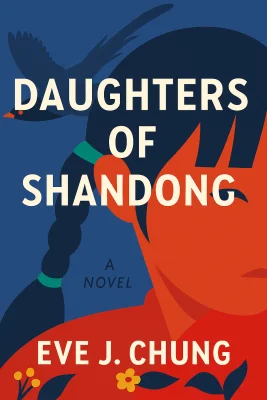
Daughters of Shandong
Categories
Fiction, Audiobook, Historical Fiction, China, Asia, Adult, Family, Book Club, Historical, Literary Fiction
Content Type
Book
Binding
Hardcover
Year
2024
Publisher
Berkley
Language
English
ASIN
0593640535
ISBN
0593640535
ISBN13
9780593640531
File Download
PDF | EPUB
Daughters of Shandong Plot Summary
Introduction
# Flowers That Bloom in Snow: A Daughter's Journey Across Revolution The winter of 1948 brought more than snow to the ancient walls of Zhucheng. It brought revolution. Thirteen-year-old Li-Hai watched from behind her mother as Communist cadres hammered on their courtyard gate, demanding the heads of the Ang family patriarchs. But the men had already fled to Taiwan, leaving behind only women and children to face the storm. What followed was an odyssey of survival that would test the bonds between mother and daughters across a China torn apart by civil war. From the frozen fields of Shandong to the refugee camps of Hong Kong, this is the story of four women who refused to be broken by abandonment, persecution, and the collapse of everything they had known. In a world where daughters were considered burdens and wives were disposable, they would discover that sometimes the only family you can trust is the one you choose to save.
Chapter 1: Revolution's Cruel Dawn: When the Red Flags Rose
The stone lions at the gate could not protect them now. Li-Hai pressed her face against the cold window as her father loaded the last of their valuables into carriages bound for Qingdao. The Ang family patriarchs spoke in hushed tones about temporary business, but thirteen-year-old Hai could read the fear in their eyes. Father's hands shook as he embraced his wife Chiang-Yue goodbye. The decision had been made in whispered conferences after their workers warned of Communist land reforms sweeping through Shandong. The men would flee to safety while the women stayed behind to protect the property. Nai Nai, Hai's grandmother, had orchestrated this division with cold calculation. Daughters were expendable, wives replaceable, but the family fortune was sacred. Within days of the men's departure, Comrade Kang arrived with his revolutionary tribunal. The workers who had once bowed to the Ang family now stood behind him, their faces twisted with decades of suppressed rage. Hai's mother knelt in the snow, baby Lan strapped to her back, as the cadres ransacked their ancestral home. The eviction came swift as a blade. Within hours, the family that had ruled Zhucheng for generations was reduced to refugees in their own land, clutching flour sacks and fleeing to a peasant's shed. The stone lions watched silently as their empire crumbled, powerless guardians of a dynasty that had lasted a thousand years but could not survive a single winter of revolution. The shed reeked of animal dung and desperation. Hai huddled with her sisters among the chickens and donkeys, their breath visible in the freezing air as tuberculosis ravaged baby Lan's tiny body. Their mother had sold her ruby ring for medicine, trading the last symbol of her former status for a chance to keep her youngest daughter alive.
Chapter 2: Abandoned by Blood: The Patriarch's Flight
The Communists were not finished with the Ang family. When Comrade Lao came for Hai at dawn, his rope felt like ice around her neck as he dragged her to Wildflower Field. The place where she had once picked flowers with her cousins was now an amphitheater of hatred, filled with peasants hungry for revenge. Comrade Lao forced thirteen-year-old Hai to kneel before the mob. The sign around her neck branded her an enemy of the people, and the stones they threw drew blood that steamed in the winter air. For six hours she knelt on the frozen ground while Comrade Cheng's fists rained down like hammers, demanding she confess to crimes she had never committed. The crowd's fury was a living thing, fed by years of hunger and humiliation. They screamed accusations about rent and taxes, about workers who had died from poverty while the Angs lived in luxury. Hai watched in horror as other landlords were executed beside her, their blood painting the snow crimson. Only her mother's years of kindness to the workers saved her from the same fate. When they finally released her, broken and bleeding, Hai understood that childhood was over. The Communists had made her the symbol of everything they sought to destroy, and there would be no mercy for the daughters of landlords. As her mother cradled her battered body, they both knew the truth that Father had hidden from them. The fake travel permit her mother forged from soap and red ink became their lifeline, a desperate gamble written in a child's careful calligraphy. As spring thawed the frozen earth, they loaded their wheelbarrow and began walking east, leaving behind the graves of their ancestors and the ashes of their world.
Chapter 3: Denunciation and Exile: A Child's Trial by Fire
The city gates of Qingdao rose before them like a mirage after weeks of walking. Hai's feet were wrapped in rags, her mother limped from exhaustion, and baby Lan had survived tuberculosis only to be left permanently disabled. They were no longer the proud Ang family of Zhucheng, but refugees indistinguishable from the thousands of other displaced souls flooding into the coastal city. Uncle Sen's apartment in Dabaodao became their sanctuary, though the man himself was dying of the same disease that had nearly claimed Lan. The irony was not lost on Hai's mother—they had fled one form of death only to embrace another. But tuberculosis was a gentler killer than revolutionary justice, and they nursed each other through the fever and blood-flecked coughs with a tenderness born of shared survival. The match factory became their salvation. Hai's mother transformed herself from Mrs. Ang to Ms. Fa, folding cardboard into tiny boxes for two thousand pieces per kilogram of corn flour. Their fingers bled from paper cuts, but the work gave them purpose and the flour gave them life. Hai learned to sell sweet buns from a squeaking wheelbarrow, her voice hoarse from calling out prices to customers who saw only another refugee child. When the People's Liberation Army tanks rolled into Qingdao in June 1949, the ground shook beneath their wheels like an earthquake of history. Hai watched from her corner as cadres hung Mao's portrait in every shop window and proclaimed the liberation of China. But liberation for whom? The same red flags that promised equality to the masses still meant death to the daughters of landlords. Cousin Wei, a distant relative working as a police officer, became their unlikely savior. His hands shook as he described the fate of other Ang family members—beaten to death by their own children, buried alive in ditches, or driven to suicide by revolutionary tribunals. The golden tael that Father had left them—their only inheritance from a lost empire—bought passage on a steam train heading south.
Chapter 4: Crossing Bitter Seas: The Long Road to Hong Kong
The steam train wheezed and groaned like a dying dragon as hundreds of refugees packed into cars designed for half their number. Hai found herself pressed against strangers who reeked of desperation and fear, their faces gaunt with hunger and their eyes hollow with loss. The lucky ones had seats; the rest sat on floors slick with spilled food and human waste. Through the grimy windows, she watched the landscape of her childhood disappear forever. The wheat fields of Shandong gave way to the mountains of Hebei, then the urban sprawl of Beijing, each mile taking them further from everything they had ever known. At every station, guards checked papers and pulled suspected Nationalists from the cars, their screams echoing across the platforms as they were dragged away. Her mother clutched their forged travel permit like a talisman, the red soap stamp that had seemed so crude in Uncle Sen's kitchen now their only shield against discovery. Each checkpoint was a gamble with death, each cadre's glance a potential death sentence. But somehow the illiterate guards saw only what they expected to see—peasant women fleeing poverty, not the daughters of landlords fleeing justice. The journey stretched across eight days of mechanical purgatory. They ate hard bread soaked in water and slept sitting up, their bodies pressed together for warmth as the train carried them through a China transformed by revolution. At every station, refugees shared whispered intelligence about the war's end—Chiang Kai-Shek had fled to Taiwan, the mainland had fallen completely, and the border with Hong Kong was closing fast. The railway bridge between Shenzhen and Hong Kong stretched across the water like a steel lifeline, its tracks gleaming in the December sun. Thousands of refugees streamed across the border, a human river flowing from red China into British territory. Communist cadres jeered from behind chain-link fences, promising to follow them into Hong Kong and finish what the revolution had started.
Chapter 5: Refugee's Limbo: Survival in the Camps of Hope
Mount Davis revealed itself as a hillside purgatory where hope came to die. The former British military installation had been transformed into a refugee camp that reeked of human waste and broken dreams. Skeletal men wandered the unpaved paths like ghosts, their eyes hollow with the knowledge that they had survived the war only to face a slower death in exile. The concrete hospital building became their unlikely salvation—a closet without windows that felt like a palace after months of sleeping in sheds and on train floors. Hai's family joined the endless queues for food vouchers and meal service, their lives reduced to a series of lines that snaked across the hillside like the coils of some bureaucratic serpent. Two bowls of thin rice porridge per day kept them alive but not much more. Hai and Di returned to their old profession of scavenging, competing with other refugee children for scraps in the Hong Kong markets. The local Cantonese speakers viewed them as vermin, disease-carrying Northerners who had brought poverty and chaos to their prosperous city. Biao-Wu, a young Nationalist soldier with an amputated leg, became their unlikely friend. His wound festered in the tropical heat, black with infection and oozing pus, but his spirit remained unbroken. He spoke of his mother in Shandong with the devotion of a monk, carrying her memory like a sacred relic as he waited for letters that would never come. Letters became their lifeline to hope, messages in bottles cast into the vast ocean of displacement. Hai's mother dictated careful words to professional scribes, each character purchased with precious coins as they tried to reach Father across the impossible distance between Hong Kong and Taiwan. The letters carried no address, only faith that somehow, somewhere, love might find a way.
Chapter 6: Bitter Reunion: Family Betrayal and New Beginnings
The ship's horn echoed across Taipei harbor as they disembarked onto Taiwanese soil. After two years of exile, they had finally reached the promised land—but the reunion was nothing like Hai had imagined. Uncle Jian met them at the dock, his face a mixture of relief and shock at their gaunt appearance. The family compound in Taipei was smaller and shabbier than their ancestral home in Zhucheng, but it still carried the weight of tradition and hierarchy. Grandmother Nai Nai sat like an empress in her chair, her bound feet propped on silk cushions, her eyes cold as winter stones. She made no effort to hide her displeasure at their arrival. The humiliation of being forced to bathe naked in the courtyard, scrubbing away the stains of their refugee years while the family watched, was almost unbearable. But worse was the revelation that their father had indeed been courting another woman—a young nurse who could have given the family the sons they desperately needed. Hai's father stood in the doorway like a stranger, his hair still black while their mother's had turned gray with suffering. He offered no apology, no explanation for his abandonment. Instead, he spoke of duty and tradition, as if their survival had been a minor inconvenience rather than a miracle of determination and love. The explosion, when it came, was inevitable. Hai and Di finally unleashed years of accumulated rage, screaming at their father and grandmother with a fury that shook the walls. They told them about the denunciation rally, about the months of starvation, about watching their baby sister nearly die while their father courted his replacement wife. The confrontation ended with Nai Nai demanding they leave her house forever.
Chapter 7: Breaking Chains: Education as the Path to Freedom
The small town of Douliu became their sanctuary. For the first time in years, they had their own home—modest but clean, with glass windows and electric lights. Hai's mother raised chickens and sold eggs in the market, while their father taught at the local middle school. It was a simple life, but it was theirs. School became Hai's obsession. At fifteen, she was older than her classmates and struggled with Mandarin, the official language that had replaced the regional dialects of her childhood. But she was determined to succeed, practicing her pronunciation while walking to class and staying late to work with teachers who saw her potential. The other students mocked her northern accent and refugee background, calling her "beggar girl" and pelting her with fruit pits. But Hai had survived worse than schoolyard bullying. She threw herself into her studies with the same intensity she had once applied to scavenging for food scraps. When the time came for high school entrance exams, the family had no money for application fees or textbooks. That's when their mother made the ultimate sacrifice, selling the jade bangle that was her last connection to her own mother. The exam was held at the most prestigious teaching college in Taipei. Hai walked into that classroom carrying her mother's dreams and her own desperate hunger for knowledge. When the acceptance letter arrived, the whole family celebrated as if they had won the lottery. Hai would be the first woman in their family to attend college, earning a stipend that would help support them all. More importantly, she would have the education that could break the cycle of dependence that had trapped generations of women before her. As she packed for Taipei, Hai felt the weight of history shifting.
Chapter 8: Legacy of Triumph: When Daughters Become the Future
Years later, Hai stood in a hospital room holding her newborn daughter, watching her mother weep with disappointment that the baby was not a boy. The old patterns died hard, even in a new country with new possibilities. But Hai made a silent promise to her daughter that night: she would grow up in a world where her worth was not measured by her gender. Hai became a teacher, then married a kind man who supported her independence. She saved money for her sister Lan's surgery, helped her younger siblings through school, and slowly built the life her mother had dreamed of during those dark nights in refugee camps. But the greatest victory was yet to come. Her daughter Yun-Mei inherited Hai's hunger for knowledge and her grandmother's fierce determination. She excelled in school, won admission to the best high school in Taiwan, then conquered university entrance exams that had once seemed impossible for girls from their background. When the acceptance letter arrived from National Taiwan University, Hai felt the earth shift beneath her feet. But even that was not the end. Yun-Mei graduated with honors and won a scholarship to study in America—the first in their family to travel beyond Asia, the first to pursue advanced degrees in science. At the airport, watching her daughter disappear through security with her laboratory equipment and dreams of discovery, Hai felt the presence of all the women who had come before. She thought of her mother pushing that wheelbarrow through the gates of Qingdao, refusing to let her daughters become casualties of history. She thought of the jade bangle sold for the price of possibility, and the nights spent studying by candlelight while the family slept. The story that began with abandonment and betrayal had become one of triumph across generations.
Summary
In the end, the daughters of Shandong learned that home is not a place but a choice—the decision to protect those who cannot protect themselves, to carry forward the best of what was lost, and to plant new roots in soil watered by tears. Hai's journey from the privileged courtyards of Zhucheng to the refugee camps of Hong Kong stripped away everything she thought defined her, revealing a strength that no revolution could destroy and no abandonment could diminish. The flowers that bloom in snow are the most beautiful precisely because they should not exist, because they transform impossible conditions into proof of life's stubborn persistence. Hai and her family became such flowers, their survival a quiet rebellion against a world that had written them off as casualties of history. In learning to save themselves, they discovered that sometimes the family you create through shared suffering is stronger than the one you inherit through shared blood. Their story reminds us that in the darkest winters of the human experience, love remains the most revolutionary force of all—the one power that no army can defeat and no ideology can contain.
Best Quote
“I finally understood the gendered aspect of free will and fate. Father believed in making his own fortune because he was a man with choices laid out before him. Nai Nai and Mom believed in fate because they generally had to rely on the decisions of others. From my own experiences, I learned that our lives are a mixture of both.” ― Eve J. Chung, Daughters of Shandong
Review Summary
Strengths: The review highlights the book's raw and heartfelt narrative, suggesting it is inspired by true events close to the author. The seamless blend of fact and fiction is praised, as is the portrayal of love and resilience. The story is described as deeply moving and awe-inspiring, with a strong emphasis on the bond between parent and child. The book is also noted for its historical accuracy and emotional impact. Overall: The reader expresses a highly positive sentiment, finding the book both heartbreaking and triumphant. It is recommended for its powerful storytelling and emotional depth, celebrating the strength of mothers and daughters.
About Author

Eve J. Chung
Chung connects personal narratives with broader social justice themes, creating a powerful synergy between her background as a human rights lawyer and her work as an author. Her writing, inspired by the persistent struggle for equality and fundamental freedoms, reflects her dedication to tackling issues such as torture, sexual violence, and modern slavery. Her debut novel, "Daughters of Shandong", is a testament to her commitment to storytelling that captures resilience, maternal love, and the impact of intergenerational trauma. This historical fiction book draws from her grandmother's real-life escape from Communist China, offering a poignant exploration of familial and historical struggles.\n\nChung's method of blending meticulous research with family testimony allows her to craft narratives that are both emotionally and factually compelling. She adeptly fictionalizes where necessary, ensuring that the emotional and societal realities are truthfully depicted. Her straightforward and clear prose, as noted by reviewers from "The New York Times" and "Newsweek", brings a unique specificity to her storytelling, making her work accessible and engaging for a wide audience. Readers interested in social justice and historical narratives will find Chung’s stories both enlightening and moving.\n\nMoreover, Chung's transition from international human rights law to authorship has not gone unnoticed. "Daughters of Shandong" has been recognized as a USA Today bestseller and a "New York Times" Editors’ Choice, reflecting the impact of her work on contemporary literature. This recognition underscores her ability to merge her legal expertise with her narrative talent, making her bio a fascinating intersection of advocacy and artistry. Her upcoming novel, "The Young Will Remember", promises to continue this trajectory, further establishing her as a distinctive voice in historical fiction.
Read moreDownload PDF & EPUB
To save this Black List summary for later, download the free PDF and EPUB. You can print it out, or read offline at your convenience.
Daughters of Shandong
by Eve J. Chung
