Categories
Fiction, Science Fiction, Mystery, Thriller, Novels, Adventure, Suspense, Crime, Mystery Thriller, Action
Content Type
Book
Binding
Paperback
Year
2002
Publisher
Pocket Books
Language
English
ASIN
0671027387
ISBN
0671027387
ISBN13
9780671027384
File Download
PDF | EPUB
Deception Point Plot Summary
Introduction
# Deception Point: Truth Buried Beneath Arctic Ice The Arctic wind screamed across the Milne Ice Shelf as geologist Charles Brophy watched his sled dogs disappear into the abyss, pushed from a military helicopter at four thousand feet. Moments later, he followed them into the void, his screams swallowed by the endless white below. The helicopter vanished into the storm, leaving no witnesses to what had transpired in this frozen wasteland where secrets lay buried deeper than any meteorite. Three thousand miles away, President Zachary Herney faced political extinction. His approval ratings plummeted while Senator Sedgewick Sexton's campaign surged on promises to privatize NASA and end government waste in space exploration. But beneath the Arctic ice, something waited that would change everything—a discovery so extraordinary it would reshape the presidential race, vindicate a struggling space agency, and cost more lives than anyone imagined. The greatest scientific breakthrough in human history was about to become the deadliest deception ever conceived.
Chapter 1: Arctic Revelation: NASA's Extraordinary Meteorite Discovery
The encrypted call reached President Herney in the Oval Office at dawn. NASA Administrator Lawrence Ekstrom's voice trembled with excitement as he described what the Polar Orbiting Density Scanner had detected beneath the Milne Ice Shelf. An anomaly. Eight tons of extraterrestrial rock embedded with fossilized creatures that had lived and died on a distant world millions of years ago. Herney stared at the polling data scattered across his desk. Sexton's relentless attacks on NASA had resonated with voters tired of billion-dollar failures. The space agency had become a political albatross, dragging his presidency toward certain defeat. But this discovery would change everything. Proof of alien life would vindicate every dollar spent on space exploration and silence NASA's critics forever. The President's secure line buzzed again. This time, the voice belonged to William Pickering, director of the National Reconnaissance Office. Pickering recommended his best analyst for the verification team—Rachel Sexton, Senator Sexton's own daughter. The irony was perfect. Having NASA's harshest critic's child endorse the discovery would provide unassailable credibility. Within hours, Rachel found herself aboard a military transport cutting through frigid air toward the Arctic. The intelligence analyst had built her career on objective data, but family loyalty and professional duty were about to collide in ways she never imagined. Beside her sat Michael Tolland, the charismatic oceanographer whose television documentaries had made him famous, and Dr. Corky Marlinson, a brilliant astrophysicist whose disheveled appearance masked a razor-sharp intellect. The habisphere rose from the ice like a technological miracle, its curved walls protecting humanity's greatest discovery. Inside, the meteorite dominated the space—a charred mass of stone that had traveled across the cosmos to deliver its precious cargo. Administrator Ekstrom watched with barely contained triumph as his team prepared for the moment that would save NASA from extinction and secure his own legacy in the annals of human achievement.
Chapter 2: Verification Mission: Scientists Witness Proof of Alien Life
The fossils embedded in the meteorite's surface defied comprehension. Rachel pressed her face close to the ancient stone, studying the arthropod-like creatures preserved in perfect detail. Seven pairs of legs, segmented bodies, delicate appendages—complex organisms that had once crawled across the surface of an alien world before cosmic forces hurled them toward Earth. Corky Marlinson's hands shook as he presented the evidence. Chondrules sparkled throughout the rock's matrix—metallic droplets that could only form in the vacuum of space. The fusion crust bore telltale signs of atmospheric entry, its surface scarred by the violent passage through Earth's protective envelope. Chemical analysis confirmed nickel content within acceptable ranges for extraterrestrial materials, though slightly higher than typical samples. The extraction site told its own story. NASA's team had used advanced laser technology to melt through three centuries of accumulated ice, following the meteorite's trail to its resting place two hundred feet below the surface. The operation was a masterpiece of engineering precision, each step documented by Tolland's cameras for the world to witness. Dr. Norah Mangor, the abrasive glaciologist leading the extraction, showed Rachel ice core samples that confirmed the shelf's ancient origins. The meteorite had been waiting in frozen darkness since 1716, perfectly preserved in nature's own time capsule. Every test, every measurement, every scientific protocol confirmed what seemed impossible—humanity had found definitive proof of extraterrestrial life. President Herney's video conference with Rachel should have been routine, but it became a carefully orchestrated political maneuver. Speaking from the President's own desk via satellite link, Rachel found herself defending the meteorite's authenticity to the most powerful people in Washington. Her endorsement carried weight precisely because of her family connection to NASA's greatest critic. Herney had played his hand brilliantly, using Rachel's scientific credibility and political pedigree to neutralize potential skepticism before it could take root.
Chapter 3: Cracks in the Ice: Discovering the Impossible Deception
The celebration in the habisphere's media area masked growing unease in Rachel's analytical mind. As cameras captured the historic moment and scientists basked in their triumph, she found herself drawn to details that didn't quite fit. The ice around the meteorite showed traces of salt water—impossible if the rock had been buried in fresh water ice for three centuries. Dr. Wailee Ming, the team's paleontologist, made a discovery that chilled him more than the Arctic wind. The extraction shaft glowed with eerie phosphorescence, patterns of light that pulsed and swirled in the dark water. Bioluminescent plankton danced in the depths—marine organisms that had no business existing in a sealed freshwater environment. Ming reached for a sample container, his scientific mind racing through implications that would dwarf even the meteorite discovery. The tiny surveillance drone struck Ming's eye like a mechanical wasp, its impact sending him tumbling into the extraction shaft. His heavy Arctic coat became a death shroud, dragging him deeper into the two-hundred-foot pit while his screams for help were swallowed by the howling wind above. The microbot had served its purpose, eliminating a threat with surgical precision while leaving no trace of murder. Three thousand meters away, Delta Force operatives watched through their surveillance feed as Ming's struggles grew weaker. They had been positioned on the ice shelf for days, their mission parameters clear—protect the secret at all costs. The paleontologist's death was regrettable but necessary, another casualty in a war most people didn't know was being fought. That night, Rachel convinced Tolland and Corky to help her investigate the inconsistencies that plagued her thoughts. Using ground-penetrating radar, they scanned the ice beneath the meteorite site. The machine hummed to life, sending electromagnetic pulses deep into the frozen layers, mapping hidden structures that would reveal the truth about NASA's greatest triumph. When the printout emerged, it showed something that made Rachel's blood freeze in her veins—a perfectly round insertion shaft leading up from the ocean floor below.
Chapter 4: Flight Through Frozen Death: Hunted Across the Arctic
The revelation hit like a physical blow. The meteorite was real, its fossils genuine, but the discovery was an elaborate fraud. Someone had drilled up from the ocean floor and planted the rock beneath the ice, creating a deception that fooled the world's greatest scientists. Before they could process the full implications, death came for them across the frozen wasteland. Three figures in white emerged from the blizzard, moving with lethal precision on powered skis. Their weapons fired projectiles of compressed ice—ammunition that would leave no trace, melting away to hide evidence of murder. Dr. Norah Mangor fell first, her body crumpling as an ice bullet found its mark. The attackers were professionals, Delta Force operatives trained to kill without leaving fingerprints. Rachel, Tolland, and Corky fled across the ice shelf in desperate terror. Behind them, the assassins gave chase with mechanical efficiency, their night vision cutting through the Arctic darkness. The glacier became both enemy and salvation—crevasses opened like hungry mouths while the storm provided cover from thermal imaging equipment. Tolland deployed a weather balloon in a desperate gambit, the Arctic wind catching it like a sail and dragging them at terrifying speed toward the ice shelf's edge. They bounced and slid across the frozen surface at sixty miles per hour while ice bullets whistled through the air around them. Rachel sawed frantically at the balloon's tether with her ice axe, knowing they had minutes before being dragged over the cliff into the Arctic Ocean. The ice shelf ended abruptly in a hundred-foot drop to churning black water. As they approached the precipice, Rachel felt the balloon's rope finally part. They tumbled down the cliff face, landing on a precarious ice ledge that jutted over the deadly sea like a frozen balcony. The ledge groaned under their weight, held to the main shelf by a crack that widened with each passing second. Above them, the assassins appeared at the cliff's edge, and Rachel watched in horror as one pulled the pin from a flash-bang grenade and hurled it into the crack that supported their fragile sanctuary.
Chapter 5: Ocean's Deadly Embrace: Survival in Frigid Waters
The explosion shattered the ice ledge's connection to the shelf. With a thunderous roar, their frozen platform broke away and plunged into the Arctic Ocean, carrying them down into black water that would claim their lives within minutes. The impact drove the breath from Rachel's lungs as icy death embraced them with liquid fingers. The ice raft surfaced like a breaching whale, carrying them back into the frigid air. But their reprieve was temporary. The Arctic Ocean was a killer that showed no mercy, and their makeshift life raft was already drifting away from shore on powerful currents. Hypothermia began its relentless assault, seeping through their thermal suits and into their bones. Rachel used her ice axe to pound out an SOS signal on their floating prison—three short taps, three long, three short. Morse code transmitted through ice into water below, where sensitive hydrophones might detect the desperate pattern. It was a long shot, but she knew the National Reconnaissance Office's underwater surveillance network covered even these remote Arctic waters. As consciousness faded and their bodies began shutting down, a dark shape emerged from the depths. The USS Charlotte, a nuclear attack submarine on patrol in the Arctic Ocean, had heard their distress call through its sophisticated sonar array. The submarine surfaced through the ice pack like a mechanical leviathan, its hull breaking through frozen barriers to rescue them from certain death. The submarine's medical bay became a battlefield against hypothermia. Hot showers, heated blankets, and adrenaline injections slowly brought them back from death's threshold. But even as Rachel's core temperature rose, her mind raced with implications of what they had discovered. President Herney was about to address the nation, announcing NASA's greatest triumph to the world. In minutes, he would validate a lie that someone had killed to protect, staking his presidency and America's credibility on an elaborate deception that reached into the highest levels of government.
Chapter 6: The Mastermind Revealed: Conspiracy at the Highest Levels
Rachel's desperate attempt to contact President Herney through the submarine's communication system was intercepted by Marjorie Tench, the President's senior advisor. Tench's voice dripped with suspicion and contempt as Rachel tried to explain the deception, accusing her of betraying Herney to help her father's campaign. The call ended with threats of prosecution and promises of destruction if Rachel continued her accusations. On television screens throughout the submarine, President Herney addressed the world with pride and conviction. The meteorite appeared behind him, its fossilized passengers displayed for all humanity to witness. NASA Administrator Ekstrom sat surrounded by his triumphant team, basking in vindication that would save the space agency from extinction. Rachel watched in horror as the President staked his reputation on a lie that had already cost innocent lives. The truth began emerging in fragments, like pieces of a shattered mirror reflecting a distorted reality. The conspiracy reached higher than Rachel had imagined, involving forces with access to military resources and unlimited ambition. Someone had orchestrated the greatest scientific fraud in history, manipulating the President himself into becoming an unwitting accomplice. William Pickering, Rachel's mentor and director of the National Reconnaissance Office, had been monitoring the situation from Washington. His protégé's report painted a picture of deception that threatened the foundations of American government. But Pickering's own role in the conspiracy remained hidden, his true motivations masked by decades of intelligence work and patriotic rhetoric. The meteorite hoax wasn't just about saving NASA or winning an election. It was about preventing the privatization of space exploration, keeping advanced technology under government control, and maintaining America's strategic advantages in the new space race. The architects of deception believed the ends justified any means, including murder, to protect what they saw as national security interests. As the Charlotte changed course toward safer waters, Rachel clutched the GPR printout that had nearly cost her life. The evidence was undeniable—proof of the insertion shaft that revealed the meteorite's artificial placement. But proving the conspiracy would require more than a single piece of paper, and their enemies possessed resources that made even a nuclear submarine seem vulnerable.
Chapter 7: Final Confrontation: Truth's Triumph Over Deception
The research vessel Goya floated above a megaplume in the Atlantic, its hull surrounded by hammerhead sharks drawn to warm water rising from an unstable magma dome on the ocean floor. Michael Tolland's ship had become an unlikely fortress, its isolation providing temporary safety for the survivors of the Arctic massacre. Xavia, the ship's geologist, delivered the final piece of evidence that would destroy NASA's claims. Her analysis of the meteorite sample revealed that its chondrules weren't formed in space at all, but in the crushing depths of Earth's deepest ocean trenches. The metallic spheres could be created by extreme pressure rather than cosmic heating and cooling cycles, demolishing the rock's supposed extraterrestrial origins. The revelation came too late. Military helicopters approached through the darkness, their weapons systems locked onto the Goya's position. The same forces that had orchestrated the Arctic murders were converging for a final elimination of witnesses who threatened to expose the truth. William Pickering himself led the assault, stepping from the attack helicopter with the calm demeanor of a man attending a business meeting. The betrayal cut deeper than any physical wound—Rachel's mentor and father figure revealed himself as the conspiracy's architect. The meteorite hoax wasn't NASA's creation but his, designed to prevent privatization and keep space technology under government control. Pickering's rationale was coldly logical. Private companies would sell American space capabilities to the highest bidder, potentially arming enemies with advanced technology. The meteorite fraud was meant to restore NASA's prestige and ensure its survival as a government agency. But the plan had spiraled beyond control, leaving a trail of bodies in its wake. The final confrontation played out on the Goya's deck as the ocean erupted beneath them. The unstable magma dome chose that moment to explode, sending superheated water and debris skyward in a massive plume that disrupted the attackers' targeting systems. The helicopter carrying Pickering was caught in the thermal updraft and debris field, crashing into shark-infested waters where prehistoric predators waited with patient hunger.
Chapter 8: Aftermath: The Price of Integrity and New Beginnings
President Herney's confession to the American people required more courage than any military campaign. Standing before the nation, he revealed the full truth about the meteorite hoax, accepting responsibility for his administration's unwitting participation while exposing the conspiracy that had cost so many lives. The revelation sent shockwaves through Washington, but Herney's honesty in the face of political suicide earned him something more valuable than votes—respect. NASA Administrator Ekstrom, learning his agency had been manipulated by forces beyond his control, quietly arranged for the fake meteorite to be returned to the ocean depths where its component rocks originated. The space agency began rebuilding its credibility on genuine scientific achievement rather than manufactured miracles, though the scandal would haunt it for years to come. Rachel found herself forever changed by the ordeal in ways that went beyond physical survival. The daughter who had once sought her father's approval now saw Senator Sexton for what he truly was—a man willing to sacrifice even his own child for political gain. The mentor she had trusted, William Pickering, had revealed himself as a master manipulator whose noble intentions masked a willingness to commit murder. In the aftermath of the conspiracy's exposure, Rachel discovered something unexpected growing from the ashes of betrayal—love. Her relationship with Michael Tolland, forged in the crucible of shared danger and mutual survival, offered hope for a future built on truth rather than deception. As they stood together in the Lincoln Bedroom of the White House, guests of a President who had chosen honesty over political expedience, they represented the possibility of redemption. The meteorite that never fell from space had nonetheless brought down a government built on lies, exposed the corruption of those who sought power at any cost, and revealed that sometimes the greatest courage lies not in keeping secrets but in having the strength to tell the truth. The Arctic ice had hidden more than fossils—it had concealed the lengths to which desperate people would go to control the future, and the price others would pay to set it free.
Summary
The frozen wasteland of the Arctic had yielded its secrets at a terrible cost, paid in the blood of scientists who died simply for being in the wrong place when powerful men decided to rewrite history. Rachel Sexton's survival came through a combination of analytical skill, desperate courage, and the chaotic forces of nature that no conspiracy could fully control. The ocean that nearly claimed her life ultimately became her salvation, its unpredictable fury disrupting the careful plans of those who believed they could manipulate both destiny and truth. In the end, the same unpredictability that made the universe fascinating also made it impossible to fully control, no matter how sophisticated the deception or ruthless its architects. Truth, like water, always found a way to surface, carrying with it the debris of broken lies and the hope that genuine discovery still waited beneath the deception. The meteorite hoax had failed not because its creators lacked skill or resources, but because they underestimated the human capacity for integrity when faced with the ultimate choice between comfortable lies and dangerous truths.
Best Quote
“Sooner or later we've all got to let go of our past.” ― Dan Brown, Deception Point
Review Summary
Strengths: The review highlights Dan Brown's ability to write in an accessible manner, ensuring comprehension for a wide audience. The book is described as a "real page turner" with an unexpected ending, indicating strong engagement. The narrative's themes, involving political intrigue and scientific discovery, are noted as particularly appealing. The book is also praised for its entertaining and thrilling nature, akin to the Robert Langdon series. Weaknesses: The review criticizes the repetitive formulaic approach of Dan Brown's storytelling, suggesting predictability in character archetypes and plot structure. It also implies a lack of depth in the narrative, with exaggerated elements like cartoonish villains and improbable scenarios. Overall: The reader expresses enjoyment and considers it their favorite Dan Brown novel, despite recognizing its formulaic nature. The book is recommended for those seeking an entertaining, fast-paced read, especially fans of Brown's previous works.
About Author

Dan Brown
Brown interrogates the intricate relationship between science and religion, often weaving these themes into his gripping narratives. His books, such as "The Da Vinci Code," have sparked widespread intellectual debates, drawing readers into complex puzzles that challenge established norms. Beyond merely entertaining, Brown's work pushes readers to question historical narratives and religious doctrines, often causing a stir among scholars and religious figures alike. This approach not only engages audiences but also fuels a broader conversation about the interplay between faith and empirical evidence.\n\nCentral to Brown's storytelling are the fundamental questions he poses, particularly evident in his book "Origin," which delves into humanity's origins and future. By integrating meticulous research with a flair for the dramatic, Brown crafts stories that captivate and educate, offering readers a deeper understanding of art, history, and science. His success, evidenced by over 200 million copies sold worldwide, underscores his ability to connect with a global audience. Therefore, his work is not just for those seeking thrills but also for those yearning for knowledge and introspection.\n\nReaders benefit from Brown's novels by gaining exposure to a blend of factual history and imaginative fiction, thus broadening their horizons and encouraging critical thinking. His influence extends beyond literature, having been named one of the 100 Most Influential People by TIME Magazine. This recognition highlights his role in reviving interest in historical and religious topics while impacting tourism and inspiring a wave of historical thrillers. Ultimately, Dan Brown's books offer a unique blend of entertainment and education, appealing to those who appreciate a well-crafted narrative with intellectual depth.
Read moreDownload PDF & EPUB
To save this Black List summary for later, download the free PDF and EPUB. You can print it out, or read offline at your convenience.

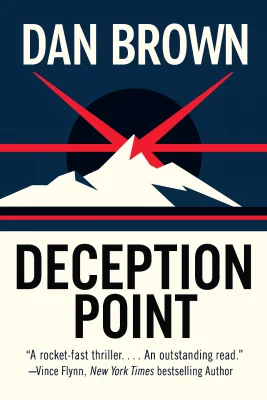
Deception Point
by Dan Brown
