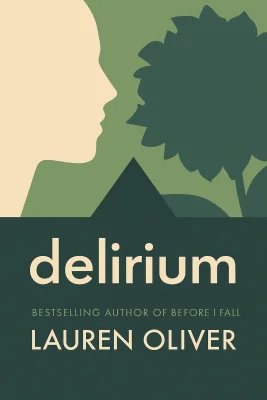
Delirium
Categories
Fiction, Science Fiction, Audiobook, Romance, Young Adult, Fantasy, Love, Teen, Post Apocalyptic, Dystopia
Content Type
Book
Binding
Paperback
Year
2012
Publisher
HarperCollins
Language
English
ASIN
0061726834
ISBN
0061726834
ISBN13
9780061726835
File Download
PDF | EPUB
Delirium Plot Summary
Introduction
# Love as Disease: A Rebellion Against the Cure The scalpel hovers inches from Lena Haloway's skull as she counts down her final days of freedom. In ninety-five days, on her eighteenth birthday, the government will slice away her capacity for love forever. Portland, Maine exists behind electrified fences, its citizens protected from amor deliria nervosa—the deadliest disease that kills you both when you have it and when you don't. Love has been declared humanity's greatest enemy, and the cure promises peace through lobotomy. But when cattle wearing hospital gowns stampede through her evaluation and a golden-haired boy winks at her from the observation deck, Lena's carefully ordered world begins to crack. In a society where even friendship between boys and girls requires surveillance, where her own mother supposedly died from love's madness, she discovers that the greatest rebellion isn't breaking rules—it's feeling everything they've tried to take away. As government raids sweep through the city and the procedure draws closer, she must choose between the safety of numbness and the dangerous, beautiful agony of being fully alive.
Chapter 1: The Sterile World: Awaiting the Cure for Love
The evaluation room reeks of antiseptic and fear. Lena sits rigid in the plastic chair, fluorescent lights blazing overhead as four scientists assess her worthiness for the procedure. At seventeen, she's already older than most when they receive their cure—a fact that marks her as potentially problematic. The questions come rapid-fire: symptoms of deliria, family history, signs of infection. When they ask about Romeo and Juliet, she stumbles. Instead of calling it a cautionary tale about love's dangers, the word "beautiful" slips from her lips. The evaluators' faces harden. Pens scratch against clipboards with the sound of judgment being rendered. Her favorite color is gray—not the approved blue or green, but the pale nothing color before sunrise that reminds her of waiting for something good to happen. Portland stretches beyond the laboratory windows, a city divided by invisible lines. Boys and girls attend separate schools, walk on opposite sides of streets, live in careful isolation until their procedures render such precautions unnecessary. The border fence looms in the distance, electrified and guarded, protecting them from the Wilds where the uncured supposedly live in savage chaos. Lena has grown up on stories of her mother's madness, how love drove Annabel Haloway to leap from the cliffs into the churning ocean below. The disease runs in families, they say. The Tiddles and Haloways carry the infection in their blood like a curse, making Lena's cure not just necessary but urgent. She tells herself she wants it, needs it, craves the peace it will bring. Her aunt Carol waits outside, relief evident when Lena emerges with a scheduled date: September third. Sixty-four days until safety. Sixty-four days until the part of her brain responsible for love, passion, and pain will be carefully destroyed, leaving behind the calm contentment she sees in every adult face around her. But late at night, when the city sleeps behind its walls, she sometimes wonders what her mother felt in those final moments—and whether it was worth dying for.
Chapter 2: First Contact: Meeting the Boy Who Changes Everything
Thunder fills the laboratory building, followed by screaming. The door to Lena's evaluation room bursts open and chaos pours in—a stampede of cattle wearing hospital gowns and wigs, their sides painted with "NOT CURE. DEATH" in dripping letters. Evaluators scramble onto tables as papers scatter like snow. In the mayhem, Lena spots a figure on the observation deck above. A boy with golden-brown hair watches the pandemonium unfold, and when their eyes meet across the chaos, he does the unthinkable: he winks at her. The gesture hits like electricity, dangerous and impossible to ignore. Then security floods the room, the cattle are herded away, and the mysterious boy vanishes as if he never existed. The incident invalidates all evaluations, giving Lena a second chance she doesn't want. Days later, while running with her best friend Hana near the laboratory complex, they encounter him again. Alex Warren, nineteen years old, works as a security guard with amber eyes and an easy smile. He claims not to remember Lena from the evaluation, but something in his manner suggests otherwise. Alex shows them a spectacular view of Casco Bay from behind the labs, pointing out how beautiful the ocean looks at sunset. His casual mention of Back Cove at eight-thirty feels like an invitation, though Lena tells herself she's imagining things. Hana, golden-haired and reckless, notices the way Alex looks at her friend—a look that should be impossible from someone who's been cured. That evening, despite every warning she's ever received, Lena bikes toward the cove as the sky blazes with color. A patrol stops her for an identity check, and by the time she reaches the meeting spot, the sun has already set. She returns home disappointed, convinced she's missed her chance. But Alex's amber eyes haunt her dreams, carrying traces of something wild and free that makes her pulse quicken despite everything she's been taught about the dangers of desire.
Chapter 3: Forbidden Awakening: The Bloom of Dangerous Emotions
Summer unfolds in stolen moments and secret meetings. Alex appears at her uncle's Stop-N-Save, making exaggerated comments about pork rinds and cauliflower soup that make her struggle not to laugh. When he mentions Back Cove again, Lena realizes he's giving her another chance—one she's no longer strong enough to resist. That evening at East End Beach, they race into the bay toward the floating buoys. The cold water, the competition, the simple joy of movement—everything seems heightened in Alex's presence. They float together beyond the safety markers, looking back toward Portland's white buildings and the dark wedge of wilderness beyond the northern border. But as they tread water, Alex's expression grows serious. He asks if she ever thinks about the Wilds, the unregulated lands beyond Portland's borders. When Lena touches the three-pronged scar behind his ear—the mark of the cure—he jerks away as if burned. Then comes his devastating confession: he was never cured. The scar is fake, carved with a knife to help him blend in. The revelation hits Lena like a physical blow. Everything she's been taught says Invalids are dangerous, diseased, barely human. As Alex explains how he came to Portland at age ten, how he's lived among sympathizers and resistance members, Lena feels her world tilting off its axis. She flees through the rising tide, swimming desperately for shore while Alex calls after her. With each secret encounter that follows, Lena feels herself changing. Colors seem brighter, food tastes richer, even the air carries new scents and possibilities. They meet at abandoned houses in Deering Highlands, neighborhoods emptied during the government's purge of sympathizers, where wild roses grow through broken windows. Alex shares fragments of poetry—banned words that speak of love as something beautiful rather than destructive. But the symptoms of deliria are becoming harder to hide, and the procedure date approaches like an executioner's blade.
Chapter 4: Shattering Revelations: Discovering the Truth About Mother
The Crypts stretch beneath Portland like a stone cancer, cells carved from bedrock where the government stores its most dangerous prisoners. Alex leads Lena through tunnels that reek of despair and human waste, past doors marked with numbers and dates of imprisonment. They're searching for the truth about her mother, the woman whose supposed suicide has shaped every day of Lena's life. In the deepest level, they find it: a cell marked with the word "love" carved into every surface. The walls tell a story of obsession and determination, letters scratched into stone with fingernails and makeshift tools. This is where Annabel Haloway spent her final years in Portland—not dead by suicide on the cliffs, but imprisoned for refusing to be cured. The tunnel she carved through the wall, letter by letter, word by word, tells the story of an escape, not a death. Her husband's military pin lies abandoned on the cell floor like a promise or a prayer. For twelve years, Lena has mourned a death that never happened, has lived with the weight of abandonment that was actually sacrifice. Alex's own father died in these tunnels after fourteen years of solitary confinement, his crime nothing more than loving too deeply to be cured. The boy who seemed so alive, so full of warmth and humor, carries his own burden of loss and rage. His real name is Alex Sheathes, and he comes from settlements in the Wilds where the uncured live in communities the government pretends don't exist. The knowledge transforms Lena's grief into fury, her fear into determination. Everyone she trusted—her aunt, her teachers, the entire structure of her society—has built their lives on lies. The cure isn't protection; it's lobotomy. The Wilds aren't chaos; they're freedom. And love isn't a disease to be eradicated but the most human thing of all, worth any price, any risk, any sacrifice. As they climb back toward the surface, Lena knows she's reached a point of no return.
Chapter 5: Underground Secrets: The Network of Love's Resistance
With less than two weeks until her procedure, Lena discovers that Portland's perfect control is an illusion. Alex reveals the network of resistance that exists even within the city's walls—cured and uncured working together to help people escape, to smuggle supplies, to maintain contact with the settlements beyond. The city that seemed so secure is riddled with cracks where humanity seeps through. Even some of the guards are sympathizers, their procedures incomplete or their hearts too strong to be fully silenced. The underground parties in abandoned buildings, the music that echoes through empty neighborhoods, the books of poetry hidden in secret compartments—all of it represents a rebellion that refuses to die despite decades of suppression. Hana covers for Lena's absences, spinning elaborate lies about study sessions and family visits. But even Hana notices the change in her friend—the way Lena's eyes have begun to shine with dangerous light, the way she moves through the world as if she's discovered some terrible secret. The gulf between them widens as Lena realizes that her best friend, for all her talk of freedom, isn't ready to pay its true price. Alex shows Lena places she never knew existed: rooftops where you can see beyond the fence, gardens where banned flowers bloom in defiance of regulations, houses where sympathizers gather to remember what it felt like to feel. Each revelation strips away another layer of the lies she's lived with, until she can barely recognize the frightened girl who once counted down the days to her cure. The procedure that once seemed inevitable now feels like a death sentence, promising to destroy the part of herself that has finally learned to feel alive. In Alex's arms, surrounded by the scent of wild roses and the sound of forbidden music, Lena understands what her mother was trying to tell her with her final words: "I love you. Remember. They cannot take it." Love isn't weakness—it's the greatest strength of all.
Chapter 6: Planning Freedom: The Decision to Cross into the Wilds
The plan requires perfect timing and desperate courage. They'll cross at the northern border where sympathizers have created gaps in the security, where the fence runs cold and the guards can be avoided. Alex has contacts in the Wilds, people who will help them reach the settlements where his mother's people live. It means leaving everything behind—family, friends, the only world Lena has ever known. Her aunt Carol grows suspicious of her behavior, her absences, the light that has begun to shine in her eyes. The woman who raised her after her mother's supposed death watches her with increasing alarm, as if she can see the infection spreading through Lena's veins like poison. The house that once felt like safety now feels like a cage, every conversation a trap waiting to spring. At her second evaluation, Lena answers every question perfectly. Blue is her favorite color. She wants to study psychology and social regulation. The definition of happiness is security. The evaluators smile approvingly, and she scores an eight out of ten. Soon after, she receives her list of approved matches: four young men selected by the government as suitable husbands, their hobbies including "watching the news" and "fantasy baseball." The matches feel like death sentences, glimpses of the empty life that awaits her if she submits to the cure. Brian Scharff and the others represent everything she's supposed to want—stability, safety, the blessed numbness of a life without passion or pain. But when she imagines their hands on her skin, their voices in her ear, she feels nothing but revulsion. The night before their planned escape, Lena lies awake counting the hours until dawn. Tomorrow she will either be free or dead—there are no other options. The procedure that once seemed like salvation now looms like an execution, promising to destroy everything that makes her who she is. In the darkness, she whispers her mother's name and prepares to follow in her footsteps, choosing love over safety, feeling over numbness, the dangerous beauty of being fully human.
Chapter 7: The Price of Escape: Sacrifice and Separation
The raid shatters the summer night like breaking glass. Sirens wail through Portland's streets as regulators sweep through the city, their mechanical voices echoing from loudspeakers: "This is a raid. Do not try to run." Lena races through the chaos toward their meeting place, but the abandoned house where she and Alex found sanctuary is surrounded by guards, their weapons gleaming in the harsh glare of floodlights. She's captured before she can reach him, clubbed unconscious and dragged back to her aunt's house like a diseased animal. They tie her to her bed with nylon cord, treating her infection like a contagion that might spread through touch or proximity. Her procedure is moved up to Sunday morning—no time for appeals, no chance for escape. Carol and Rachel speak of her as if she's already dead, the girl they knew replaced by something dangerous and unpredictable. Even little Grace is kept away, protected from the contamination of Lena's love. But Grace proves stronger than they imagine. In the dark hours before dawn, she creeps into Lena's room and gnaws through the restraints with her small teeth, freeing her cousin for one last desperate gambit. The window offers the only escape route, a two-story drop to the street below where Alex waits on a stolen motorcycle, his amber eyes blazing with determination and fear. They've found each other despite the raid, despite the odds, despite everything the government has done to keep them apart. The chase that follows is a symphony of violence and desperation. Bullets shatter the morning air as they race through Portland's empty streets, pursued by patrol cars and helicopters, the entire apparatus of the state mobilized to stop two teenagers in love. At the border fence, with guards closing in from all sides, Alex makes his choice—he creates a diversion, drawing their fire while Lena climbs to safety. The last image she has of him is burned into her memory: standing bloodied but unbroken in the spotlight's glare, his mouth forming a single word that carries across the distance like a prayer: "Run."
Chapter 8: Beyond the Fence: Rebirth in the Land of the Uncured
The Wilds embrace Lena like a living thing, all green shadows and wild music, air that tastes of freedom and possibility. She runs until her lungs burn and her legs give out, driven by Alex's final command and the knowledge that his sacrifice must not be meaningless. Behind her, Portland shrinks to a distant memory, its walls and rules and careful emptiness already feeling like something from another life. In the forest, she finds others like herself—refugees from the cured world, people who chose love over safety, passion over peace. Raven, fierce and scarred, becomes her guide into this new world. Julian, quiet and gentle, shows her how to survive without the government's protection. They teach her to hunt and gather, to read the signs of weather and season, to live in a place where the government pretends no one can survive. Here, children grow up knowing their own names, choosing their own paths, loving freely and without fear. The settlements that exist beyond the fence prove everything Portland taught her was a lie—love doesn't destroy civilization, it creates it. These communities flourish through cooperation and care, through the bonds that connect people when they're free to feel everything. But freedom comes with its own price. In the Wilds, there are no guarantees, no safety nets, no promises that love will not bring pain. People die here—from illness, from accidents, from the raids that sometimes penetrate even these deep places. Yet they choose to stay, choose to feel everything rather than nothing, choose the beautiful agony of being fully human. Lena learns to carry Alex with her, not as a wound but as a gift. His love transformed her from a frightened girl into someone capable of choosing her own destiny, of seeing through the lies that kept her caged. In the settlements beyond the fence, she discovers that love is not a disease but a form of resistance, not a weakness but the greatest strength of all. The cure that was supposed to save her would have killed everything that mattered, leaving behind only an empty shell wearing her face.
Summary
In the end, Lena's story becomes a testament to the power of love to transform not just individuals but entire worlds. Her journey from compliant citizen to rebel reveals the hollow core of a society built on fear, where the cure for love is really the death of everything that makes life worth living. The price of her freedom—Alex's sacrifice, her family's loss, the comfort of certainty—proves that some things are worth any cost. The Wilds that were supposed to be chaos turn out to be the only place where true order exists—the natural order of hearts choosing their own paths, of people living and dying and loving on their own terms. Lena's mother's escape, her own flight, and the network of resistance that spans both worlds suggest that love, like life itself, finds a way to survive even the most determined efforts to destroy it. In choosing feeling over numbness, pain over emptiness, the dangerous beauty of love over the safe sterility of the cure, Lena discovers that the greatest rebellion is simply being human.
Best Quote
“I love you. Remember. They cannot take it” ― Lauren Oliver, Delirium
Review Summary
Strengths: The book presents an original and compelling concept where love is treated as a disease, and the narrative voice is described as flowing, steady, and easy to follow. The storyline is engaging enough to maintain the reader's interest. Weaknesses: The review highlights a problematic use of language, specifically the misuse of "literally," which detracts from the reading experience. The protagonist, Lena, is perceived as weak and annoying, with her actions and comparisons inducing negative reactions. The book draws undeniable parallels to other works like "Matched" and "Uglies," which may affect its originality. Overall: The reviewer expresses a mixed sentiment, appreciating the book's concept and narrative style but criticizing character development and language use. The recommendation level appears cautious, with reservations about certain elements.
About Author

Lauren Oliver
Oliver explores the complexities of adolescence and self-discovery through narratives that intertwine emotional depth and dystopian elements. Her work often delves into themes of identity and societal control, as evident in the "Delirium" trilogy, a dystopian series that has reached a global audience, selling over two million copies. This intricate storytelling is complemented by her ability to adapt her novels into different media, as seen with "Panic", which she successfully transformed into a streaming series, showcasing her multifaceted skills as both author and media entrepreneur.\n\nHer contributions to literature extend beyond young adult fiction; Oliver has crafted compelling narratives for middle-grade readers with works like "Liesl & Po", nominated for the E.B. White Read-Aloud Award, and her adult novel "Rooms", which achieved bestseller status. Meanwhile, her entrepreneurial ventures include founding StoryGiants and co-founding Incantor AI, companies that innovate in literary IP management and digital media. Through these platforms, Oliver not only creates but also mentors, helping to shape nearly one hundred other books, thereby impacting both the literary and technological fields.\n\nReaders who engage with Oliver's books benefit from her immersive narrative style, which blends suspense, emotion, and character-driven storytelling. Her ability to write across age groups with distinct voices ensures a wide-ranging appeal, inviting readers to reflect on personal growth, societal norms, and the supernatural. Oliver's unique blend of literary and media endeavors positions her as a significant contemporary author whose work continues to resonate across various platforms.
Read moreDownload PDF & EPUB
To save this Black List summary for later, download the free PDF and EPUB. You can print it out, or read offline at your convenience.
Delirium
by Lauren Oliver
