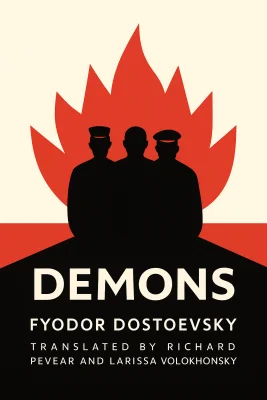
Demons
Categories
Philosophy, Fiction, Politics, Classics, Literature, 19th Century, Russia, Novels, Classic Literature, Russian Literature
Content Type
Book
Binding
Paperback
Year
1995
Publisher
Vintage
Language
English
File Download
PDF | EPUB
Demons Plot Summary
Introduction
# Demons Dancing: The Descent into Revolutionary Madness In the autumn of 1869, a train pulled into a sleepy Russian provincial town, carrying with it the seeds of destruction. Nikolai Stavrogin stepped onto the platform—tall, pale, devastatingly handsome—his marble features betraying nothing of the chaos that followed in his wake. Behind him came whispers of scandal, revolutionary pamphlets, and the acrid smell of conspiracy. The town's drawing rooms buzzed with nervous energy as old secrets surfaced like corpses from a thawed river. What began as social intrigue would soon explode into murder, arson, and the complete collapse of civilized order. At the center of it all moved Pyotr Verkhovensky, a young revolutionary with silver tongue and dead eyes, weaving his web of manipulation around the town's most vulnerable souls. He spoke of networks spanning all Russia, of the glorious destruction of the old world, but his true genius lay in understanding that revolution required not just ideas but the careful cultivation of human weakness. The demons were gathering for their dance, and before the music ended, blood would stain the cobblestones and madness would claim both the innocent and the guilty.
Chapter 1: The Return of the Beautiful Damned: Stavrogin's Homecoming
The scandal erupted during Sunday service at the cathedral, shattering the morning's sanctity like glass against stone. Nikolai Stavrogin knelt in his family's pew, his mother Varvara Petrovna beside him in rustling black silk, when Ivan Shatov approached with deliberate steps. The young man's face burned with righteous fury as his fist connected with Stavrogin's cheek, the sound echoing through the sacred space like a gunshot. The congregation froze in collective shock. Stavrogin swayed but did not fall, blood trickling from his split lip as he stood motionless for ten eternal seconds. His hand rose instinctively toward his attacker before stopping mid-air, trembling with suppressed violence. Then, with supernatural self-control, he clasped his hands behind his back and walked away, leaving Shatov standing alone in the stunned silence. The slap reverberated through the town's social circles like an earthquake. In drawing rooms and coffee houses, speculation ran wild about what had driven the mild-mannered former student to such violence. Shatov had once worshipped Stavrogin with the devotion of a disciple, following him through the radical circles of Petersburg before some terrible disillusionment drove them apart. Now he watched his former idol with the hatred of a true believer confronting a fallen god. Varvara Petrovna, the iron-willed widow who ruled both her estate and much of the town's hierarchy, struggled to comprehend her son's transformation. The passionate young man who had left four years ago had returned as something else entirely—beautiful still, but hollow, as if some essential part had been carved away. When she pressed him about his plans, his future, he answered in riddles or not at all, his pale eyes reflecting nothing. The first revelation came during what should have been a routine social call. A lame, painted woman named Marya Timofeevna Lebyadkin had appeared at the cathedral, her mad eyes burning with desperate recognition as she kissed Varvara Petrovna's hand. Now, in the elegant drawing room surrounded by the town's finest society, the terrible question hung in the air like a blade: "Is this unfortunate woman your lawful wife?" Stavrogin's response was silence more eloquent than any confession, and in that moment, the foundations of their carefully constructed world began to crack.
Chapter 2: Weaving the Web: Pyotr Verkhovensky's Revolutionary Conspiracy
Pyotr Verkhovensky arrived like a fever, infecting everything he touched with his revolutionary fervor. Small and nervous, with thinning hair and restless hands, he possessed an almost supernatural ability to identify weakness and exploit it. He had returned from abroad with pockets full of inflammatory pamphlets and a head full of dangerous ideas, but his true weapon was his tongue—silver-plated and sharp as a surgical blade. His first target was his own father, Stepan Trofimovich Verkhovensky, the aging liberal who had spent twenty years as Varvara Petrovna's pensioner. The old man represented everything Pyotr despised about the previous generation—their romantic idealism, their faith in gradual reform, their belief that poetry could change the world. With surgical precision, Pyotr began dismantling his father's comfortable existence, revealing to Varvara Petrovna the contents of private letters filled with complaints and bitter observations about her character. The confrontation was brutal in its efficiency. Twenty years of friendship crumbled into mutual recrimination as Pyotr displayed his father's correspondence like a prosecutor presenting evidence. When Stepan Trofimovich finally cursed his son and ordered him from the house, the young man simply smiled. He had achieved exactly what he intended—the complete isolation of a man who might have opposed his plans. Through careful manipulation, Pyotr assembled his network of conspirators. There was Liputin, the bitter clerk who delighted in others' misfortunes; Virginsky, the idealistic teacher whose wife harbored radical sympathies; and Shigalyov, the grim theorist who had calculated that true equality required nine-tenths of humanity to become slaves. Each man carried his own grievances, his own twisted dreams of power or revenge. But Pyotr's true prize remained tantalizingly out of reach. Nikolai Stavrogin possessed something the others lacked—a magnetic presence that drew people to him despite themselves. In Switzerland, Pyotr had glimpsed the depths of Stavrogin's nihilism, the complete absence of moral restraint that made him capable of anything. Such a man could become the perfect leader for a movement that sought to destroy everything in its path. The recruitment began with casual conversations about Russia's corruption, the need for radical change, and whispered promises of a vast network of revolutionary cells spreading across the empire. Most of it was lies, but lies told with such conviction that even Pyotr sometimes believed them.
Chapter 3: Seeds of Destruction: The Formation of the Revolutionary Cell
The meetings began innocuously in Virginsky's cramped apartment, where conspirators gathered under the pretense of discussing literature and social questions. But under Pyotr's guidance, these innocent salons transformed into something far more dangerous. The revolutionary cell that emerged was a grotesque parody of democratic organization, with each member bound to the others by chains of mutual suspicion and shared guilt. Pyotr understood that successful conspiracy required not just shared ideology but personal investment in the group's survival. He carefully cultivated each member's individual grievances, turning private resentments into revolutionary fervor. Liputin's wounded vanity became fuel for the cause. Virginsky's domestic humiliation—his wife openly entertaining other men while he preached free love—transformed into hatred for the social order that had failed to protect his dignity. The group's first test came when they learned of Shatov's intention to withdraw from their activities. His crisis of faith had led him to reject not just socialism but the entire project of revolutionary change. For Pyotr, this defection represented an existential threat. Shatov knew too much about their plans and possessed too much integrity to be trusted with their secrets. The decision to eliminate the traitor was presented as a matter of collective security, but its real purpose was to bind the remaining conspirators together through shared culpability. Once they had blood on their hands, retreat would become impossible. They would be revolutionaries not by choice but by necessity, united in their guilt as much as their ideology. Meanwhile, Kirillov, the philosophical engineer, conducted his own experiments with death and meaning. His obsession with suicide was not born of despair but of terrible logic—if God did not exist, then man must become God, and the ultimate expression of divine power was the ability to choose death over life. He spoke of his theories in broken Russian, his words tumbling over each other in their haste to escape the prison of his skull. Pain and fear, he argued, were the only barriers preventing universal suicide. Pyotr listened to these ravings with calculating interest, already seeing how Kirillov's philosophical suicide could serve more practical purposes.
Chapter 4: The Mask Falls: Public Humiliation at the Literary Fête
The literary gala was meant to showcase the town's cultural sophistication, but it became a theater of the absurd that exposed the rot beneath provincial society's polished surface. Yulia Mikhailovna, the governor's ambitious wife, had organized the event to raise funds for impoverished governesses while establishing herself as a patron of progressive causes. Instead, she found herself presiding over a public execution of everything she held dear. Stepan Trofimovich took the stage as the featured speaker, his hands trembling as he faced an audience that had already begun to turn hostile. He had prepared a passionate defense of art and beauty against the rising tide of materialism, but the crowd wanted blood sport, not philosophy. When he dared to suggest that poetry mattered more than practical concerns, voices rose in mockery. Someone shouted that a pair of boots was worth more than all of Shakespeare, and the mob roared its approval. The old liberal found himself drowning in a sea of contempt. These were not the respectful audiences of his youth, when ideas carried weight and words could change minds. This was a new generation that measured everything by its immediate utility and found his cherished ideals wanting. As he stammered through his prepared remarks about the eternal value of beauty, the crowd grew more restless, more cruel in its judgment. The evening descended into farce as other performers took the stage. Captain Lebyadkin, Marya Timofeevna's drunken brother, stumbled forward to recite doggerel verse that mocked the very cause the fête was meant to support. His bloated face purple with drink, he babbled about honor and secrets while waving crumpled banknotes like battle flags. The audience watched in horrified fascination as he exposed the sordid reality behind their charitable pretensions. The final blow came when news arrived that fires were burning across the river in the poor quarter of town. Panic seized the assembly as people realized that while they had been playing at culture, real destruction was consuming the wooden houses of Zarechye. The fête collapsed into chaos as the audience fled, leaving behind the wreckage of their social pretensions and the bitter knowledge that civilization's veneer was far thinner than anyone had dared imagine.
Chapter 5: Night of Blood and Fire: Murder and Arson Consume the Town
The night sky glowed orange as flames devoured the Zarechye district, turning wooden houses into torches and sending families fleeing into the streets with whatever possessions they could carry. The fires had been set deliberately at multiple points, a coordinated act of arson that spoke of careful planning and ruthless execution. As townspeople formed bucket brigades to fight the blaze, darker deeds unfolded in the shadows cast by the dancing flames. At the edge of town, in a modest house by the river, Captain Lebyadkin sat drinking himself into oblivion while his sister Marya Timofeevna hummed children's songs and played with paper dolls. They had no warning when the door burst open and death entered wearing a peasant's coat. Fedka the Convict, an escaped serf who had once belonged to Stepan Trofimovich, worked quickly and efficiently with his knife. The captain died drunk and unaware, his throat opened like a second mouth. His sister fought her killer, her body bearing multiple stab wounds, but madness was no match for murderous intent. The scene was staged to look like robbery, but the timing was too convenient to be coincidental. Someone had orchestrated this symphony of destruction with careful precision, using the chaos of the fires to settle old scores and eliminate inconvenient witnesses. Fedka moved through the burning district like a ghost, his scarred face hidden beneath a cap pulled low over his eyes, carrying out orders he didn't fully understand for money that would let him disappear forever into the vast Russian countryside. Liza Tushina, the beautiful young woman whose engagement to the honorable Mavriky Nikolaevich should have guaranteed her happiness, made a decision that sealed her fate. Against all advice, she ventured into the burning district to witness the destruction with her own eyes. She had spent the previous night with Stavrogin at his estate, finally surrendering to the attraction that had tormented her, only to discover that he felt nothing for her in return. Now she sought some kind of truth in the ashes and blood. The crowd at the murder scene was ugly and volatile, inflamed by rumors that Stavrogin had ordered his wife's death to free himself for a new marriage. When they recognized Liza as his lover, their rage found a target. Someone struck her down with a stone, and in the ensuing melee she was trampled to death while Mavriky Nikolaevich fought desperately to protect her. The revolution had claimed another innocent victim, and the night's work was complete.
Chapter 6: The Web Unravels: Betrayal and the Collapse of Conspiracy
The trap was set with meticulous care in the darkness beside the black waters of the park lake. Shatov arrived believing he was retrieving a hidden printing press, but instead found his former comrades waiting like wolves in the shadows. The murder was brutal and clumsy, nothing like the clean work of professional killers. These were ordinary men driven to extraordinary violence by ideology and fear, and their inexperience showed in every panicked blow. Shatov fought desperately for his life, but he was outnumbered and overwhelmed. When it was over, they weighted his body with stones and threw it into the dark water, watching the ripples spread outward in concentric circles until the surface was still again. Each conspirator carried away a piece of the collective guilt that would poison their remaining days, the knowledge that they had crossed a line from which there could be no return. Pyotr had arranged for Kirillov to provide the perfect cover for the crime. The engineer had long planned to commit suicide as a philosophical statement about the meaninglessness of existence, and now Pyotr convinced him to time his death to coincide with Shatov's murder. Kirillov would leave behind a confession taking responsibility for both that crime and the Lebyadkin killings, providing the perfect scapegoat for the conspiracy's darkest deeds. In his sparse quarters, Kirillov sat with the revolver in his hands, dictating the false confession that would shield his comrades from justice. His mad logic had led him to this moment—the ultimate expression of human freedom through the voluntary choice of death. When Pyotr finally left him alone, the sound of the gunshot echoed through the night like a final punctuation mark on the evening's work. But the conspiracy began to collapse under the weight of its own contradictions. Lyamshin, the weakest link in Pyotr's chain of conspirators, broke first under the pressure of guilt and terror. When the authorities came calling, he spilled secrets like water from a broken vessel, revealing the full scope of the revolutionary network. One by one, the other conspirators fell—Virginsky confessing with something approaching relief, Liputin trying desperately to bargain his way to freedom, each revelation exposing the hollowness at the heart of their grand revolutionary dreams.
Chapter 7: Final Judgments: Death, Confession, and the Price of Ideology
Stepan Trofimovich's last journey began as romantic gesture and ended as pilgrimage toward grace. The old liberal, humiliated at the literary gala and abandoned by his patron, set out on foot across the Russian countryside with nothing but a walking stick and dreams of finding the "real" Russia. What he discovered instead was something far more profound than his books had prepared him for—genuine human compassion in its simplest form. Rain soaked through his gentleman's clothes and mud clung to his European boots as the vast emptiness of the landscape dwarfed his literary pretensions. In a humble peasant cottage, tended by Sofya Matveevna, a simple woman who sold Gospels for a living, he found what had eluded him through decades of philosophical speculation. She possessed none of his education or cultural refinement, but she had something he lacked—a direct, uncomplicated faith that needed no elaborate justification. As fever consumed his body and delirium clouded his mind, she sat beside him with patient devotion, reading from the Gospels in her clear, simple voice. In his final hours, the old man who had spent his life talking about God finally encountered Him. The revelation came not through philosophical argument but through the humble service of a woman who asked nothing for herself. Varvara Petrovna arrived too late for reconciliation but in time for forgiveness. The proud woman who had controlled every aspect of her protégé's life for twenty years found herself kneeling beside his deathbed, finally able to speak the words that had been locked in her heart. Their love, complicated by pride and wounded by misunderstanding, found its resolution in the shadow of death. Meanwhile, Nikolai Stavrogin, the beautiful enigma around whom so much had revolved, found no peace in the aftermath of destruction. The demons that had driven him to such extremes offered no respite, no final satisfaction. In a letter to Darya Pavlovna, the woman who had loved him despite knowing his true nature, he laid bare the emptiness at his core—the terrible absence where a soul should have been. His final act was as enigmatic as everything else about him: the rope, the soaped cord, the carefully prepared note that blamed nothing and no one. He died as he had lived, alone and unreachable, his beauty intact but his spirit long since fled.
Summary
The grand revolutionary conspiracy collapsed into a sordid criminal investigation, its lofty ideals revealed as the delusions of damaged minds seeking meaning through destruction. Pyotr Verkhovensky vanished like smoke on the wind, escaping to Europe and leaving behind only wreckage and the bitter taste of betrayal. The network he had claimed stretched across all Russia was exposed as nothing more than a handful of provincial malcontents playing at revolution, their dreams of transformation reduced to a few murders and a night of arson that solved nothing and changed less. Yet in the midst of all this darkness, small lights had flickered against the encroaching night. Sofya Matveevna's simple faith, Stepan Trofimovich's final awakening to genuine love, the quiet heroism of those who chose compassion over ideology—these moments of grace suggested that even in the deepest spiritual winter, spring remained possible. The demons had danced their terrible dance and departed, but they had not conquered everything. In the end, it was not the revolutionaries or their victims who would inherit the earth, but those who had learned to see clearly in the darkness and still chose to believe in the light that no amount of human evil could permanently extinguish.
Best Quote
“If you want to overcome the whole world, overcome yourself.” ― Fyodor Dostoyevsky, Demons
Review Summary
Strengths: The review highlights Dostoyevsky's unique portrayal of human nature and the profound depth of "Demons" compared to his other works. It praises the novel's strong political elements and its exploration of power's corrupting influence. The review also notes the novel's modern relevance, drawing parallels between historical and contemporary terrorism. Overall: The review conveys a highly positive sentiment towards "Demons," describing it as Dostoyevsky's most powerful novel. It is recommended for its psychological, political, and religious insights, and its relevance to modern issues. The reviewer appreciates its depth and complexity, suggesting it surpasses other works by the author.
About Author
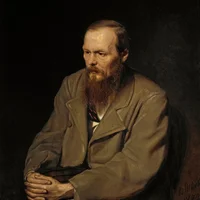
Fyodor Dostoevsky
Dostoevsky probes the human psyche and existential dilemmas with a penetrating depth that has left an enduring impact on literature. By situating his narratives within the tumultuous socio-political landscape of 19th-century Russia, Dostoevsky offers a critique of human nature and society. His philosophical exploration in works like "The Brothers Karamazov" delves into faith and morality, while "The Idiot" presents the complexity of innocence in a flawed world. His experiences, such as his exile to Siberia, profoundly shaped his narrative style and themes, leading to a profound exploration of sin, redemption, and the conflict between reason and passion.\n\nDostoevsky’s method combines intricate character development with an existential inquiry that interrogates the spiritual and moral questions of his time. This approach enables him to craft narratives that transcend simple storytelling, offering readers a deeper understanding of the human condition. For example, in "Crime and Punishment," the torment of Raskolnikov serves as a vehicle for examining guilt and redemption. Therefore, Dostoevsky’s works remain seminal in their psychological insight, influencing both contemporary literature and philosophy.\n\nFor readers, Dostoevsky's works provide a rich tapestry of thought-provoking themes that challenge the reader to reflect on their own beliefs and the nature of humanity. Those interested in the intersections of literature, philosophy, and psychology will find his novels invaluable, as they offer profound insights into existential and theological questions. This short bio encapsulates the author’s mastery in blending narrative with deep psychological and moral inquiry, making Dostoevsky’s books an essential part of the literary canon for anyone seeking a comprehensive exploration of the complexities of the human soul.
Read moreDownload PDF & EPUB
To save this Black List summary for later, download the free PDF and EPUB. You can print it out, or read offline at your convenience.
Demons
by Fyodor Dostoevsky
