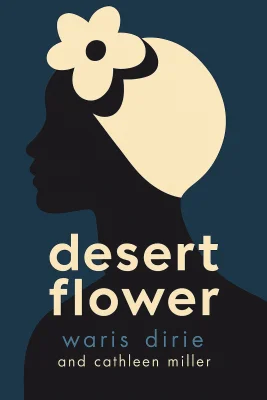
Desert Flower
Categories
Nonfiction, Biography, Memoir, Feminism, Africa, Womens, Autobiography, Biography Memoir, Contemporary, Somalia
Content Type
Book
Binding
Paperback
Year
2011
Publisher
William Morrow Paperbacks
Language
English
ASIN
0688172377
ISBN
0688172377
ISBN13
9780688172374
File Download
PDF | EPUB
Desert Flower Plot Summary
Introduction
In the vast expanse of the Somali desert, a young girl named Waris Dirie faced down a lion with nothing but acceptance in her heart. Weak from days without food or water, having fled an arranged marriage to an elderly man, she looked into the predator's golden eyes and whispered, "Come and get me. I'm ready for you." The lion, perhaps sensing something extraordinary in this skeletal child, turned and walked away. This moment of divine intervention would prove prophetic—Waris Dirie was destined for something far greater than anyone could imagine. From this beginning as a barefoot nomadic child herding goats in the African wilderness, Waris would transform into an international supermodel gracing magazine covers and runways worldwide, before ultimately finding her true calling as a United Nations Special Ambassador fighting against female genital mutilation. Her journey reveals three profound dimensions of the human experience: the incredible resilience required to survive and escape crushing poverty and oppression, the unexpected paths that can lead from the most humble origins to global recognition, and the moral courage needed to speak truth about cultural practices that cause immense suffering. Through her story, readers witness not just a remarkable personal transformation, but a blueprint for how individual pain can be alchemized into purpose, and how one person's voice can become a beacon of hope for millions of others trapped in silence.
Chapter 1: Childhood in the Desert: A Nomadic Beginning
Waris Dirie's earliest memories were painted in the golden hues of the Somali desert, where her family lived as traditional nomads following ancient patterns of survival. Born into a world where time was measured not by clocks but by the movement of shadows and the rhythm of seasons, she learned the fundamental lessons of life from the vast African wilderness. Her family of twelve children moved constantly across the desert, carrying their dome-shaped grass hut and few possessions on the backs of camels, always in search of water and grazing land for their livestock. The harsh beauty of nomadic life shaped every aspect of Waris's character. By age six, she was responsible for herding sixty to seventy sheep and goats alone into the desert each day, armed only with a long stick and her developing instincts. These solitary journeys taught her self-reliance and courage as she navigated the dangers of hyenas, lions, and wild dogs that constantly threatened her charges. The desert demanded vigilance and wisdom beyond her years—she learned to read the sky for signs of rain, to find the best grazing spots before other herders, and to calculate precisely how far she could travel before darkness fell and the predators emerged. Water was the most precious commodity in their world, and every drop was treasured. Waris watched her father disappear for days at a time with empty water containers strapped to camels, returning only when he had found a distant water source. Sometimes the family had to move camp while he was still searching, yet he always managed to track them down across the featureless desert using only his knowledge of wind patterns and animal sounds. This constant struggle for survival created an unbreakable bond between family members and instilled in Waris a deep appreciation for life's simplest gifts. The evenings brought the greatest joy of nomadic life, when the family would gather around fires fueled by frankincense wood, the aromatic smoke carrying their laughter across the desert night. Her mother, a woman of quiet strength and infectious humor, would tell stories and make jokes that kept spirits high despite their hardships. Her father, proud and handsome, served as the family's protector and decision-maker. These moments of togetherness under the vast African sky, with the bells of their camels creating a gentle musical backdrop, would remain Waris's most treasured memories throughout her life. The desert also taught Waris about the interconnectedness of all living things. She shared the landscape with elephants, giraffes, zebras, and countless other species, observing their behaviors and learning from their adaptations. When she discovered an ostrich egg and tried to take it home as a pet, the protective mother chased her at forty miles per hour, teaching her respect for the fierce maternal instincts that governed life in the wild. This intimate connection with nature would later contrast sharply with the artificial environments of London and New York, making her appreciate even more deeply the authenticity and wisdom of her nomadic upbringing. Despite the constant hardships—periods without food or water, the death of beloved animals during droughts, and the ever-present threat of danger—Waris's childhood was filled with a sense of freedom and belonging that money could never buy. The desert was her classroom, her playground, and her church, teaching lessons about resilience, community, and the sacred nature of life that would sustain her through every challenge that lay ahead.
Chapter 2: The Painful Tradition: Female Genital Mutilation
The practice that would forever alter Waris's life came wrapped in the guise of celebration and tradition. Female circumcision was presented to young girls in Somalia as a special rite of passage, a transformation from childhood to womanhood that every girl eagerly anticipated. Waris watched with envy as her older sister Aman underwent the procedure, begging her mother to let her be circumcised too. She had no understanding of what the ritual actually entailed—only that it marked her as special and grown-up, worthy of the adult world that seemed so fascinating and important. At the tender age of five, Waris finally got her wish. In the pre-dawn darkness, her mother led her to a secluded spot where an elderly woman known as "the Killer Woman" waited with her crude instruments. What followed was a horror beyond imagination—the systematic removal of Waris's external genitalia using a broken, rusty razor blade, with no anesthetic, no sterile conditions, and no medical knowledge to guide the procedure. The woman then stitched the wound closed with acacia thorns, leaving only a tiny opening barely the diameter of a matchstick. The immediate aftermath was a nightmare of pain, infection, and fear. Waris spent weeks lying alone in a hut, unable to move, her legs bound together to prevent the wound from tearing. Every bodily function became an agony—urination took ten minutes and felt like acid burning through her mutilated flesh. High fever from infection made her drift in and out of consciousness, and she accepted the possibility of death as preferable to the suffering she endured. The physical trauma was compounded by psychological confusion—she couldn't understand why her loving mother had allowed this to happen, or what purpose such cruelty could possibly serve. The long-term consequences would plague Waris for the rest of her life. Her menstrual periods became monthly nightmares lasting ten days instead of the normal five, as blood backed up behind the crude scarring. The pain was so excruciating that she would dig holes in the desert sand and bury herself up to her waist, desperately seeking relief from the earth's coolness. Years later, living in London as a maid, she would regularly faint from the agony, finally seeking medical help that revealed the full extent of the damage done to her body. What made the practice even more tragic was its universality in her culture. Waris discovered that her sister Halemo had died from the procedure, bleeding to death in her recovery hut. Countless other girls in their community simply disappeared after their "special day," victims of infection, shock, or hemorrhage. Yet the practice continued, generation after generation, supported by the belief that uncircumcised women were unclean and unmarriageable. Mothers inflicted on their daughters what had been inflicted on them, not from cruelty but from love—the desperate desire to ensure their girls could find husbands in a society where unmarried women had no place. The psychological impact was perhaps even more devastating than the physical damage. The procedure robbed Waris of her sexual identity before she even understood what sexuality meant. It marked her as property rather than a person, damaged goods designed to ensure male ownership and control. The message was clear: women's bodies existed for men's pleasure and peace of mind, not for their own experience of joy or fulfillment. This violation of her most intimate self would shape her relationships, her self-image, and ultimately her mission in life. As an adult, Waris would come to understand that her experience was not unique but shared by millions of women across Africa and beyond. The ritual that had been presented as a celebration of her womanhood was actually its destruction—a practice rooted not in religion or necessity, but in ignorance, superstition, and the systematic oppression of women. This realization would transform her personal pain into a global crusade, making her voice a powerful weapon against a tradition that continued to mutilate 6,000 girls every day around the world.
Chapter 3: Escape to Freedom: The Journey to London
The catalyst for Waris's dramatic escape came when her father announced he had arranged her marriage to an elderly man in exchange for five camels. At thirteen, with barely any understanding of what marriage entailed, she knew instinctively that accepting this fate would mean the end of any dreams she harbored for a different life. The groom was at least sixty years old, walked with a cane, and represented everything Waris feared about her future—a lifetime of servitude in the desert with no hope of change or growth. On the night before her intended husband was to arrive with his camels, Waris made a desperate plea to her mother. In whispered conversation by the dying fire, she begged to be allowed to run away to find her aunt in Mogadishu, Somalia's capital. Her mother, perhaps recognizing something of her own frustrated dreams in her daughter's eyes, agreed to help. Before dawn, she woke Waris with a simple command: "Go now." With nothing but a scarf wrapped around her body and no possessions except her determination, Waris ran barefoot into the black desert night. The journey that followed tested every survival skill the desert had taught her. For days she ran across the burning sand, guided only by instinct and prayer, with no food, water, or protection from the elements. Her father pursued her, tracking her footprints across the dunes and calling her name across the vast emptiness. She evaded him by changing direction, walking on rocky ground where she would leave no traces, and pushing herself beyond the limits of endurance. The desert that had been her home became an adversary, offering no comfort to the fleeing child. When her strength finally gave out, Waris faced the lion that would become a defining moment in her mythology. Weak from starvation and dehydration, she found herself staring into the golden eyes of a magnificent predator who could have ended her journey in an instant. Instead of fear, she felt acceptance—even relief at the prospect of a quick death rather than slow starvation. But the lion, perhaps sensing that this skeletal child posed no threat and offered little sustenance, simply walked away. To Waris, this was divine intervention, a sign that God had bigger plans for her life. Her arrival in Mogadishu marked the beginning of a new chapter fraught with different dangers. The bustling capital city, with its Italian colonial architecture and modern conveniences, was as foreign to the desert nomad as another planet. She navigated a series of increasingly difficult situations—staying with relatives who treated her as an unpaid servant, working construction jobs that left her hands bloody and raw, and constantly searching for her place in a world that had no obvious role for a runaway nomad girl. The opportunity that would change everything came when she encountered Mohammed Chama Farah, the Somali ambassador to London, who was looking for domestic help. Despite her youth and obvious inexperience, something about Waris's determination impressed him. When she boldly declared that she was excellent at cleaning and cooking, he agreed to take her to London. The prospect of traveling to England—a place she had never heard of but that sounded impossibly far from forced marriage and limited horizons—filled her with excitement. The journey to London represented more than just physical travel; it was a leap from the medieval to the modern, from a life circumscribed by tradition to one of infinite possibility. As the airplane lifted off from Mogadishu, carrying the teenage nomad toward a future she couldn't even imagine, Waris left behind not just her family and homeland, but an entire way of life that had remained unchanged for thousands of years. The girl who had faced down a lion in the desert was about to encounter challenges that would prove even more formidable—and opportunities that would transform her into a voice for millions of voiceless women around the world.
Chapter 4: Breaking Into Modeling: An Unexpected Career
Waris's entry into the modeling world began not with glamorous photo shoots or runway shows, but through the persistent attention of Malcolm Fairchild, a photographer who spotted her walking to school near the Somali ambassador's residence in London. For over a year, this mysterious white man with a ponytail would appear whenever she accompanied her young cousin to All Souls Church School, attempting to communicate with someone who spoke almost no English and viewed all strangers with deep suspicion. Living as a servant in her uncle's household, Waris had no understanding of what modeling entailed or why anyone would want to photograph her. Her world consisted of endless chores—preparing breakfast at dawn, cleaning four floors of the elegant townhouse, and caring for seven children—with no time for frivolous pursuits like fashion or beauty. When Malcolm finally approached her family directly, her aunt dismissed him with anger and suspicion, assuming he was some sort of predator with dishonorable intentions. It was only after her uncle's diplomatic assignment ended and Waris found herself alone in London that she decided to explore the business card Malcolm had pressed into her hand. Accompanied by her friend Halwu for protection, she ventured into his studio and discovered a world of stunning images featuring beautiful women adorning the walls. Something deep inside her recognized this as her destined path, the same inexplicable knowing that had told her to flee into the desert years earlier. Malcolm's first photoshoot revealed Waris's extraordinary bone structure and exotic beauty. Using only half her face in profile and transforming one side with professional makeup, he created an image that captured the essence of her African heritage while presenting it in a thoroughly modern context. The resulting photographs showcased the sharp cheekbones, elegant neck, and piercing eyes that would soon make her one of the most recognizable faces in fashion. Her early career was marked by a series of increasingly prestigious assignments that seemed almost too good to be true for someone who had been scrubbing floors at McDonald's just months earlier. Terence Donovan, one of Britain's most celebrated photographers, selected her for the Pirelli calendar, a coveted assignment that required her to overcome her modesty about nudity and embrace the artistic vision of the project. The six-day shoot in Bath became a masterclass in professionalism, teaching her the rhythms and requirements of high-fashion photography. The breakthrough that launched her into international recognition came with her casting in the James Bond film "The Living Daylights." Although her role was minimal—essentially playing "a beautiful girl lying around the pool"—the exposure led to her image appearing on the cover of The Sunday Times of London. This cover shot, with her bleached-blonde hair blazing and determined expression staring directly at the camera, announced the arrival of a new kind of model: one whose exotic beauty and mysterious background could not be easily categorized or contained. What set Waris apart in the modeling world was not just her striking appearance, but her authenticity and groundedness. Having grown up in genuine hardship and isolation, she brought a natural unselfconsciousness to the camera that no amount of training could replicate. Her movements had the fluid grace of someone accustomed to walking long distances over difficult terrain, and her expressions carried the depth of someone who had faced real danger and loss. The transition from complete obscurity to international recognition happened with breathtaking speed, but Waris approached each new opportunity with the same pragmatic attitude she had learned in the desert. Modeling was simply the latest challenge to master, requiring different skills than herding goats or cleaning houses, but fundamentally no more mystifying. Her success stemmed partly from treating each photo shoot as a job to be done well rather than as validation of her worth or beauty, maintaining the emotional distance that had helped her survive every previous upheaval in her life.
Chapter 5: Finding Her Voice: Becoming a UN Ambassador
The transformation from fashion model to human rights advocate began with a single courageous decision that would define the rest of Waris's life. In an interview with Marie Claire magazine, she made the unprecedented choice to speak publicly about her circumcision, breaking a silence that had protected her privacy but also perpetuated the suffering of millions of other women. The decision came from deep within her soul—a recognition that her platform as a successful model gave her both the opportunity and the responsibility to speak for those who had no voice. The magazine article, titled "The Tragedy of Female Circumcision," created an immediate and powerful response from readers who had never imagined that such practices continued in the modern world. Letters poured in from women expressing horror, outrage, and desperate desire to help end the mutilation of young girls. The response revealed both the shocking ignorance that existed about female genital mutilation in Western countries and the deep wellspring of compassion that emerged once people understood the reality of what was happening. Barbara Walters, having read the article on an airplane, was so disturbed by the story that she initially couldn't finish reading it. However, she recognized the importance of bringing this issue to a broader audience and invited Waris to appear on 20/20 for a segment titled "A Healing Journey." Speaking on camera about her most intimate trauma required enormous courage, as Waris knew she was exposing her deepest vulnerability to millions of viewers while simultaneously challenging cultural practices that many people considered sacred traditions. The television appearance caught the attention of the United Nations Population Fund, which had been working to combat female genital mutilation but lacked a powerful spokesperson who could speak from personal experience. When they invited Waris to become a Special Ambassador, she accepted the role with the same certainty that had guided her major life decisions—fleeing into the desert, staying in London, and pursuing modeling. She understood that this was why she had survived the lion, escaped the desert, and achieved international recognition. As a UN Ambassador, Waris gained access to the horrifying statistics that put her personal experience into global context. She learned that 130 million girls and women had undergone various forms of genital mutilation, with 2 million more at risk each year—6,000 every single day. The practice occurred in twenty-eight countries across Africa, performed by traditional practitioners using razor blades, knives, scissors, broken glass, sharp stones, and sometimes even teeth, with no anesthetic and no medical training. The long-term health consequences she had experienced personally—chronic pain, difficult menstruation, urinary problems, and sexual dysfunction—were shared by millions of women whose suffering remained invisible and unspoken. Many died from immediate complications like shock, infection, and bleeding, while others faced lifelong struggles with childbirth complications, recurring infections, and psychological trauma. The practice had no basis in religious doctrine, despite claims to the contrary, but was perpetuated by ignorance, superstition, and the systematic oppression of women. Her advocacy work required her to confront not only the perpetrators of these practices but also their victims—mothers who, out of love for their daughters and fear for their marriageability, continued to subject new generations to the same mutilation they had endured. Waris understood their dilemma intimately, having grown up in a culture where unmarried women had no place or protection, but she also recognized that silence and acceptance would only perpetuate the cycle of suffering. The courage required for this work extended beyond public speaking to personal risk. Religious fundamentalists and cultural traditionalists viewed her activism as an attack on sacred practices, and she received threats from those who preferred to keep the suffering of women hidden from international scrutiny. Yet she pressed forward, driven by the knowledge that every day she remained silent, 6,000 more girls would be subjected to the same brutality that had scarred her own childhood and continued to affect her adult life.
Chapter 6: Personal Triumph: Love, Motherhood and Identity
The personal happiness that had eluded Waris throughout her adult life finally arrived in the most unexpected way, in a small jazz club in New York's Greenwich Village. After years of avoiding romantic relationships due to the physical and emotional complications of her circumcision, she found herself irresistibly drawn to a shy drummer named Dana Murray. Their meeting was serendipitous—she had simply wanted to check out the club below her old apartment—but the connection was immediate and undeniable. Dana represented everything that had been missing from Waris's previous relationships: gentleness, authenticity, and the patience to understand her complex history without judgment or pity. Unlike the various men who had pursued her during her modeling career, often drawn by her fame or exotic appeal, Dana fell in love with her essence before he even knew she was a model. Their courtship unfolded naturally, built on long conversations and genuine compatibility rather than the superficial attractions that had characterized her earlier romantic encounters. When Waris discovered she was pregnant, the news brought a joy she had never expected to experience. Having lived for so long with the belief that her mutilation had robbed her of the fundamental experiences of womanhood, the prospect of bearing a child felt like a miraculous restoration of what had been stolen from her. The pregnancy also deepened her connection to her mother and the generations of strong women who had preceded her, creating a bridge between her traumatic past and hopeful future. The birth of her son Aleeke—whose name means "strong lion" in Somali—marked a profound transformation in Waris's understanding of her own identity and purpose. Holding her newborn child, she experienced the same fierce protective instincts that had driven her own mother to wake her in the darkness and send her running toward freedom. Motherhood gave her a visceral understanding of the impossible choices faced by women in her homeland, who mutilated their daughters out of love, believing it was necessary to secure their futures in an unforgiving society. Becoming a mother also intensified her commitment to ending female genital mutilation. The thought of her own son potentially having daughters who might be subjected to such brutality if cultural practices remained unchanged gave new urgency to her advocacy work. She could envision a future where her grandchildren would grow up in a world where no little girl would have to endure what she had suffered, where the ancient traditions of torture would finally be recognized as incompatible with human dignity and basic medical knowledge. The experience of natural childbirth, despite its pain and difficulty, provided a stark contrast to the artificial agony inflicted by circumcision. Where the latter had been meaningless suffering imposed by human ignorance and cruelty, childbirth represented the purposeful pain that brings new life into the world. The difference helped her articulate why cultural practices that caused suffering without serving any beneficial purpose needed to be abandoned, regardless of their historical precedent or traditional significance. Marriage to Dana and the establishment of a stable family life also gave Waris the emotional foundation she needed to continue her increasingly dangerous work as an activist. Knowing that her son would grow up with a father's love and protection, and that she had created a home filled with the warmth and laughter she remembered from her own childhood around the desert fires, provided the strength necessary to face the threats and criticism that accompanied her public stance against female genital mutilation. The personal healing that came through love, marriage, and motherhood did not erase the physical and emotional scars of her circumcision, but it transformed their meaning. What had once been purely a source of shame and limitation became part of the foundation for her unique ability to speak with authority about the devastating consequences of cultural practices rooted in the oppression of women. Her hard-won happiness provided both the credibility and the courage necessary to challenge traditions that had remained unquestioned for thousands of years.
Summary
Waris Dirie's extraordinary journey from African nomad to international model to United Nations Ambassador demonstrates that individual courage, when aligned with divine purpose, can transcend even the most crushing circumstances to create profound change in the world. Her transformation from a voiceless victim of cultural brutality into a powerful advocate for human rights proves that our deepest wounds, when courageously examined and shared, can become the source of our greatest contributions to humanity. The most profound lesson of her life lies in the recognition that authentic strength emerges not from avoiding pain, but from transforming personal suffering into purposeful action that serves others. For readers facing their own challenges, Waris's story suggests two essential principles: first, that survival often requires the courage to leave behind familiar circumstances, no matter how frightening the unknown may seem; and second, that finding one's true calling often involves speaking the truths that others are afraid to voice. Her journey reminds us that the most meaningful work we can do often emerges from our deepest struggles, and that using our voices to protect the vulnerable may be the highest expression of our humanity.
Best Quote
“I feel that God made my body perfect the way I was born. Then man robbed me, took away my power, and left me a cripple. My womanhood was stolen. If God had wanted those body parts missing, why did he create them? I just pray that one day no woman will have to experience this pain. It will become a thing of the past. People will say "Did you hear, female genital mutilation has been outlawed in Somalia?" Then the next country, and the next, and so on, until the world is safe for all women. What a happy day that will be, and that's what I'm working toward. In'shallah, if God is willing, it will happen. ” ― Waris Dirie, Desert Flower
Review Summary
Strengths: The book is praised for its emotional impact and inspirational narrative, particularly highlighting Waris Dirie's journey from a nomadic childhood in Somalia to becoming a renowned model and activist. The direct and honest storytelling is commended for its ability to engage readers deeply, making them feel as if they are conversing with a friend. The book effectively raises awareness about the issue of female genital mutilation, with Waris Dirie serving as a powerful spokesperson against the practice. Weaknesses: Some reviewers noted that the book's literary quality is average, with certain sections, particularly those detailing Waris's later life, perceived as more superficial and less engaging. Additionally, the depiction of female genital mutilation is not extensively detailed in parts. Overall: The general sentiment is positive, with readers appreciating the book's emotional depth and the important message it conveys. It is recommended for those interested in autobiographies and social issues, despite some critiques on its literary execution.
About Author

Waris Dirie
Dirie reframes her personal narrative into a powerful catalyst for social change, using her experiences to illuminate the broader fight against female genital mutilation (FGM). Her writing combines autobiographical detail with advocacy, as seen in her renowned book "Desert Flower," which broke international silence about the practice of FGM. This bestseller, adapted into a film, set the stage for a Europe-wide campaign against the harmful tradition. Dirie’s works, such as "Desert Dawn" and "Desert Children," serve as a bridge between her traumatic past and her present as a formidable voice in human rights activism. \n\nDirie’s journey from a nomadic upbringing in Somalia to the global stage reflects her resilience and determination to effect change. Her bio illustrates her transition from an international modeling career to a focus on writing and advocacy, underscoring her commitment to eradicating FGM. Her establishment of the Desert Flower Foundation exemplifies this mission, providing support and raising awareness worldwide. Meanwhile, her accolades, including the Women's World Award, validate her influence and dedication to women's rights. Through her works and activism, Dirie connects deeply with readers and advocates, offering hope and mobilizing action against practices that endanger women and girls globally.
Read moreDownload PDF & EPUB
To save this Black List summary for later, download the free PDF and EPUB. You can print it out, or read offline at your convenience.
Desert Flower
by Waris Dirie
