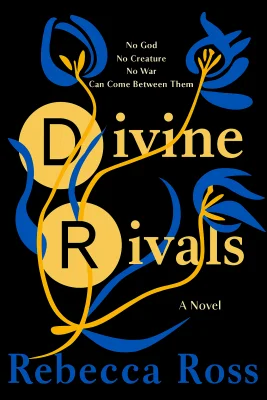
Divine Rivals
Categories
Fiction, Audiobook, Historical Fiction, Romance, Young Adult, Fantasy, Romantasy, Fantasy Romance, Enemies To Lovers, Young Adult Fantasy
Content Type
Book
Binding
Hardcover
Year
2023
Publisher
Wednesday Books
Language
English
ISBN13
9781250857439
File Download
PDF | EPUB
Divine Rivals Plot Summary
Introduction
# Letters Through Wardrobe Doors: Correspondents of War and Magic The typewriter keys clicked like bones in the darkness as Iris Winnow typed her final letter to a brother who would never read it. Outside her cramped flat, the city of Oath slept uneasily while gods waged war in the western territories. Dacre, the ancient deity of shadow and flame, had awakened from centuries of slumber with a single burning question: where was Enva, his divine rival who had vanished without trace? His rage scorched entire towns as he searched, forcing mortals to choose sides in a conflict that predated their civilization. But Iris knew nothing of divine politics. She knew only that Forest, her beloved older brother, had heard Enva's call to war and disappeared into the mist six months ago without sending a single word home. In her grief and desperation, she had begun sliding letters beneath her wardrobe door, a childhood game that somehow transported her words across impossible distances to a mysterious correspondent who signed himself only as Carver. What began as messages meant for her missing brother became something far more dangerous—a correspondence that would reshape her understanding of love, rivalry, and the magic that connects two souls across the chaos of war.
Chapter 1: Rivals in Ink: The Competition That Sparked Connection
The Oath Gazette newsroom buzzed with the particular tension that comes when two predators circle the same prey. Iris Winnow clutched her coffee cup like a weapon as Roman Kitt strode through the office, his perfectly tailored jacket and confident smile making her stomach churn with familiar resentment. The columnist position—the one she had clawed and fought for through months of brutal competition—had been handed to him like a birthday gift. Roman came from railroad money, his family name opening doors that remained forever locked to working-class girls like Iris. He arrived each morning with three dictionaries and two thesauruses, arranging them on his desk with military precision. She countered by rearranging them whenever he stepped away, savoring the flash of irritation that crossed his aristocratic features. Their editor Zeb Autry watched their rivalry with calculating eyes. He had hired Iris after her essay won a citywide contest, impressed by raw talent that cut through readers' defenses like a blade. But Roman wrote with silk-smooth polish, his articles flowing like expensive wine while hers burned with working-class fire. When tragedy struck—when Iris's mother stumbled drunk into traffic one rain-soaked night—Roman tried to convince Zeb to give her more time. The gesture felt like pity, and pity was worse than hatred. Standing in the funeral parlor, identifying her mother's broken body, Iris felt something crack inside her chest. Not her heart—that had shattered months ago when Forest vanished. Something deeper. The part that believed success at the Gazette mattered more than finding the only family she had left. She resigned the next morning, ignoring Zeb's threats and Roman's protests, and within hours the Inkridden Tribune hired her as a war correspondent. Helena Hammond, their gruff editor, admired Iris's determination and her grandmother's antique typewriter—one of only three magical Alouettes ever made. The typewriter had belonged to Daisy Winnow, a woman of few words but deep poetry. Hidden beneath its frame was a silver plaque: "THE THIRD ALOUETTE / MADE ESPECIALLY FOR D.E.W." For months, Iris had been sliding letters beneath her wardrobe door, hoping somehow they would reach Forest in the war zone. To her amazement, the papers vanished each night, and eventually, impossibly, responses began to arrive.
Chapter 2: Words Through Doors: The Magic of Anonymous Letters
The first response contained only four words that changed everything: "This isn't Forest." Fear and curiosity warred in Iris's chest as she stared at the unfamiliar handwriting. Who was reading her most private thoughts, her raw confessions about their mother's drinking and her own desperate loneliness? The mysterious correspondent revealed himself slowly, like dawn breaking over a battlefield. He was an older brother who had lost his sister Del in a drowning accident four years prior. He understood grief, guilt, the way loss could reshape a soul until you no longer recognized yourself in mirrors. He signed his letters simply "C" and later revealed his nickname: Carver. Their correspondence became a lifeline across impossible distance. He shared myths about the gods—how Dacre had once pursued Enva through the underworld, how she had escaped his realm through cleverness and music, how their ancient hatred now spilled mortal blood like wine. She told him about her work, her fears, her growing feelings for someone she had never met but who seemed to understand her better than anyone in her physical world. The magic connecting their typewriters transcended space and perhaps time itself. The Alouettes had been crafted decades ago by an eccentric inventor whose daughter died young, designed to connect three friends separated by illness. Now they linked strangers across a war zone, allowing hearts to touch when bodies could not. Carver's letters arrived like gifts, filled with gentle wisdom and surprising vulnerability. "You remove a piece of armor for them," he wrote about her letters to wounded soldiers. "You let the light stream in, even if it makes you wince. Perhaps that is how you learn to be soft yet strong, even in fear and uncertainty." His words made her feel seen in ways that terrified and thrilled her. When Iris announced her departure for the western front, Carver's response was swift and desperate: "Don't go. Please. The front lines are no place for someone like you. But if you must... be careful. Write to me. I'll be waiting for every word." She had no idea that across the city, Roman Kitt sat at his own typewriter, his hands shaking as he typed his response to the girl who had unknowingly captured his heart through words alone.
Chapter 3: Journey to War: When Duty Calls Hearts Westward
The train west carried Iris away from everything familiar toward a war she had only read about in sanitized newspaper accounts. Avalon Bluff crouched in the shadow of conflict like a town under siege, its windows boarded against the night when Dacre's hounds stalked the streets seeking light to devour. Sirens wailed warnings of approaching eithrals, winged creatures whose shadows promised death from above. Marisol Torres ran the bed and breakfast where correspondents stayed, her warm smile hiding constant worry for her wife Keegan, fighting somewhere in the trenches. She taught Iris and her fellow correspondent Attie about survival—how to read the sirens, when to run, where to hide. The garden they planted together became a symbol of faith in tomorrow, seeds trusting in soil despite the bombs that fell like deadly rain. Iris found purpose in the converted school that served as an infirmary, writing letters for wounded soldiers too broken to hold pens themselves. Their words flowed through her fingers onto paper—messages of love, regret, hope sent to families who might never see their children again. The work was heartbreaking and sacred, giving voice to those who had sacrificed everything for strangers' freedom. Her correspondence with Carver continued across the distance, his letters becoming more urgent and personal. "I want to see you," he wrote. "I want to hear your voice. When this war is over, will you come home to me?" She found herself falling in love with words on paper, with a mind that matched hers in every way that mattered. Then came the morning when eithrals darkened the sky over Avalon Bluff, their wings casting death-shadows across the golden fields. Iris watched through binoculars as a lone figure walked across the grass, ignoring the siren's warning. Her heart stopped when she recognized the sharp jaw and dark hair. Roman Kitt, carrying a typewriter case, striding toward certain death with infuriating confidence. She ran without thinking, across gardens and stone walls, through grass that caught at her legs like grasping fingers. They collided in the field as winged creatures circled overhead, her momentum driving them both to the ground. For endless minutes they lay frozen, her body pressed against his, sharing breath and terror as death wheeled above them on membranous wings.
Chapter 4: Unmasking Carver: The Revelation That Changes Everything
Roman's presence in Avalon Bluff disrupted everything Iris thought she understood about her life. He claimed to be there as another war correspondent, but she suspected ulterior motives. Worse, he made her feel things she didn't want to feel—a dangerous warmth when he looked at her, a flutter in her chest when he said her name with unexpected gentleness. The letters to Carver became her refuge from confusion. "My rival from work has appeared here," she wrote. "I'm not sure what to do with him being next door. He confuses me in ways I can't explain." Carver's response carried an edge she had never heard before: "This rival sounds like a fool if he's competing with you. You'll best him in every way, I'm certain." Suspicion grew like a cancer in her mind. Roman's behavior, his words, even the way he looked at her—everything felt familiar in a way that made her heart race with impossible hope. The morning she found her own letters scattered across the floor of his room, her world tilted on its axis. "You," she breathed, holding up pages covered in her most intimate thoughts. "Me," Roman replied simply, his blue eyes vulnerable in a way she had never seen. The revelation hit like a physical blow. Roman Carver Kitt—her rival, her correspondent, the boy who had been reading her soul for months while she poured her heart onto pages that disappeared through magical thresholds. Rage and embarrassment warred with something deeper, something that felt dangerously like relief. "How long have you known?" she demanded, her voice shaking with betrayal. "From the beginning," he admitted. "I knew from your first letter about the columnist position. I wanted to tell you, but I was afraid you'd stop writing. Everything I wrote to you was true, Iris. Every word. I love you." The kiss that followed was inevitable, desperate, full of months of longing finally given voice. When they broke apart, both breathing hard, Iris felt the last of her armor fall away. This was Roman—her Carver, her rival, her heart's unexpected choice. In Marisol's garden, surrounded by vegetables they had planted together, he proposed with ancient vows under stars that had witnessed countless wars. That night, in the darkness of their shared room, two souls finally became one.
Chapter 5: Love in the Trenches: Marriage Under Fire
The lorry bounced over rutted roads toward the western front, carrying supplies and two correspondents who had no idea what awaited them in the communication trenches. Iris found herself pressed against Roman's chest for most of the journey, his arm around her waist to keep her from flying through the windshield. The intimacy was maddening—his cologne mixing with road dust, his breath in her hair, the steady beat of his heart against her spine. Lieutenant Lark of the Sycamore Platoon welcomed them with a scarred smile and gentle eyes that had seen too much. He explained the rotation system—twelve hours in the trenches, twelve in reserve, an endless cycle of vigilance and exhaustion. The abandoned town served as their base, every building repurposed for war. Churches became armories, schools turned into hospitals, homes transformed into barracks where soldiers wrote final letters to families they might never see again. The trenches carved through earth like infected wounds, walls of mud and timber holding back the darkness. Soldiers huddled in alcoves, cleaning weapons by candlelight or staring at photographs worn soft by desperate fingers. The smell was overwhelming—unwashed bodies, gunpowder, fear, and something else she couldn't name. Death, perhaps, or the absence of hope. Roman stayed close beside her, his usual arrogance replaced by wide-eyed alertness. They found a corner to claim as their own, spreading blankets on damp earth while around them the Sycamore Platoon settled in for another night of waiting. Artillery fire painted the distant horizon red, a constant reminder that somewhere across no man's land, Dacre's forces prepared their own assault. The attack came without warning—a barrage of shells that shook the earth and filled the air with screaming metal. In the chaos that followed, a grenade landed between them. Roman threw himself forward, shielding Iris with his body as the explosion tore through the trench. When smoke cleared, he lay bleeding from shrapnel wounds while she remained miraculously unharmed. "Don't leave me," he whispered as she helped carry wounded soldiers to safety. "You and I... we need to stay together. We're better this way."
Chapter 6: Green Fog and Separation: When War Tears Apart What Love Built
Dawn brought eithrals and green gas that turned morning air poisonous. Iris woke to explosions that shook Marisol's boarding house to its foundations, plaster raining down as Dacre's forces launched their final assault on Avalon Bluff. In the chaos of evacuation, she and Roman were separated—he helping wounded soldiers while she searched desperately for Marisol and Attie. A figure in a gas mask found her in the confusion, grabbing her hand with painful intensity. "Come with me," the distorted voice commanded. "We need to run." Iris followed, trusting it was Roman beneath the mask, until she saw another figure stumbling through the poisonous fog—the real Roman, bloodied and limping, calling her name with desperate urgency. Horror crashed over her as she realized the truth: her rescuer was a stranger, dragging her away from the man she loved. She fought then, clawing and kicking, but her captor's grip was iron. Only when he spoke a childhood nickname did the world crack open: "Stop fighting me, Little Flower." Forest. Her brother, alive but changed, wearing an enemy uniform beneath stolen clothes. He had been fighting for Dacre, healed by the dark god after mortal wounds should have killed him. Now he had deserted to save her, but the cost was Roman's life—left behind in green fog that swallowed everything. "I can't leave him," Iris sobbed, watching Roman collapse in the distant grass. "He's my husband!" But Forest's grip never loosened, and the last thing she saw was Roman reaching for her across impossible distance before the poisonous cloud consumed him whole. Her brother carried her away from the battlefield, away from love, away from everything that mattered, while behind them the war raged on without mercy. The journey back to Oath stretched like a wound that wouldn't heal. Forest, hollow-eyed and haunted by his service to Dacre, led them through forests and back roads, always looking over his shoulder. He wore their mother's locket—the one Iris had lost in the trenches—and when she asked how he had found it, the truth emerged in broken pieces. He had been there that day, fighting for the enemy, when the grenade exploded. He had seen the locket glinting in rubble and known his sister had been there, in danger.
Chapter 7: The Promise of Return: Hope Across Impossible Distance
Oath felt like a foreign country when they finally arrived, its familiar streets and sounds belonging to someone else's life—someone who hadn't loved and lost and married and been torn apart by divine war. In their old flat, surrounded by dust and memories, Iris found herself writing letters to Roman in her mind, all the words she had never said, all the promises that might never be kept. Forest told her the truth about their mother's death, about the months of silence that had driven Iris west in the first place. But even as they tried to rebuild some semblance of family, she felt the pull of unfinished business. Somewhere out there, Roman might still be alive. Attie and Marisol might be waiting for her. The war continued, and her story was far from over. In her old bedroom, she found the last letter she had never read—the one that had started everything. Roman's words reached across time and distance: "Iris! Iris, it's me, Kitt." Even now, even separated by war and loss and impossible odds, their connection endured through magical typewriters and stubborn hearts that refused to accept defeat. The gods might rage across battlefields, their ancient hatred spilling mortal blood like wine, but human love endured in quieter ways. In letters written by candlelight, in the press of bodies sharing warmth in muddy trenches, in the recognition that our fiercest rivals often become our most necessary allies. Iris stared at her grandmother's typewriter, its keys waiting for words that might bridge any distance. She began to type: "My dearest Roman, if you're alive, if these words can find you..." Outside her window, Oath slept uneasily while gods waged war, but inside a cramped flat, a young woman chose hope over despair, love over safety, the dangerous magic of words over the comfortable silence of surrender. Some stories, she had learned, were worth risking everything to tell. The paper disappeared beneath her wardrobe door, carrying her heart across impossible distances toward a future she could only imagine. Somewhere in the western territories, where green fog still lingered over abandoned battlefields, another typewriter might be waiting. Another heart might be hoping. Love, it seemed, was the one magic that even gods couldn't break.
Summary
In this tale of love discovered through letters and tested by war, two souls learn that the greatest battles are often fought not with swords but with words. Iris and Roman's journey from rivals to soulmates reflects the transformative power of vulnerability—how sharing our deepest truths with another person can forge bonds stronger than divine magic. Their separation at the story's climax isn't an ending but a promise, a testament to love's ability to survive even the darkest forces. The world where gods walk among mortals and typewriters carry messages across impossible distances serves as the perfect backdrop for this exploration of connection in disconnected times. As Dacre's shadow spreads across the land and families are torn apart by forces beyond their control, the simple act of writing a letter becomes both rebellion and hope. In a universe where divine powers shape mortal destinies, the greatest magic remains achingly human: two people choosing to see and be seen, to love and be loved, despite every reason to remain safely armored and alone.
Best Quote
“It takes courage to let down your armor, to welcome people to see you as you are. Sometimes I feel the same as you: I can’t risk having people behold me as I truly am. But there’s also a small voice in the back of my mind, a voice that tells me, “You will miss so much by being so guarded.” ― Rebecca Ross, Divine Rivals
Review Summary
Strengths: The reviewer praises the book's captivating plot, highlighting its ability to change perspectives and engage readers, even those not typically interested in fantasy or third-person narratives. The writing is described as beautiful and poetic, and the book is considered a favorite read of 2023. The inclusion of various tropes such as "workplace rivals to lovers" and "found family" is appreciated. Overall: The reviewer expresses a highly positive sentiment, recommending the book as a transformative read, especially for romance enthusiasts hesitant about fantasy. The book's engaging narrative and unique blend of romance and fantasy elements make it a standout choice.
About Author

Rebecca Ross
Ross interrogates the complexities of fantasy through her meticulously crafted worlds, weaving narratives that explore themes of revenge, loyalty, and self-discovery. Known for her fantasy books for both teen and adult audiences, she creates immersive experiences with her lyrical prose and intricate world-building. The author’s works, such as "The Queen's Rising" and "A River Enchanted", captivate readers with their blend of romance and fantasy, making her stories a source of fascination and reflection for her audience. Her early love for storytelling, inspired by classic literature like Jane Austen and "Jane Eyre", is evident in her narrative style that draws readers into the nuanced worlds she builds.\n\nFor Ross, the journey to becoming a bestselling author was shaped by her dedication and passion for writing. From a young age, she was drawn to storytelling, and her path to success was paved by her commitment to her craft, even while balancing various jobs. Her breakthrough came with the "Divine Rivals", a book that solidified her reputation, staying on The New York Times bestseller list for nearly 40 weeks. Meanwhile, her work continues to resonate internationally, with her books translated into thirty-one languages. Fans of her work appreciate the depth of character development and the seamless integration of fantastical elements, which offer both escapism and introspection.\n\nHer literary journey is marked by critical acclaim and awards, including a Locus Award nomination. This bio highlights how Ross's stories not only entertain but also provoke thought and introspection among readers. Situated in Northeast Georgia, where she draws inspiration from her garden, she remains committed to expanding her literary catalog, continuously engaging her audience with new narratives and ideas. The author’s dedication to her craft and the themes she explores resonate deeply, offering a rich tapestry of storytelling that invites readers to explore new perspectives and emotions.
Read moreDownload PDF & EPUB
To save this Black List summary for later, download the free PDF and EPUB. You can print it out, or read offline at your convenience.
Divine Rivals
by Rebecca Ross
