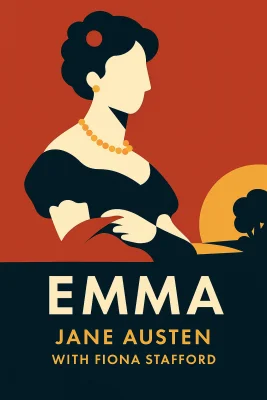
Emma
Categories
Fiction, Classics, Audiobook, Historical Fiction, Romance, Literature, 19th Century, Historical, Novels, Classic Literature
Content Type
Book
Binding
Paperback
Year
2003
Publisher
Penguin Books
Language
English
ASIN
0141439580
ISBN
0141439580
ISBN13
9780141439587
File Download
PDF | EPUB
Emma Plot Summary
Introduction
# The Matchmaker's Awakening: A Journey from Delusion to Love Emma Woodhouse stands at the window of Hartfield, watching the last traces of Miss Taylor's wedding carriage disappear into the autumn mist. At twenty-one, she possesses everything society values: beauty that turns heads, wit sharp enough to cut glass, and thirty thousand pounds that ensures her independence. More dangerously, she possesses an unshakeable belief in her own judgment, particularly when it comes to matters of the heart. The successful match between her former governess and Mr. Weston has intoxicated her with a sense of romantic omniscience that will prove her undoing. With her beloved companion now Mrs. Weston, Emma finds herself alone with her hypochondriac father and a restless mind that craves purpose. She discovers it in the most treacherous of pursuits: orchestrating the love lives of others. Her next target is Harriet Smith, a sweet seventeen-year-old of uncertain parentage attending the local school. Emma sees in Harriet the perfect canvas for her romantic artistry, never suspecting that her meddling will unleash a cascade of misunderstandings that will force her to confront the most uncomfortable truth of all—she has been blind to the workings of her own heart.
Chapter 1: The Confident Orchestrator: Emma's First Triumph and Fatal Overconfidence
The morning light filters through Hartfield's windows as Emma savors her latest victory. Miss Taylor's marriage to Mr. Weston glows in her memory like a personal achievement, proof of her superior understanding of human nature. Mr. Knightley's skeptical voice echoes in her mind—"Success supposes endeavour"—but Emma dismisses his doubts with practiced ease. What could he possibly know about the delicate art of bringing hearts together? Her father's querulous complaints about losing dear Miss Taylor drift from his chair by the fire, but Emma's attention has already shifted to new possibilities. Harriet Smith enters her sphere like a gift from providence—golden-haired, blue-eyed, and possessed of exactly the malleable disposition Emma finds most appealing in a protégé. The girl's uncertain parentage only adds to her appeal, allowing Emma's imagination to conjure noble blood flowing through those humble veins. Emma's first intervention comes swiftly when Robert Martin, a prosperous young farmer, sends Harriet a letter of proposal. The correspondence is honest and heartfelt, written by a man who knows his own mind and heart. But Emma sees only what she chooses to see: a social inferior daring to reach above his station. She positions herself beside Harriet in the morning room, watching the girl's face as she reads Martin's sincere words. "A farmer, Harriet," Emma says gently, her voice carrying the weight of social wisdom. "You must consider what you deserve. Surely you are meant for drawing rooms, not dairy yards." The girl's natural gratitude toward her social superior makes resistance impossible. Under Emma's relentless persuasion, doubt creeps into Harriet's heart like poison. Perhaps she is worth more than a farmer's wife. Perhaps Emma, with her superior understanding of society, truly knows best. The refusal is written and dispatched, sealing both Robert's fate and Harriet's, though Emma refuses to acknowledge the latter. As Harriet weeps quietly over her lost love, Emma consoles herself with grander plans. She has someone far more suitable in mind—Mr. Elton, the handsome young vicar whose charm and social position make him, in Emma's estimation, a perfect match for her elevated protégé. The stage is set for her next romantic triumph, and Emma feels the familiar thrill of a plan taking shape.
Chapter 2: Misguided Benevolence: The Destruction of Harriet's True Happiness
The portrait sessions begin with such promise. Emma positions herself as artist, Harriet as subject, and Mr. Elton as devoted admirer hovering at the edges of the composition. The young vicar proves an enthusiastic collaborator, praising every brushstroke with theatrical fervor. His dark eyes follow the painting's progress with what Emma interprets as growing devotion to the subject, never suspecting that his attention focuses entirely on the artist's skilled hands. Mr. Elton presents his charade with a flourish that sets Emma's heart racing with triumph. "My first displays the wealth and pomp of kings"—the riddle spells out courtship as clearly as if he had shouted it from the church tower. Emma watches Harriet blush and stammer over the verses, sees Elton's meaningful glances, and feels the deep satisfaction of a chess master executing a brilliant gambit. Every smile, every lingering look, every moment of apparent attention becomes evidence supporting her romantic theory. The winter drawing room at Hartfield glows with candlelight as Emma orchestrates her most elaborate deception yet. She has convinced herself so thoroughly of Mr. Elton's feelings for Harriet that reality bends around her certainty. When he offers to take the portrait to London for framing, treating it with reverence usually reserved for religious artifacts, Emma sees only the actions of a devoted suitor treasuring his beloved's image. But Mr. Knightley's fury when he learns of Robert Martin's rejection cuts through Emma's satisfaction like a blade. His face flushes red as he stands in her drawing room, his voice shaking with indignation. "A degradation to illegitimacy and ignorance, to be married to a respectable, intelligent gentleman-farmer!" The words thunder through the space between them, but Emma remains unmoved. What could he understand about a woman's delicate feelings, about the subtle gradations of social rank that govern a lady's choices? As Knightley storms from the house, Emma feels only a momentary pang of doubt before renewed determination takes hold. Soon Mr. Elton will declare himself, Harriet will accept with grateful joy, and even Knightley will be forced to admit that Emma's judgment was superior to his own. The pieces of her romantic puzzle seem to arrange themselves with perfect precision, blind to the chaos she has actually unleashed.
Chapter 3: Shattered Illusions: Mr. Elton's Devastating Revelation
The December evening that destroys Emma's carefully constructed romance begins with snow and ends with devastating revelation. A dinner party at Randalls has been planned, but the weather turns treacherous as darkness falls. One by one, the guests send their regrets, until only Emma, her anxious father, and Mr. Elton remain committed to braving the storm. Even Mr. Woodhouse's nerves nearly keep them home, but Emma's determination to advance her matchmaking scheme overcomes his anxieties. The evening passes pleasantly enough, but the return journey becomes a nightmare of miscommunication. The snow has transformed familiar roads into treacherous passages, and the carriage sways dangerously as they navigate the white-shrouded landscape. Trapped in the close confines with Mr. Elton, Emma suddenly finds herself the unwilling recipient of a passionate declaration she never saw coming. His words tumble out in the darkness, wine-flushed and desperate. Every compliment about the portrait, every moment of apparent devotion to Harriet, had been merely his strategy for winning Emma's attention. His hands seek hers in the cramped space as he speaks of his hopes, his dreams, his conviction that she has been encouraging his suit all along. The breath catches in Emma's throat as the full scope of her miscalculation crashes over her. "Mr. Elton, you mistake me entirely," Emma gasps, recoiling as if struck. "My attentions were all for my friend. I never gave you reason to believe—" But his bitter laughter cuts through her protests like a knife. Harriet Smith, he declares with cruel clarity, is nothing to him—a girl of no family, no fortune, no consequence. How could Emma have imagined he would lower himself to such a match when the incomparable Emma Woodhouse was within his reach? The carriage wheels crunch through snow that seems to echo Emma's crumbling confidence. Her perfect understanding of human nature lies in ruins around her, every assumption shattered by the reality of Mr. Elton's mercenary ambitions. Somewhere in Highbury, Harriet Smith sleeps peacefully, unaware that her heart is about to be broken by Emma's spectacular failure of judgment. The matchmaker has become the architect of misery, and the weight of that knowledge presses down on her like the winter sky above.
Chapter 4: Hidden Games: The Arrival of Frank Churchill and Jane Fairfax's Secrets
Spring brings new players to Highbury's small stage, each carrying secrets that will test Emma's battered confidence in her own perceptiveness. Frank Churchill arrives first, the golden son of Mr. Weston, raised by wealthy relatives and possessed of every advantage that birth and fortune can bestow. His easy charm makes conversation feel like a dance, and he shows just enough interest in Emma to flatter her wounded vanity without alarming her hard-won caution. Frank's restless energy fills every room he enters. He speaks of his aunt's demanding health with theatrical concern, makes impulsive trips to London for haircuts, and carries himself with the careless confidence of a man who has never faced real consequence. Emma finds herself drawn into his orbit, enjoying the game of wit and flirtation even as she maintains her resolve never to marry. His attentions feel safe, manageable, nothing like the dangerous intensity of Mr. Elton's unwanted passion. Jane Fairfax's return to Highbury casts a different shadow over the village's social landscape. The orphaned granddaughter of Mrs. Bates has been transformed by years of education with the wealthy Campbell family, emerging as an accomplished young woman whose elegance puts Emma's own refinement to the test. Her reserve irritates Emma, her perfection feels like a reproach, and her mysterious air suggests secrets that Emma's curiosity burns to uncover. The puzzle deepens when an expensive pianoforte arrives at the modest Bates cottage, its sender unknown. Jane's pale cheeks flush when questioned about the gift, her denials carrying an undertone of distress that suggests hidden knowledge. Emma's imagination seizes on the mystery with characteristic confidence, weaving theories about inappropriate attachments and guilty consciences. Perhaps Jane has formed a connection with Mr. Dixon, her friend's new husband, and he expresses his forbidden passion through lavish gifts. Frank's reaction to the mysterious instrument strikes Emma as oddly intense. He hovers near Jane during social gatherings, his usual easy manner replaced by something more complex and charged. When he compliments Jane's hairstyle with pointed attention, Emma realizes she is witnessing something more significant than casual social interaction. The currents flowing beneath Highbury's placid surface grow stronger with each encounter, pulling Emma toward revelations that will shatter her understanding of everyone around her, including herself.
Chapter 5: The Mirror of Truth: Box Hill's Cruel Awakening
The expedition to Box Hill begins as a pleasant summer outing and ends in catastrophe that will haunt Emma for years to come. The heat seems to bring out the worst in everyone—Frank Churchill's restless energy turns sharp and cruel, Jane Fairfax withdraws into icy silence, and Emma finds herself caught up in a performance of wit that will cost her dearly. The forced gaiety feels brittle, ready to shatter at the slightest provocation. Frank's behavior grows increasingly erratic as the day progresses, his attention to Emma becoming almost aggressive in its intensity, as if he were trying to prove something to an invisible audience. When he challenges the party to entertain Emma with clever conversation, she feels intoxicated by her position as the center of attention. The game turns vicious when poor Miss Bates responds with her usual good-humored self-deprecation, admitting she might say three dull things the moment she opens her mouth. The opening proves too tempting for Emma to resist. "Ah, ma'am, but there may be a difficulty," she says with cutting precision. "Pardon me—but you will be limited as to number—only three at once." The words slice through the summer air like a blade, and the silence that follows is deafening. Miss Bates's face crumples as the cruelty of the remark sinks in, her usual cheerfulness replaced by wounded dignity that makes Emma's stomach clench with immediate regret. Mr. Knightley's rebuke comes later, when they are alone by the carriages preparing to depart. His voice shakes with disappointment and anger as he confronts Emma with the full weight of her cruelty. "How could you be so unfeeling to Miss Bates? How could you be so insolent in your wit to a woman of her character, age, and situation?" Each word falls like a blow, stripping away Emma's defenses and forcing her to see herself as others see her—not the witty, superior creature she imagined, but a spoiled young woman who uses her advantages to wound those less fortunate. The carriage ride home passes in a blur of tears and self-recrimination. For the first time in her life, Emma feels the sharp edge of genuine remorse, the bitter taste of shame that comes from recognizing one's own moral failure. Knightley's words echo in her mind with each turn of the wheels, driving the lesson deeper with every repetition. She had thought herself above reproach, but she was merely above consequence—and that, she is beginning to understand, is not the same thing at all.
Chapter 6: Hearts Revealed: Emma Discovers Her Own Deepest Feelings
The revelation strikes Highbury like lightning, illuminating a landscape Emma has completely misread. Frank Churchill and Jane Fairfax have been secretly engaged since autumn, their elaborate deception finally exposed when Frank's domineering aunt dies and frees him to marry as he chooses. Every mysterious glance, every inexplicable mood, every moment Emma attributed to Frank's growing attachment to herself had been part of an intricate charade designed to conceal his true feelings for Jane. Emma's first emotion is outrage at being so thoroughly deceived, but it quickly gives way to something far more disturbing. As she sits in her drawing room absorbing Mrs. Weston's gentle explanation of the lovers' predicament, Emma realizes with growing horror that she feels no heartbreak at losing Frank. Instead, she feels only embarrassment at having been used as a screen for someone else's romance, her supposed attachment providing the perfect cover for their secret courtship. But worse revelation awaits when Harriet arrives, glowing with happiness and ready to confess her own romantic hopes. Emma prepares to hear about some new attachment that will finally erase the memory of Mr. Elton's rejection. Instead, Harriet speaks of Mr. Knightley—dear, dependable Mr. Knightley, who has shown her such marked kindness and attention that she dares to hope he might return her feelings. The words hit Emma like a physical blow, jealousy tearing through her chest with savage claws. In that instant, as possessive fury floods her veins, she understands the truth that has been hiding in plain sight. She loves Knightley—has always loved him, though she has been too blind and too proud to recognize it. The thought of losing him to Harriet, sweet, grateful Harriet whom she herself had elevated and encouraged, becomes unbearable. As Harriet recounts meaningful glances and tender moments, Emma sits frozen in her chair, watching her carefully constructed world crumble around her. She has spent so much time managing other people's hearts that she never learned to recognize the workings of her own. Now, faced with the possibility of losing the one person whose good opinion truly matters to her, Emma finally begins to understand the difference between the games she has been playing and the devastating reality of love itself.
Chapter 7: Love's True Course: The Resolution of All Misunderstandings
The morning after Harriet's confession finds Emma walking in her garden, wrestling with emotions too powerful to contain within four walls. Every path reminds her of conversations with Knightley, every flower bed of moments when his presence made the world seem brighter without her understanding why. She has been so busy arranging other people's happiness that she missed her own, growing quietly in the shadows of her consciousness like a plant reaching toward light. When Knightley appears at the garden gate, Emma's heart hammers against her ribs like a caged bird. He looks haggard, older somehow, and she braces herself for the conversation that will seal her fate. But instead of speaking of Harriet, he begins to talk of Frank Churchill, of his relief that Emma has not been truly attached to such an unworthy man. The misunderstanding unravels slowly, each thread of confusion giving way to startling clarity. Knightley has come to comfort Emma in what he imagines is her heartbreak over Frank's betrayal. Emma, believing he means to confess his feelings for Harriet, tries to give him permission to speak freely despite the pain it will cause her. They circle each other like dancers learning a new step, each trying to sacrifice their own happiness for the other's sake, neither understanding that their hearts beat in perfect synchrony. The moment of truth comes with devastating simplicity. "If I loved you less, I might be able to talk about it more," Knightley says, his voice rough with emotion that transforms his familiar features into something precious and new. The words crash over Emma like a wave, washing away years of blindness and self-deception. She is not losing him to Harriet—she is being offered everything she never dared to want. The kiss that follows tastes of tears and laughter, of friendship transformed into something deeper and more precious than either had imagined possible. As they stand together in the garden where Emma played as a child, where Knightley scolded and praised and shaped her into the woman she has become, the last of her illusions fall away. Love, she discovers, is not the elaborate game she imagined, but something far simpler and infinitely more complex—the recognition of a heart that matches her own, the courage to be vulnerable with someone who sees her clearly and chooses to stay.
Summary
Emma Woodhouse's journey from self-assured matchmaker to humbled lover traces the painful but necessary path of genuine self-discovery. Her romantic schemes, born of vanity and sustained by dangerous delusion, brought misery to those she claimed to help and nearly cost her the love that had been waiting patiently at her side all along. Through Knightley's patient guidance and her own hard-won wisdom, Emma learned that true understanding begins not with managing others' hearts, but with acknowledging the depths of her own. The drawing rooms of Highbury witnessed a transformation more profound than any marriage arrangement Emma had ever attempted. In learning to love truly—with humility, with sacrifice, with the courage to be vulnerable—she finally became worthy of the happiness that had always been within her reach. The greatest match she ever made was not between others, but between the woman she was and the woman she was capable of becoming, discovering that the human heart follows no logic save its own mysterious wisdom.
Best Quote
“If I loved you less, I might be able to talk about it more.” ― Jane Austen, Emma
Review Summary
Strengths: The review highlights the book's engaging exploration of complex themes such as math, mirrors, and crystal balls, which are intricately woven into the narrative. The reviewer appreciates the author's ability to decode the nuances of human relationships, likening it to solving a complex mathematical equation. The writing is praised for its depth and the way it builds upon itself to create a compelling narrative. Overall: The reviewer expresses a positive sentiment towards the book, noting its engaging and intricate storytelling. The book is recommended for its unique approach to exploring human relationships and societal dynamics, making it a worthwhile read for those interested in deeper thematic content.
About Author
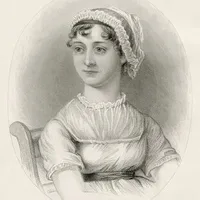
Jane Austen
Austen reframes the literary landscape by intertwining sharp social critique with engaging narratives, illuminating the societal pressures and gender roles of the Regency era. Her novels often tackle the economic and social dependency of women, a recurring theme exemplified through characters navigating complex social networks and personal aspirations. Therefore, through her keen observation and ironic wit, Austen invites readers to scrutinize the rigid social structures of her time. Her early book, "Sense and Sensibility", contrasts the emotional and rational responses to societal expectations, while "Emma" humorously explores social class and self-awareness. Meanwhile, "Persuasion" delves into the theme of second chances and personal growth, showcasing her mature narrative style.\n\nThrough Austen's work, readers gain insight into the intricate dynamics of human relationships and societal constraints. Her elegant prose and deft character development offer a mirror to the historical context while providing timeless lessons on love, morality, and social responsibility. This bio reflects her impact on literature, as her narratives continue to inspire scholarly discussions and adaptations that resonate with contemporary audiences. For readers and scholars alike, engaging with Austen's works means exploring the intersection of personal desire and societal obligation, a theme that remains relevant across generations.\n\nAs an author, Austen's influence extends beyond her lifetime, despite her novels initially achieving only modest success. Her ability to infuse realism with nuanced social commentary has solidified her position as a pivotal figure in English literature. Posthumous recognition has seen her works, such as "Mansfield Park" and "Northanger Abbey", gaining widespread acclaim, ensuring that her contributions to the development of the novel are celebrated globally. Her legacy persists, proving her prowess in capturing the essence of her era while addressing universal human experiences.
Read moreDownload PDF & EPUB
To save this Black List summary for later, download the free PDF and EPUB. You can print it out, or read offline at your convenience.
Emma
by Jane Austen
