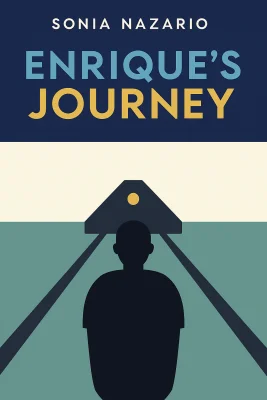
Enrique's Journey
Categories
Nonfiction, Biography, History, Memoir, Politics, Adult, Social Justice, Biography Memoir, School, Book Club
Content Type
Book
Binding
Paperback
Year
2007
Publisher
Random House Trade Paperbacks
Language
English
ASIN
0812971787
ISBN
0812971787
ISBN13
9780812971781
File Download
PDF | EPUB
Enrique's Journey Plot Summary
Introduction
What would drive a mother to leave her five-year-old son behind and journey thousands of miles to a foreign country? What desperation would push that same child, years later, to risk his life crossing one of the most dangerous routes on earth just to hold his mother again? These are not abstract questions for millions of families across Central America and Mexico, where economic devastation forces impossible choices between survival and family unity. This is the story of one mother's agonizing decision to seek work in the United States, and her son's harrowing odyssey to find her eleven years later. Through their experiences, we witness the human cost of global inequality and the extraordinary lengths people will go to for love. As you read their story, you'll gain profound insight into the root causes of immigration, understand the brutal realities faced by migrants, and discover how family bonds can endure even the most devastating separations. Most importantly, you'll see beyond statistics and politics to the beating hearts of people who simply want to be together.
Chapter 1: The Painful Separation: When Mothers Leave Children Behind
Lourdes stands on the porch of her small home in Tegucigalpa, Honduras, watching her five-year-old son Enrique cling to her pant leg. She cannot bring herself to say goodbye. The words would shatter her resolve, and she knows that if she stays, her children will continue to go hungry. Some nights they sleep without dinner, and she soothes them by suggesting they lie face down so their empty stomachs won't growl so loudly. The year is 1989, and Lourdes makes less than forty dollars a month scrubbing laundry in a muddy river and selling crackers from a wooden box on the street. Her husband has left her for another woman. There is no money for school uniforms or pencils, no hope of her children escaping the grinding poverty that has trapped her own family for generations. She has heard about a place where she glimpsed on television screens in wealthy homes while delivering tortillas: America, with its gleaming cities and endless opportunities. On January 29th, Lourdes tells Enrique to remember to go to church that afternoon. Then she steps off the porch and walks away without looking back. Behind her, Enrique's cries pierce the air: "Where is my mom? Where is my mom?" She forces herself to keep walking, carrying nothing but the desperate hope that this separation will give her children the future she cannot provide by staying. This scene plays out thousands of times each year across Latin America, as economic desperation forces mothers to make an impossible choice. They become part of the largest wave of immigration in American history, driven not by adventure or opportunity, but by the fundamental desire to feed their children. These mothers tell themselves the separation will be brief, perhaps a year or two, just long enough to save money and send for their families. The reality, however, is far different. Most separations last six to eight years, and by the time families reunite, if they ever do, both mothers and children have been forever changed by the years apart. The decision to leave creates a ripple effect of suffering that extends far beyond individual families. Children left behind often struggle with abandonment, acting out in school or turning to drugs and gangs to fill the emotional void. Meanwhile, mothers in America work multiple jobs, live in overcrowded conditions, and sacrifice their own well-being to send money home. They become what sociologists call "transnational mothers," trying to parent from thousands of miles away through phone calls and wire transfers that can never replace their physical presence. Understanding this dynamic is crucial for grasping why children like Enrique eventually risk everything to find their mothers. It's not simply about economics or opportunity. At its core, it's about the most fundamental human need: the desire to be loved and to belong to someone who will never abandon you.
Chapter 2: Riding the Beast: Survival on Mexico's Freight Trains
The freight train rumbles to life in the pre-dawn darkness of Tapachula, a Mexican border town where Central American migrants begin their journey north. Enrique, now sixteen and hardened by six failed attempts to reach his mother, emerges from his hiding place in a cemetery where he has slept among the tombs. Around him, dozens of other migrants, many just children themselves, prepare for what they call "mounting the beast." As the train slowly pulls away from the station, Enrique sprints alongside a gray hopper car, his heart pounding as he reaches for the ladder rungs. The train is accelerating, and he knows that if he misses his grip or stumbles, the massive steel wheels will crush him instantly. With desperate strength, he pulls himself up, scrambling to the top of the freight car just as the train gathers speed. He has survived the mounting, but his ordeal has only begun. For the next several hours, Enrique clings to the top of the swaying car as the train snakes through southern Mexico. The sun beats down mercilessly, heating the metal surface until it burns his skin. Tree branches whip past, forcing him to duck and sway in synchronized movements with other riders, a deadly dance where one moment of inattention could send him flying. When the train slows for immigration checkpoints, he must leap off and run through hostile territory, dodging corrupt police and bandits who prey on migrants like wolves on wounded prey. The dangers are constant and varied. Street gangs control sections of the train route, robbing migrants at knife point and throwing those who resist to their deaths. Mexican police demand bribes and beat those who cannot pay. Immigration agents use dogs and heat-sensing equipment to hunt down stowaways. Even the train itself becomes an enemy during the frequent derailments that can crush riders beneath overturned cars. Yet Enrique persists because the alternative, returning home empty-handed, means acknowledging that his mother was right to leave him. Each mile northward brings him closer not just to America, but to an answer to the question that has tormented him for eleven years: does she still love him? This desperate need for maternal love drives thousands of children to risk everything on these death trains each year, making the journey one of the most dangerous migration routes in the world. The lesson here extends beyond immigration policy to fundamental questions about family and sacrifice. When we force people to choose between being together and surviving economically, we create situations where love itself becomes dangerous. Every parent who has ever struggled to provide for their children can understand the impossible mathematics of poverty that drove Lourdes to leave. Every child who has felt abandoned or unloved can comprehend the desperate courage that propels Enrique forward despite the terrifying odds against him.
Chapter 3: Acts of Kindness: The Gift Throwers of Veracruz
The train whistle echoes across the small Mexican town of Encinar as evening approaches. Inside their humble homes, families hear the familiar sound and begin their nightly ritual. Magdalena González Román, thirty-one, drops what she is doing and rushes to her kitchen. She stuffs tortillas into an orange bag, fills another with bread rolls, and quickly ladlels homemade stew into a plastic container. Her brother Jesús grabs three sweaters from a bag of hand-me-downs and ties them together for easier throwing. As the freight train rounds the curve, slowing just enough for its desperate passengers to be visible in the fading light, Magdalena and dozens of other residents emerge from their homes carrying food, water, and clothing. They line the tracks, watching for the migrants clinging to the tops of boxcars and tank cars. When they spot them, they call out encouragement and hurl their offerings with practiced aim, trying desperately not to miss as the train rolls past. Enrique, weak from days without adequate food, reaches out as a blue plastic bag arcs through the air toward his freight car. It lands squarely in his arms, and he calls out "¡Gracias! ¡Adiós!" into the darkness, though he is not sure the woman who threw it can even hear him over the rumble of the train. Inside the bag are half a dozen bread rolls that will sustain him for another day on his journey north. This scene, repeated nightly in dozens of towns across the Mexican state of Veracruz, reveals something profound about human nature. These are not wealthy people with excess to spare. A World Bank study found that 42.5 percent of Mexico's population lives on two dollars or less per day, and rural residents along the train tracks are often among the poorest. Yet they share what little they have with strangers who pass by in the night, moved by empathy and guided by faith. The gift throwers explain their motivation in simple terms. "If I have one tortilla, I give half away," one woman says. "I know God will bring me more." Another adds, "What if someday something bad happens to us? Maybe someone will extend a hand to us." Many have children or relatives who have attempted the dangerous journey to America themselves, and they see their own family members in the faces of the migrants on the trains. These acts of kindness do more than provide physical sustenance. For migrants like Enrique, who have endured robbery, beatings, and constant rejection, the gift throwers restore faith in human goodness. They prove that not everyone sees them as criminals or burdens, that some people recognize their humanity and worth. In a journey marked by so much cruelty and indifference, these moments of grace become as essential as food and water for survival. The deeper lesson speaks to how we respond to suffering in our midst. The gift throwers don't ask questions about immigration status or judge the migrants' choices. They simply see human beings in need and respond with compassion. In our increasingly polarized world, their example reminds us that our common humanity transcends political boundaries and that sometimes the most powerful action is also the simplest: reaching out to help someone who is struggling.
Chapter 4: The River Crossing: Final Hurdle to Reunion
The Rio Grande flows dark and swollen between Nuevo Laredo, Mexico and Laredo, Texas, its murky waters carrying the dreams and fears of countless migrants who have stood on its banks. Enrique has been camped here for weeks, washing cars and sleeping rough while saving money for a smuggler and trying to contact his mother. He has survived seven attempts to cross Mexico, enduring beatings, robberies, and near starvation. Now only this river separates him from the country where his mother waits. At 1 A.M. on May 21, 2000, Enrique strips to his underwear and climbs onto a black inner tube held steady by El Tiríndaro, a heroin-addicted smuggler who knows this stretch of river like his own heartbeat. The water is cold and fast-moving, and Enrique cannot swim. In recent days, the body of another young migrant has floated past, pulled under by the treacherous currents. As El Tiríndaro paddles them across, Enrique grips the tube's valve stem and scans the dark water for the green snakes that sometimes glide across the surface. Halfway across, they reach a small island overgrown with willows. Through the reeds, Enrique can see the flashing lights of Border Patrol vehicles patrolling the American side. Agents shine spotlights across the water, searching for migrants making this final crossing. For thirty minutes, Enrique and the others lie motionless in the mud and vegetation, mosquitoes swarming around them, as the lights sweep back and forth overhead. One detection now would mean deportation back to Honduras and the collapse of his eleven-year quest to find his mother. When the patrol vehicles finally move on, El Tiríndaro makes a second trip across the remaining channel. Enrique's feet touch American soil for the first time as he scrambles up the muddy bank on the Texas side. But his ordeal is not over. They must still navigate through Laredo's outskirts, avoiding motion sensors and thermal imaging equipment that detect body heat. They wade through a sewage-filled creek, hide in drainage culverts, and sprint across open ground where any misstep could bring Border Patrol agents racing to their location. Hours later, Enrique finds himself in the back seat of a red Chevrolet Blazer, speeding north toward Dallas on Interstate 35. He pulls a pillow over his exhausted body and allows himself to believe, for the first time in four months of trying, that he might actually reach his mother. The comfort of the car, the successful crossing, and the knowledge that each mile takes him closer to Lourdes fills him with a happiness so intense it feels like a physical warmth spreading through his chest. This river crossing represents more than a geographic boundary. For Enrique, it is the threshold between his old life of abandonment and his new life of possibility. Every migrant who makes this journey faces a similar moment when they must literally leap into the unknown, trusting that whatever waits on the other side will justify the enormous risks they have taken. The Rio Grande becomes a baptism of sorts, washing away the past and opening the door to an uncertain but hopeful future. The crossing also highlights the arbitrary nature of borders and the lengths people will go to overcome them when love is at stake. This particular river has separated families and claimed countless lives, yet it continues to flow indifferently toward the Gulf of Mexico, carrying within its waters both the dreams of those who successfully cross and the bodies of those who do not.
Chapter 5: Fractured Reunions: The Reality After Years Apart
The door of the mobile home swings open, and Enrique sees a girl with shoulder-length black hair sitting at the kitchen table eating breakfast. She is Diana, his half-sister, born in America after his mother left Honduras. "Are you my brother?" she asks. He nods and kisses her cheek, then runs down the narrow hallway calling "Where's my mother? Where's my mother?" He finds Lourdes asleep in the back bedroom and jumps onto the bed beside her. After 122 days of travel and eleven years of separation, mother and son are finally together. For the first few hours, the reunion unfolds like a dream. Lourdes cooks rice, beans, and fried pork for her skeletal son, who has lost twenty-eight pounds during his journey. Enrique tells her about his travels, the beatings, the hunger, the fear. She sees that he has grown taller than she is now, and that he has her round face and curly hair. When he shows her the tattoo across his chest that reads "EnriqueLourdes," she winces but admits that at least if he had to get one, he remembered her. But as days pass, the fantasy of perfect reunion gives way to painful reality. Neither really knows the other anymore. At the grocery store, Lourdes reaches for Coca-Cola, only to learn that Enrique prefers Sprite. She expects gratitude for her sacrifice and recognition of her maternal authority. Instead, she encounters a young man hardened by years of abandonment, who tells her angrily that money could never substitute for a mother's presence. "You left me, abandoned me," he says. "You forgot about me." Enrique's resentment, buried during the desperate years of searching, now erupts with volcanic force. He accuses her of caring more about the new baby she had in America than about the children she left behind. He questions every choice she made, from getting pregnant again to promising Christmas visits that never materialized. Most painfully, he tells her that his grandmother, who raised him after she left, is more of a mother to him than she will ever be. Lourdes, devastated by his rejection, fights back with her own hurt and anger. She reminds him of the money she sent, the sacrifices she made working multiple jobs, the humiliation she endured cleaning other people's houses so he could eat. She shows him stacks of money transfer receipts as proof of her love and dedication. "What about the money I sent you?" she demands. "I have witnesses!" But Enrique dismisses her evidence with cruel precision: "Money doesn't solve anything." Their fights escalate until one reaches a breaking point. During an argument about his behavior, Lourdes slaps Enrique hard across the mouth. He grabs her hands to prevent further blows, and she screams, thinking he is trying to choke her. That night, Enrique runs away and sleeps in a church cemetery, feeling more abandoned than ever. The reunion both had dreamed about has become their shared nightmare. These fractured reunions are tragically common among immigrant families. Children harbor deep resentment about being left behind, while mothers expect gratitude for their sacrifice. Years of separation create strangers who share only blood and the memory of love that once existed. The children who endure dangerous journeys to find their parents often discover that the mothers they idealized exist only in their memories, replaced by worn-down women who have been forever changed by their own struggles in America. Understanding this pattern is crucial for anyone who wants to grasp the true cost of family separation. The journey to reunite is often easier than learning to live together again. Love alone cannot bridge years of absence, and the damage done by separation can take a lifetime to heal, if it ever heals at all.
Chapter 6: The Girl Left Behind: Cycles of Separation Continue
Three-year-old Jasmín plays in the dirt behind her grandmother's house in Honduras, building small structures from mud and stones while her mother, María Isabel, prepares for work. The little girl has her father's deep voice and stubborn temperament, but she has never met him. Enrique is thousands of miles away in North Carolina, sending money but growing increasingly distant from the daughter he knows only through photographs and brief phone conversations. María Isabel faces the same impossible choice that confronted Lourdes sixteen years earlier. Enrique calls constantly now, begging her to join him in America. He promises they can work together, save money faster, and return to Honduras sooner if she comes north. The pressure is immense, but every time María Isabel looks at Jasmín, she remembers the pain she felt when her own mother left for America when she was young. She cannot imagine inflicting that same wound on her daughter. The breaking point comes during a phone conversation when Enrique delivers an ultimatum. "Are you ready to come?" he demands. When María Isabel hesitates, he threatens to find someone else if she won't commit. The threat forces her decision. If she doesn't go, Jasmín will grow up without her father, just as Enrique grew up without his mother. If she does go, they might reunite as a complete family sooner. "I will do it for my daughter," she tells herself, convinced that short-term separation will lead to long-term togetherness. On the day of departure, María Isabel cannot bring herself to tell Jasmín the truth. When the three-year-old asks why her mother is packing a backpack, María Isabel lies: "I'm going downtown. I'll be right back." At the bus station, Jasmín sits on the hood of a car, waving goodbye with both hands as her mother's bus pulls away. "Adiós, mami! Adiós, mami!" she calls out, not understanding that this is not a temporary trip but another link in an endless chain of family separation. Back home, Jasmín moves in with Enrique's sister Belky and begins the same painful cycle of abandonment that defined Enrique's childhood. She asks constantly when her mother is coming back, alternating between hope and confusion as phone calls become her only connection to the woman who once tucked her into bed each night. When she hears airplanes overhead, she runs outside and waves, shouting "Goodbye, mommy!" to the sky, believing her mother might be on one of them. The cycle appears unstoppable. Poverty creates separation, separation creates emotional damage, and damaged children grow up to perpetuate the same patterns with their own families. María Isabel's journey to America, undertaken in the name of family unity, has instead created another abandoned child who will spend years wondering why her mother chose leaving over staying. Yet within this cycle lies a glimmer of hope. Each generation learns something from the pain of the previous one. María Isabel lasted longer before leaving than Lourdes did, staying until Jasmín was three instead of leaving when she was one. Enrique, despite his own struggles, vows to return to Honduras while Jasmín is still young enough to remember him as her father. Perhaps the accumulating wisdom of suffering will eventually break the chain. The broader lesson is that individual choices, no matter how well-intentioned, cannot solve systemic problems. Until the economic desperation that drives family separation is addressed at its roots, mothers will continue to face impossible choices between survival and togetherness, and children will continue to pay the price for global inequality with their emotional well-being and family bonds.
Chapter 7: Finding Meaning: How Migration Shapes Lives and Nations
The story of Enrique and his family illuminates the broader transformation reshaping both the countries people leave and the nation they struggle to reach. In Honduras, entire neighborhoods now survive on money sent from the United States, creating a parallel economy based on remittances rather than local production. Children grow up knowing their parents not through daily interaction but through wire transfers and occasional phone calls, creating a generation raised by grandparents and defined by absence. The effects extend far beyond individual families. In Honduras, parentless children fuel the growth of street gangs like the Mara Salvatrucha, as young people seek the family bonds they lost when their mothers migrated north. Schools struggle with students whose parents cannot help with homework or attend conferences because they live thousands of miles away. Communities become dependent on foreign aid from their own former residents, creating an economy of exile that discourages local development and perpetuates the cycle of emigration. Meanwhile, in American communities like the one where Enrique and Lourdes eventually settle, immigration creates its own complex dynamics. Employers benefit from hardworking, reliable employees willing to do difficult jobs at low wages. Middle-class families gain access to affordable childcare and household help, often provided by women like Lourdes who have left their own children behind to care for others'. The economy gains the vitality that comes with new blood and fresh perspectives, as immigrants bring entrepreneurial energy and cultural diversity. But the costs are real too. Schools in immigrant-heavy areas struggle with overcrowding and students who speak dozens of different languages. Hospitals provide expensive emergency care to uninsured immigrants who cannot afford routine medical treatment. Some native-born workers face wage depression in industries where employers can exploit undocumented workers who have no legal recourse if they are mistreated. Perhaps most importantly, the story reveals how immigration challenges core American values and self-understanding. The United States has always defined itself as a nation of immigrants, welcoming those seeking better lives. Yet the massive scale of current immigration, and the desperate circumstances driving it, force difficult questions about capacity, fairness, and responsibility. How many people can realistically be absorbed? What obligations do Americans have to people fleeing poverty and violence in neighboring countries? Enrique's journey also demonstrates that no amount of border enforcement will stop people determined to reunite with their families. He made eight attempts to cross Mexico, enduring robbery, beatings, and near-death experiences, yet never considered giving up. When love and desperation combine, they create a force stronger than any wall or patrol. The only long-term solution lies in addressing the root causes that drive people to leave their homes in the first place: the extreme poverty and lack of opportunity that make staying seem like a death sentence for both parents and children. The transformation is not abstract but deeply personal, affecting millions of families caught between survival and togetherness. Understanding their struggles helps us grasp both the human costs of global inequality and the lengths people will go to protect and provide for those they love.
Summary
At its heart, this story reveals a fundamental truth: when societies force people to choose between survival and family unity, love itself becomes an act of rebellion against impossible circumstances. The courage required to leave everything familiar, cross deadly terrain, and start over in a foreign land is matched only by the determination of children who will risk death itself to find their mothers. These are not statistics or policy problems, but human beings whose capacity for sacrifice illuminates both the depths of desperation and the heights of devotion. Take time to look beyond political rhetoric and see the individual faces behind immigration debates. When you encounter immigrant families in your community, recognize that their presence likely represents enormous sacrifice and loss, not opportunism or laziness. Support policies that address root causes of migration rather than simply trying to build higher walls, understanding that no barrier will stop parents from trying to reach their children or children from searching for their parents. Most importantly, remember that the lottery of birth geography is exactly that, a lottery, and that any of us might make similar choices if faced with similar desperation. The measure of our humanity lies not in our ability to close our hearts to suffering, but in our willingness to see ourselves in the struggles of others and respond with both compassion and wisdom.
Best Quote
“I figure when I die, I can't take anything with me. So why not give?” ― Sonia Nazario, Enrique's Journey
Review Summary
Strengths: The review highlights the book's origin as a Pulitzer-winning series of articles, indicating high-quality journalism. It emphasizes the book's exploration of complex decisions faced by Central American immigrants, providing a detailed narrative of Enrique's journey and the socio-economic challenges in Honduras. Overall: The review conveys a positive sentiment towards "Enrique's Journey," appreciating its in-depth investigation into immigration issues and the personal stories of those affected. The book is recommended for its insightful portrayal of the hardships and motivations behind the dangerous journey to the United States.
About Author

Sonia Nazario
Nazario interrogates the complex social issues surrounding immigration and marginalized communities through her investigative reporting. Her writing method combines meticulous research with a narrative-driven style, allowing her to explore the human impact of these issues while bringing personal stories to the forefront. This approach is exemplified in her acclaimed book "Enrique's Journey," which details the perilous journey of a young boy from Honduras to the United States to reunite with his mother. The author's focus on social justice and empathetic storytelling provides readers with a deeper understanding of the struggles faced by immigrant children and the broader social forces at play.\n\nWhile Nazario’s works are grounded in in-depth investigative journalism, they resonate with a wide audience due to her ability to humanize complex social topics. Her early experiences growing up in Argentina during the "dirty war" have profoundly influenced her perspective on human rights, driving her career as a journalist committed to social advocacy. Moreover, her achievements, including the Pulitzer Prize for Feature Writing, highlight her influence in the field. This bio serves as a testament to her ongoing impact as an advocate for social justice and her role in amplifying the voices of those often overlooked in mainstream narratives.
Read moreDownload PDF & EPUB
To save this Black List summary for later, download the free PDF and EPUB. You can print it out, or read offline at your convenience.
Enrique's Journey
by Sonia Nazario
