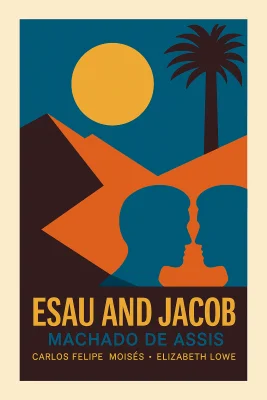
Esau and Jacob
Categories
Fiction, Classics, Romance, Literature, Brazil, School, 20th Century, Novels, Canon, Portuguese Literature
Content Type
Book
Binding
Paperback
Year
2000
Publisher
Oxford University Press
Language
English
ASIN
0195108116
ISBN
0195108116
ISBN13
9780195108118
File Download
PDF | EPUB
Esau and Jacob Plot Summary
Introduction
# Mirrored Souls: The Eternal Dance of Twin Destinies The morning mist clung to Rio's cobblestones like a shroud as Natividade Santos climbed the treacherous slopes of Morro do Castelo, her swollen belly writhing with unborn violence. Inside her womb, twin boys fought with such ferocity that she feared they might tear her apart before drawing their first breath. The cabocla fortune-teller's dark eyes pierced through incense smoke as she studied the pregnant woman's tormented form. "They will be great," the mystic whispered, her voice carrying the weight of prophecy. "But they will always be enemies. What separates them in the womb will separate them in life." This is the story of Pedro and Paulo Santos, identical twins whose souls were forged from opposing elements, destined to dance an eternal waltz of rivalry and hatred across the grand stage of Brazilian history. Between them stood Flora Batista, the red-haired enigma whose heart became the battlefield where their war would rage most fiercely. As empires crumbled and republics rose, as fortunes were made and lost in the coffee-scented air of a transforming nation, these three souls remained locked in a triangle of desire that would define their lives and destroy their peace.
Chapter 1: The Prophecy's Shadow: Birth of Eternal Opposition
Pedro emerged first, claiming birthright by mere minutes while Paulo followed with clenched fists, already plotting to reclaim what he considered stolen. The midwife barely had time to clean one before the other arrived, and even as infants they seemed to sense each other's presence as mortal threat. Their father Santos, a banker whose fortune grew with Brazil's expanding coffee economy, watched his sons with bewildered fascination. The boys were mirror images in flesh but opposing forces in spirit. Pedro displayed calculating patience, preferring observation before action, while Paulo burned with restless energy that demanded immediate satisfaction. Their shared bedroom became the first battlefield when adolescence sharpened their natural antagonism into ideological warfare. The breaking point came in a print shop on Rua da Carioca. Pedro's eyes fell upon an engraving of Louis XVI, the martyred French king, and something in the monarch's dignified bearing spoke to his conservative soul. Without hesitation, he purchased the portrait. Paulo, witnessing his brother's choice, felt compelled to respond with equal force. His gaze found Robespierre, architect of the Terror, and he bought the revolutionary's image with defiant satisfaction. That night they hung their chosen heroes above their beds, creating a battlefield of ideologies that would define their existence. The dead king and executed revolutionary stared at each other across the space between twin beds, eternal enemies watching over their earthly disciples. Neither brother could sleep peacefully knowing his rival's champion gazed down upon him, yet neither would remove his portrait. The fortune-teller's prophecy had begun its terrible fulfillment.
Chapter 2: Divergent Hearts: Monarchy, Republic, and Brotherly War
As Brazil teetered on the edge of political transformation, the Santos twins found themselves on opposite sides of history's great divide. Pedro embraced the monarchy with true believer's fervor, seeing in Emperor Dom Pedro II the embodiment of order, tradition, and civilized governance. He spoke eloquently of the empire's achievements, its cultural refinement that set Brazil apart from the crude republics of Spanish America. Paulo caught revolutionary fire during his law studies in São Paulo, returning to Rio burning with republican passion. His speeches blazed with talk of democracy, progress, and history's inevitable march toward popular sovereignty. The brothers' dinner conversations became intellectual duels, their words sharp as rapiers, each thrust designed to wound the other's convictions. Their mother Natividade watched these battles with growing alarm, the cabocla's prophecy echoing in her mind as she witnessed her sons' compulsive need to take opposing positions regardless of the issue. When Pedro praised a book, Paulo found fault with it. When Paulo admired a painting, Pedro dismissed it as mediocre. Their rivalry had transcended politics to become a fundamental law of their existence. The irony was not lost on those who knew them well. Both possessed brilliant minds, both were destined for greatness according to prophecy, yet they seemed incapable of channeling their talents toward constructive purpose. Instead they wasted energy in endless opposition, like two powerful engines running in opposite directions, canceling out each other's force. Their friend Counselor Aires, a retired diplomat with philosopher's eye for human folly, observed them with amused melancholy, recognizing in their struggle the eternal tragedy of potential squandered on petty conflicts.
Chapter 3: Flora's Triangle: The Woman Who Divided Two Souls
Into this world of perpetual opposition came Flora Batista, daughter of a provincial governor whose political fortunes rose and fell with imperial favor's changing tides. She possessed that rare beauty which seems to glow from within, her grace and intelligence drawing admirers like moths to flame. But it was the Santos twins who truly captured her heart, or rather, who divided it so completely that she could never choose between them. Flora's dilemma transcended simple indecision. When she looked at Pedro, she saw strength, stability, and the promise of life built on solid foundations. His conservative nature appealed to something deep within her that craved security and order. Yet when Paulo spoke of his dreams for Brazil's future, his eyes blazing with revolutionary fervor, she felt her pulse quicken with excitement at the prospect of joining him in reshaping the world. The twins, recognizing their mutual attraction to the same woman, made a pact that revealed both their honor and their fundamental inability to resolve conflict through direct action. They agreed to wait passively for Flora's choice, with the rejected suitor promising to withdraw gracefully from the field. It was a gentleman's agreement that satisfied their sense of fair play while avoiding the messy business of actually competing for her affections. But Flora found herself caught in an impossible trap. Her heart, like her mind, seemed divided into equal parts, each responding to a different twin. In her dreams she began experiencing strange visions where Pedro and Paulo merged into a single person, as if her unconscious mind was trying to resolve what her conscious will could not. She would spend hours at her piano, playing melancholy pieces that seemed to express inexpressible longing for a love that could never be fulfilled. The music became her only refuge from the torment of choosing between two halves of what felt like one perfect whole.
Chapter 4: Empire's Fall: Personal Loves Amid Political Revolution
The night of November 15, 1889, changed Brazil forever, but the Santos household slept through the revolution. While Marshal Deodoro's troops marched through Rio's streets proclaiming the republic, Pedro and Paulo lay in their beds dreaming of Flora, their personal obsessions rendering them oblivious to the seismic political shift occurring around them. They awoke to find their country transformed, the monarchy they had debated so passionately swept away in a single night. The irony was exquisite. Paulo, the fervent republican, had missed his moment of triumph, while Pedro, the devoted monarchist, discovered his cause was lost without his even knowing the battle had been fought. Yet rather than bringing them together in shared bewilderment, the revolution only provided new grounds for their eternal opposition. Paulo threw himself into defending the new regime while Pedro gradually, almost reluctantly, began accepting republican reality. Their father Santos adapted to the new order with the pragmatic flexibility of a successful businessman. The Encilhamento, Brazil's first great stock market boom, offered opportunities that transcended political ideology. Money flowed like water through Rio's streets, and Santos positioned himself to catch as much as possible. He watched his sons' political debates with bemused tolerance, understanding that their rivalry was more personal than ideological. Flora's father Batista also navigated the transition with calculated opportunism, his wife Cláudia pushing him to embrace whichever political wind might carry them to greater heights. They were invited to the grand ball on Ilha Fiscal, the monarchy's last great celebration, where Flora danced in rooms that glittered like Venetian dreams while the old order prepared to die. The twins attended her like devoted courtiers, each hoping the magical setting might finally tip her heart in his direction. But even surrounded by such splendor, Flora remained suspended between her two impossible choices, her indecision as fixed as the stars reflected in the harbor's dark waters.
Chapter 5: Separation and Longing: Distance Tests the Heart's Truth
The letter arrived like a death sentence wrapped in official seals. Batista had been appointed governor of a northern province, his reward for switching political allegiances with practiced dancer's skill. Dona Cláudia celebrated while Flora felt her world crumble like sand castles before the tide. She would have to leave Rio, leave the twins, leave everything that gave her life meaning. Pedro learned the news with drowning man's desperation. He cornered Flora in her father's garden, promising to follow her anywhere, to abandon his medical studies for love. His words tumbled over each other in their urgency, painting impossible dreams of elopement and adventure. Flora listened with breaking heart, knowing that promises made in passion rarely survived reality's cold light. Paulo returned from São Paulo to find his beloved preparing for departure. He raged against fate with revolutionary fervor, as if political speeches could change personal destiny. The three spent their last evenings together in a haze of unspoken longing, each afraid to voice what they all knew: that distance would test their triangle of love beyond endurance. The ship waited in the harbor like a black omen. Flora stood at the rail as Rio's mountains faded into memory, her heart divided between two faces that grew smaller with each nautical mile. The twins watched from the dock until the vessel disappeared beyond the horizon, taking with it the center of their universe. For two years, letters crossed the ocean like messages in bottles, carrying love across impossible distances. Flora wrote of northern sunsets and provincial balls, never mentioning the suitors who sought her hand or the loneliness that ate at her soul. The twins responded with news of their studies and careers, each hoping his words would reach her heart first.
Chapter 6: The Impossible Choice: Flora's Return and Deepened Rivalry
Flora's return to Rio in 1891 found a city transformed by republican fervor and economic speculation. The twins had grown into their professions—Pedro a promising doctor, Paulo a fiery lawyer with political ambitions. Yet both remained as devoted to her as ever, their rivalry sharpened by years of separation like blades honed on whetstones of longing. She had changed too, her girlish uncertainty replaced by a woman's complexity. The northern sun had bronzed her skin and deepened her mystery. She moved through Rio's salons with new confidence, yet her eyes still held that inexplicable quality that had first captivated Aires. Men pursued her with desperate intensity, but she remained as elusive as moonlight on water. The twins' competition reached new heights of sophistication. Pedro courted her with scientific precision, bringing rare orchids and speaking of their future with medical certainty. He had established a practice among Rio's elite and could offer her security wrapped in respectability. Paulo wooed her with revolutionary passion, painting visions of a new Brazil where they would build something unprecedented together. Flora listened to both with the same enigmatic smile that had tormented them for years. At dinner parties she would turn from Pedro's steady devotion to Paulo's brilliant intensity, her attention flowing between them like water finding its level. Neither could claim victory, neither could accept defeat. The city watched their triangle with fascination and growing concern. How long could such tension sustain itself without explosion? Flora seemed to thrive on the duality, as if she needed both men to feel complete. She was the axis around which they revolved, the prize that gave meaning to their eternal competition.
Chapter 7: Death's Brief Unity: Love's End and Promised Brotherhood
Flora's illness came like a thief in the night, stealing her strength even as it seemed to clarify her tormented heart. She had retreated to Counselor Aires' sister's home in Andaraí, seeking distance from the twins who haunted her thoughts, but separation only intensified her internal struggle. Her fever dreams were filled with visions of Pedro and Paulo, sometimes as separate beings locked in eternal combat, sometimes fused into the single perfect love she could never possess in waking life. As Flora weakened, both twins felt the approaching catastrophe with the intensity of men facing their own mortality. Their rivalry seemed suddenly petty in the face of losing the woman who had given meaning to their opposition. They took turns at her bedside, each hoping to be the one who might save her through sheer force of devotion, but Flora slipped away from them both with the serene inevitability of an evening tide. At her graveside, something extraordinary occurred. Standing over the fresh earth that covered their shared beloved, Pedro and Paulo reached across the chasm that had always separated them and clasped hands. "She separated us," Pedro whispered, his voice thick with grief. "Now that she is gone, let her unite us." They swore eternal friendship over Flora's tomb, their oath witnessed by silent stones and indifferent sky. For a brief, shining moment, it seemed the fortune-teller's prophecy might be broken. The twins returned to their family home as genuine brothers, their mother Natividade weeping with joy at this miracle born from tragedy. They spoke gently to each other, shared memories of Flora without jealousy, and seemed to have found in their common loss a bridge across the abyss of their natures. But even as they made their peace, the seeds of future discord were already stirring. Their reconciliation was built on death, and life has a way of reasserting its claims on the living.
Chapter 8: Destiny Fulfilled: The Unbreakable Cycle of Opposition
The promise made at Flora's grave lasted exactly one month. On the anniversary of her death, both twins felt compelled to visit her resting place, but neither told the other of his intention. Pedro arrived first, laying a wreath of forget-me-nots at the grave's head and spending long minutes in silent communion with the woman who had divided his heart. When he finally prepared to leave, he saw Paulo approaching with his own offering of immortelles. What should have been a moment of shared remembrance became instead a source of fresh resentment. Pedro felt robbed of his exclusive grief, while Paulo resented arriving second to what he considered equally his sacred duty. They did not speak, but each measured the other's devotion by the length of his vigil, finding in their very love for Flora new reasons for mutual antagonism. Their careers flourished even as their relationship deteriorated. Pedro established a successful medical practice while Paulo built a reputation as a brilliant lawyer. Both were elected to the Chamber of Deputies, taking their seats as representatives of opposing political factions. Their mother Natividade attended their inauguration with tears of pride, remembering the cabocla's prophecy that her sons would be great. Yet even in their moment of triumph, they could not sit together or acknowledge each other's success. The final act of their tragedy played out at their mother's deathbed. Natividade, dying of typhus, summoned her sons for a last desperate attempt to heal the wound that had defined their lives. With her burning hands grasping theirs, she extracted from them a solemn promise of eternal friendship. "I want no other farewell," she whispered. "Just this, true friendship, which will never be broken." Both young men swore through their tears to honor her dying wish. But promises made to the dying are often buried with them. Within months of Natividade's funeral, Pedro and Paulo had returned to their natural state of opposition, their brief reconciliation forgotten like morning mist.
Summary
In the end, the cabocla's prophecy proved unbreakable. Pedro and Paulo Santos achieved the greatness she had foretold, rising to positions of power and influence in the new Brazilian republic, but their success only provided a grander stage for their eternal opposition. They became known in the Chamber of Deputies as Castor and Pollux, the mythical twins whose love and hatred were so intertwined that the gods themselves could not separate them. Flora's death had shown them a glimpse of what they might become together, but they lacked the strength to sustain that vision against the gravitational pull of their divided natures. Their story stands as a testament to the tragic persistence of human nature, the way our deepest flaws can masquerade as our greatest strengths. In their rivalry they found the energy that drove them to excellence, yet that same rivalry prevented them from ever achieving the unity that might have made them truly great. They were like two mirrors facing each other, creating an infinite reflection that revealed nothing but their own endless opposition. In the end, they remained what they had always been—two halves of a whole that could never be joined, forever dancing their dance of opposition in the ballroom of eternity, their souls as divided as the nation they served.
Best Quote
“Não se luta contra o destino; o melhor é deixar que nos pegue pelos cabelos e nos arraste até onde queira alçar-nos ou despenhar-nos.” ― Machado de Assis, Esau and Jacob
Review Summary
Strengths: The review highlights the narrative structure and duality in "Esaú e Jacó" as ingenious, with Machado de Assis's style being engaging and entertaining. The book's potential for multidisciplinary study, including politics, psychology, and urbanism, is praised, particularly for its depiction of Rio de Janeiro's transformation. The beauty of Machado's writing and the direct engagement of the narrator with the reader are also noted as strengths. Weaknesses: The book is described as tedious and slow-paced, with a plot where little happens, making it challenging to read despite its brilliance. Overall: The review presents a mixed sentiment. While the book is appreciated for its literary and educational value, its slow pace may deter some readers. It is recommended for those interested in exploring deeper themes and enjoying Machado's narrative style.
About Author

Machado de Assis
Machado de Assis delves into the intricacies of human nature and social structures, employing innovative narrative techniques to challenge conventional storytelling. As a pioneer of Realism in Brazilian literature, Machado deftly navigates themes of racial identity, social inequality, and existential introspection through his unique style. His landmark book, "Memórias Póstumas de Brás Cubas", revolutionizes the narrative form by introducing unreliable narrators and metafiction, while "Dom Casmurro" explores the complexities of love and jealousy. Meanwhile, "Quincas Borba" and "Esaú e Jacó" further demonstrate his mastery in dissecting psychological and societal conflicts.\n\nMachado's work offers readers a profound insight into the human psyche and societal norms, making his contributions invaluable to literary scholars and enthusiasts alike. His ability to blend humor with serious subjects provides a multifaceted perspective that appeals to a broad audience. The author’s bio reveals a man who, despite his modest beginnings and lack of formal higher education, became a towering figure in literature. As the founder and first president of the Brazilian Academy of Letters, Machado de Assis’s legacy endures, influencing countless writers and earning admiration from literary giants such as José Saramago and Harold Bloom. Through his insightful storytelling and critical analysis of human conditions, Machado continues to resonate with readers, encouraging introspection and a deeper understanding of societal dynamics.
Read moreDownload PDF & EPUB
To save this Black List summary for later, download the free PDF and EPUB. You can print it out, or read offline at your convenience.

Esau and Jacob
by Machado de Assis
